2026 Vol. 50, No. 2
Display Method: |


2026, 50(2): 022001. doi: 10.1088/1674-1137/ae1195
Abstract:
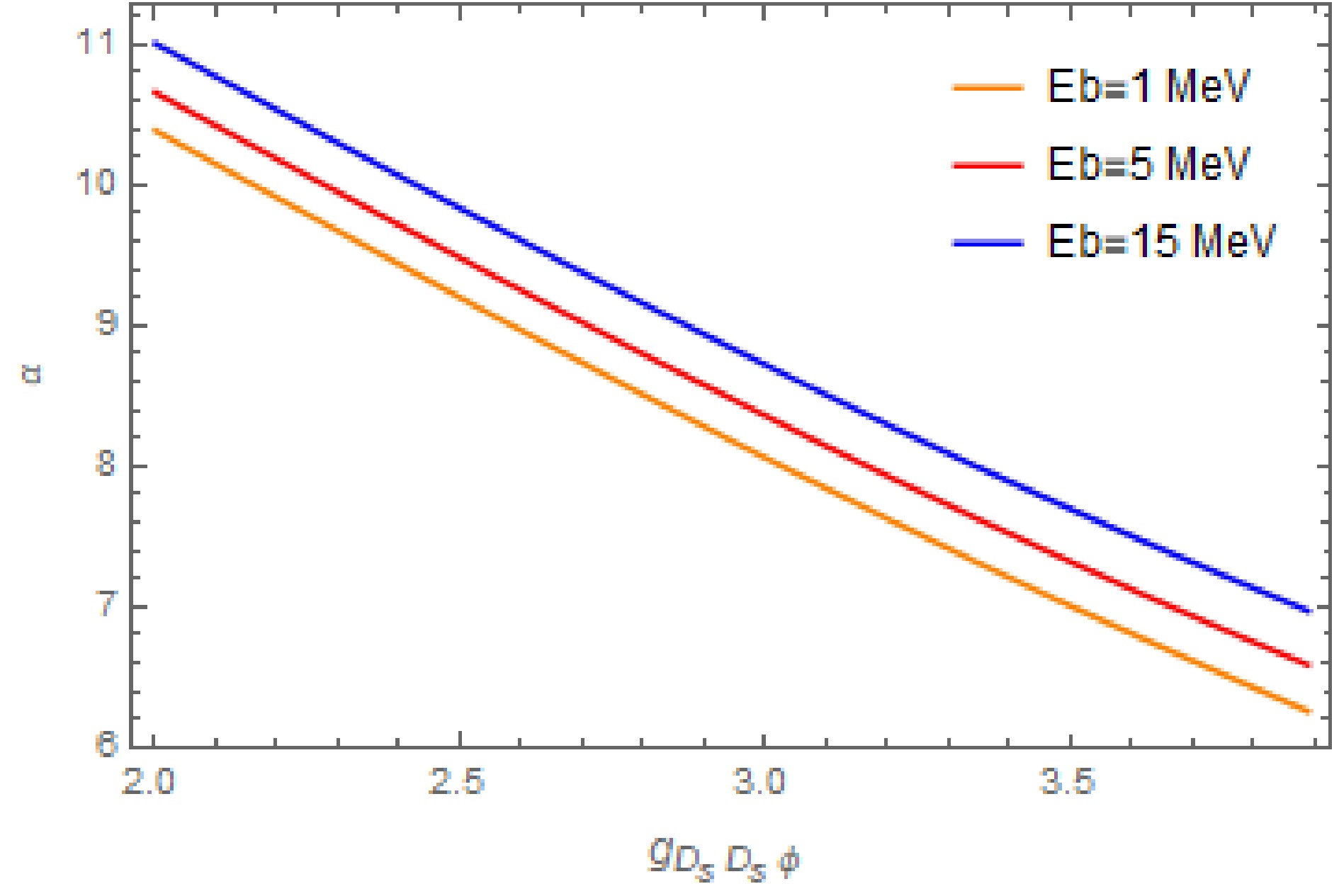
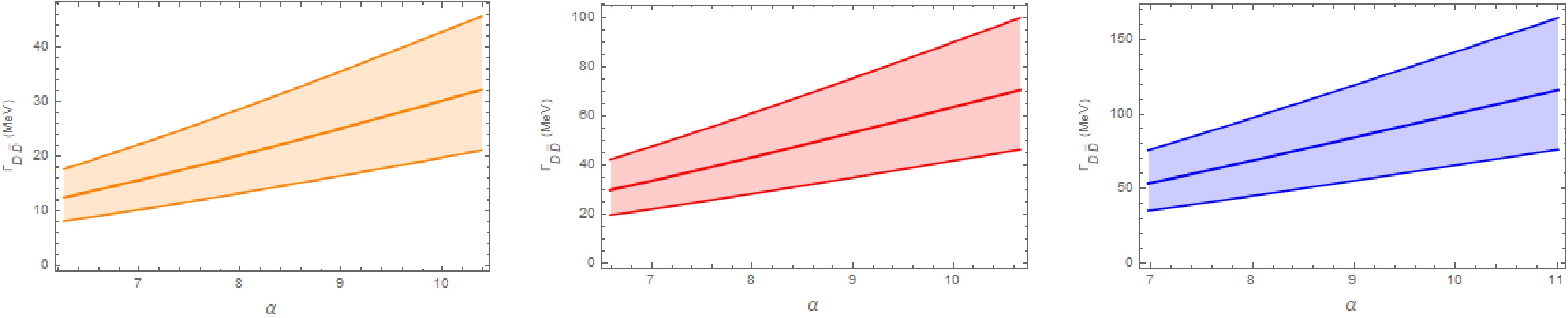
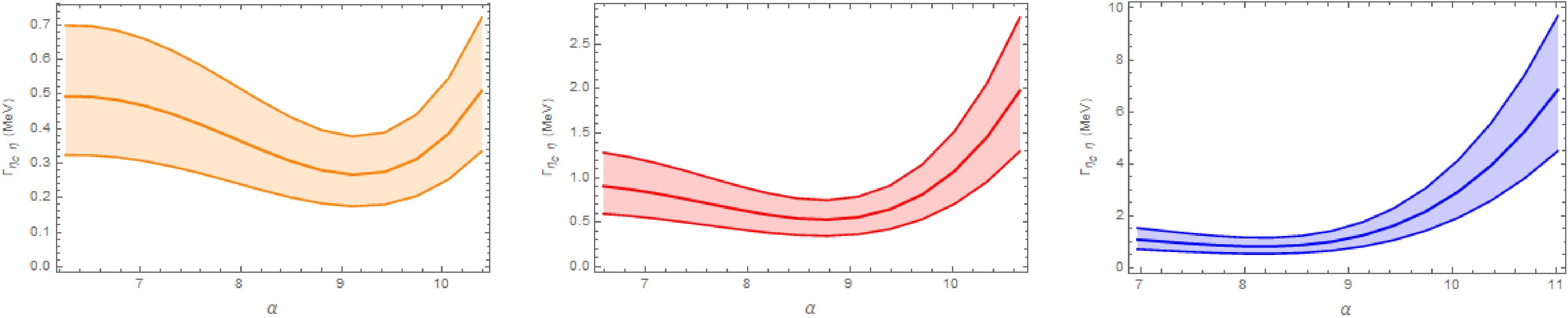
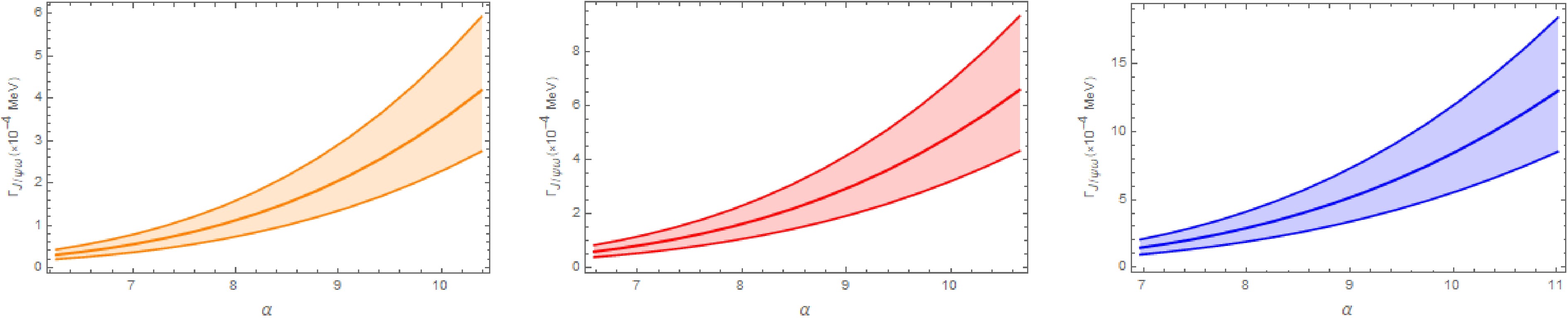
In this work, we investigate possible bound states in the\begin{document}$ D_s\bar{D}_s $\end{document} \begin{document}$ J/\psi $\end{document} \begin{document}$ D_s\bar{D}_s $\end{document} \begin{document}$ D\bar{D} $\end{document} \begin{document}$ \eta_c\eta $\end{document} \begin{document}$ J/\psi\omega $\end{document} \begin{document}$ D_s\bar{D}_s $\end{document} \begin{document}$ D\bar{D} $\end{document}
In this work, we investigate possible bound states in the
2026, 50(2): 022002. doi: 10.1088/1674-1137/ae1187
Abstract:
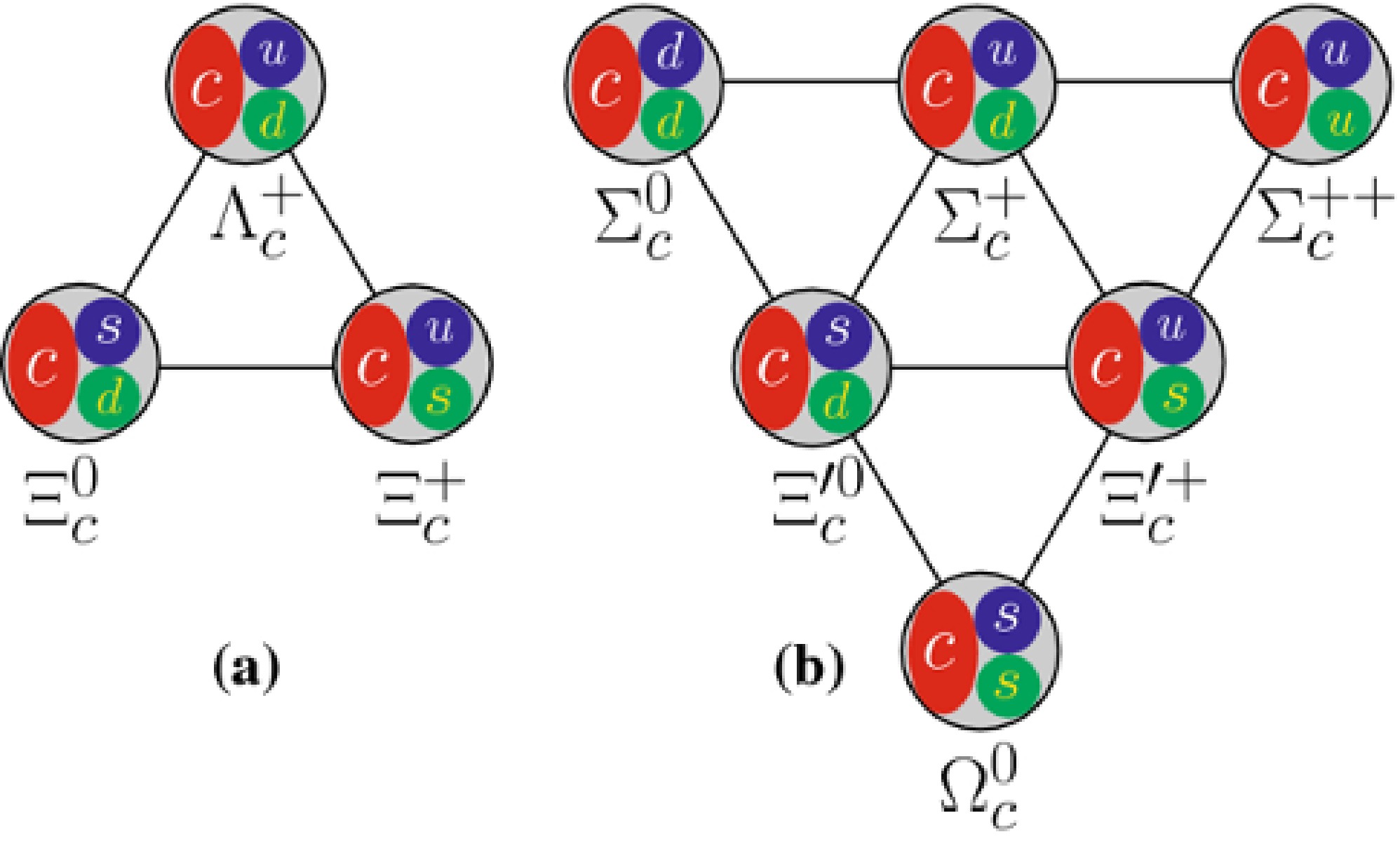
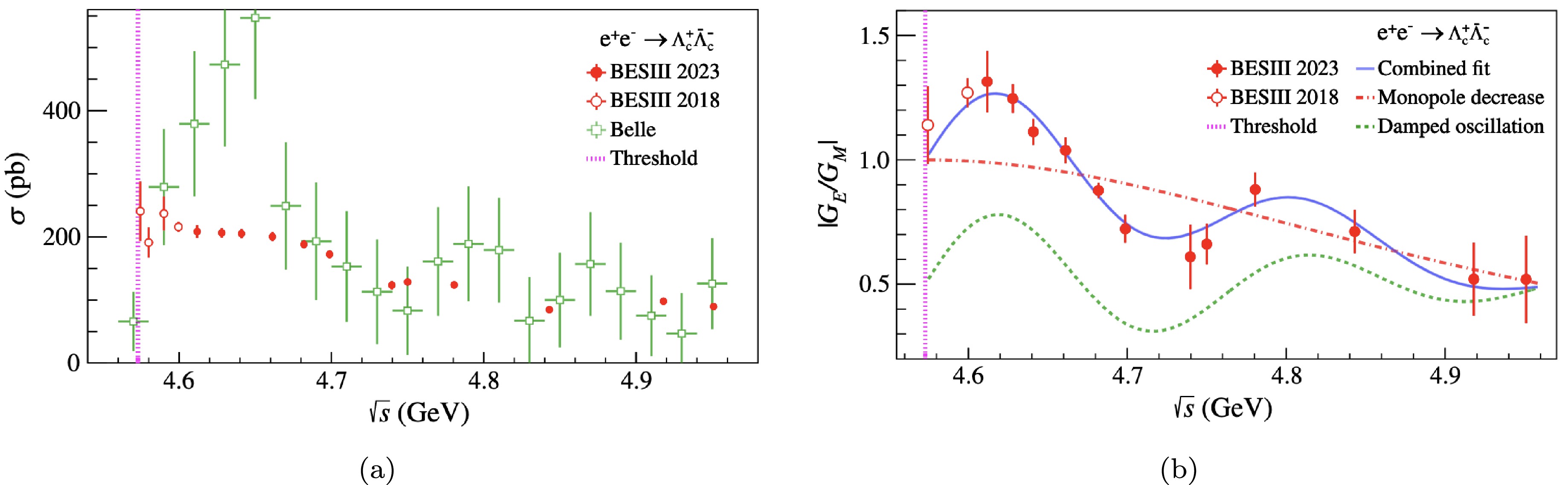
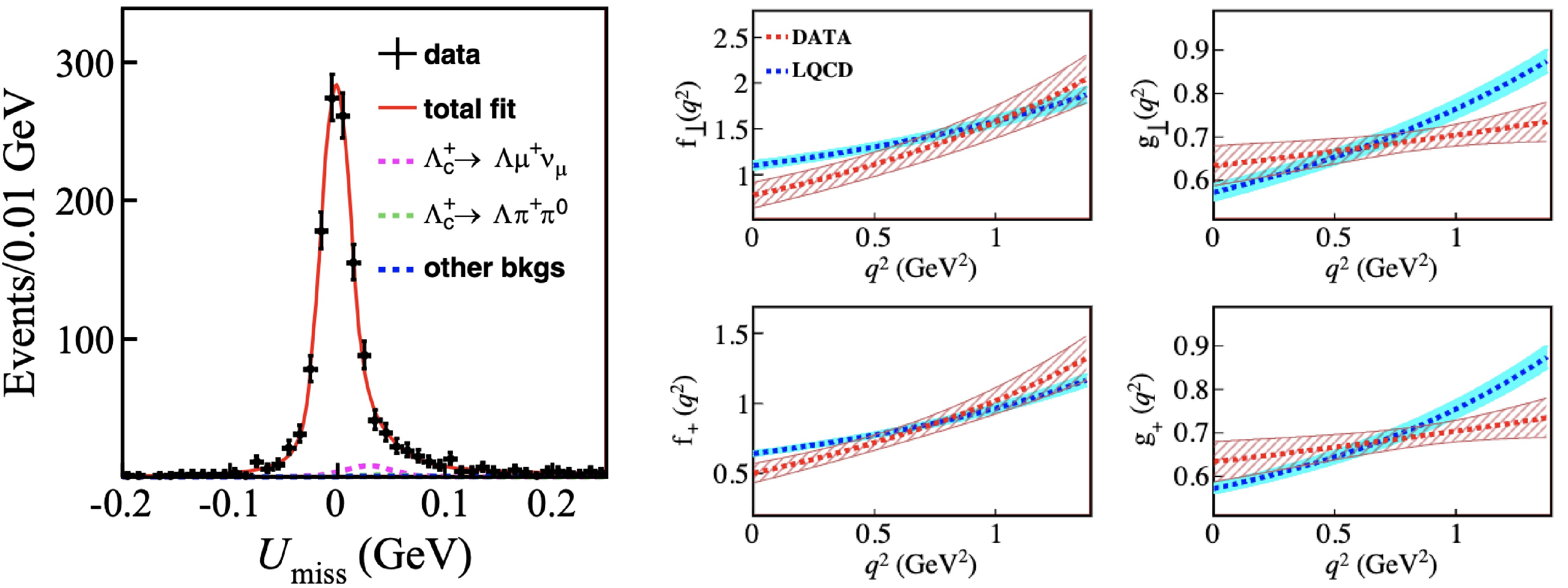
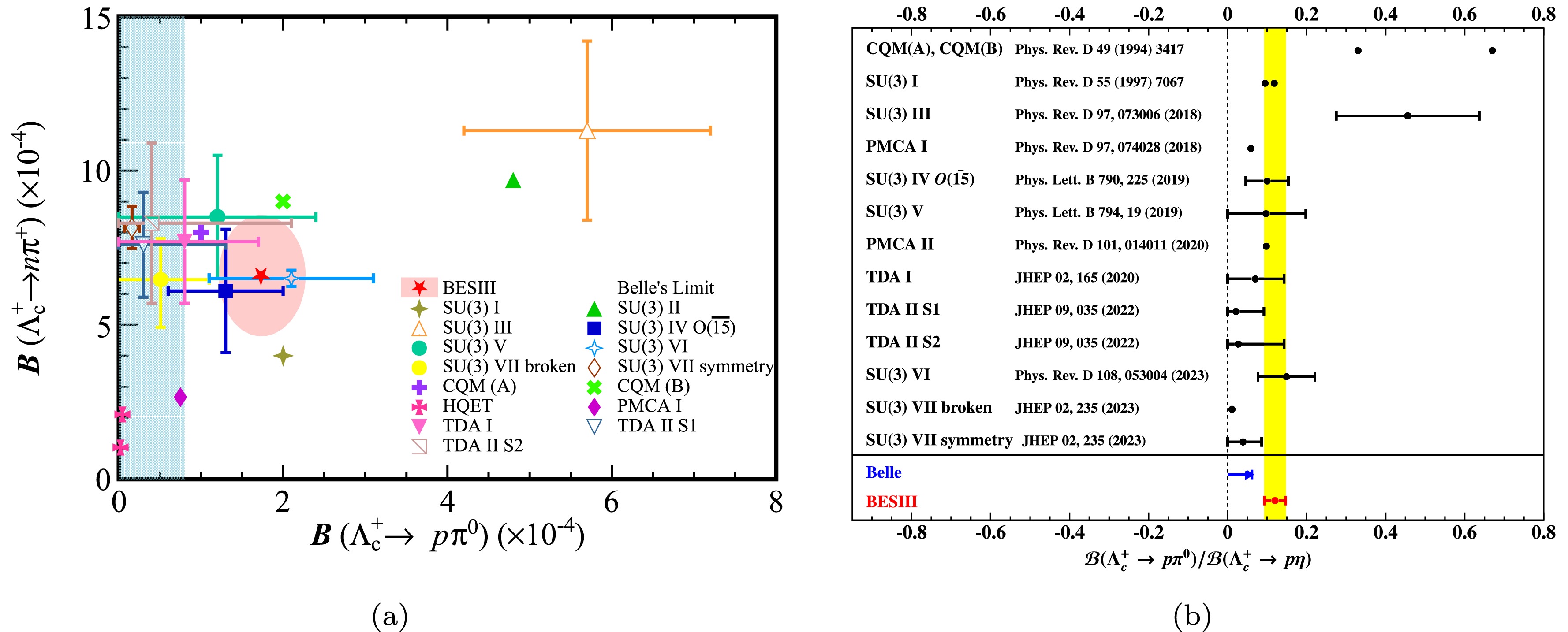
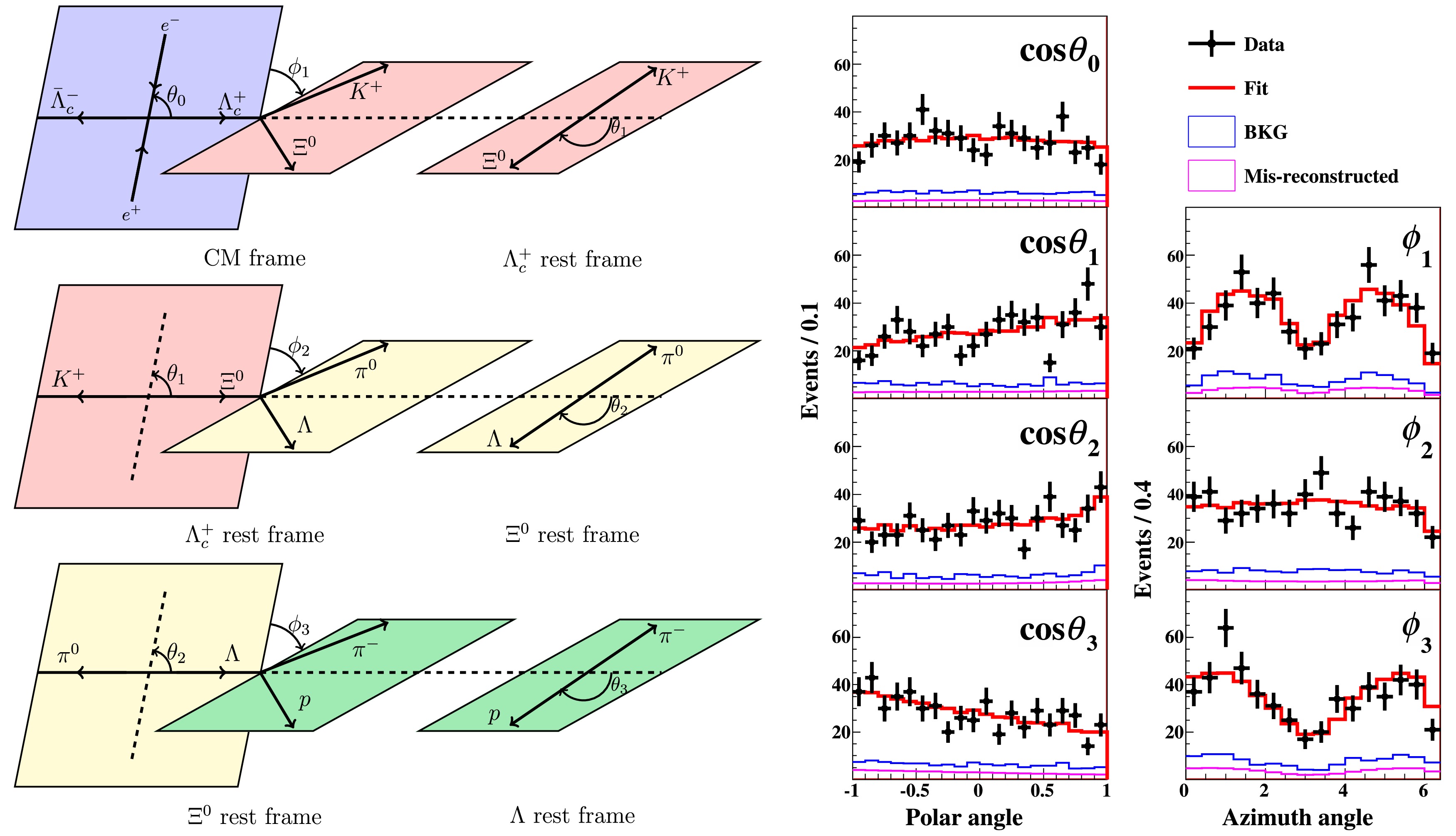
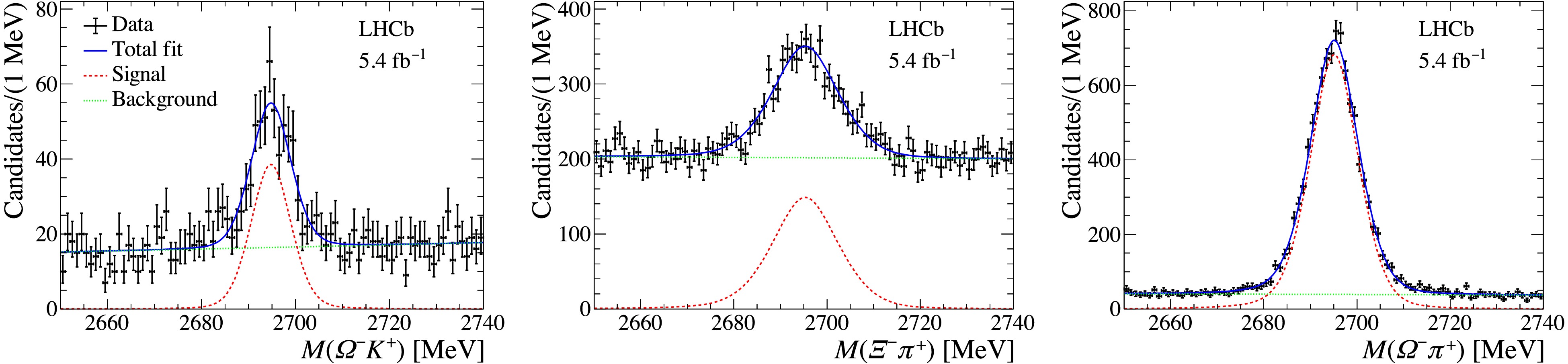
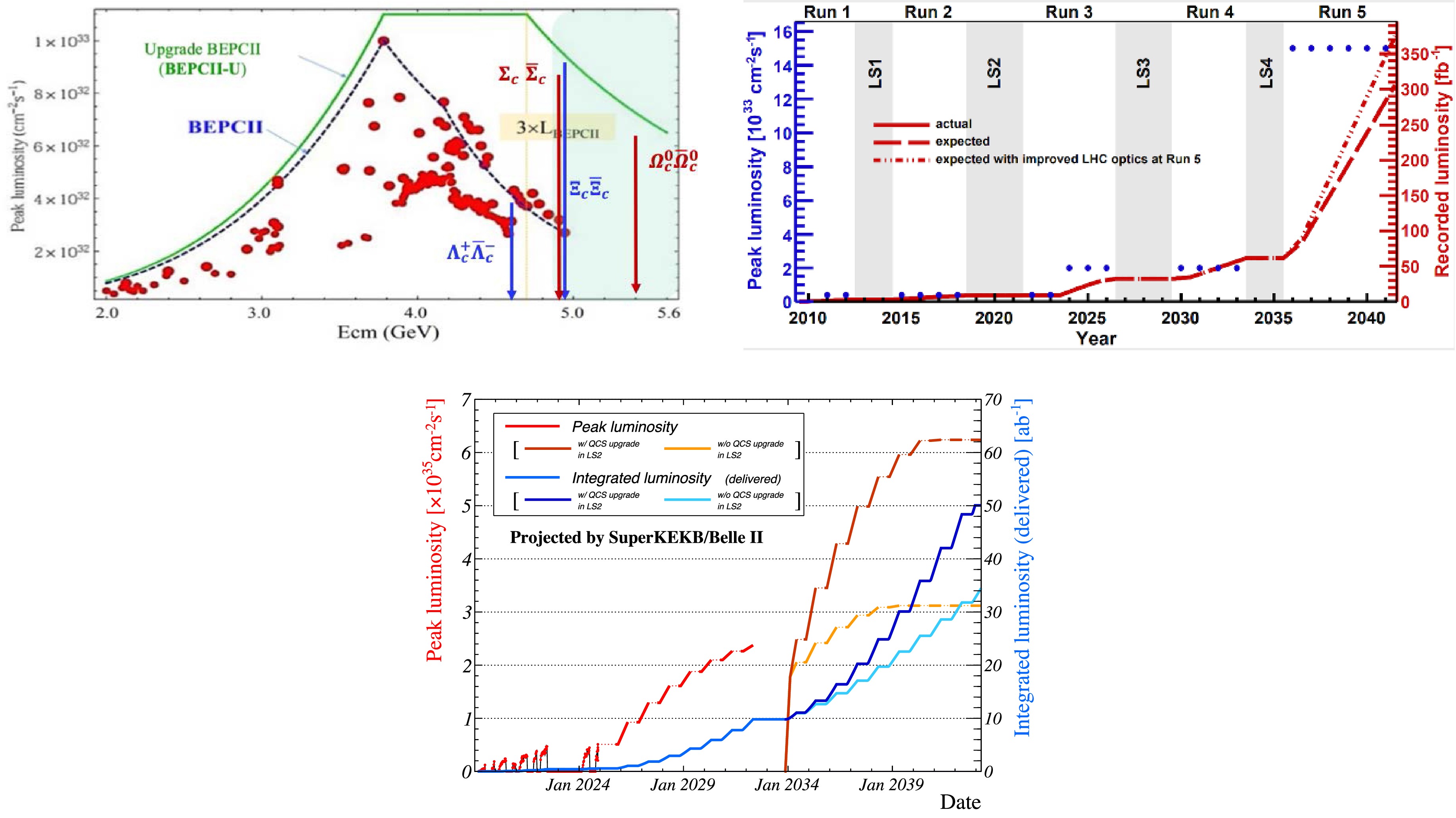
The charmed baryon was first observed experimentally in 1975, one year after the charm quark's confirmation via the discovery of the\begin{document}$ J/\psi $\end{document} \begin{document}$ D_{(s)} $\end{document}
The charmed baryon was first observed experimentally in 1975, one year after the charm quark's confirmation via the discovery of the
2026, 50(2): 023101. doi: 10.1088/1674-1137/ae1201
Abstract:
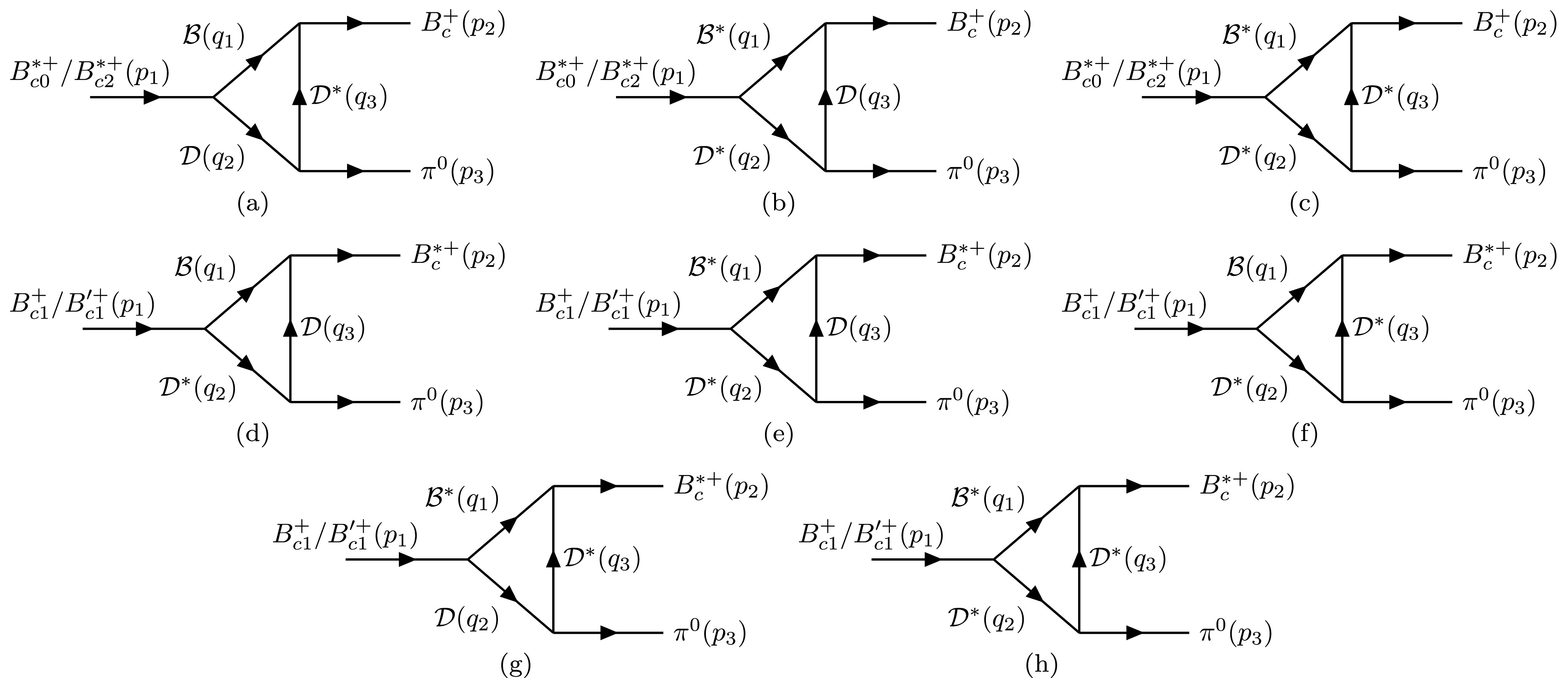
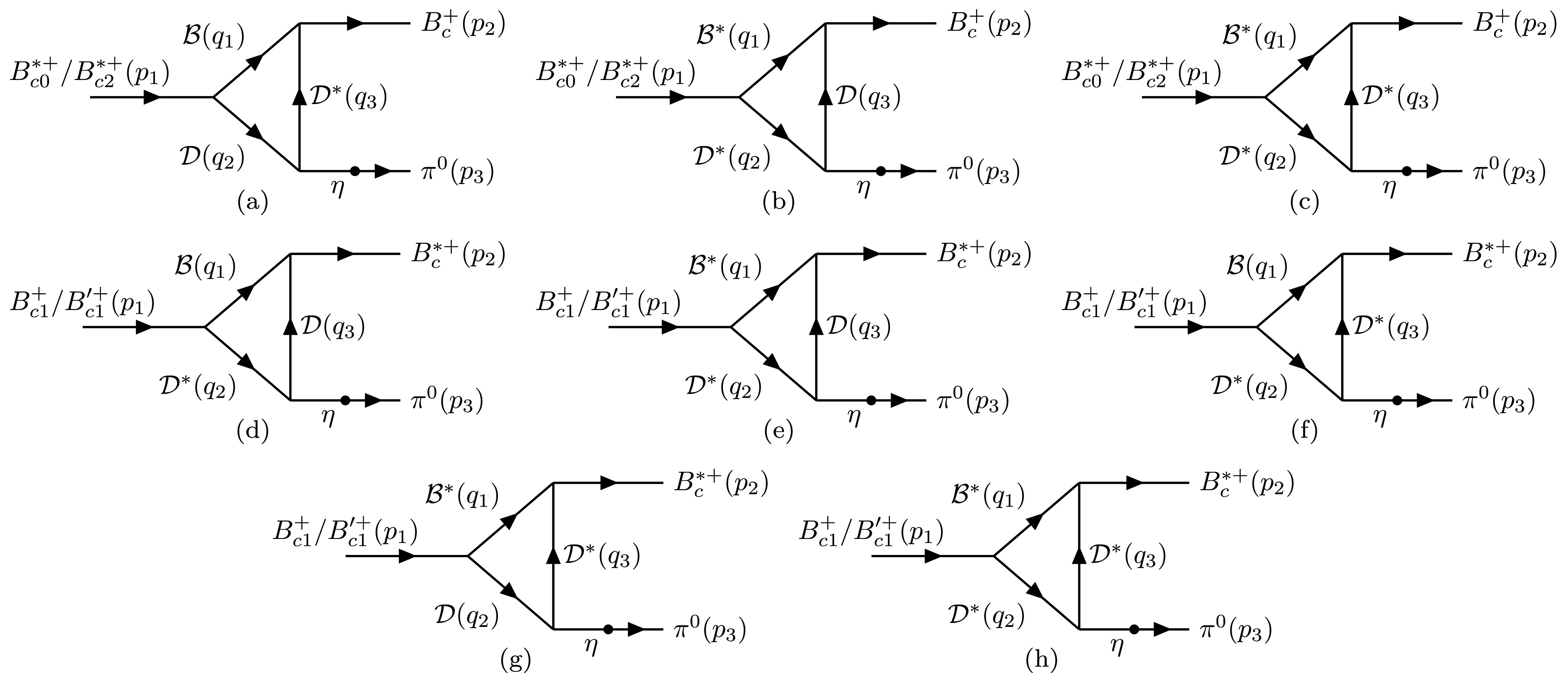
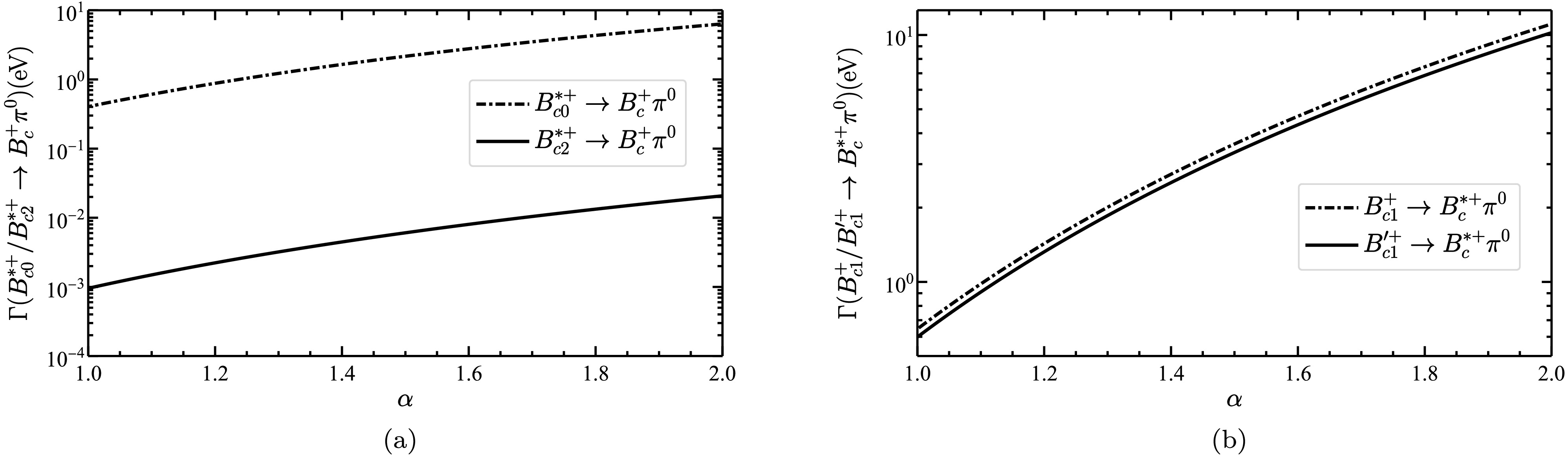
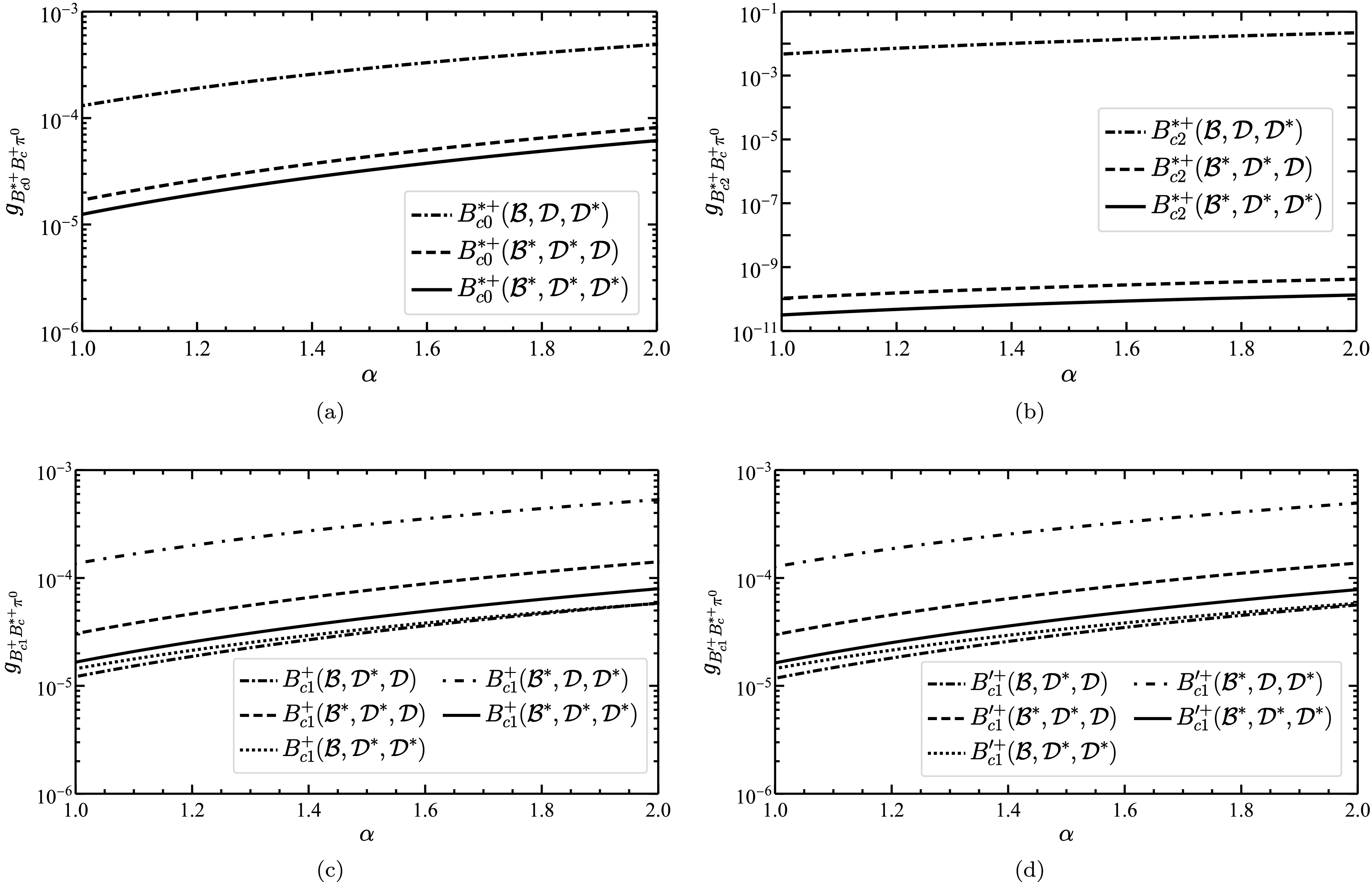
In this study, we investigate the isospin-violating decays of\begin{document}$ B_{c}(1P)^{+}\to B_{c}^{(*)+}\pi^{0} $\end{document} \begin{document}$ B_{c}(1P)^{+} $\end{document} \begin{document}$B_c $\end{document} \begin{document}$ B_{c}(1P)^{+}\to B_{c}^{(*)+}\pi^{0} $\end{document} \begin{document}$ B_{c0}^{*+}\to B_{c}^{+}\pi^{0} $\end{document} \begin{document}$ B_{c2}^{*+}\to B_{c}^{+}\pi^{0} $\end{document} \begin{document}$ B_{c0}^{*+} $\end{document} \begin{document}$ B_{c}^{+}\pi^{0} $\end{document} \begin{document}$ B_{c1}^{+}/B_{c1}'^{+} $\end{document} \begin{document}$ B_{c1}^{+}/B_{c1}'^{+}\to B_{c}^{*+}\pi^{0} $\end{document}
In this study, we investigate the isospin-violating decays of
2026, 50(2): 023102. doi: 10.1088/1674-1137/ae1206
Abstract:
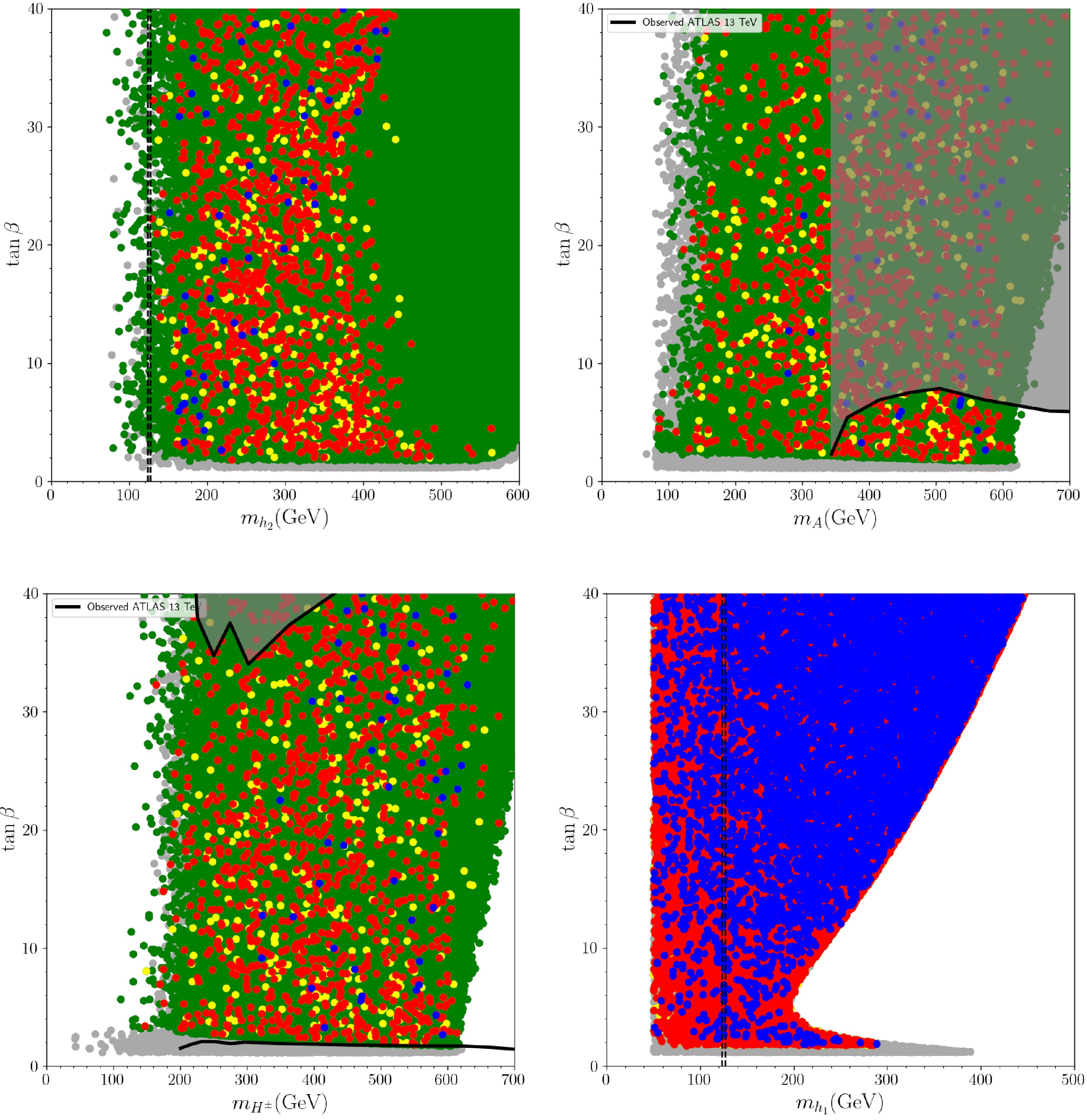
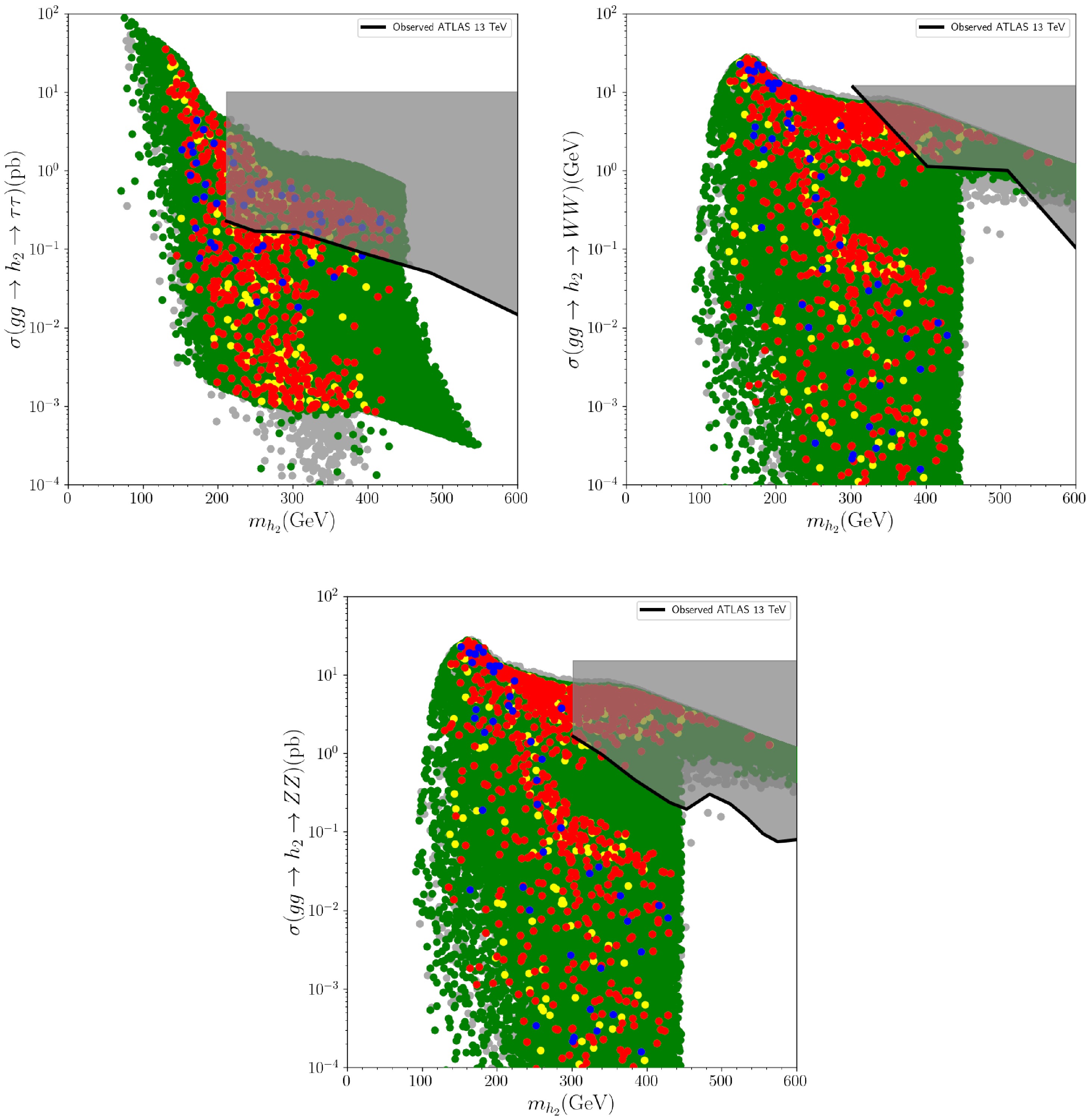
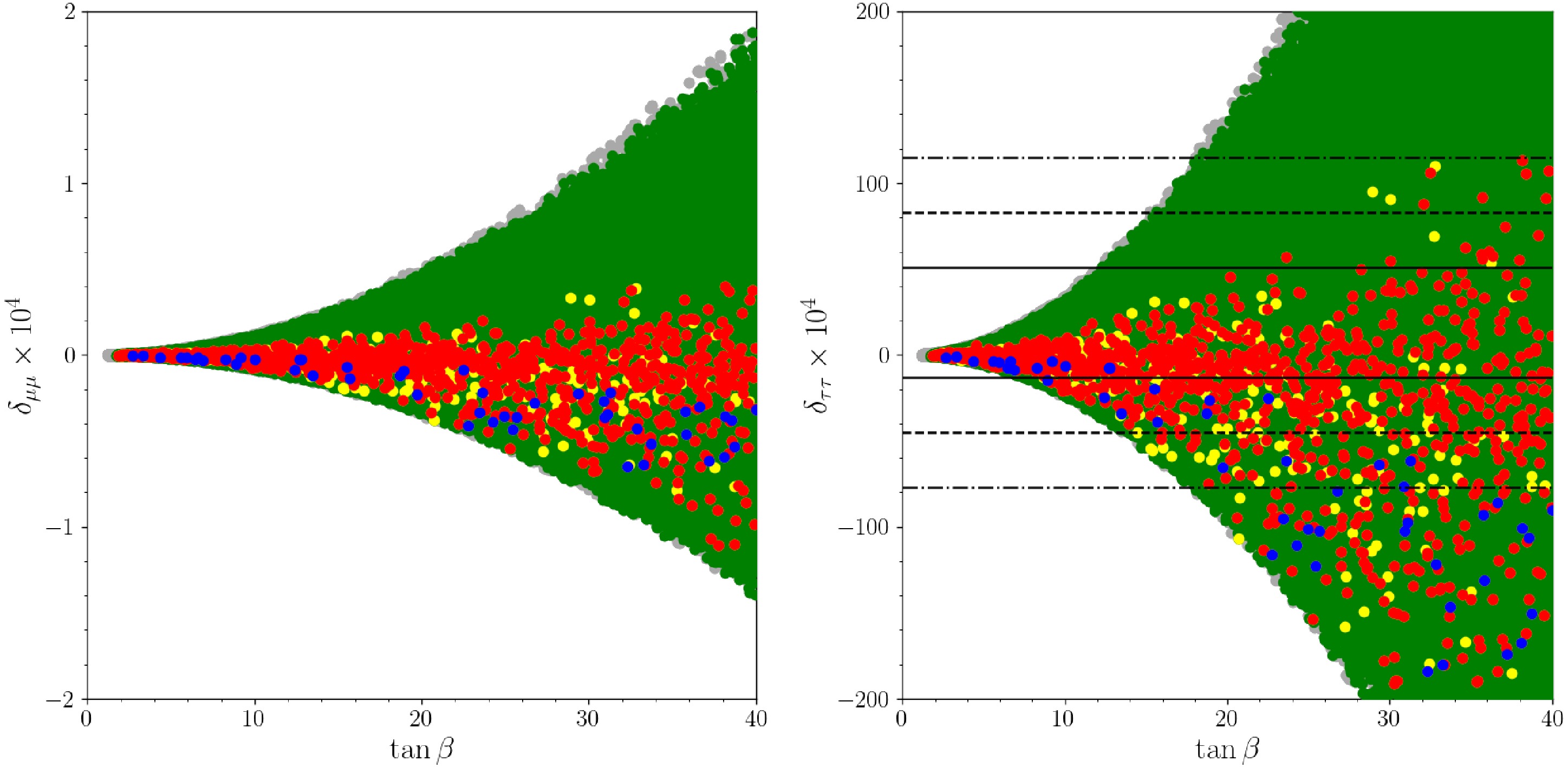
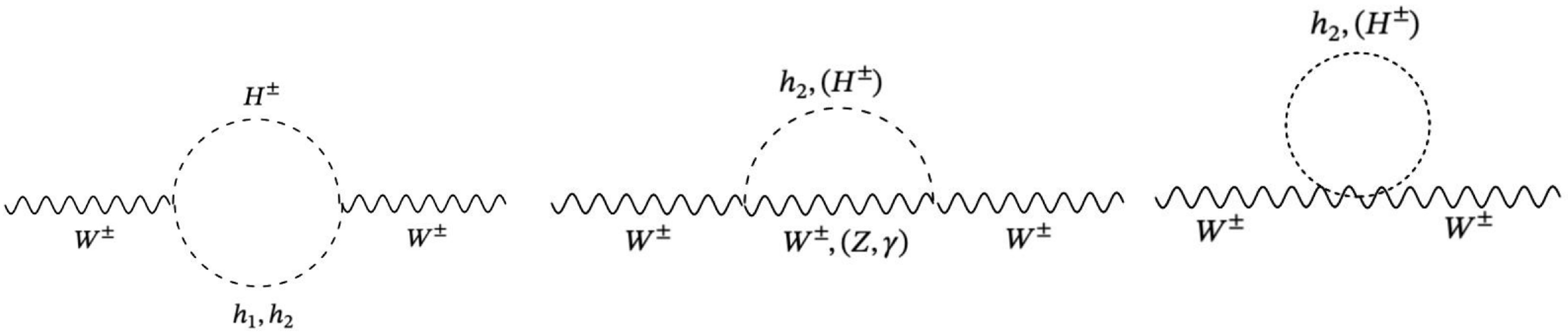
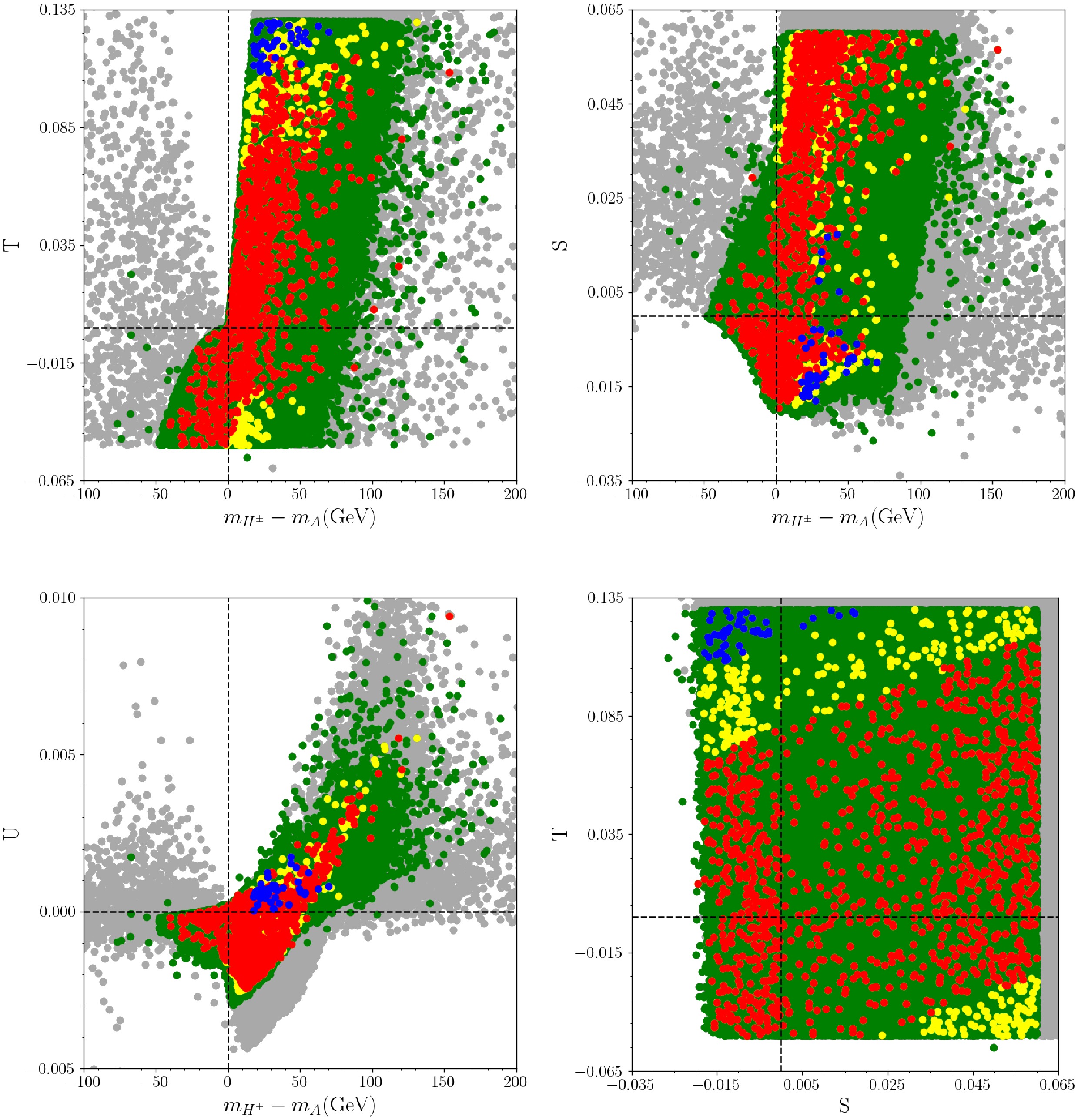
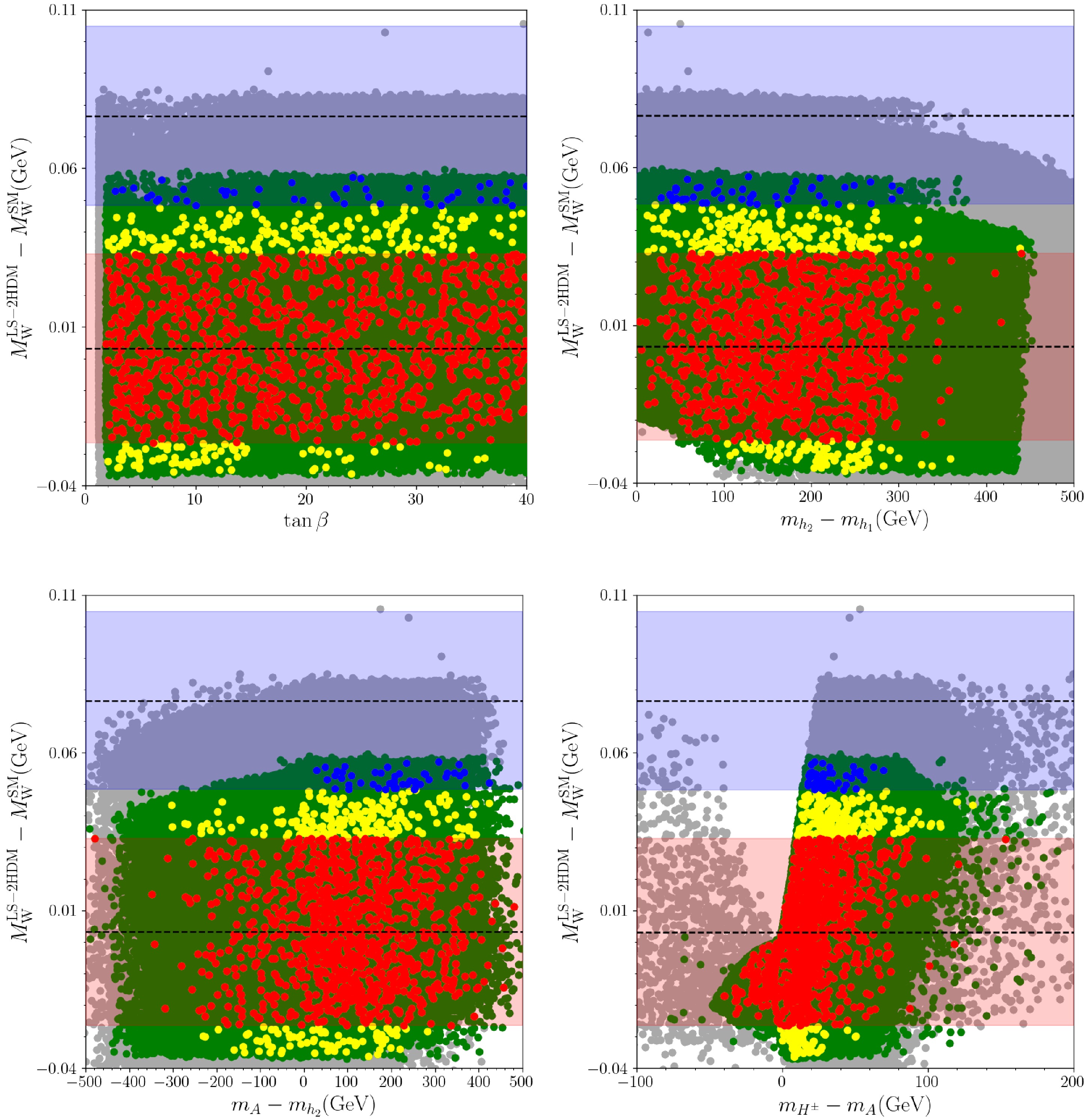
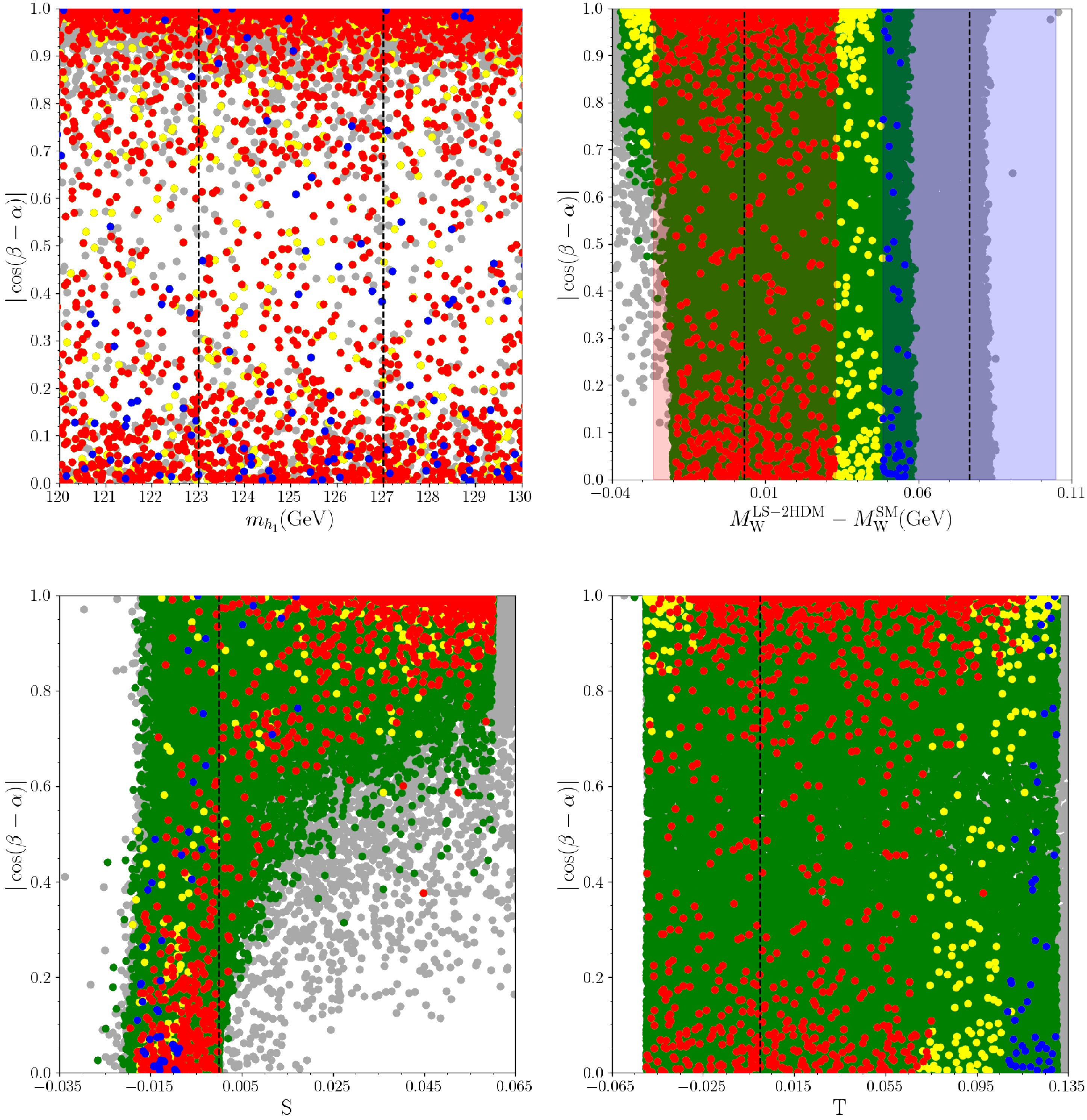
In 2022, the collider detector at Fermilab (CDF) collaboration reported the W-boson mass (\begin{document}$ M_W= $\end{document} \begin{document}$ 80.4335\pm0.0094\; \text{GeV} $\end{document} \begin{document}$ M_W^{\rm SM}=80.357\pm0.006\; \text{GeV} $\end{document} \begin{document}$ 7\sigma $\end{document} \begin{document}$ M_W=80.3602\pm0.0099\; \text{GeV} $\end{document} \begin{document}$ \sim80.357\; \text{GeV} $\end{document} \begin{document}$ (S,T,U) $\end{document} \begin{document}$ H^\pm $\end{document} \begin{document}$ h_1 $\end{document} \begin{document}$ m_{h_1}\simeq125 $\end{document} \begin{document}$ |\cos(\beta-\alpha)|\lesssim0.06 $\end{document} \begin{document}$ 17\lesssim\tan\beta\lesssim39 $\end{document} \begin{document}$ 144\lesssim m_{h_2}\lesssim414 $\end{document} \begin{document}$ 435\lesssim m_{A,H^{\pm}}\lesssim685 $\end{document} \begin{document}$ 3\sigma $\end{document} \begin{document}$ M_W=80.4335\pm0.0094\; \text{GeV} $\end{document} \begin{document}$ \lesssim2\sigma $\end{document} \begin{document}$ (S,T,U) $\end{document} \begin{document}$ W $\end{document} \begin{document}$ 2\sigma $\end{document}
In 2022, the collider detector at Fermilab (CDF) collaboration reported the W-boson mass (

2026, 50(2): 023103. doi: 10.1088/1674-1137/ae1374
Abstract:
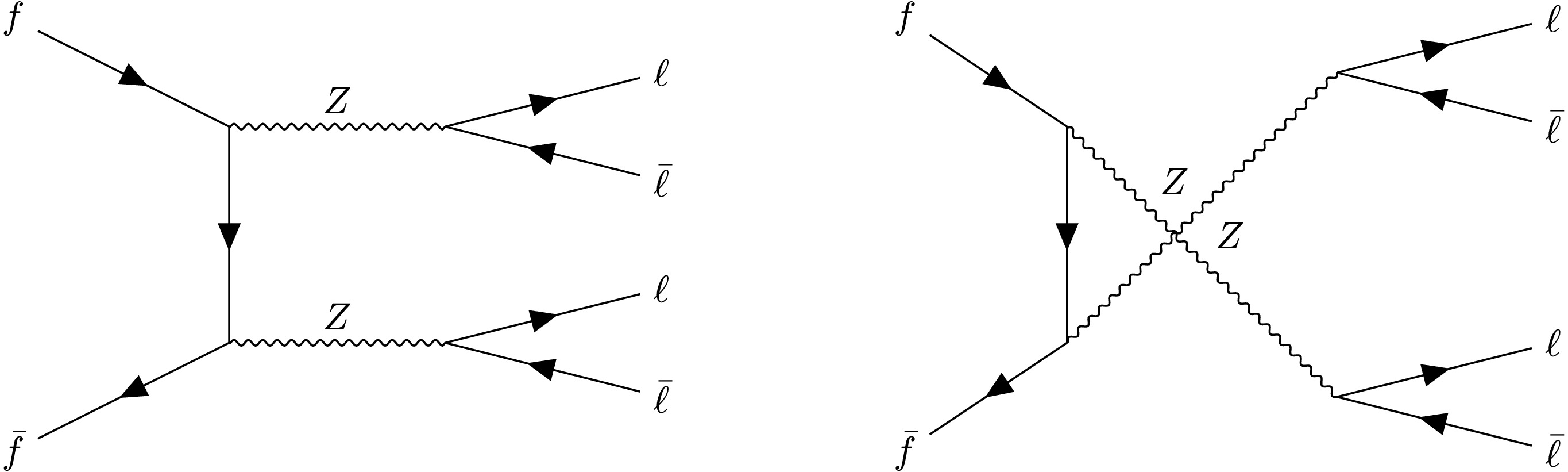
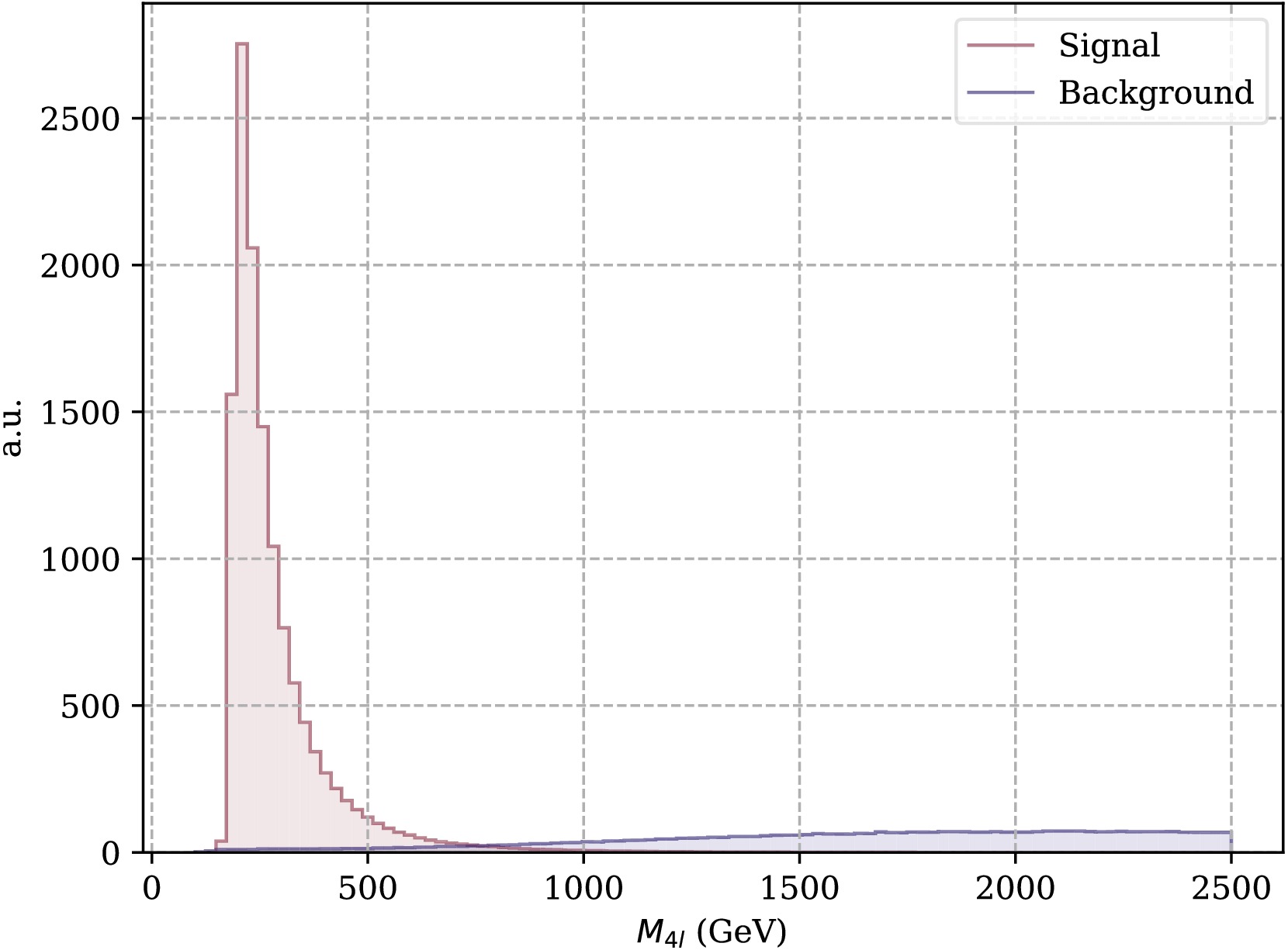
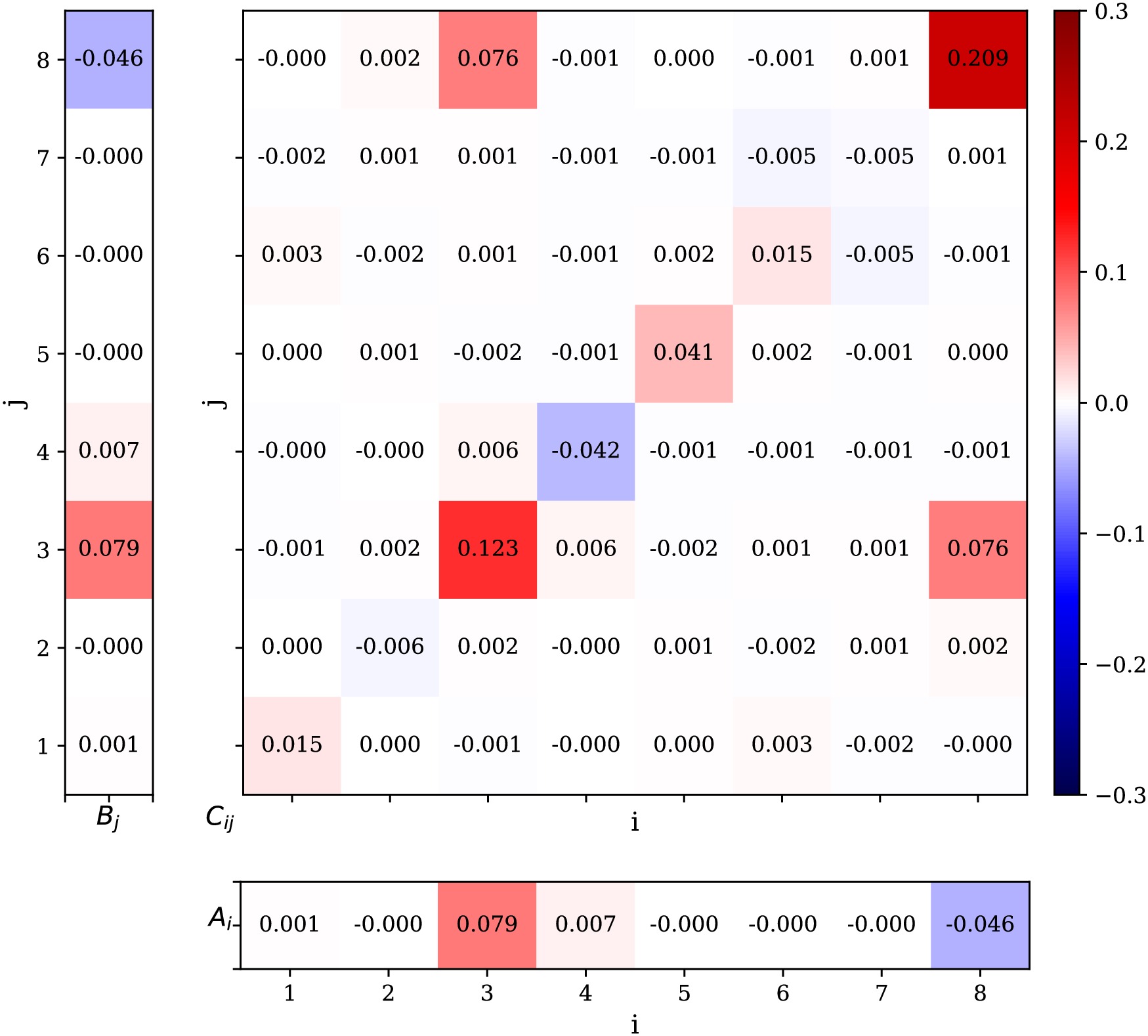
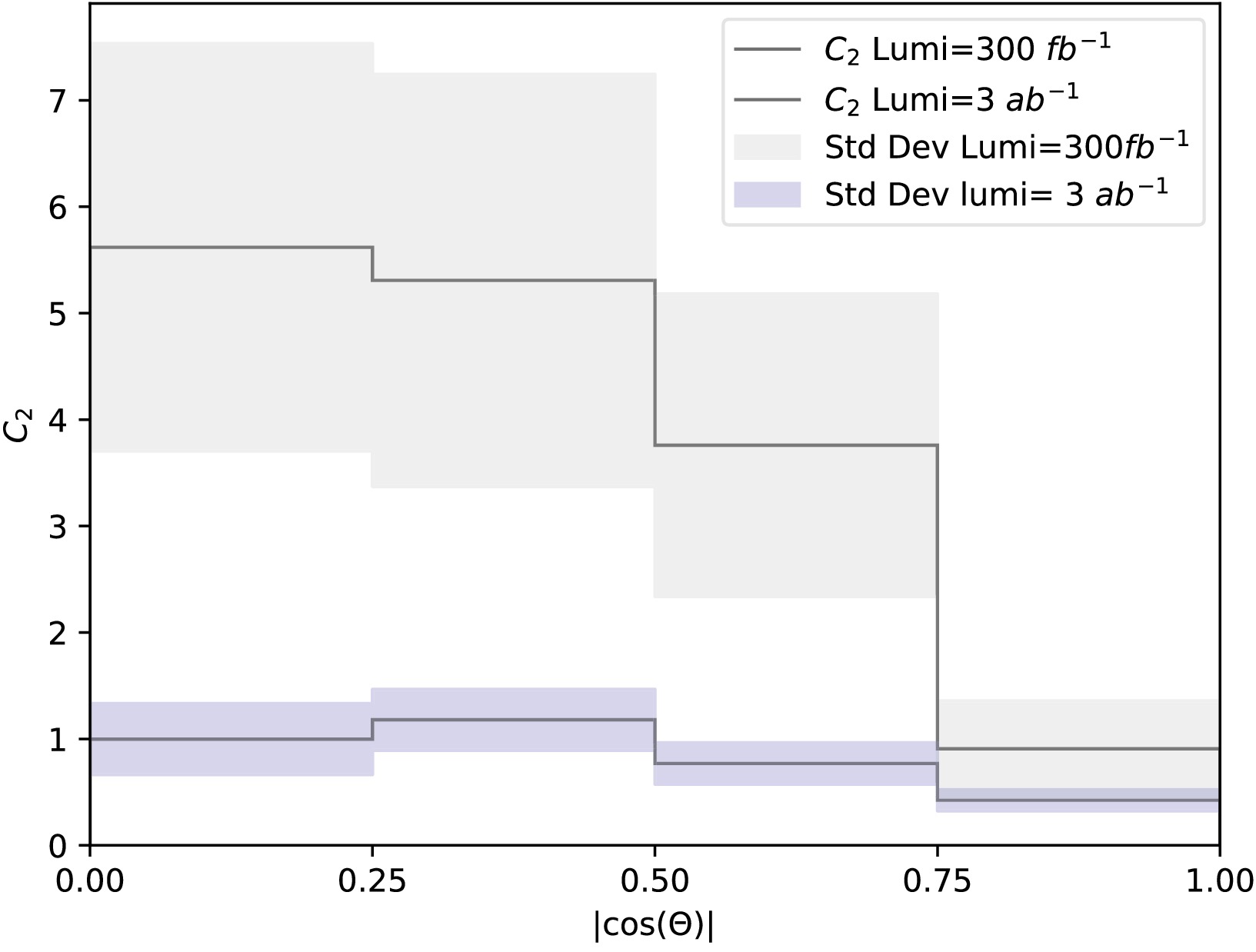
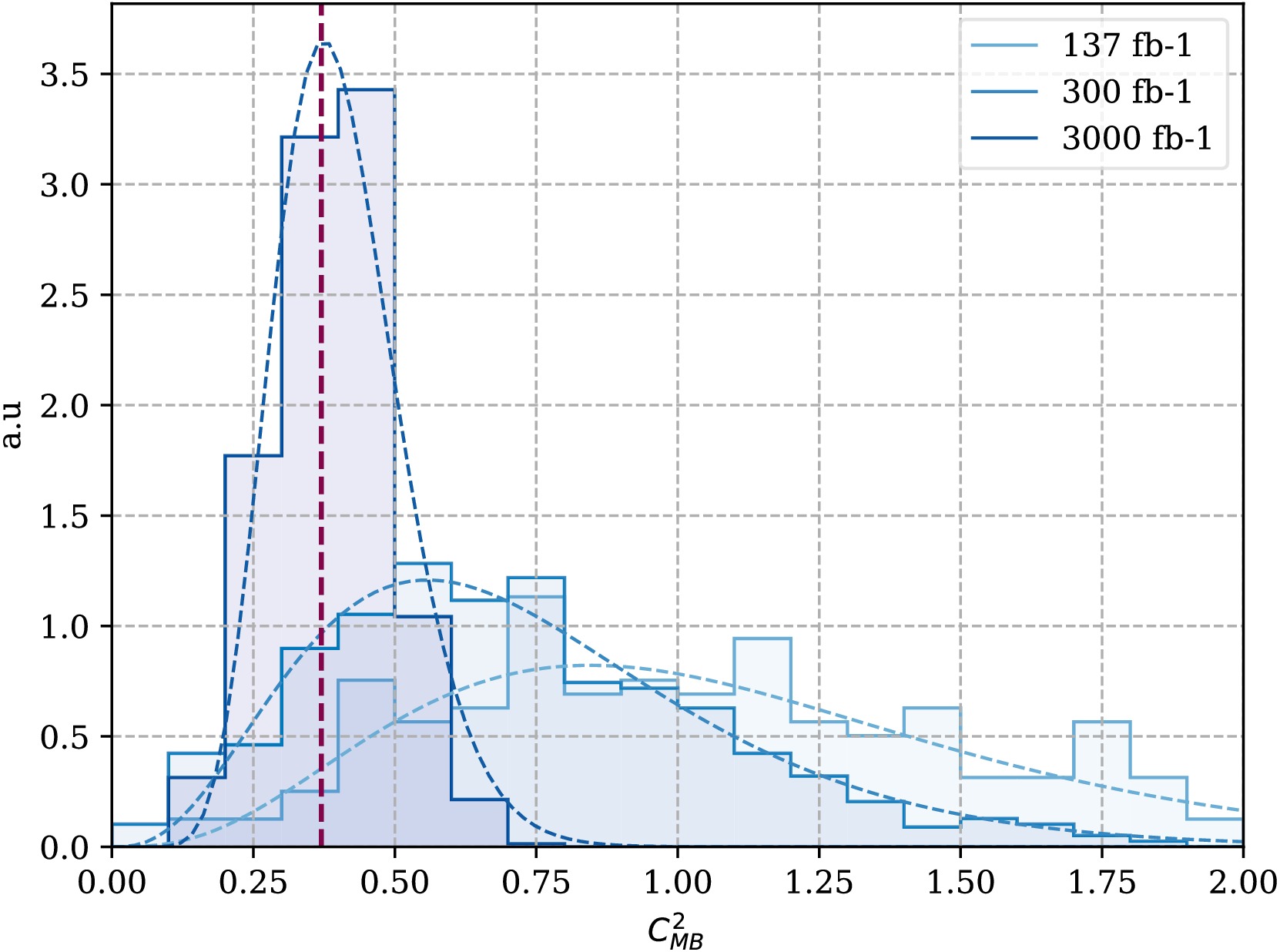
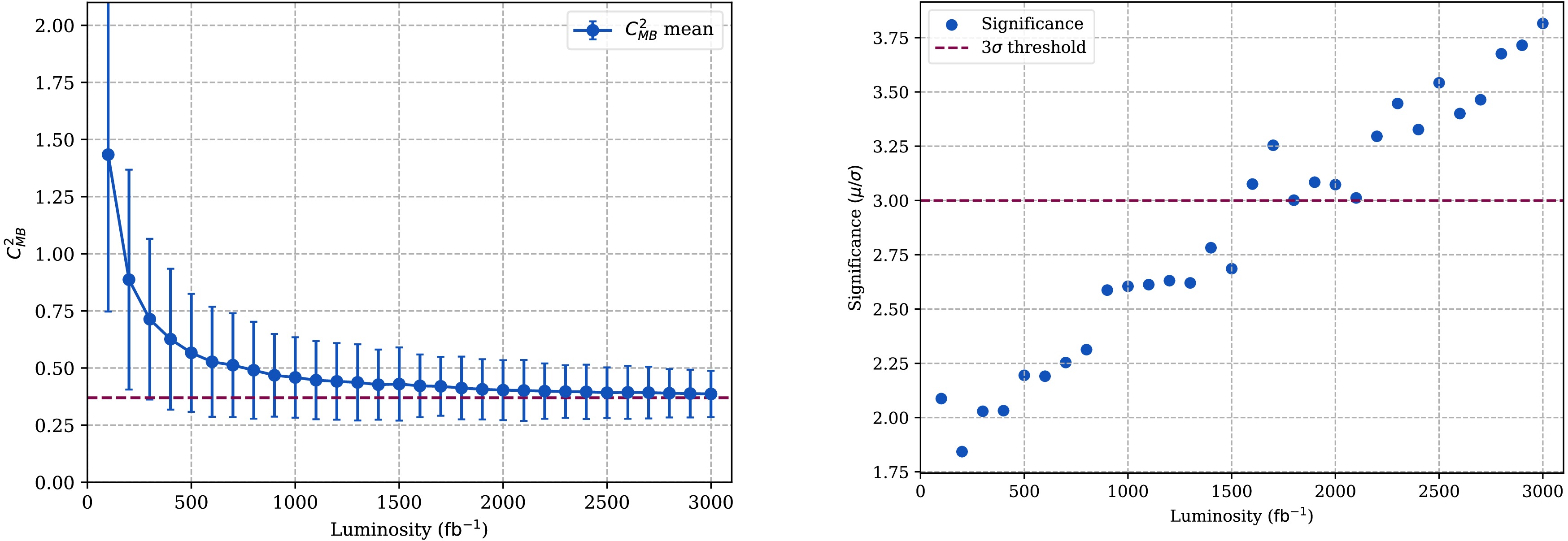
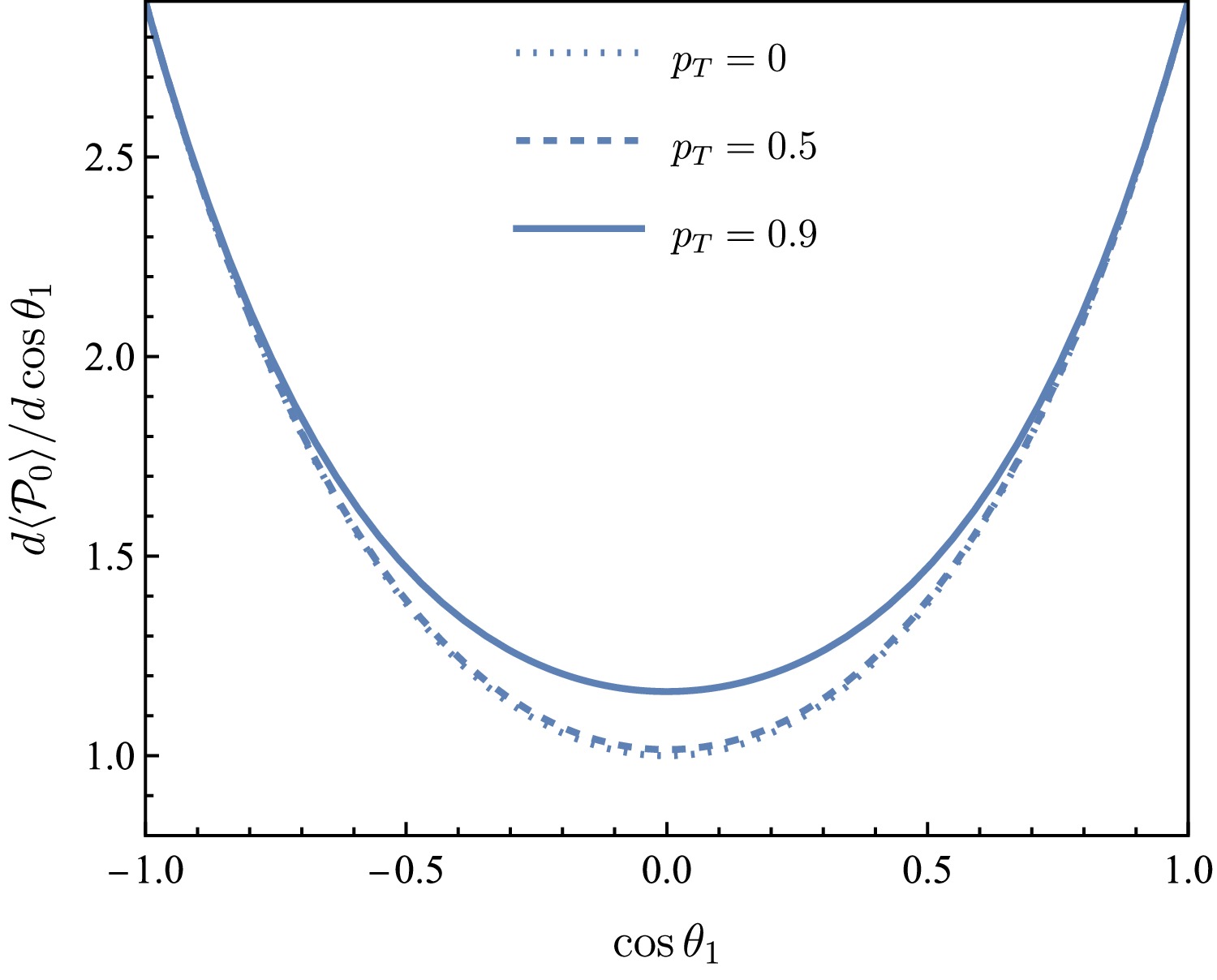
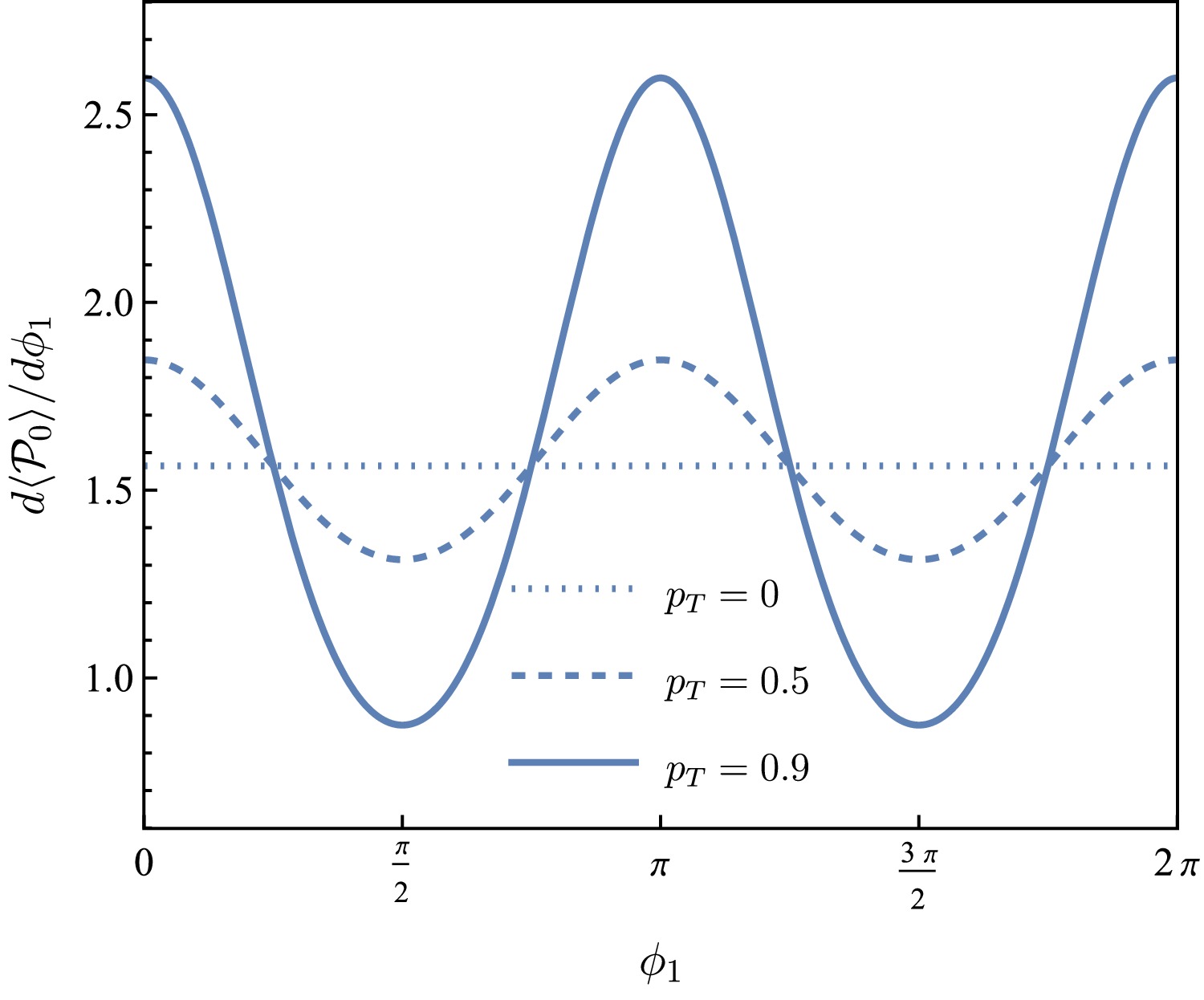
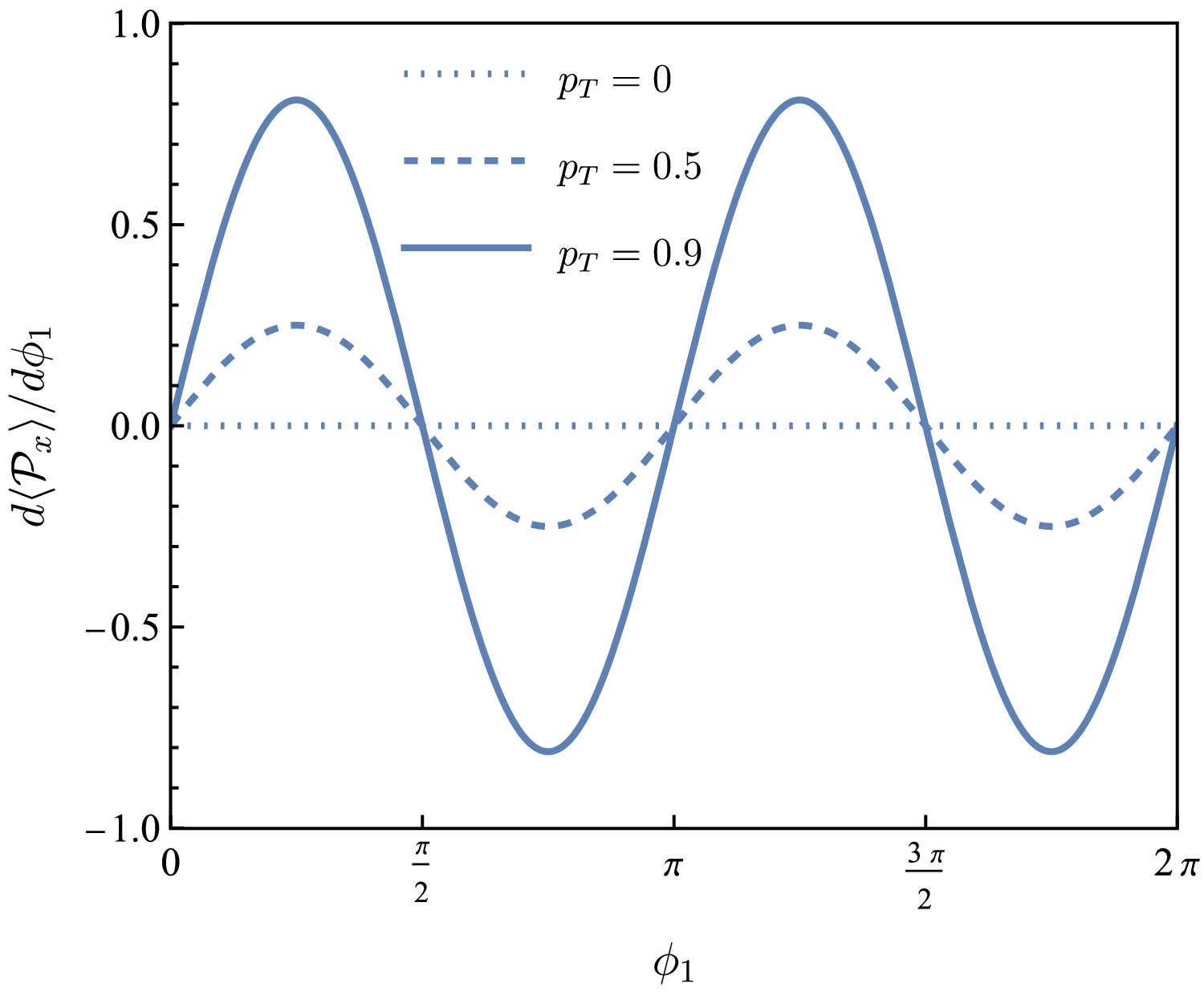
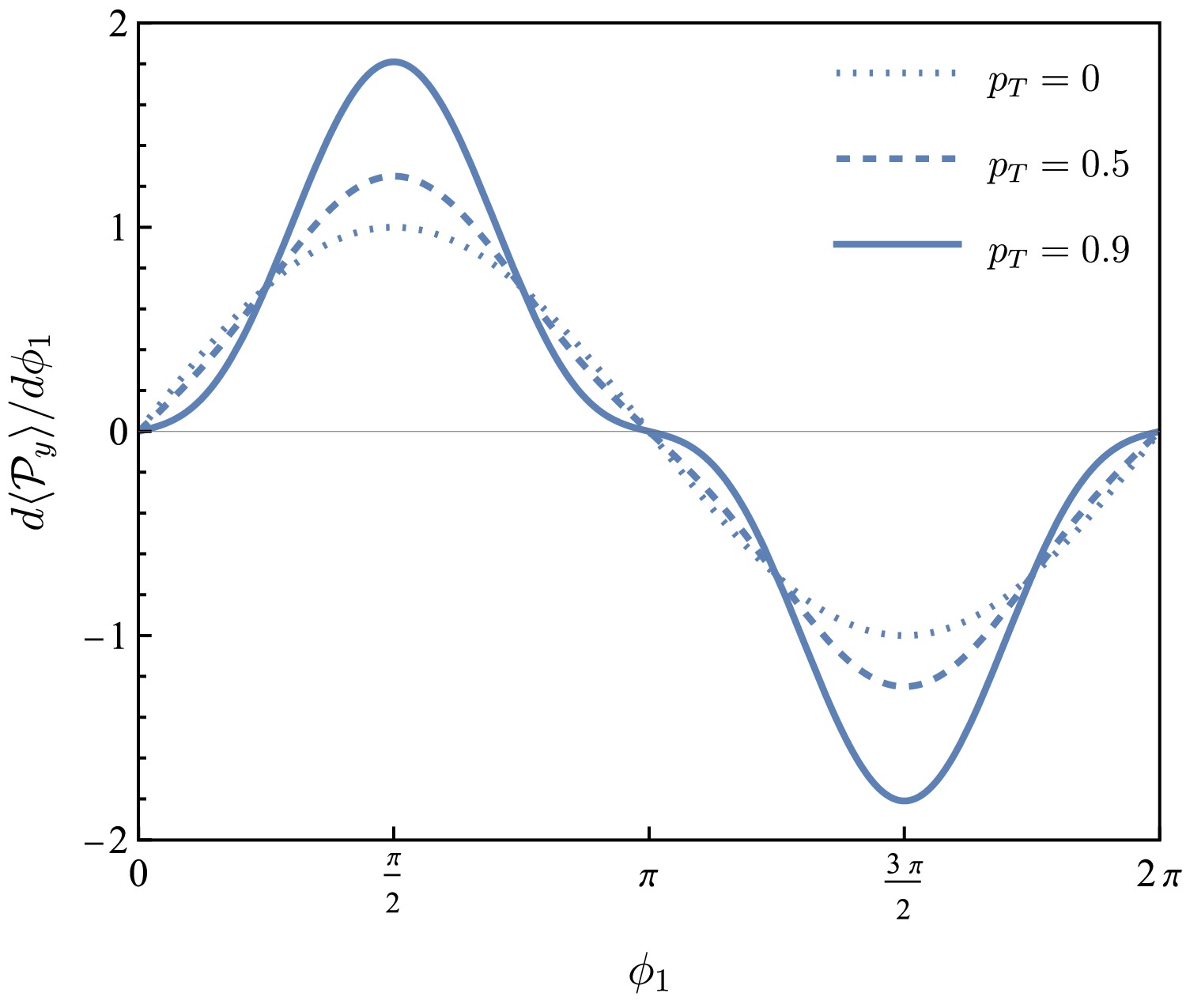
Recent studies have shown that observing entangled particle states at a particle collider, such as the Large Hadron Collider (LHC), and testing the violation of Bell inequality in them can open up new research areas for studying high energy physics. We examine the presence of quantum entanglement in the\begin{document}$ pp\to ZZ\to 4\ell $\end{document} \begin{document}$ \sigma $\end{document} \begin{document}$ \sigma $\end{document}
Recent studies have shown that observing entangled particle states at a particle collider, such as the Large Hadron Collider (LHC), and testing the violation of Bell inequality in them can open up new research areas for studying high energy physics. We examine the presence of quantum entanglement in the
2026, 50(2): 023104. doi: 10.1088/1674-1137/ae0f87
Abstract:
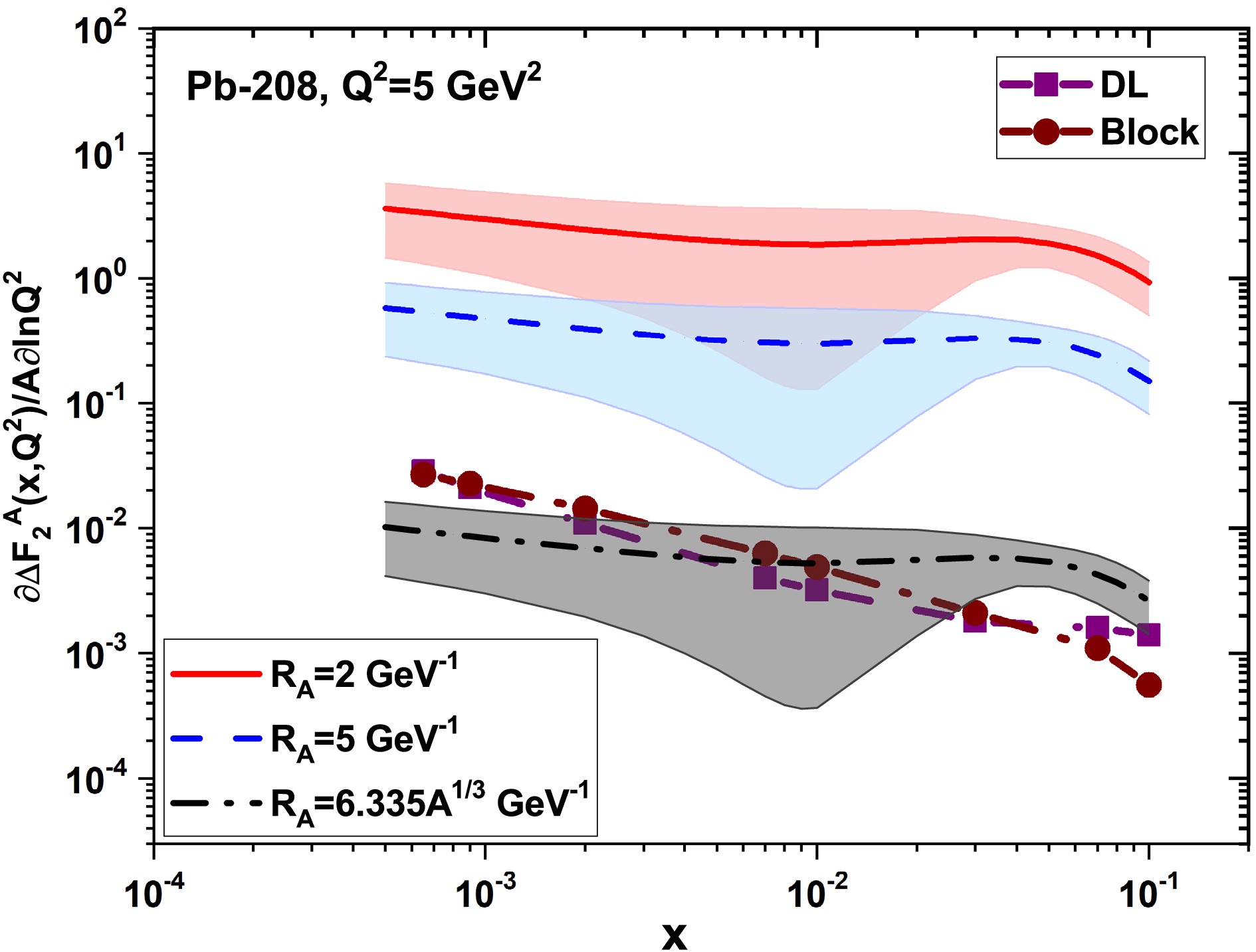
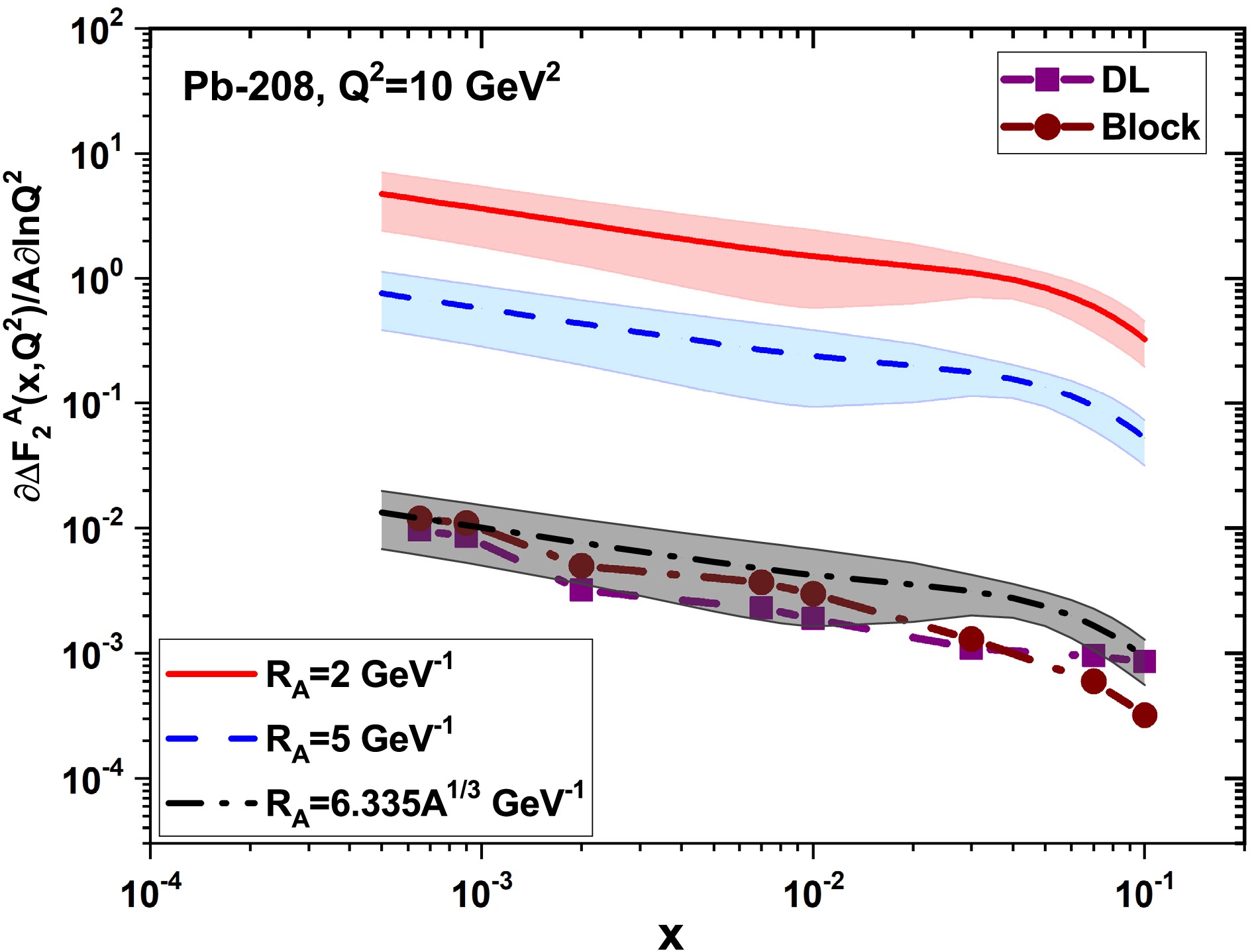
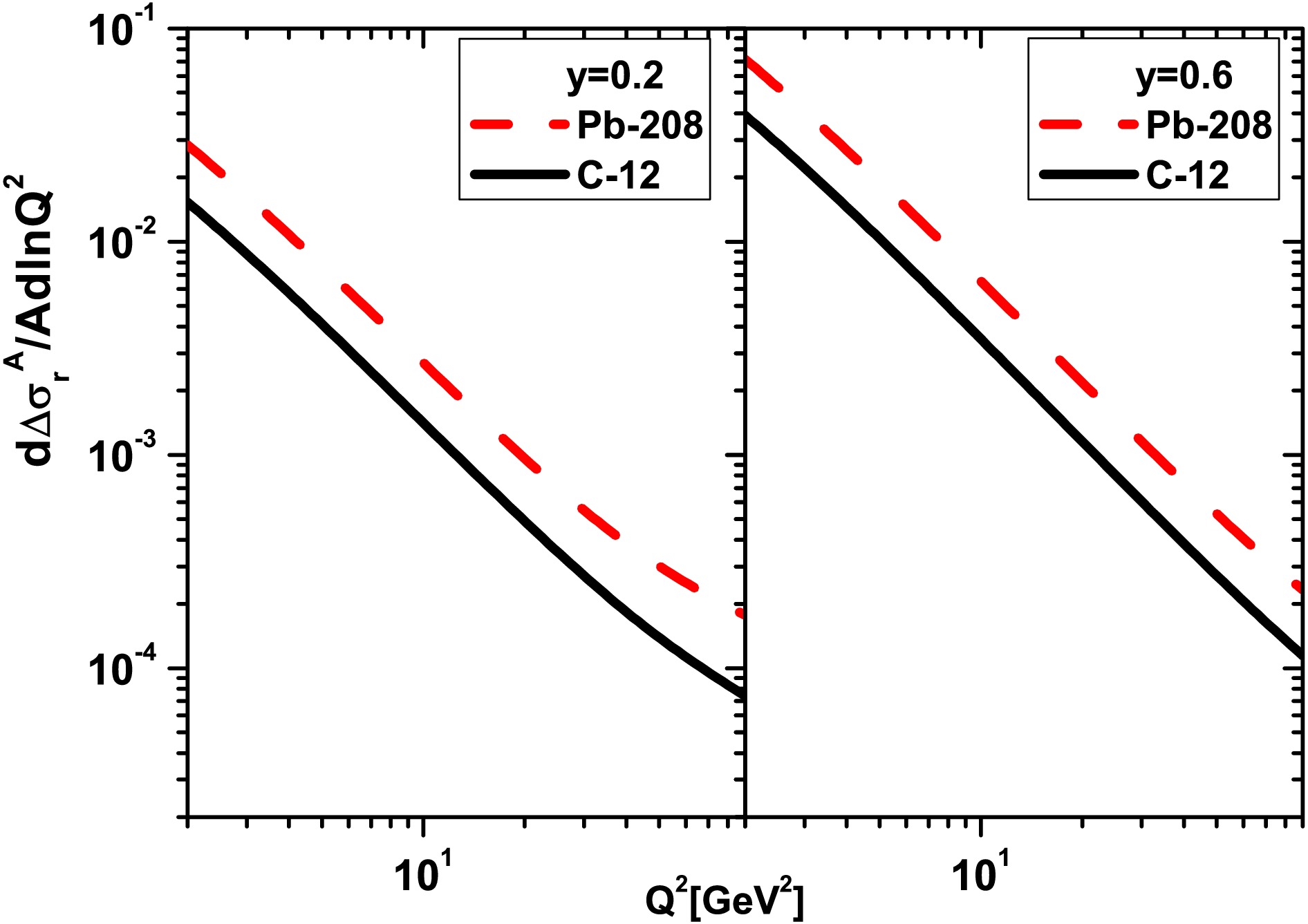
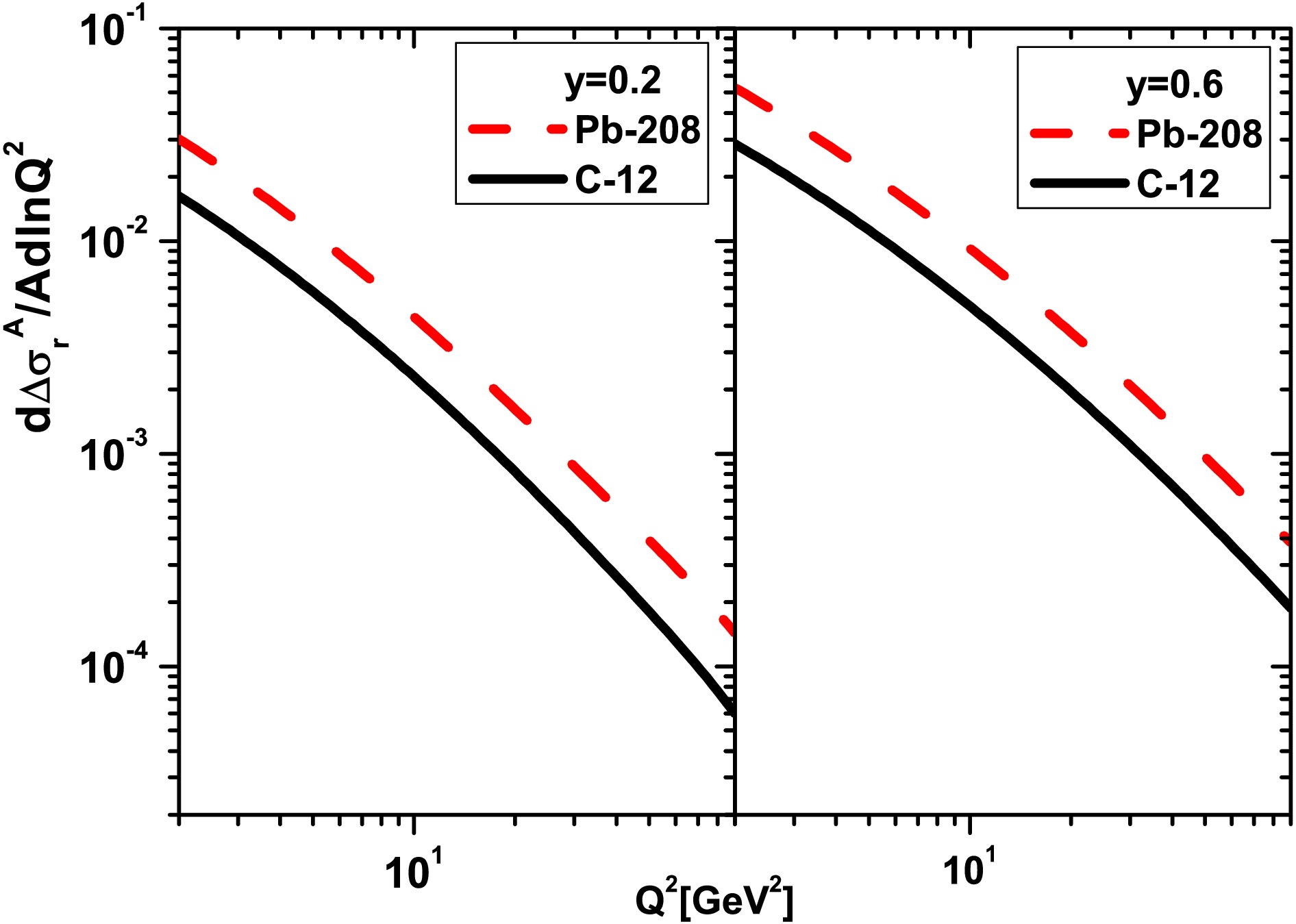
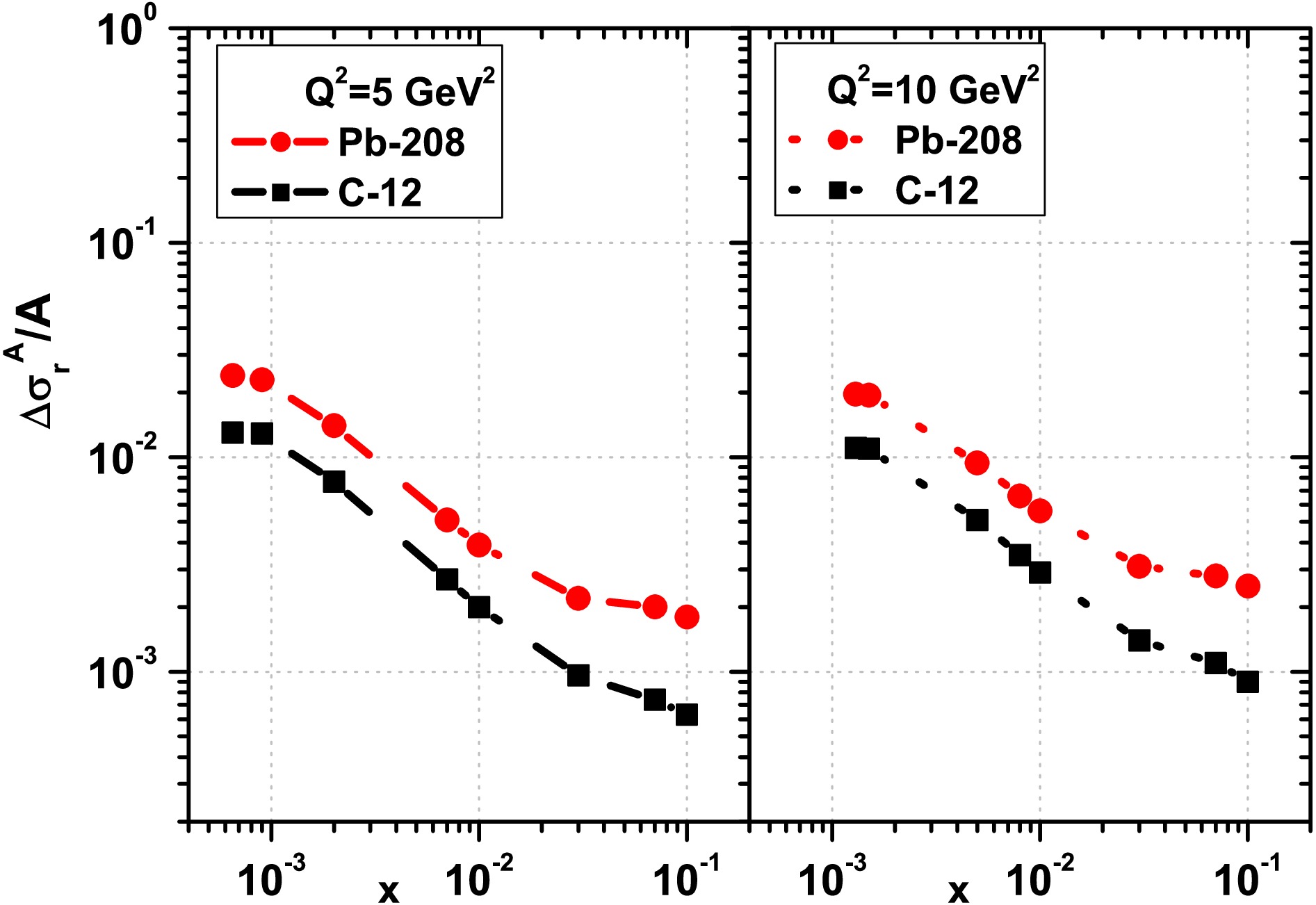
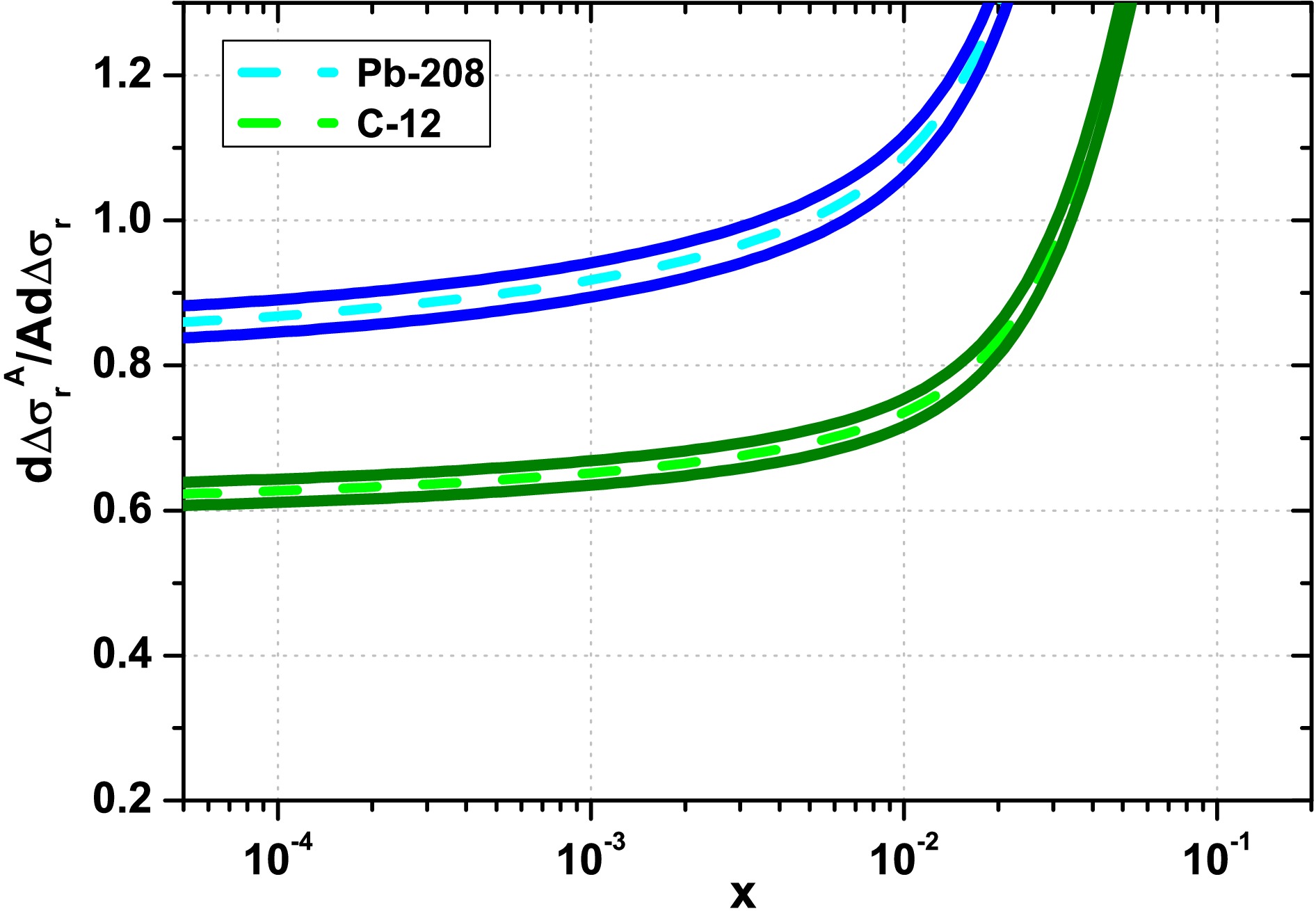
The determination of non-linear corrections to the nuclear distribution functions due to the HIJING parameterization within the framework of perturbative QCD, specifically the GLR-MQ equations, is discussed. We analyze the possibility of constraining the non-linear corrections present in the distribution functions using the inclusive observables that will be measured in future electron-ion colliders. The results show that non-linear corrections play an important role in heavy nuclear reduced cross sections at low x and low\begin{document}$ Q^2 $\end{document}
The determination of non-linear corrections to the nuclear distribution functions due to the HIJING parameterization within the framework of perturbative QCD, specifically the GLR-MQ equations, is discussed. We analyze the possibility of constraining the non-linear corrections present in the distribution functions using the inclusive observables that will be measured in future electron-ion colliders. The results show that non-linear corrections play an important role in heavy nuclear reduced cross sections at low x and low
2026, 50(2): 023105. doi: 10.1088/1674-1137/ae24e6
Abstract:
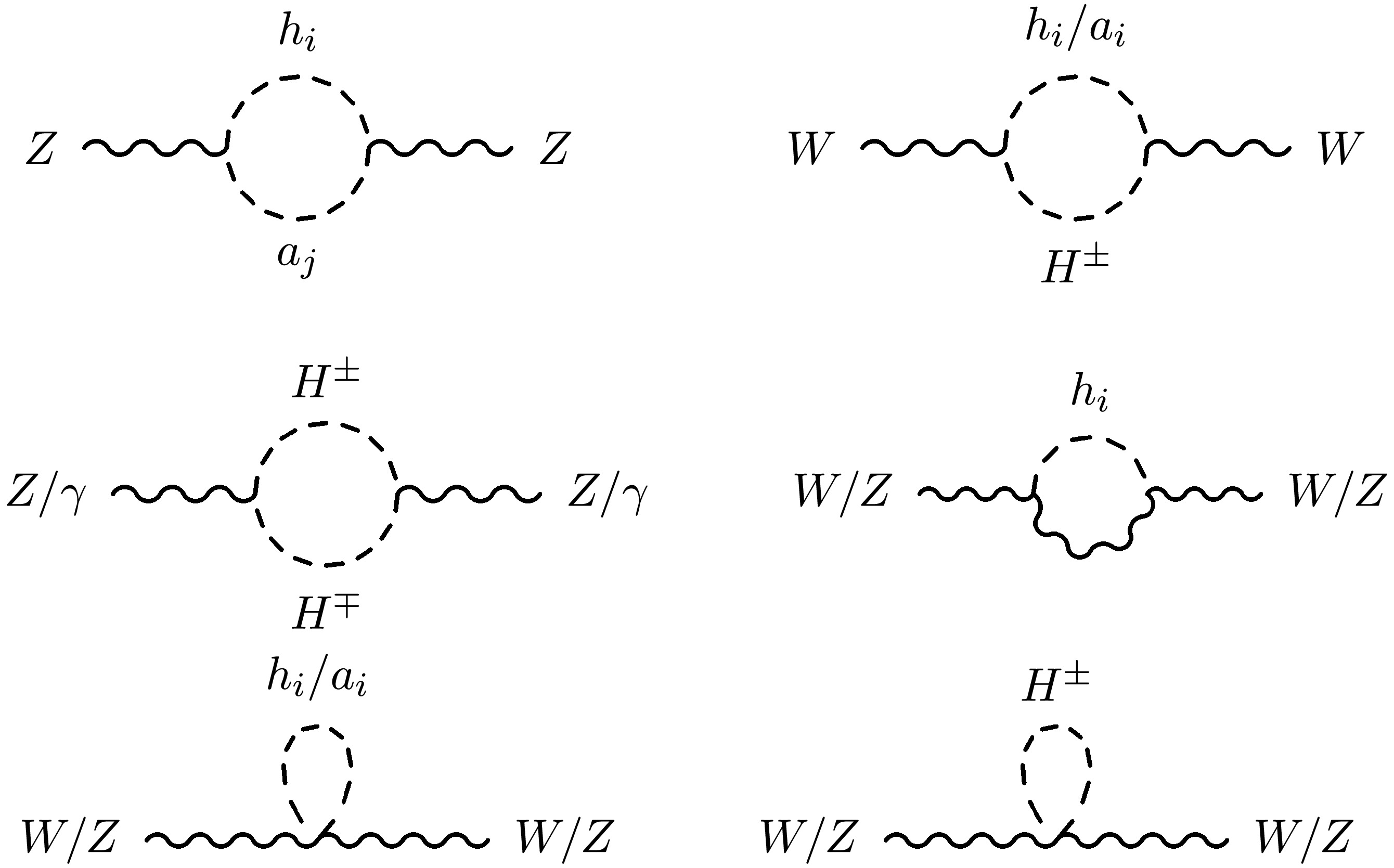
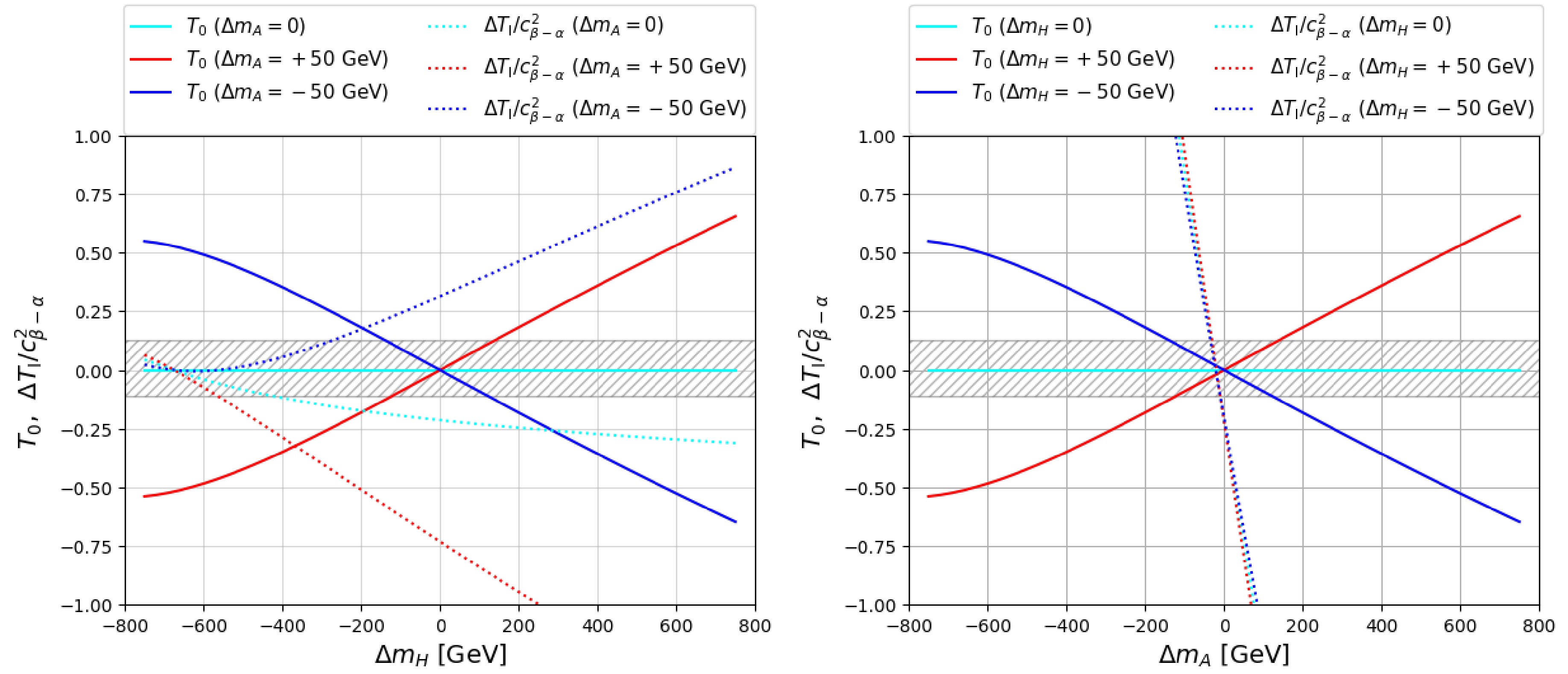
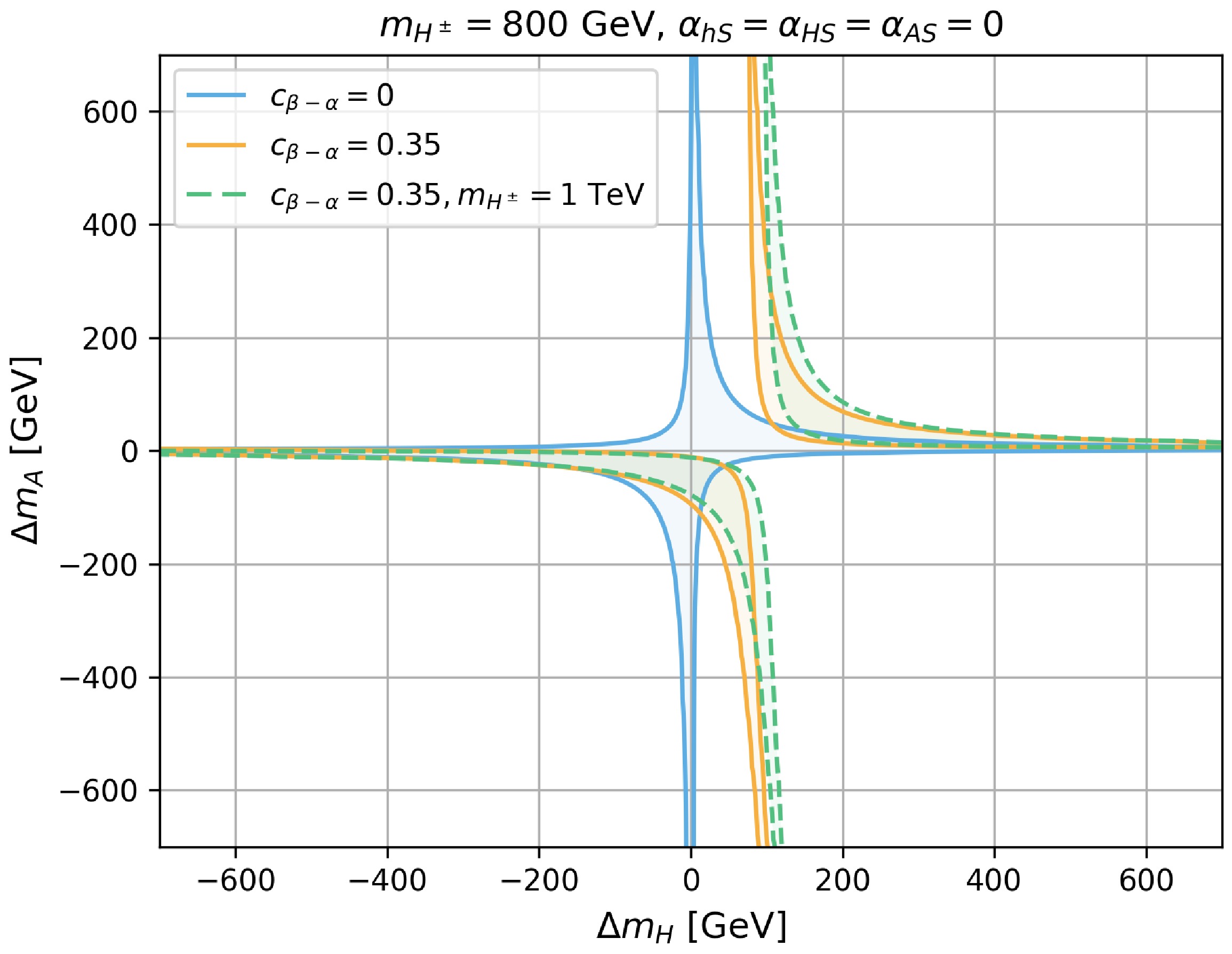
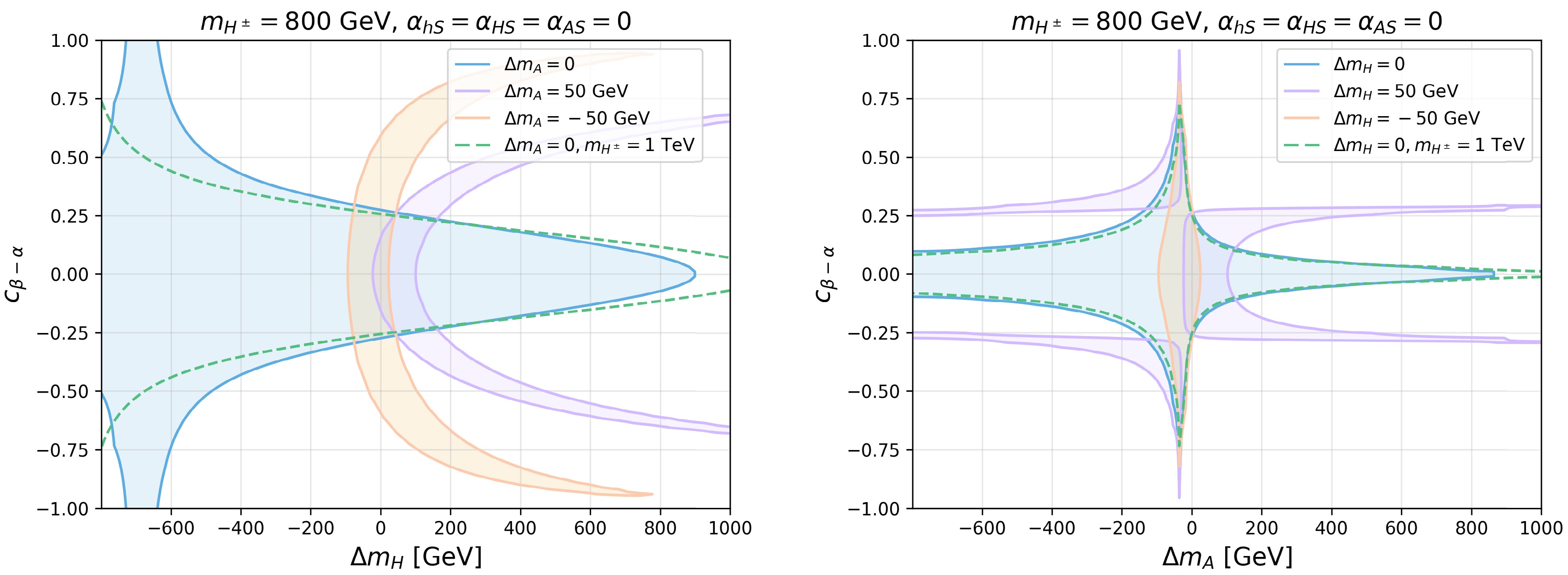
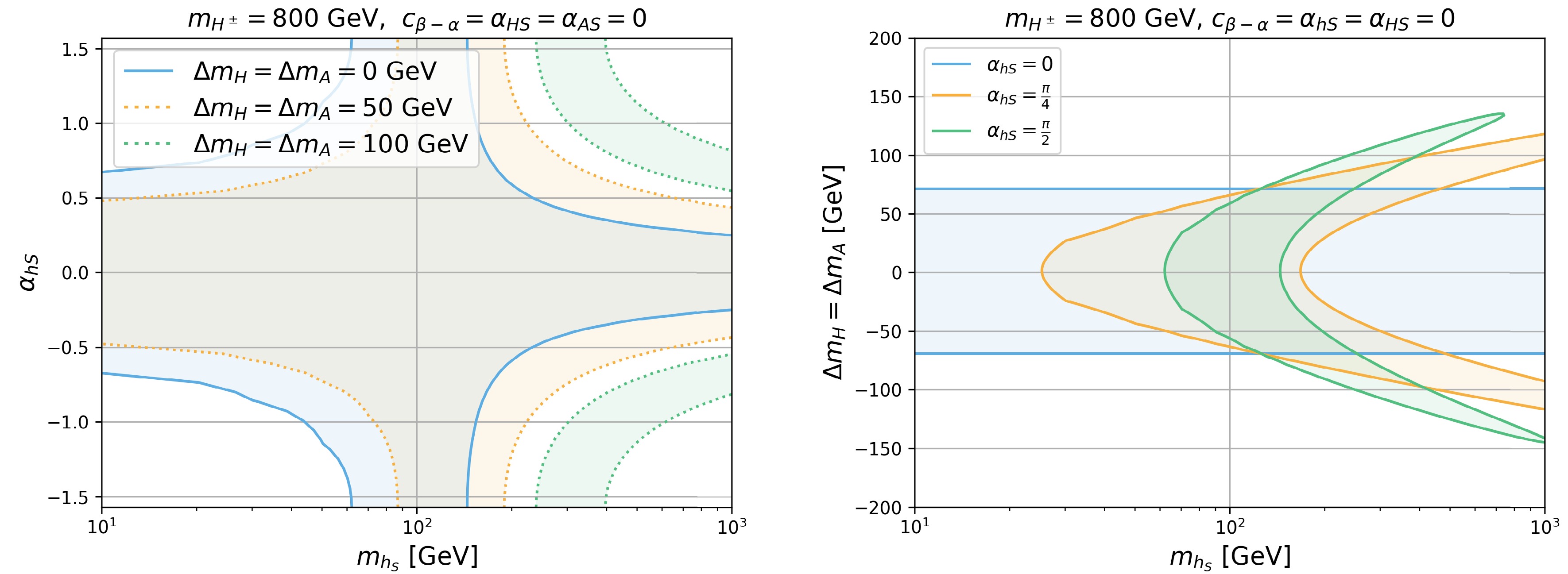
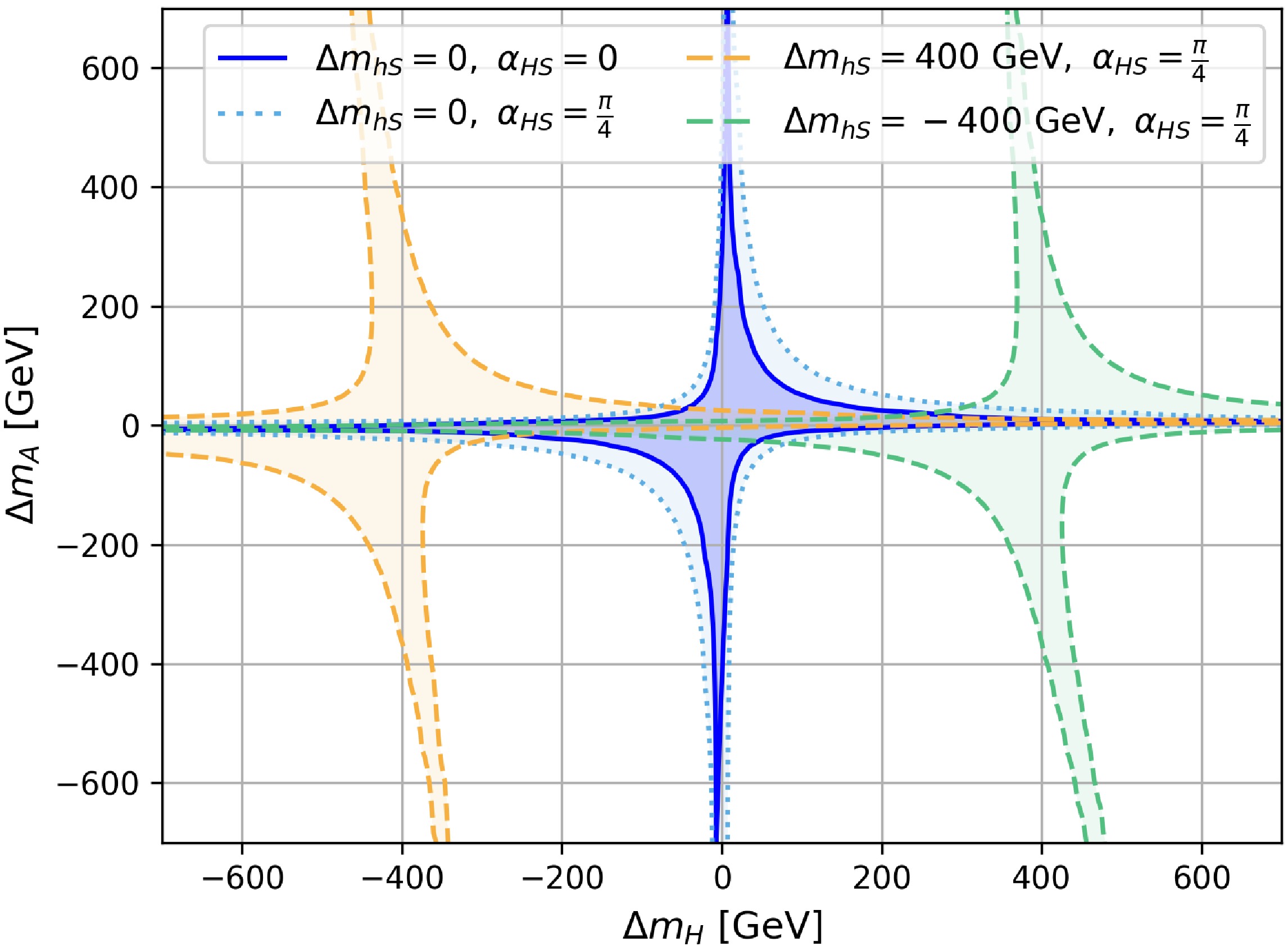
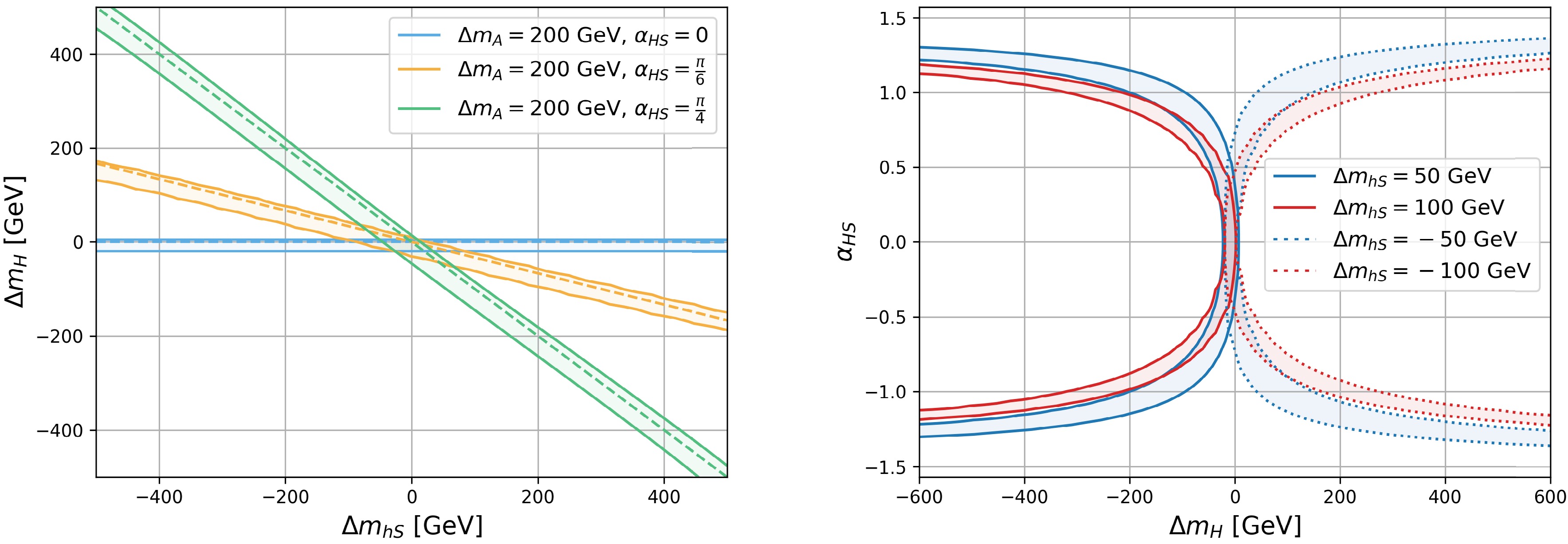
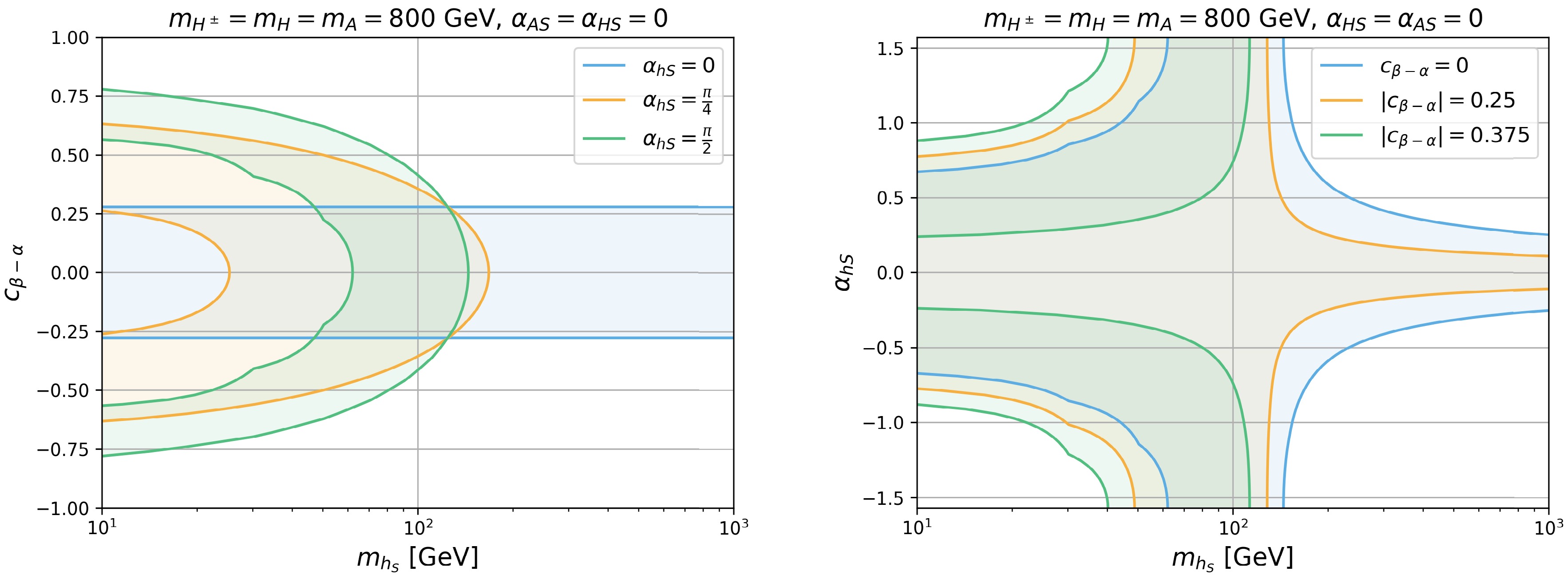
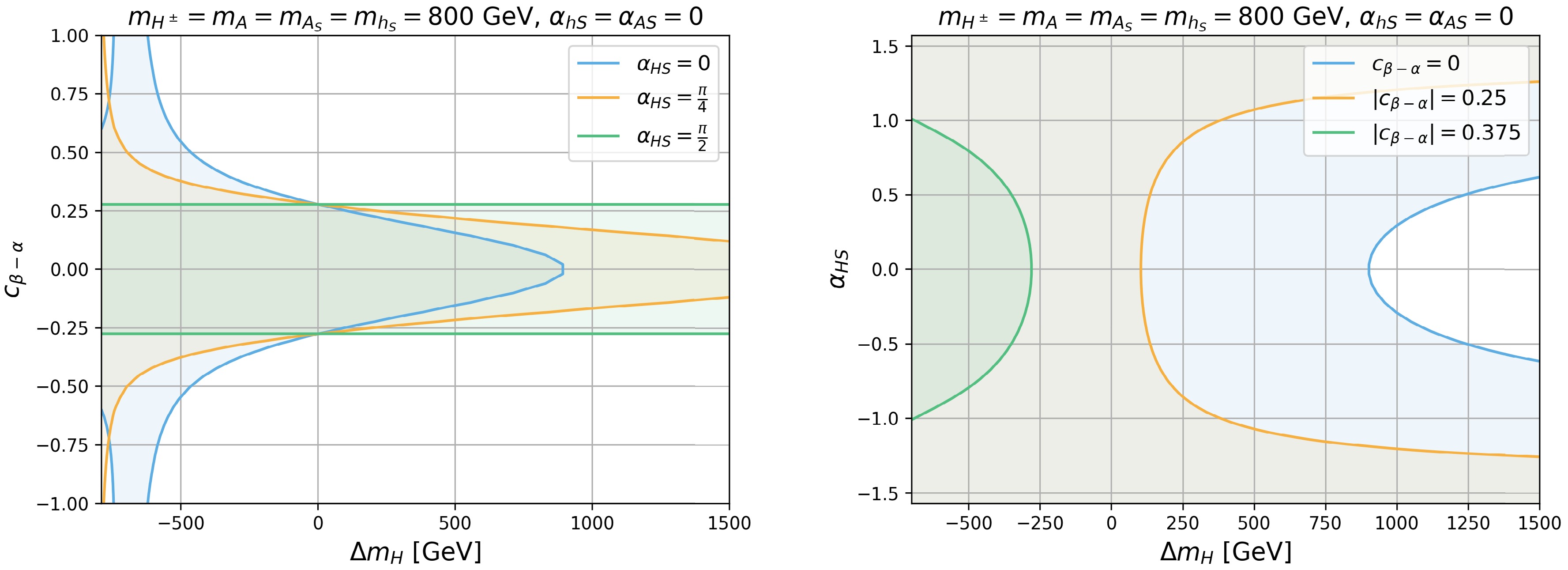
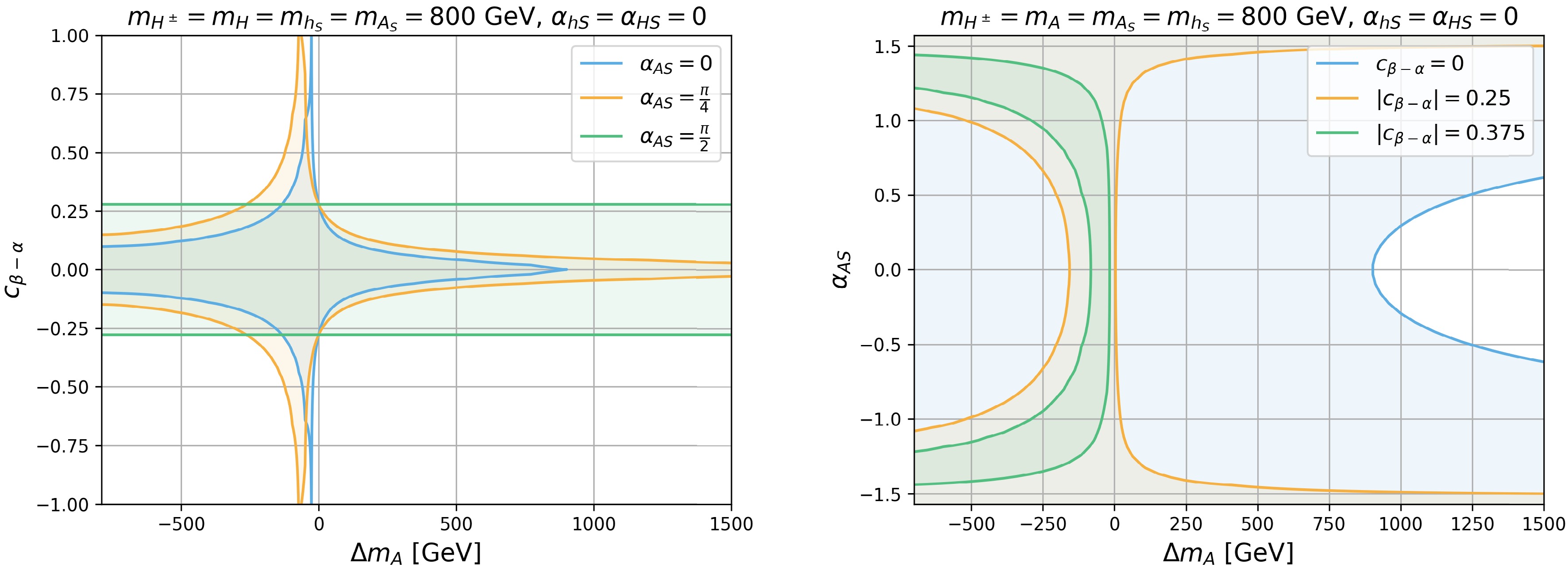
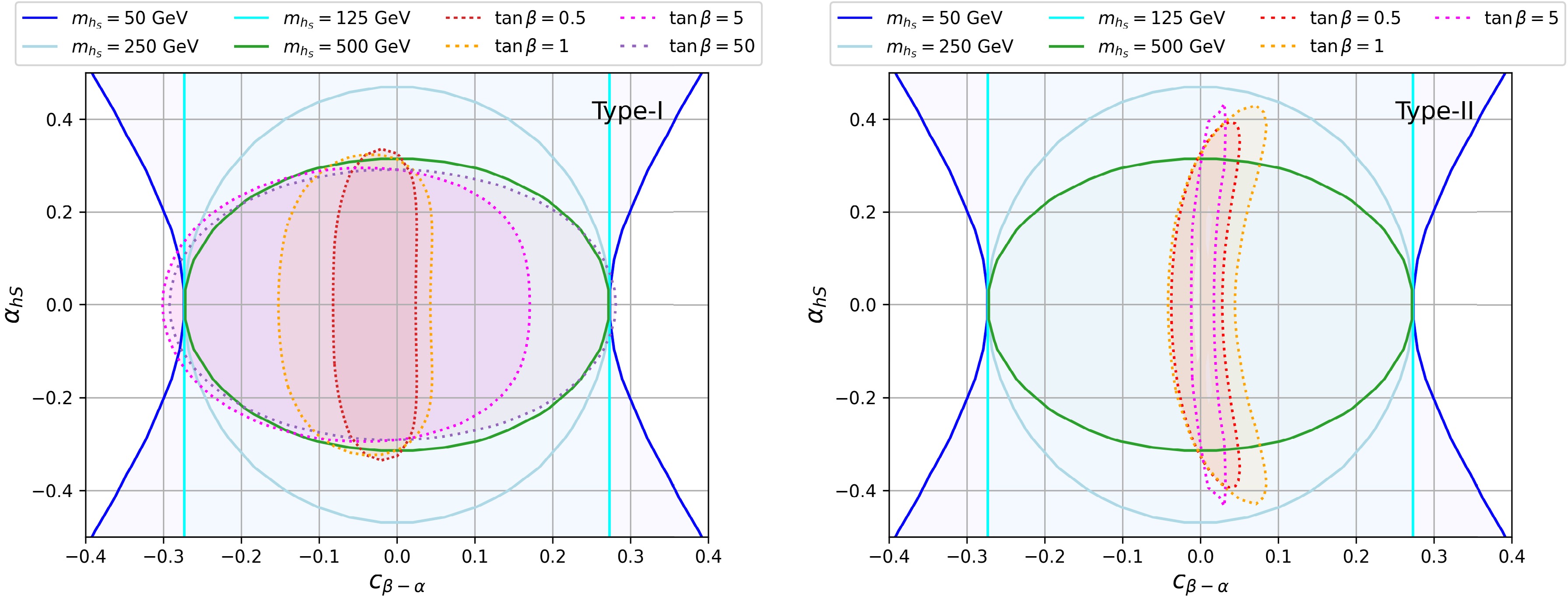
The 2HDM+S is the singlet extension of the two-Higgs-doublet model (2HDM). The singlet field and its mixing with the 2HDM Higgs sector lead to new contributions to the electroweak precision observables, in particular, the oblique parameters. In this study, we performed a systematic investigation of the impacts of each mixing angle on the oblique parameters. We adopted the mixing angles and physical Higgs masses as our parameters, which allow a mapping when a specific symmetry structure of the Higgs potential and various theoretical considerations are taken into account. We identified five benchmark cases, where at most one mixing angle was nonzero, and analyzed the 95% C.L. allowed parameter space using the oblique parameters. In the alignment limit of the 2HDM, we find that, other than the usual mass relations of\begin{document}$m_H\sim m_{H^\pm}$\end{document} \begin{document}$m_A\sim m_{H^\pm}$\end{document} \begin{document}$c^2_{\alpha_{HS}} m_{H} + s^2_{\alpha_{HS}}m_{h_S} = m_{H^\pm}$\end{document} \begin{document}$c^2_{\alpha_{AS}} m_{A} + s^2_{\alpha_{AS}}m_{A_S} = m_{H^\pm}$\end{document}
The 2HDM+S is the singlet extension of the two-Higgs-doublet model (2HDM). The singlet field and its mixing with the 2HDM Higgs sector lead to new contributions to the electroweak precision observables, in particular, the oblique parameters. In this study, we performed a systematic investigation of the impacts of each mixing angle on the oblique parameters. We adopted the mixing angles and physical Higgs masses as our parameters, which allow a mapping when a specific symmetry structure of the Higgs potential and various theoretical considerations are taken into account. We identified five benchmark cases, where at most one mixing angle was nonzero, and analyzed the 95% C.L. allowed parameter space using the oblique parameters. In the alignment limit of the 2HDM, we find that, other than the usual mass relations of
2026, 50(2): 023106. doi: 10.1088/1674-1137/ae1197
Abstract:
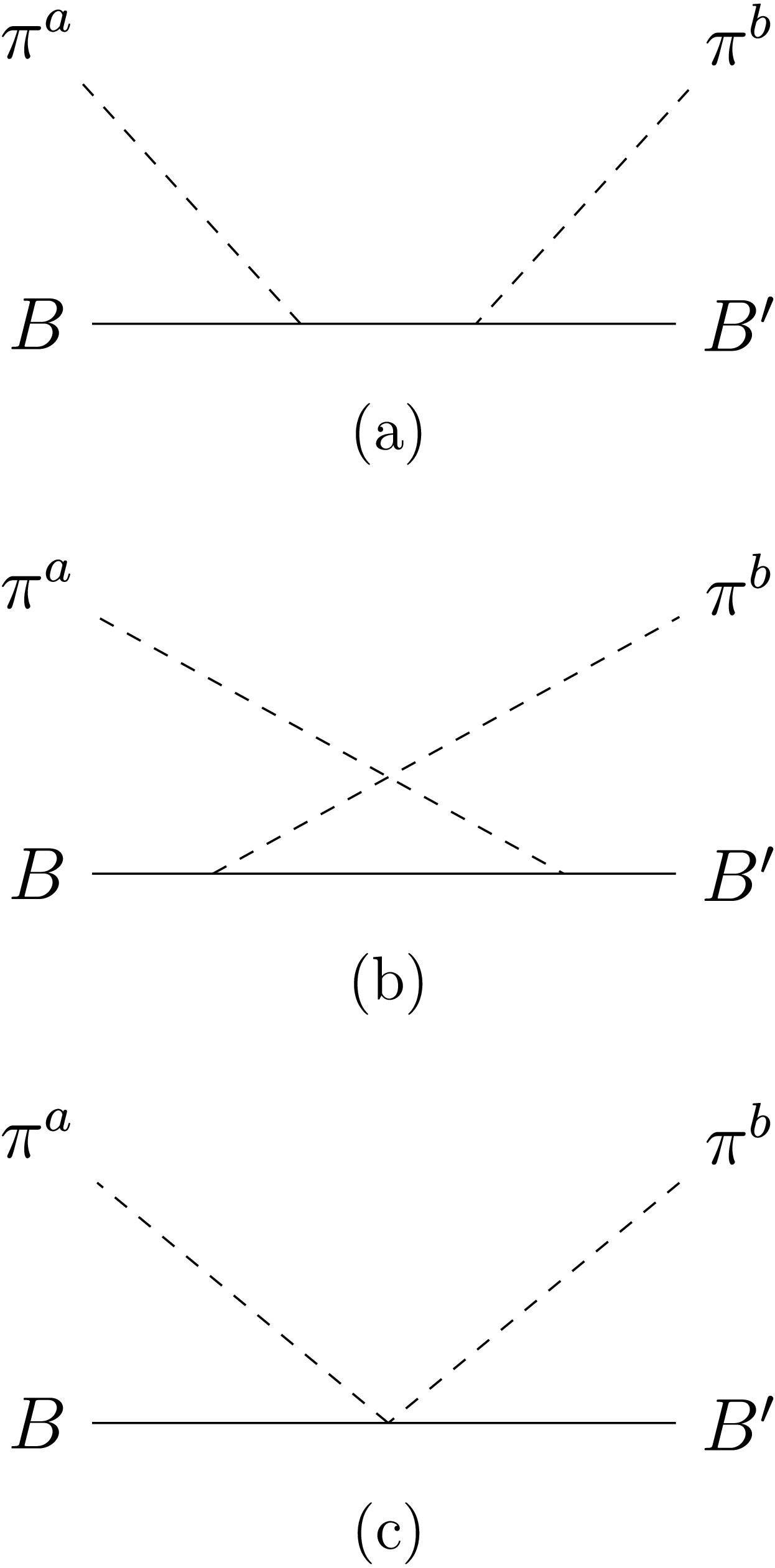
An SU(3) flavor projection operator technique is implemented to construct the baryon-meson scattering amplitude within the framework of the\begin{document}$1/N_c$\end{document} \begin{document}$N_c$\end{document} \begin{document}${\cal{O}}(1/N_c^2)$\end{document} \begin{document}$N\pi\to N\pi$\end{document}
An SU(3) flavor projection operator technique is implemented to construct the baryon-meson scattering amplitude within the framework of the
2026, 50(2): 023107. doi: 10.1088/1674-1137/ae1186
Abstract:
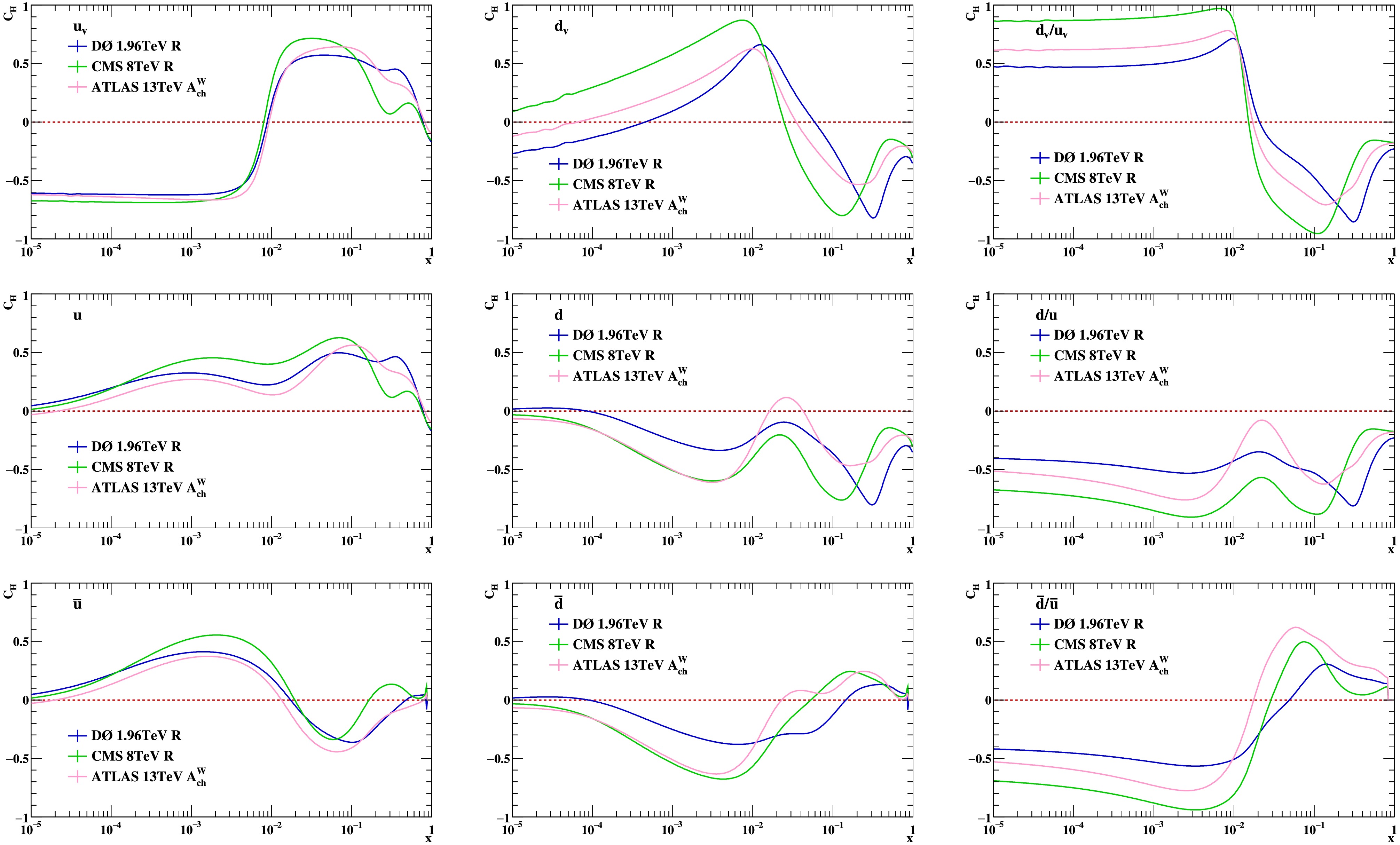
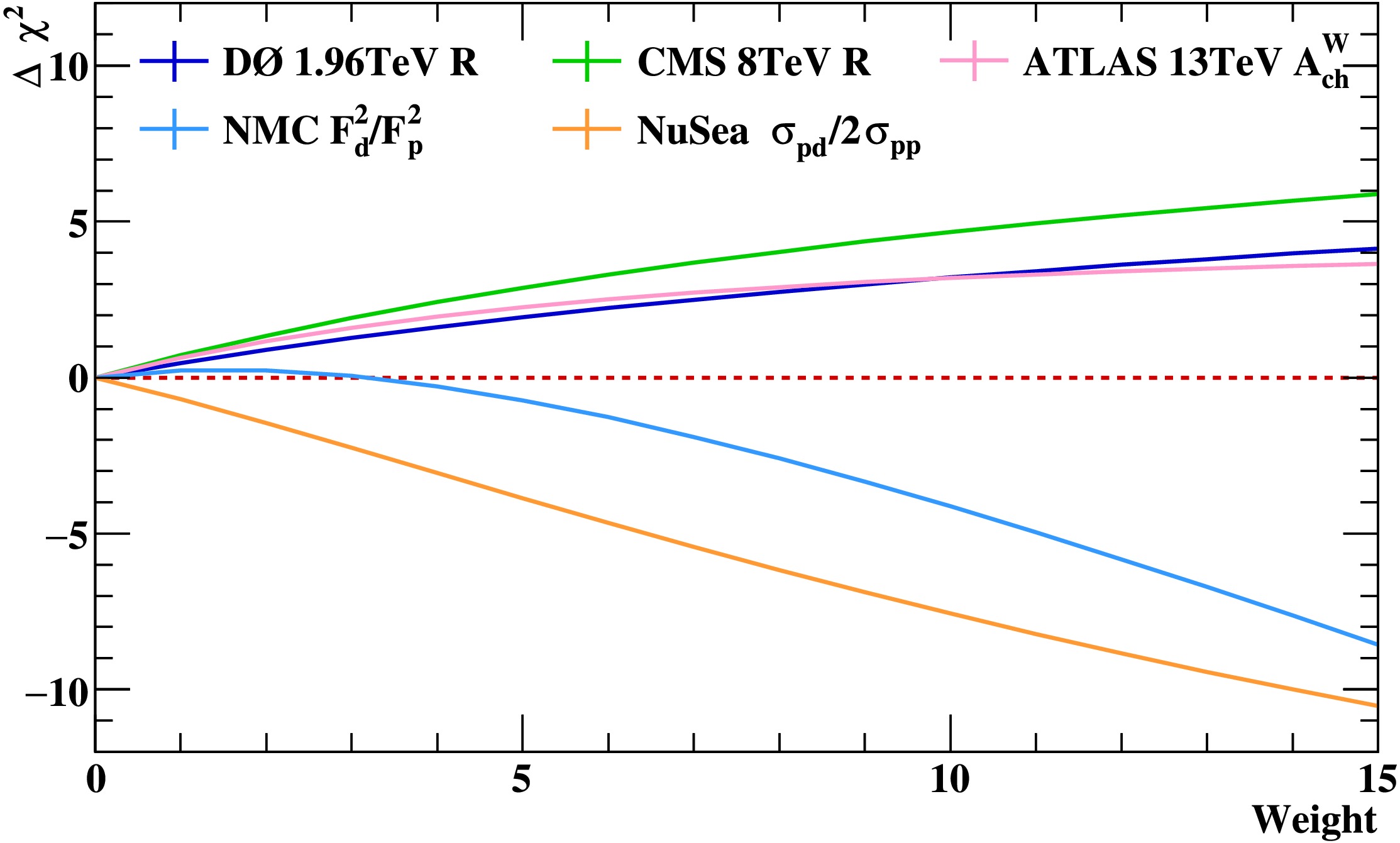
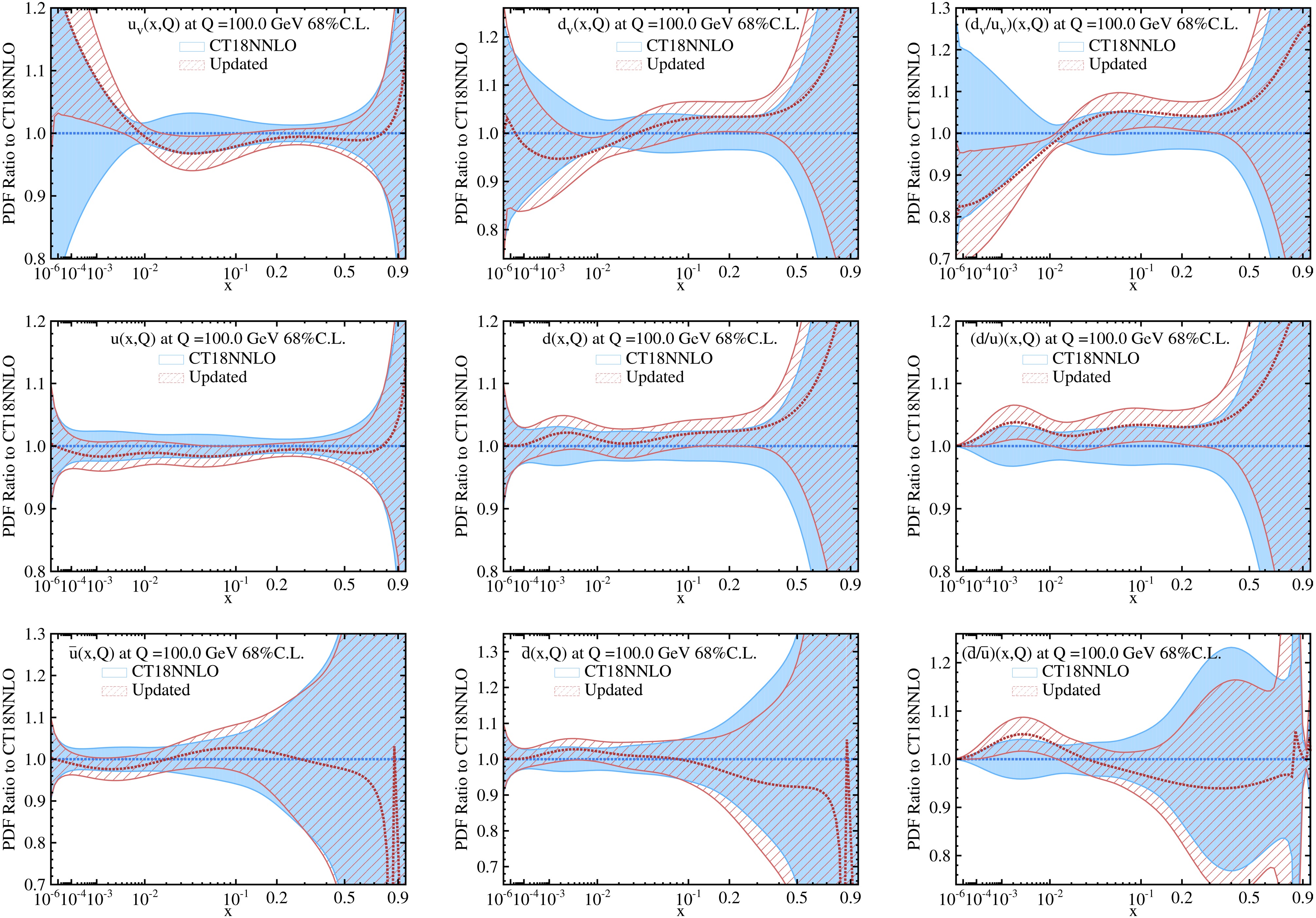
Recently, a series of new measurements with both the neutral and charge current Drell–Yan processes have been performed at hadron colliders, revealing deviations from the predictions of the current parton distribution functions (PDFs). In this article, the impact of these new measurements is studied by using their results to update the PDFs. Although these new measurements correspond to different boson propagators and colliding energies, they are found to have a similar impact to the light quark parton distributions with a momentum fraction x of approximately 0.1. The deviations are consistent with each other and favor a larger valence\begin{document}$ d_v/u_v $\end{document}
Recently, a series of new measurements with both the neutral and charge current Drell–Yan processes have been performed at hadron colliders, revealing deviations from the predictions of the current parton distribution functions (PDFs). In this article, the impact of these new measurements is studied by using their results to update the PDFs. Although these new measurements correspond to different boson propagators and colliding energies, they are found to have a similar impact to the light quark parton distributions with a momentum fraction x of approximately 0.1. The deviations are consistent with each other and favor a larger valence

2026, 50(2): 023108. doi: 10.1088/1674-1137/ae15ee
Abstract:
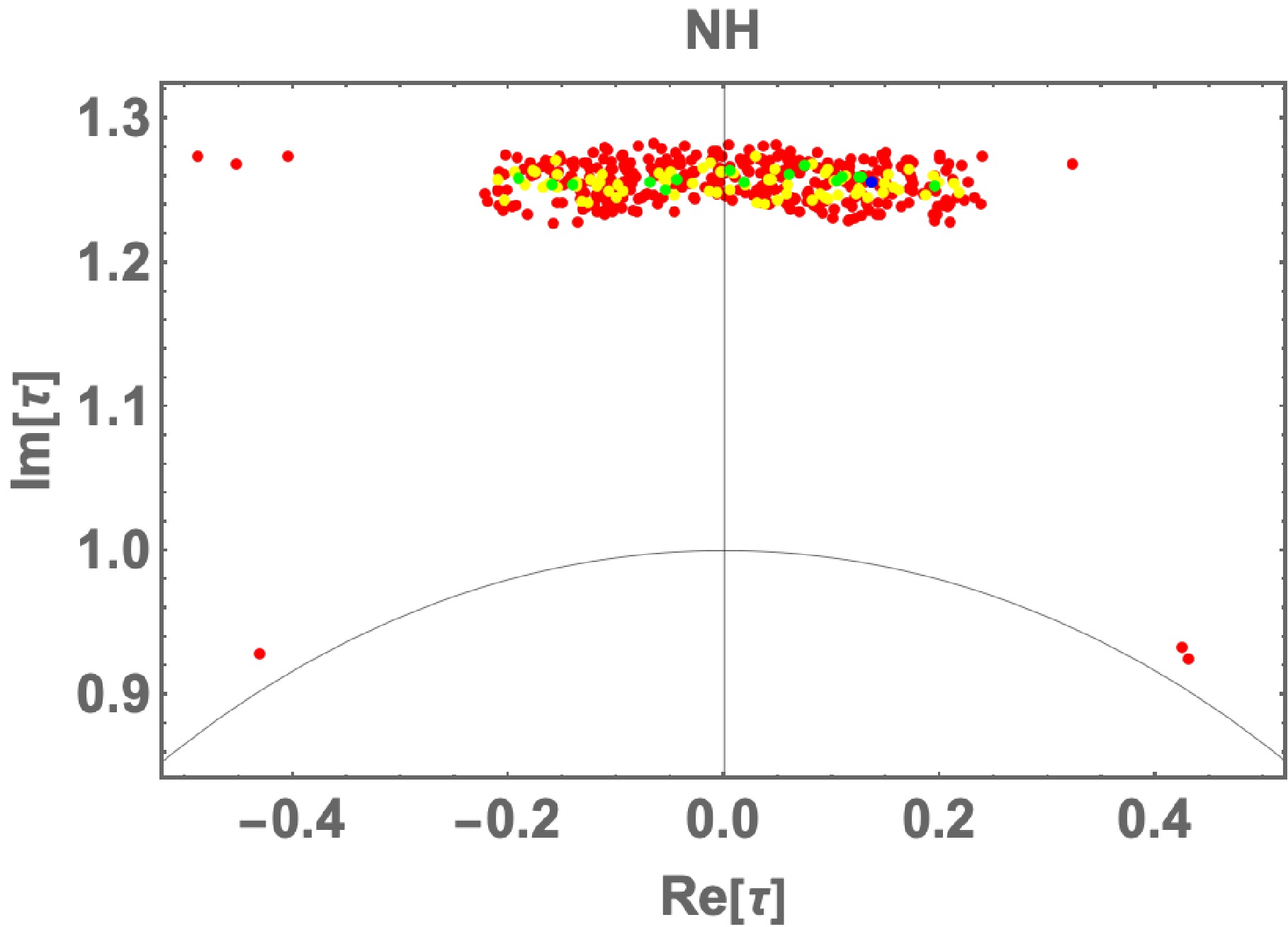
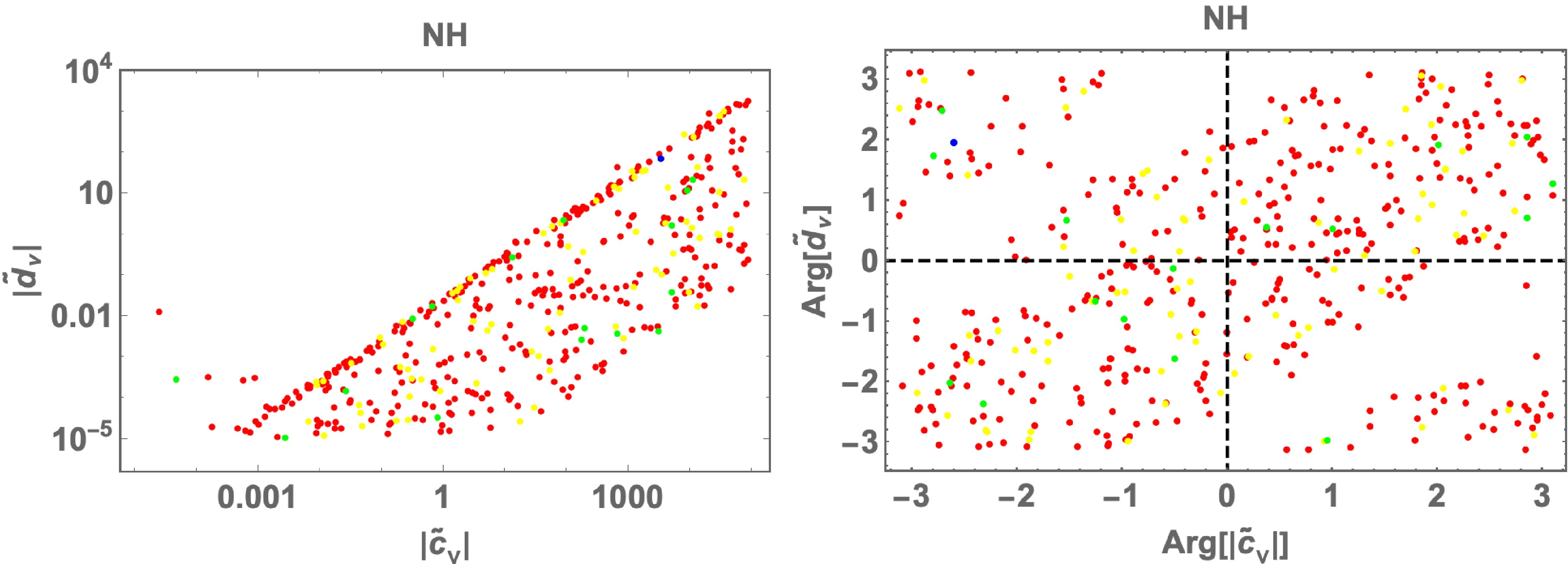
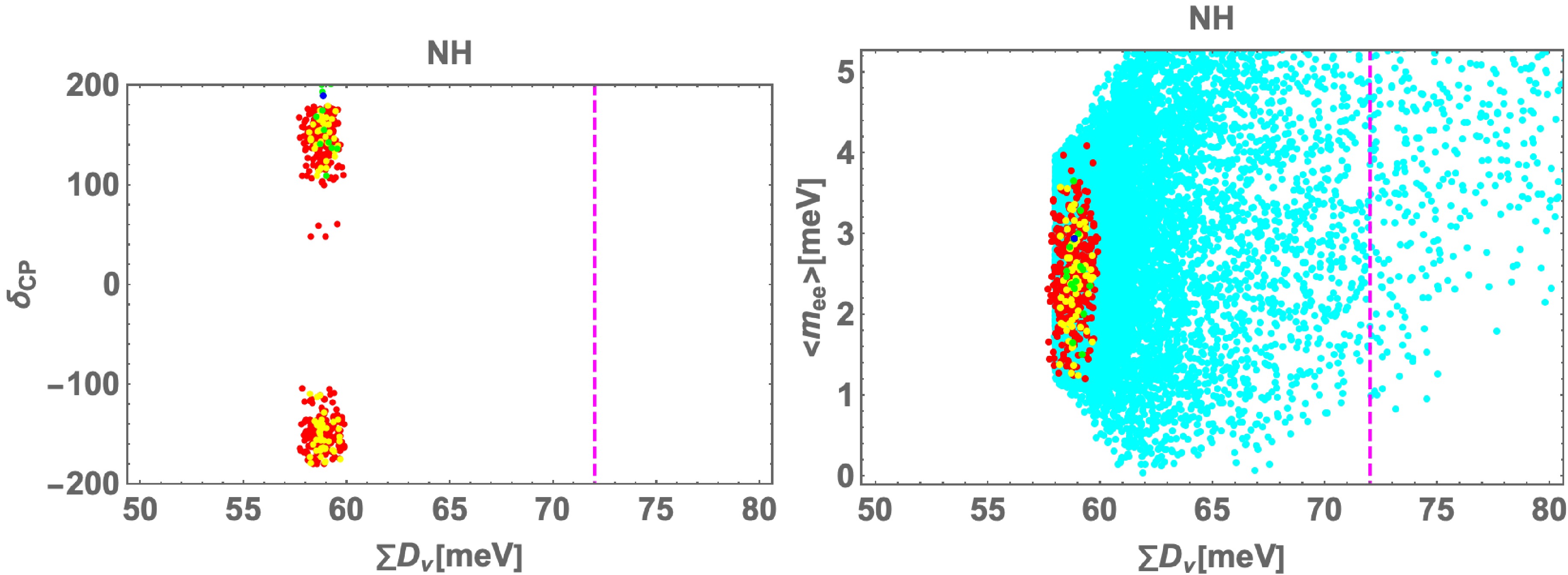
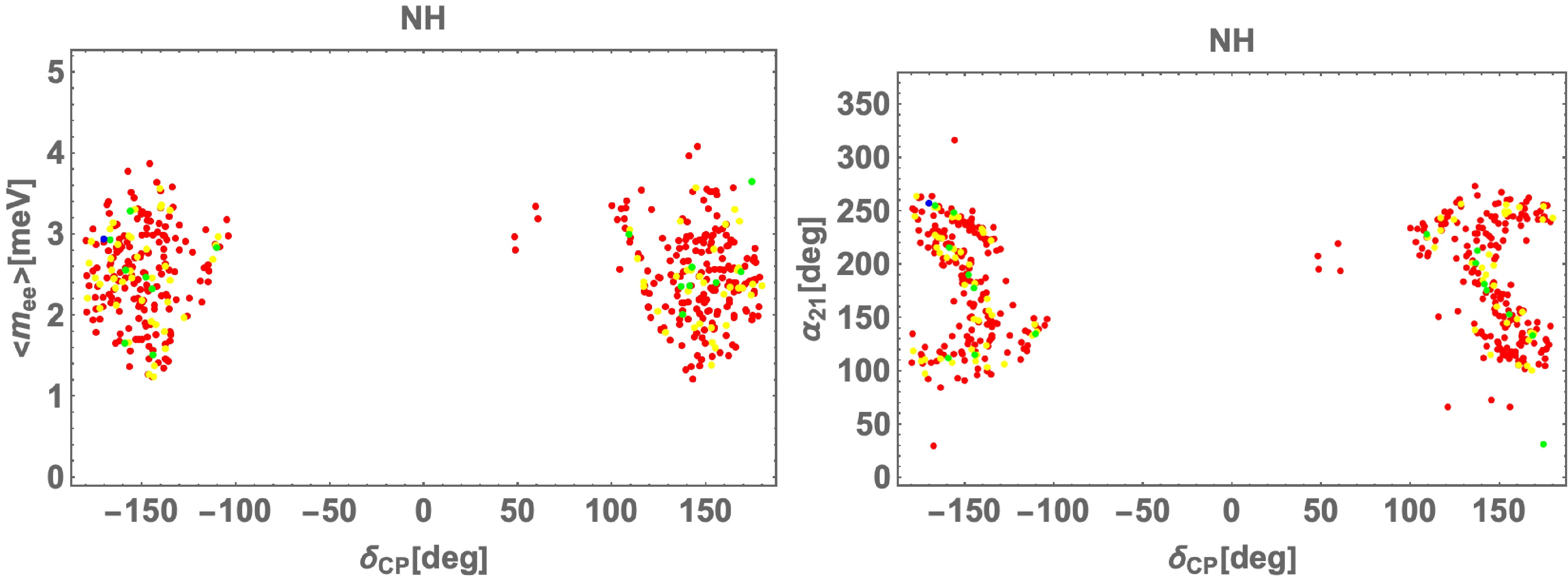
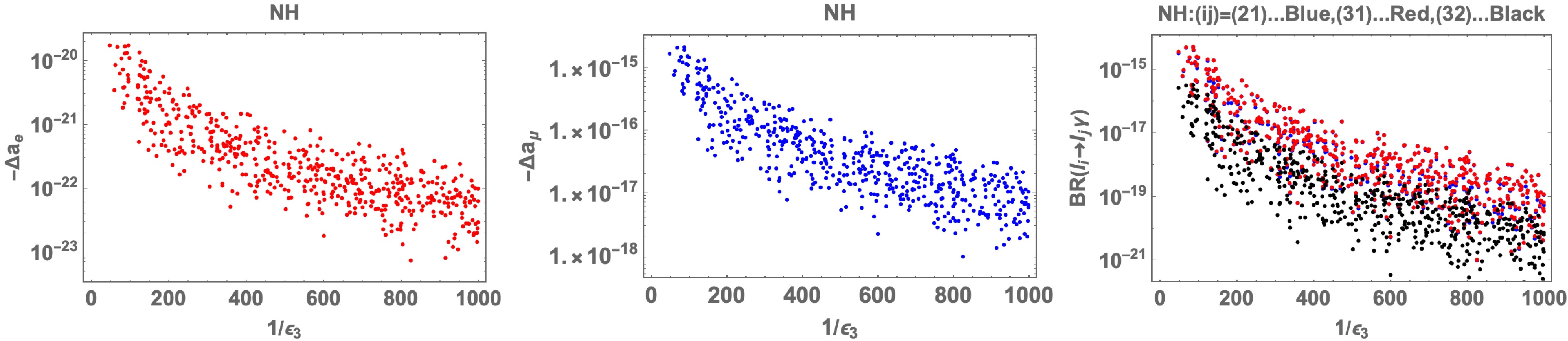
We study a three-loop induced neutrino mass scenario from a non-holomorphic modular A4 flavor symmetry and obtain the minimum scenario leading to predictions of the lepton masses, mixing angles, and Dirac and Majorana phases, which are shown through chi square analyses. In addition, we discuss the lepton flavor violations, muon anomalous magnetic moment, lepton universality, and relic density of the dark matter candidate. Moreover, we show that our model can be extended to satisfy the observed relic density of dark matter within the limit of perturbation by adding one singlet scalar boson without changing predictions in the neutrino sector.
We study a three-loop induced neutrino mass scenario from a non-holomorphic modular A4 flavor symmetry and obtain the minimum scenario leading to predictions of the lepton masses, mixing angles, and Dirac and Majorana phases, which are shown through chi square analyses. In addition, we discuss the lepton flavor violations, muon anomalous magnetic moment, lepton universality, and relic density of the dark matter candidate. Moreover, we show that our model can be extended to satisfy the observed relic density of dark matter within the limit of perturbation by adding one singlet scalar boson without changing predictions in the neutrino sector.
2026, 50(2): 023109. doi: 10.1088/1674-1137/ae18af
Abstract:
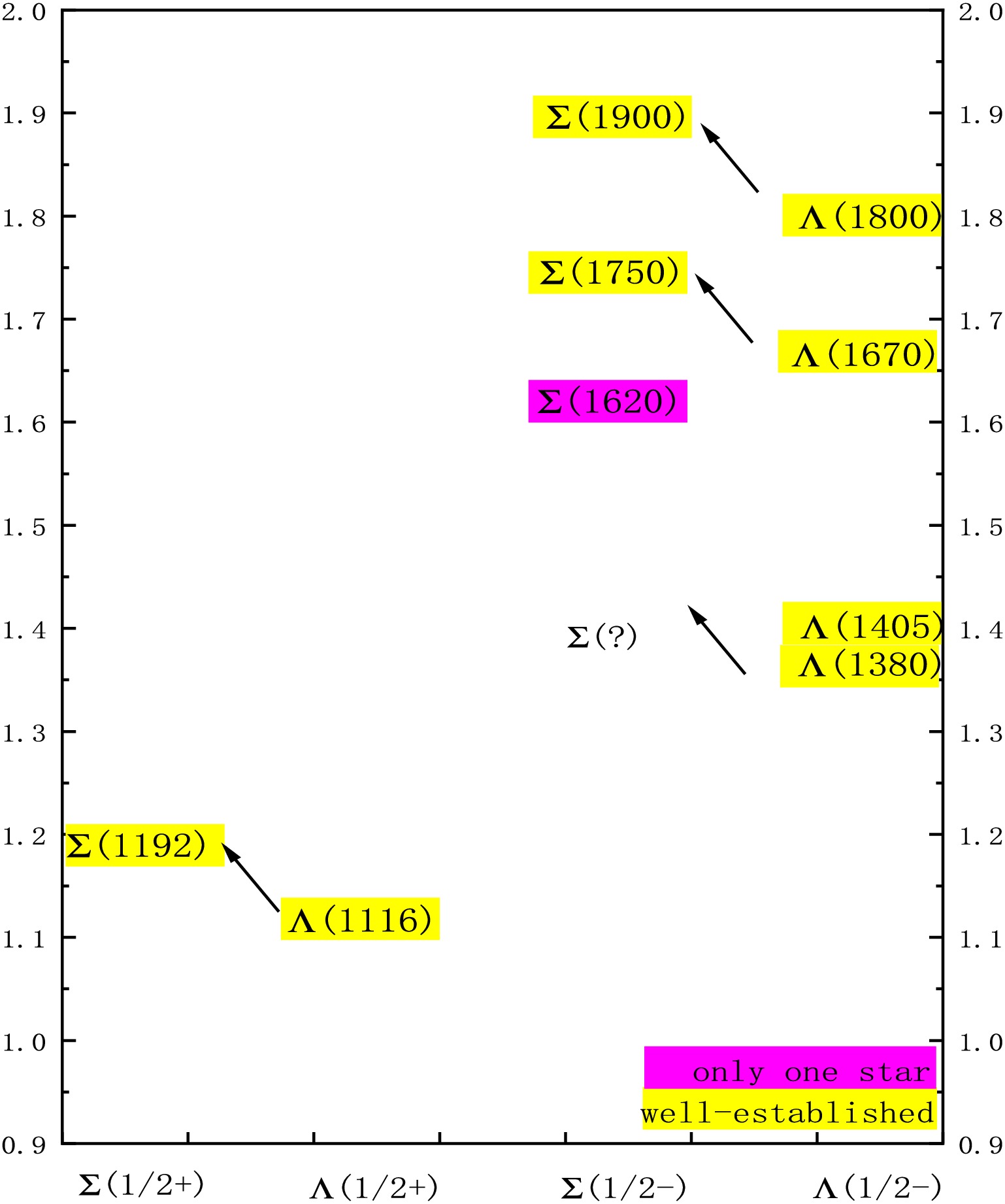
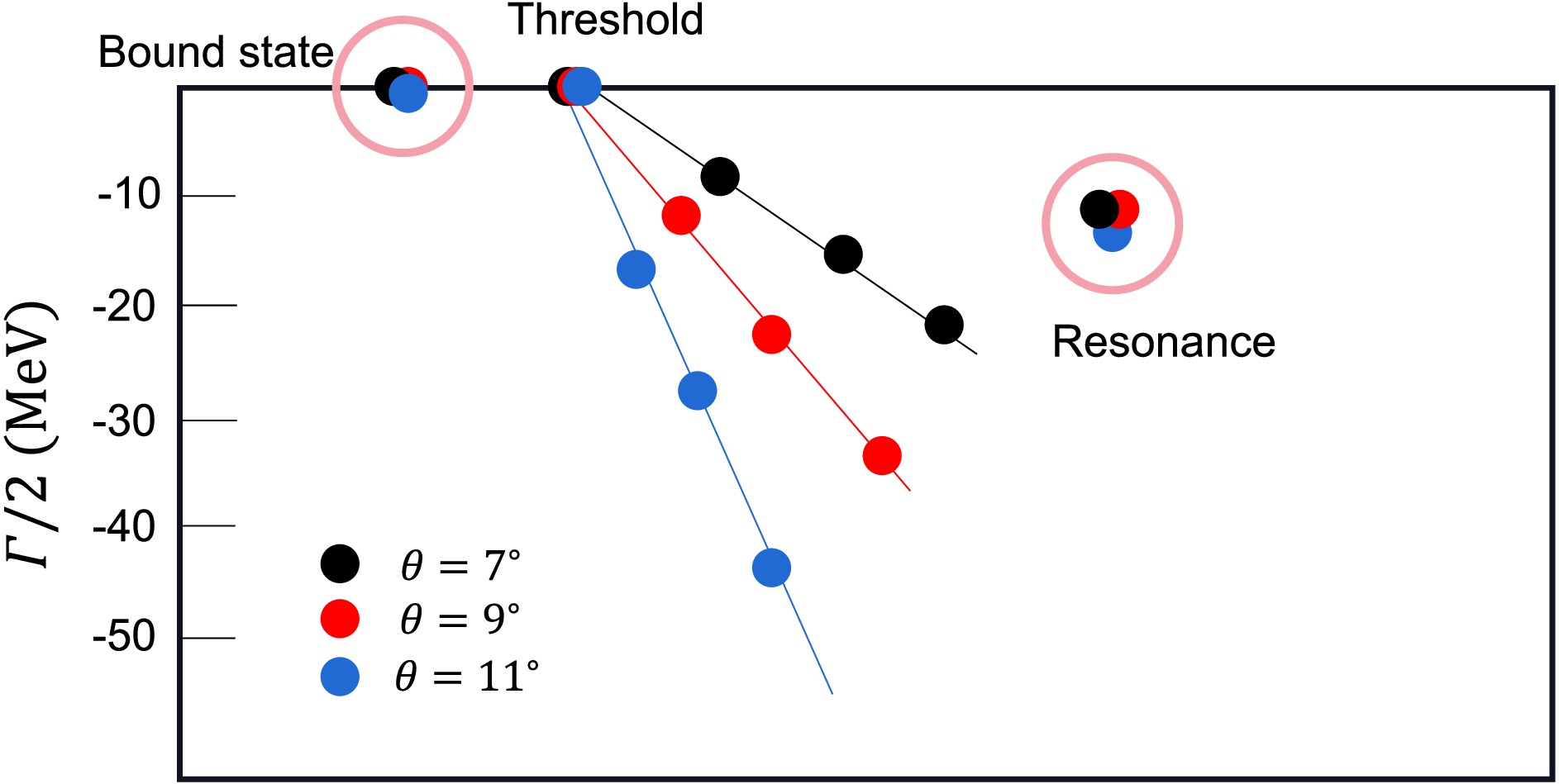
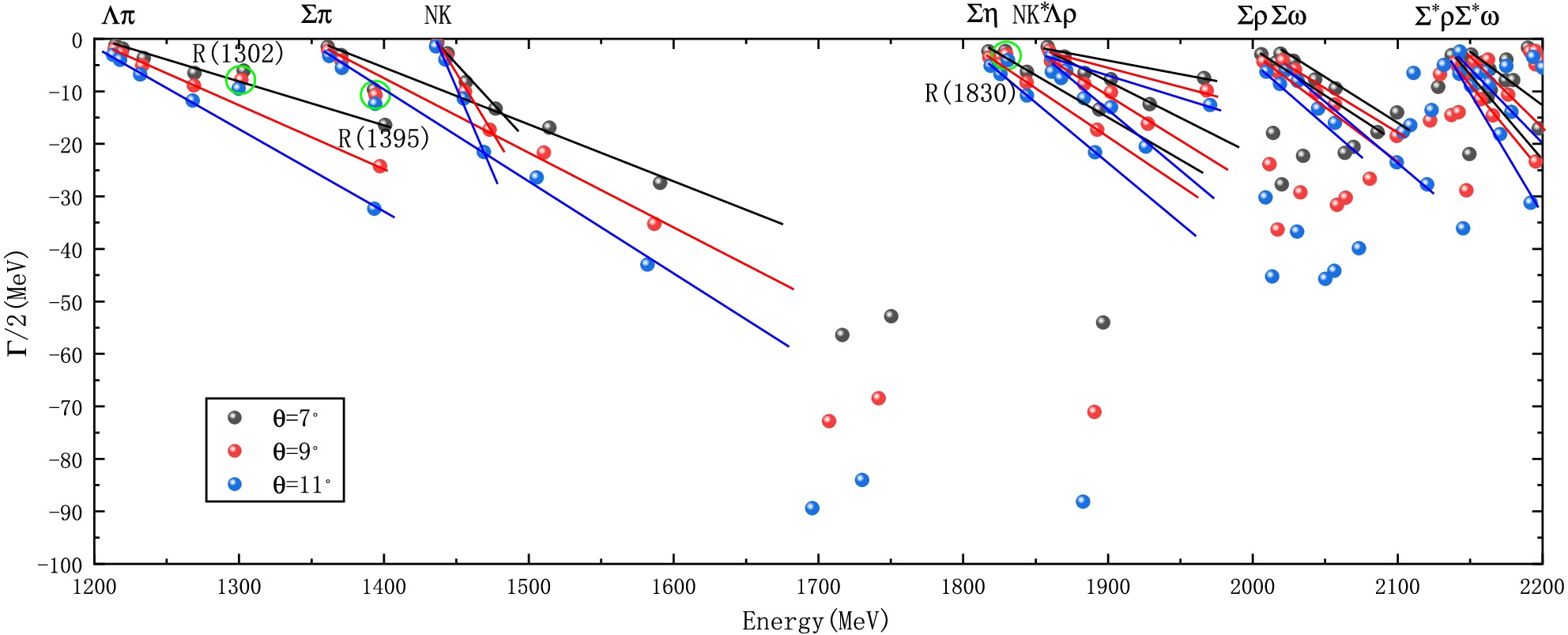
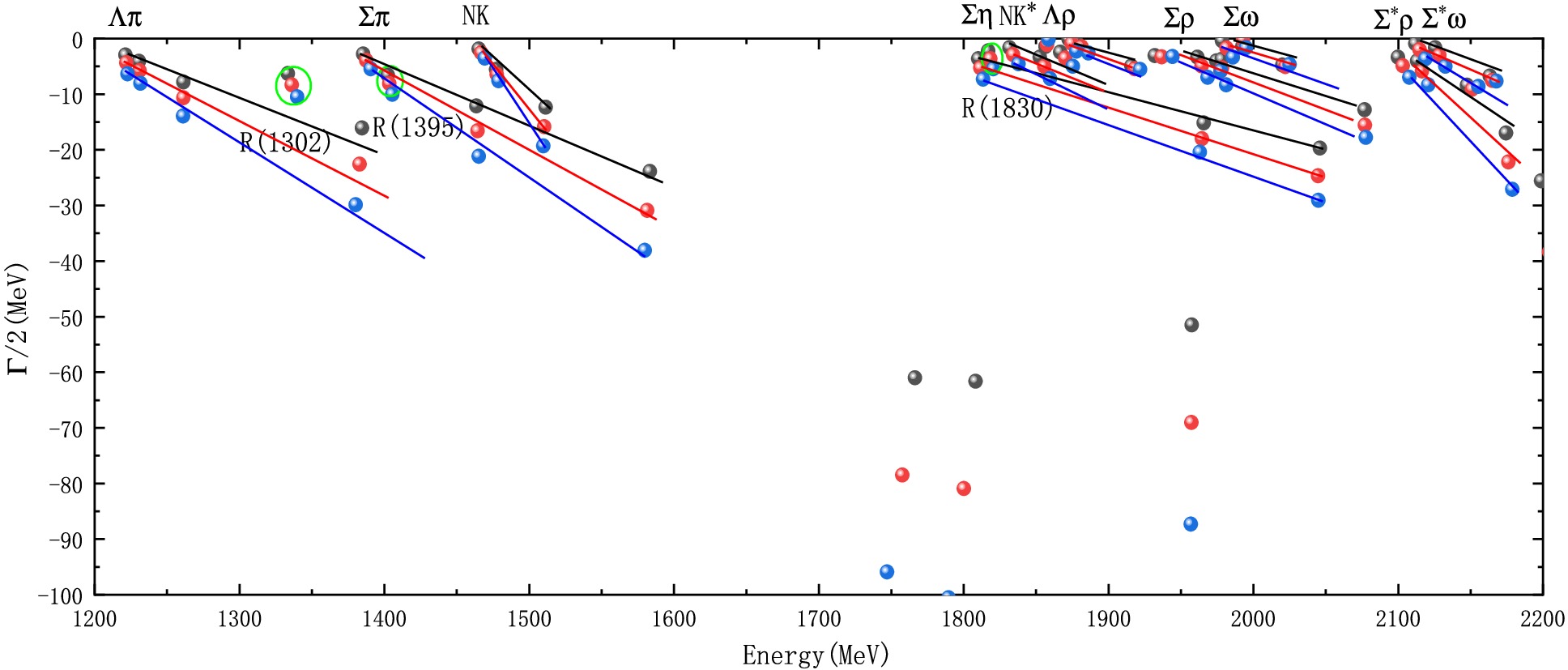
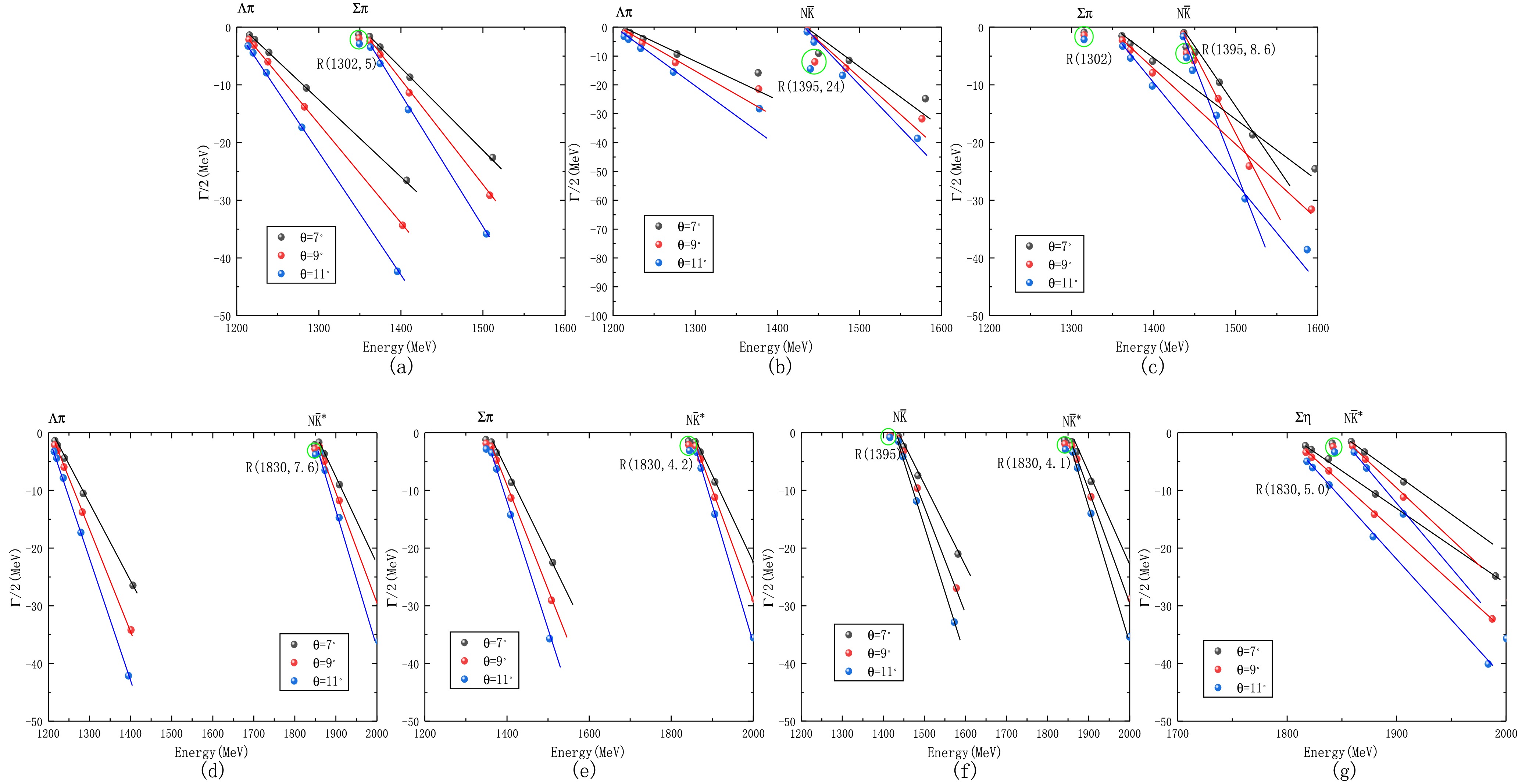
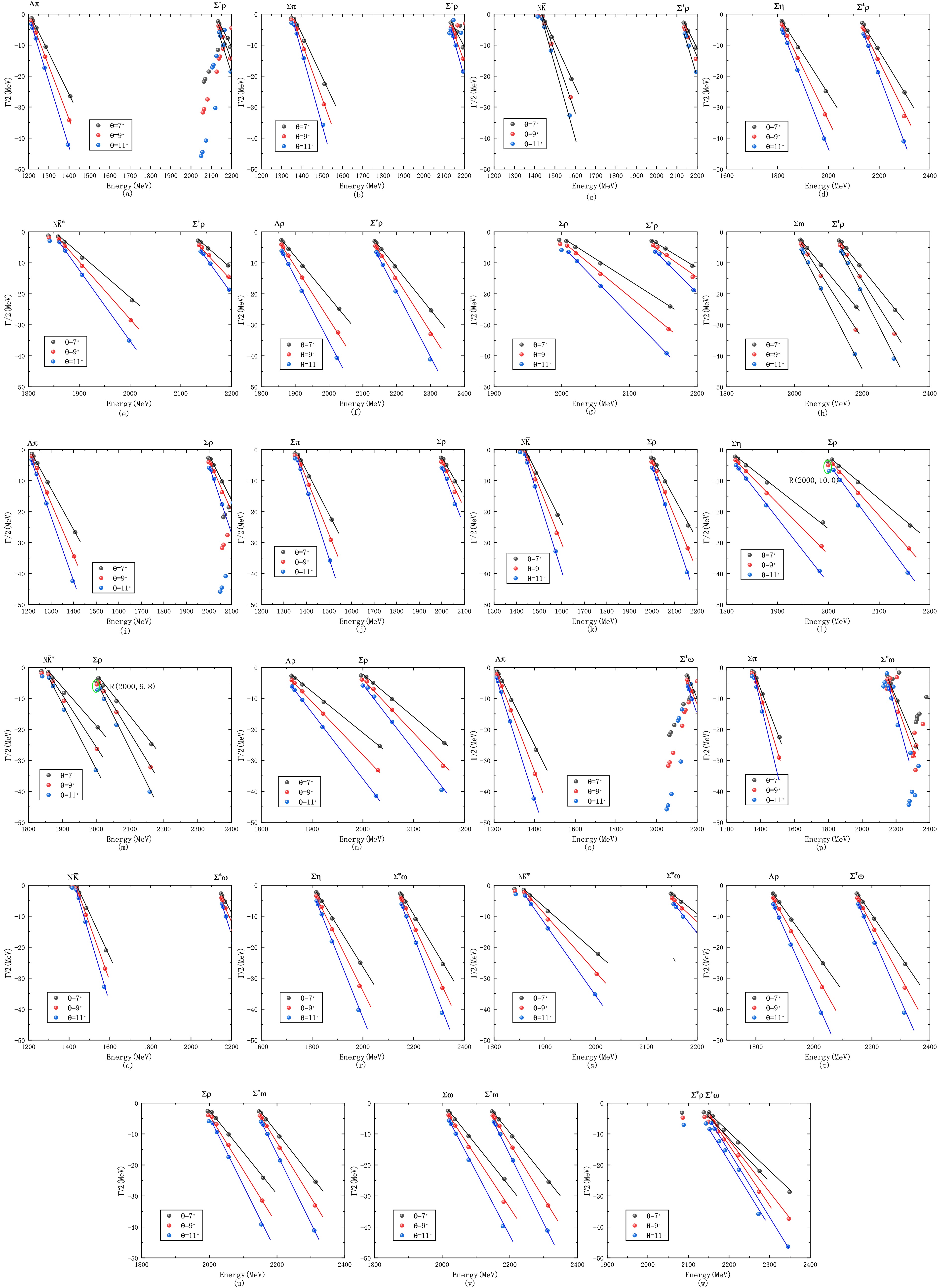
In this work, we investigate the resonance structures in the\begin{document}$ \Sigma(1/2^-) $\end{document} \begin{document}$ \Sigma(1/2^-) $\end{document} \begin{document}$ \Sigma(1750) $\end{document} \begin{document}$ \Sigma(1900) $\end{document} \begin{document}$ \Sigma \pi $\end{document} \begin{document}$ N \bar{K} $\end{document} \begin{document}$ N \bar{K}^{*} $\end{document} \begin{document}$ \Sigma(1/2^-) $\end{document} \begin{document}$ \Sigma \pi $\end{document} \begin{document}$ N \bar{K} $\end{document} \begin{document}$ \Lambda(1380) $\end{document} \begin{document}$ \Lambda(1405) $\end{document} \begin{document}$ \Sigma \pi $\end{document} \begin{document}$ N \bar{K} $\end{document} \begin{document}$ N \bar{K}^{*} $\end{document} \begin{document}$ \Sigma(1750) $\end{document} \begin{document}$ \Sigma(1900) $\end{document} \begin{document}$ N \bar{K}^{*} $\end{document} \begin{document}$ \Sigma(1750) $\end{document} \begin{document}$ \Sigma(1900) $\end{document} \begin{document}$ \Sigma \pi $\end{document} \begin{document}$ N \bar{K} $\end{document} \begin{document}$ \Lambda \pi $\end{document} \begin{document}$ \Sigma(1/2^-) $\end{document} \begin{document}$ \Lambda \pi $\end{document}
In this work, we investigate the resonance structures in the
2026, 50(2): 023110. doi: 10.1088/1674-1137/ae1373
Abstract:
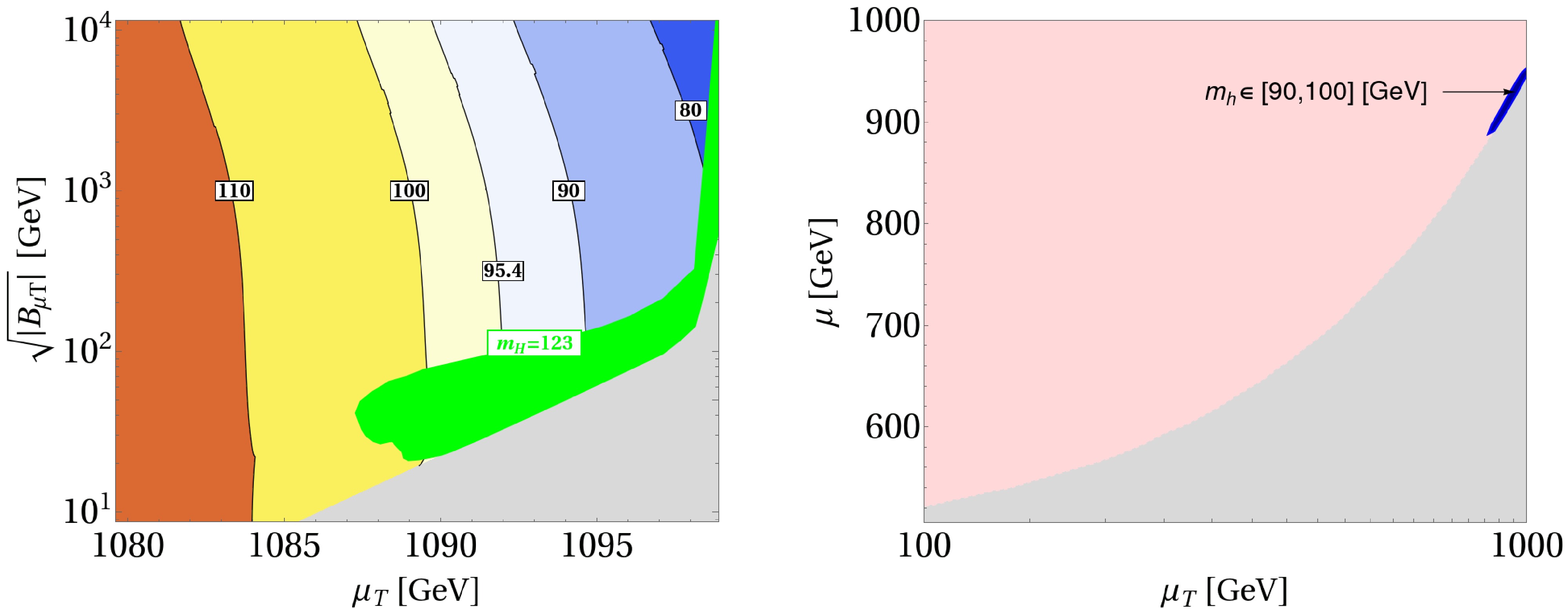
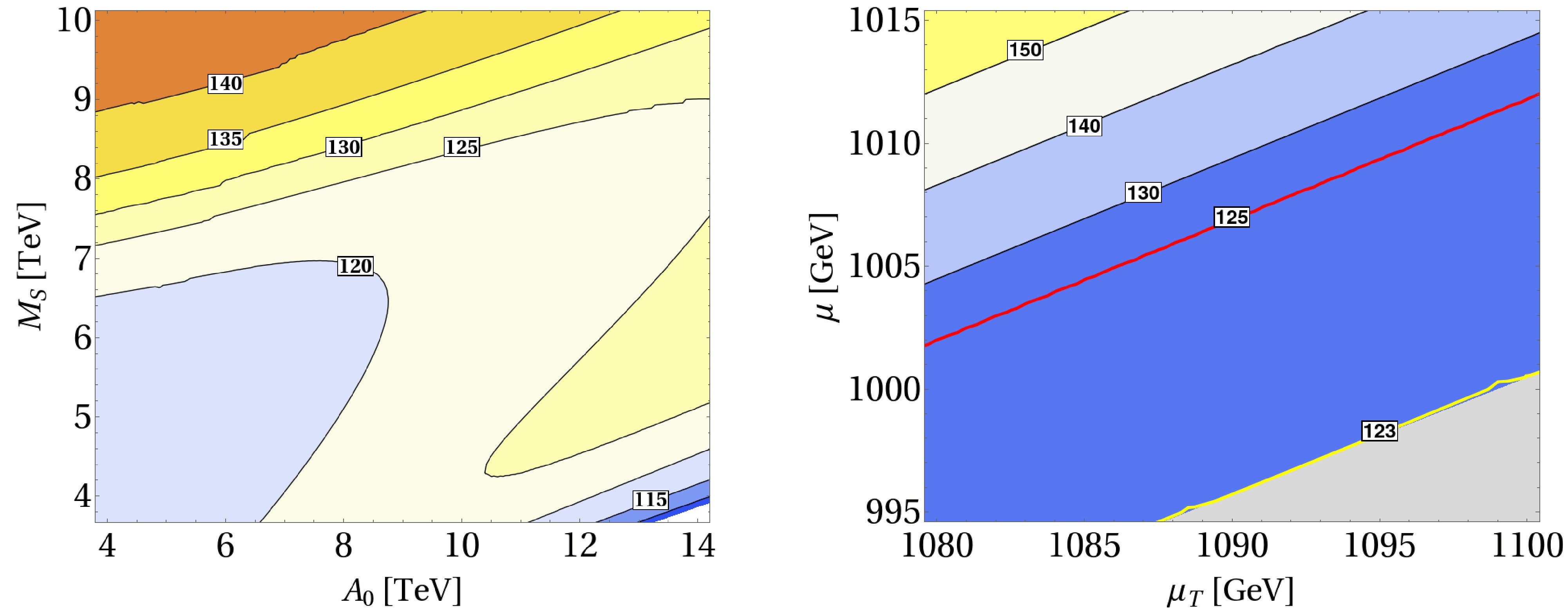
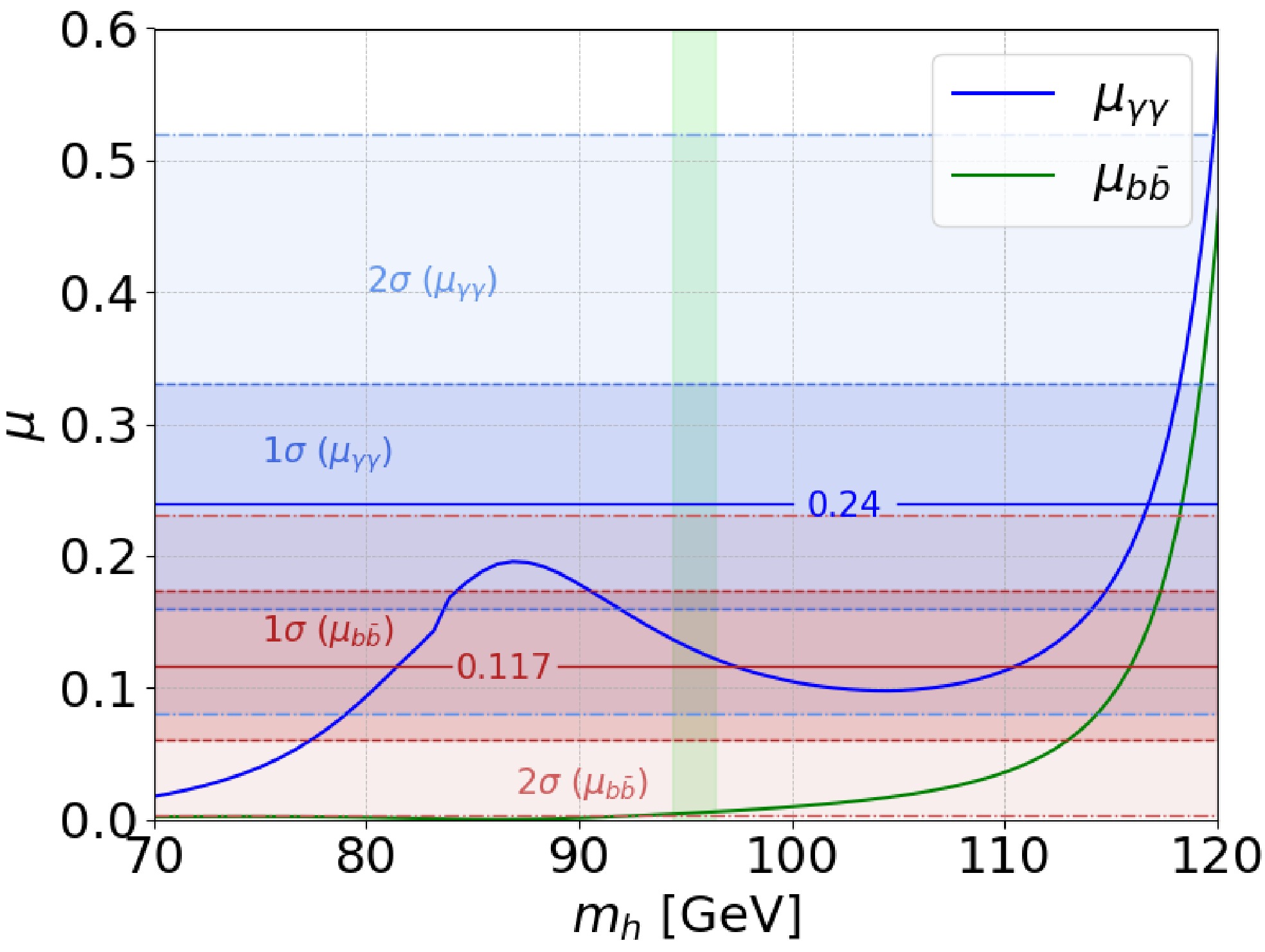
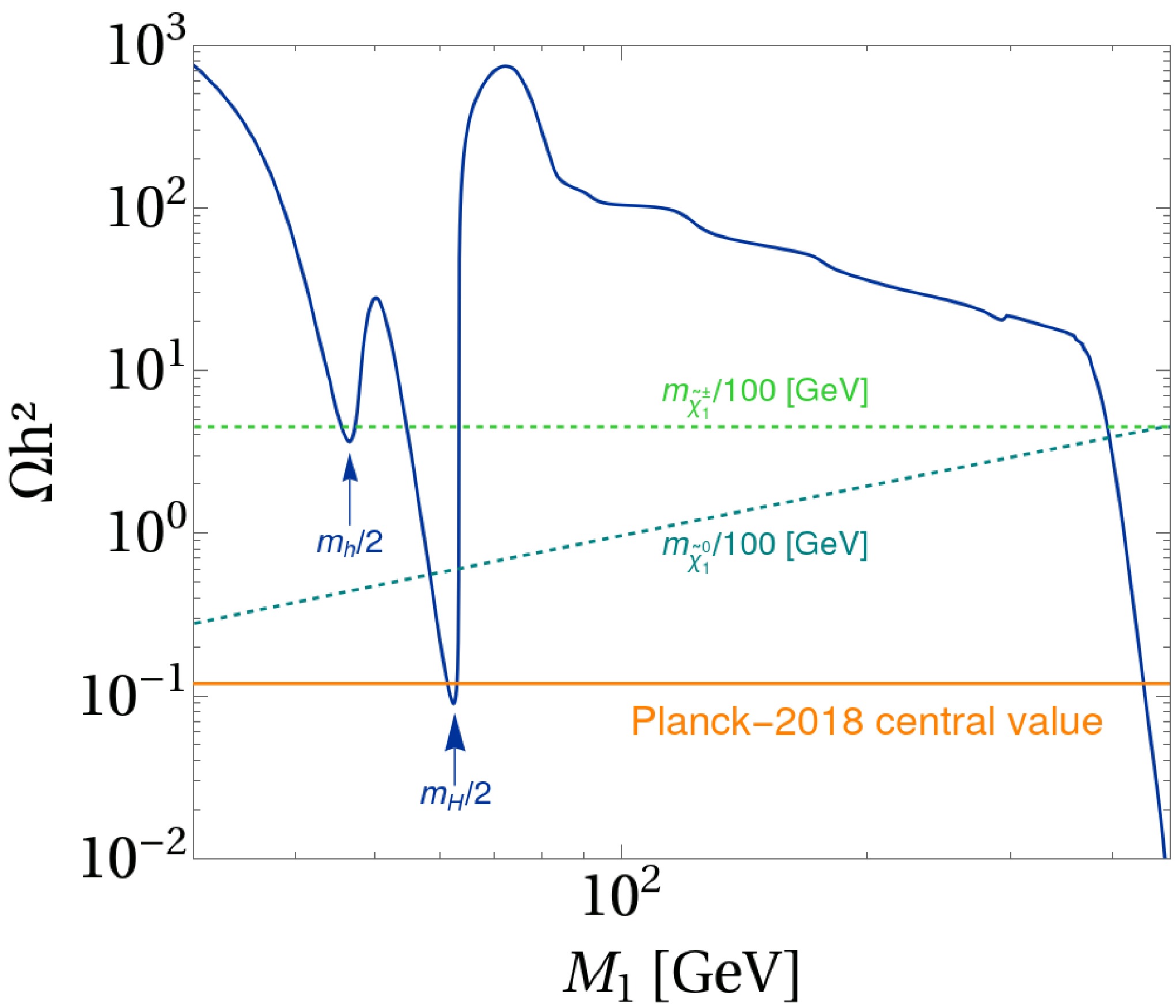
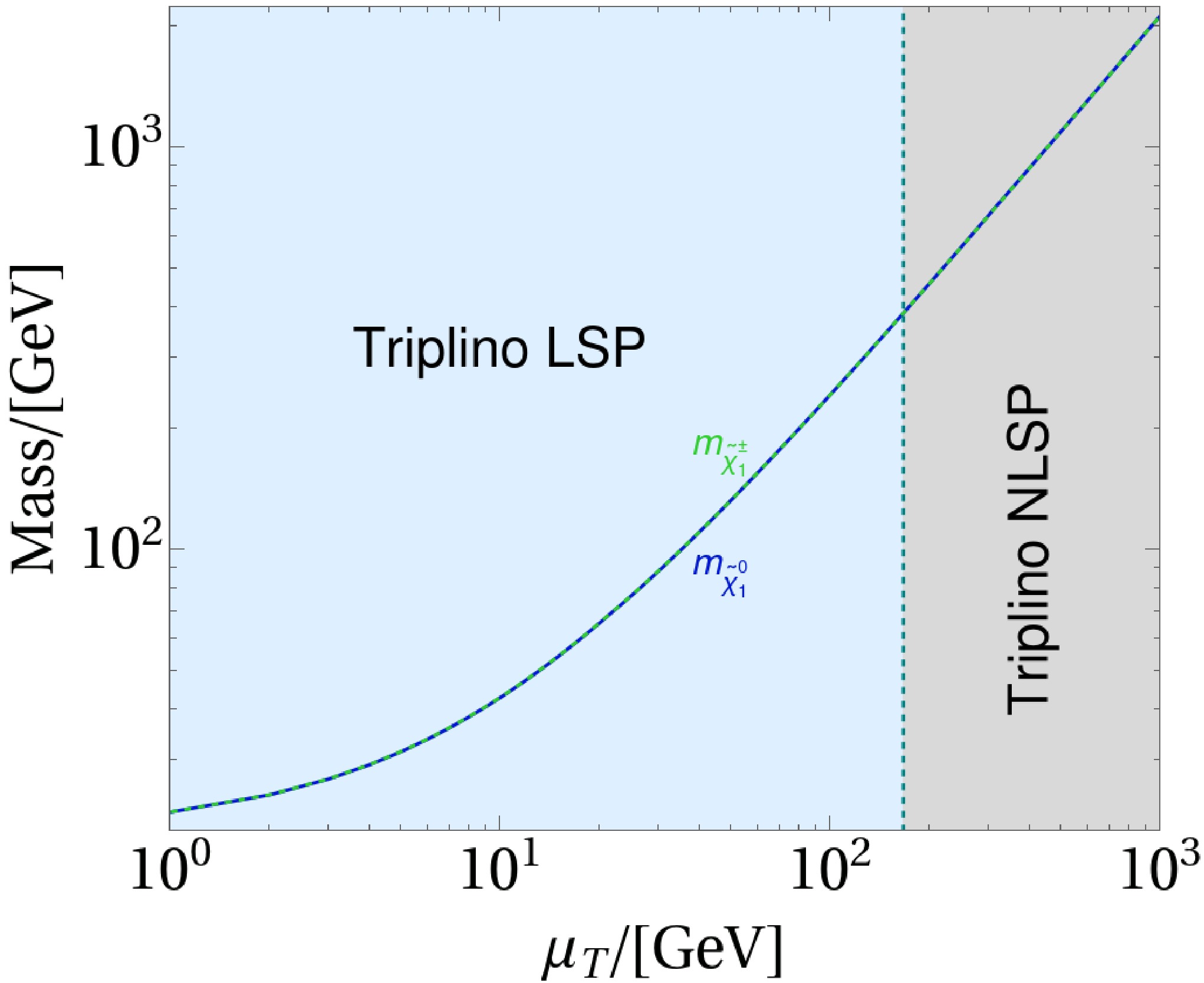
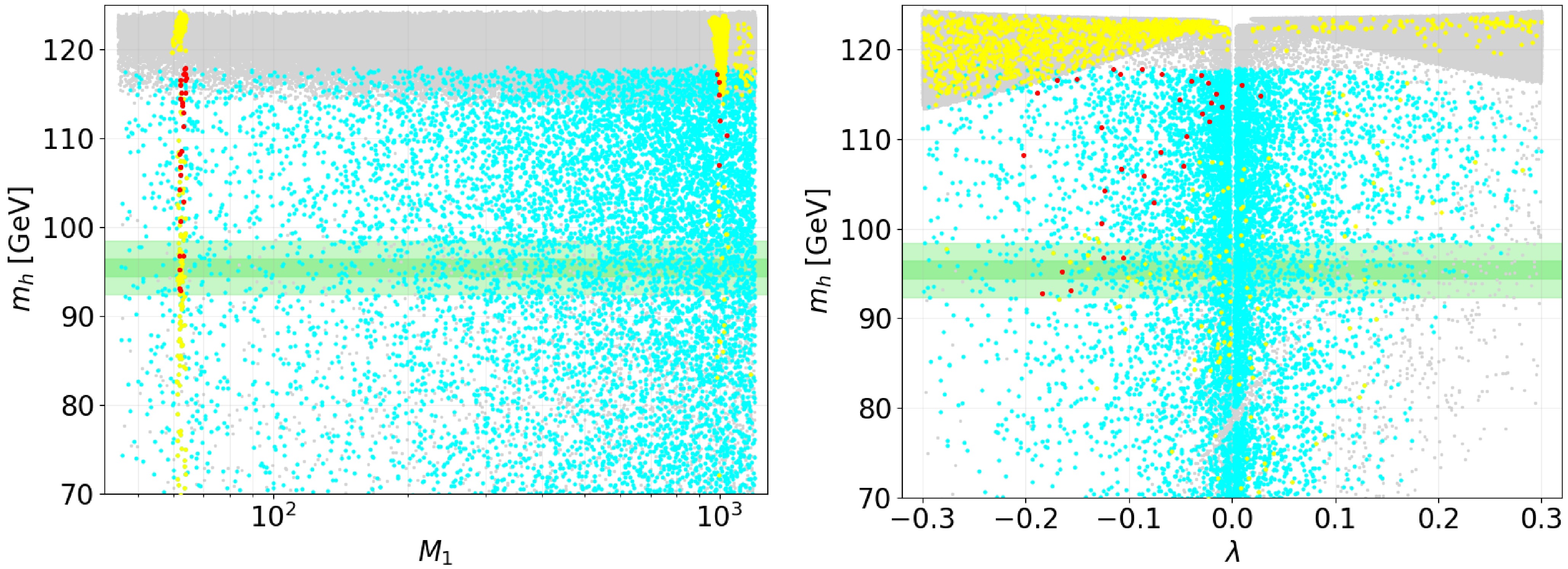
The decay of the Higgs boson and the nature of dark matter remain fundamental challenges in particle physics. We investigate the 95 GeV diphoton excess and dark matter within the framework of the triplet-extended minimal supersymmetric standard model (TMSSM). In this model, an additional hypercharge\begin{document}$ Y=0 $\end{document} \begin{document}$ S U(2)_L $\end{document} \begin{document}$ \mu_{\gamma\gamma}^{{\rm{CMS+ATLAS}}} = 0.24_{-0.08}^{+0.09} $\end{document} \begin{document}$ Zb\bar{b} $\end{document} \begin{document}$ 2\sigma $\end{document}
The decay of the Higgs boson and the nature of dark matter remain fundamental challenges in particle physics. We investigate the 95 GeV diphoton excess and dark matter within the framework of the triplet-extended minimal supersymmetric standard model (TMSSM). In this model, an additional hypercharge
2026, 50(2): 023111. doi: 10.1088/1674-1137/ae120b
Abstract:
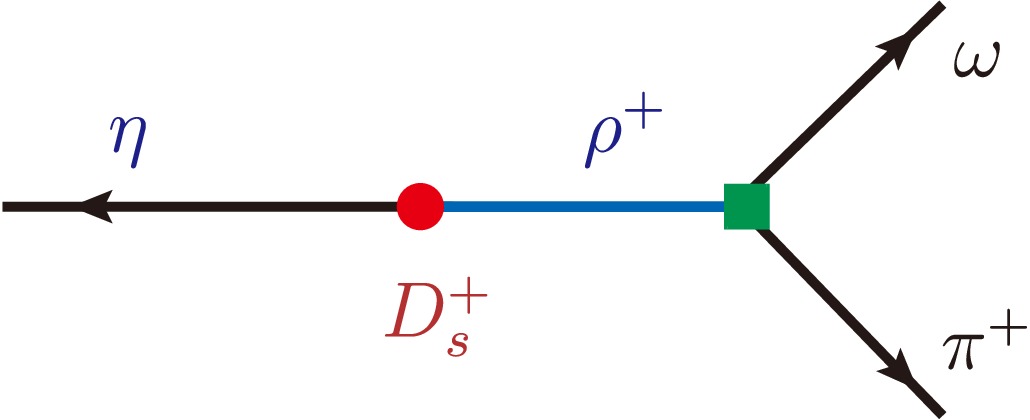
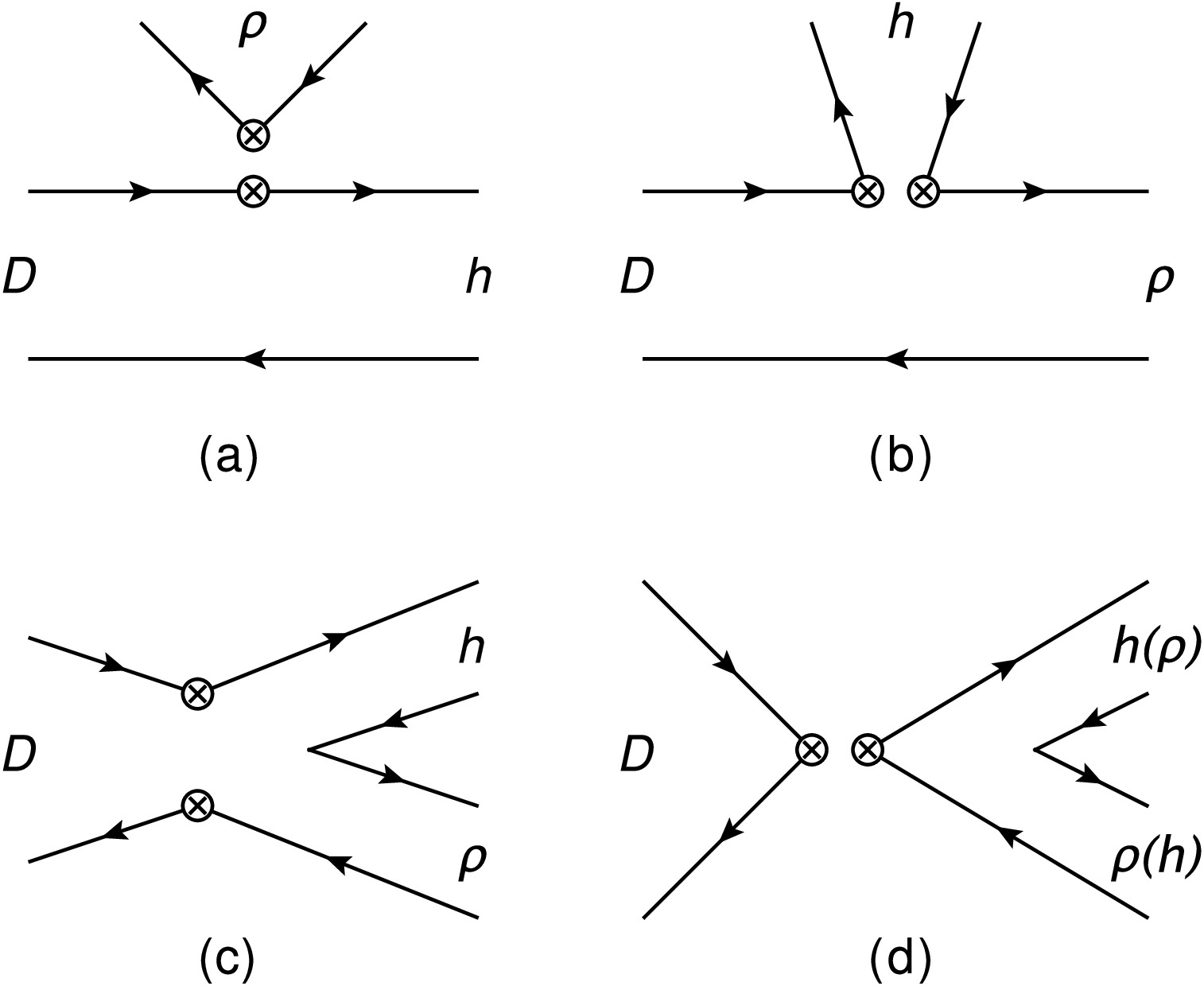
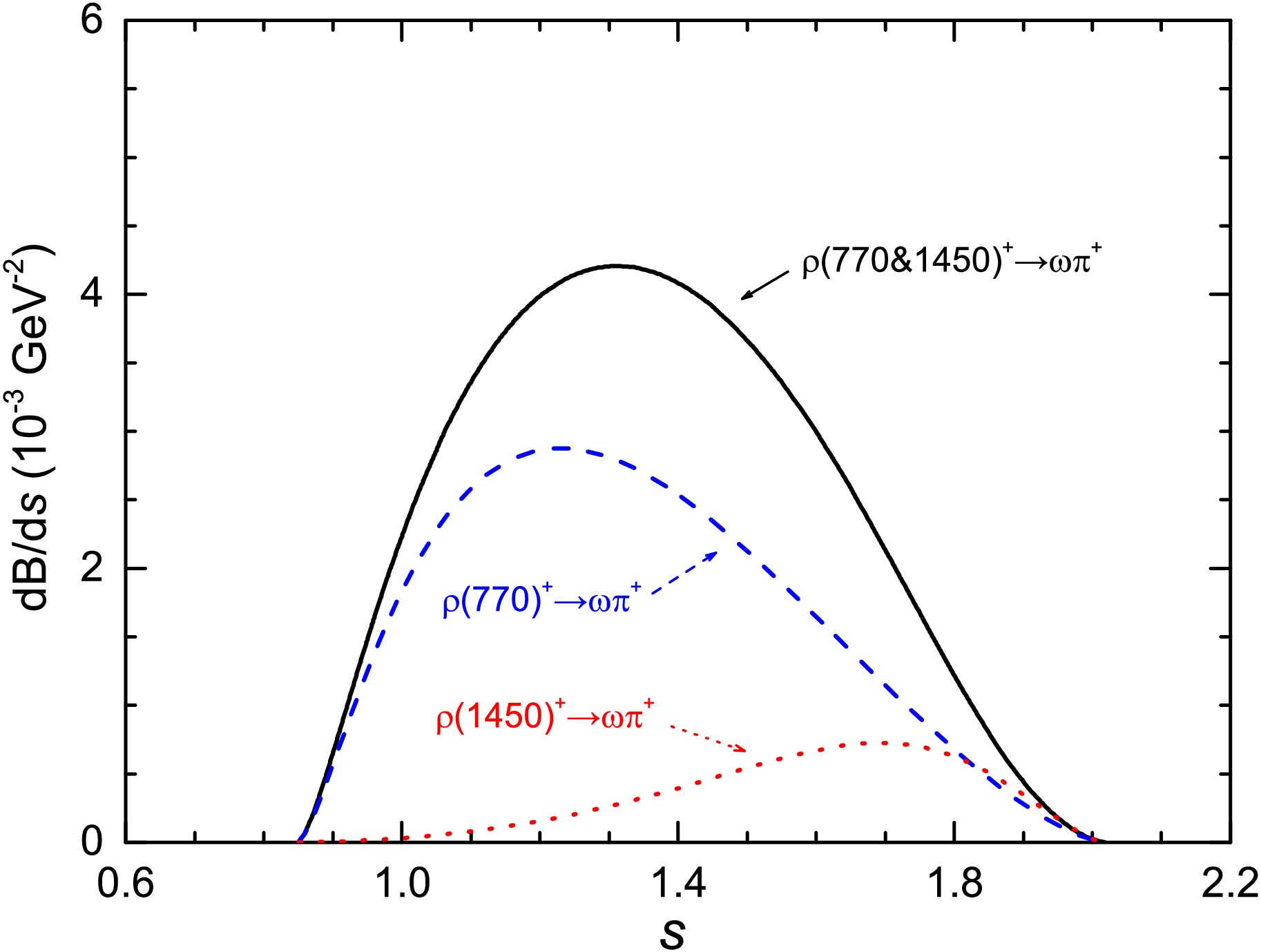
Recently, the BESIII Collaboration observed the three-body decays\begin{document}$ D_s^+\to \eta \omega\pi^+ $\end{document} \begin{document}$ D^+\to K^0_S\pi^+\omega $\end{document} \begin{document}$ D^0\to K^-\pi^+\omega $\end{document} \begin{document}$ \rho^+\to \omega\pi^+ $\end{document} \begin{document}$ D \to h\omega\pi $\end{document} \begin{document}$ \rho^+= \{\rho(770)^+, \rho(1450)^+, \rho(770)^+\&\rho(1450)^+\} $\end{document} \begin{document}$ h=\{ \eta, K^0_S, K^-\} $\end{document} \begin{document}$ F_{\omega\pi} $\end{document} \begin{document}$ e^+e^- $\end{document} \begin{document}$ D_s^+\to\eta[\rho^+\to]\omega\pi^+ $\end{document} \begin{document}$ D^+\to K^0_S[\rho^+\to]\omega\pi^+ $\end{document} \begin{document}$ D^0\to K^-[\rho^+\to]\omega\pi^+ $\end{document} \begin{document}$ \rho(770)^+\to\omega\pi^+ $\end{document} \begin{document}$ D_s^+\to\eta \omega\pi^+ $\end{document} \begin{document}$ D^+\to K^0_S \omega\pi^+ $\end{document} \begin{document}$ D^0\to K^- \omega\pi^+ $\end{document} \begin{document}$ \rho(770)^+ $\end{document} \begin{document}$ D_s^+\to\eta \omega\pi^+ $\end{document} \begin{document}$ D^+\to K^0_S \omega\pi^+ $\end{document} \begin{document}$ \rho(770)^+ $\end{document} \begin{document}$ \rho(1450)^+ $\end{document}
Recently, the BESIII Collaboration observed the three-body decays
2026, 50(2): 023112. doi: 10.1088/1674-1137/ae15ed
Abstract:
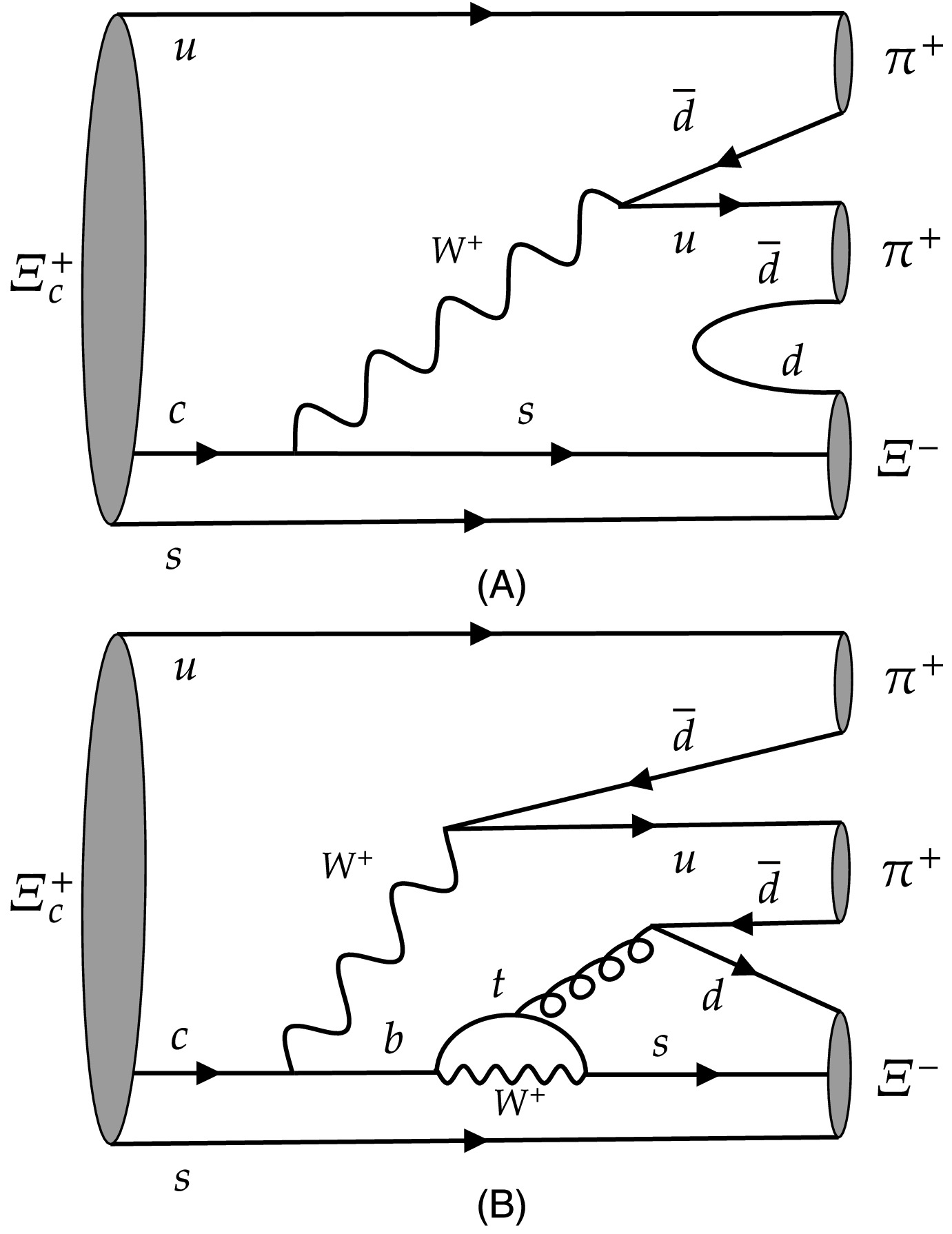
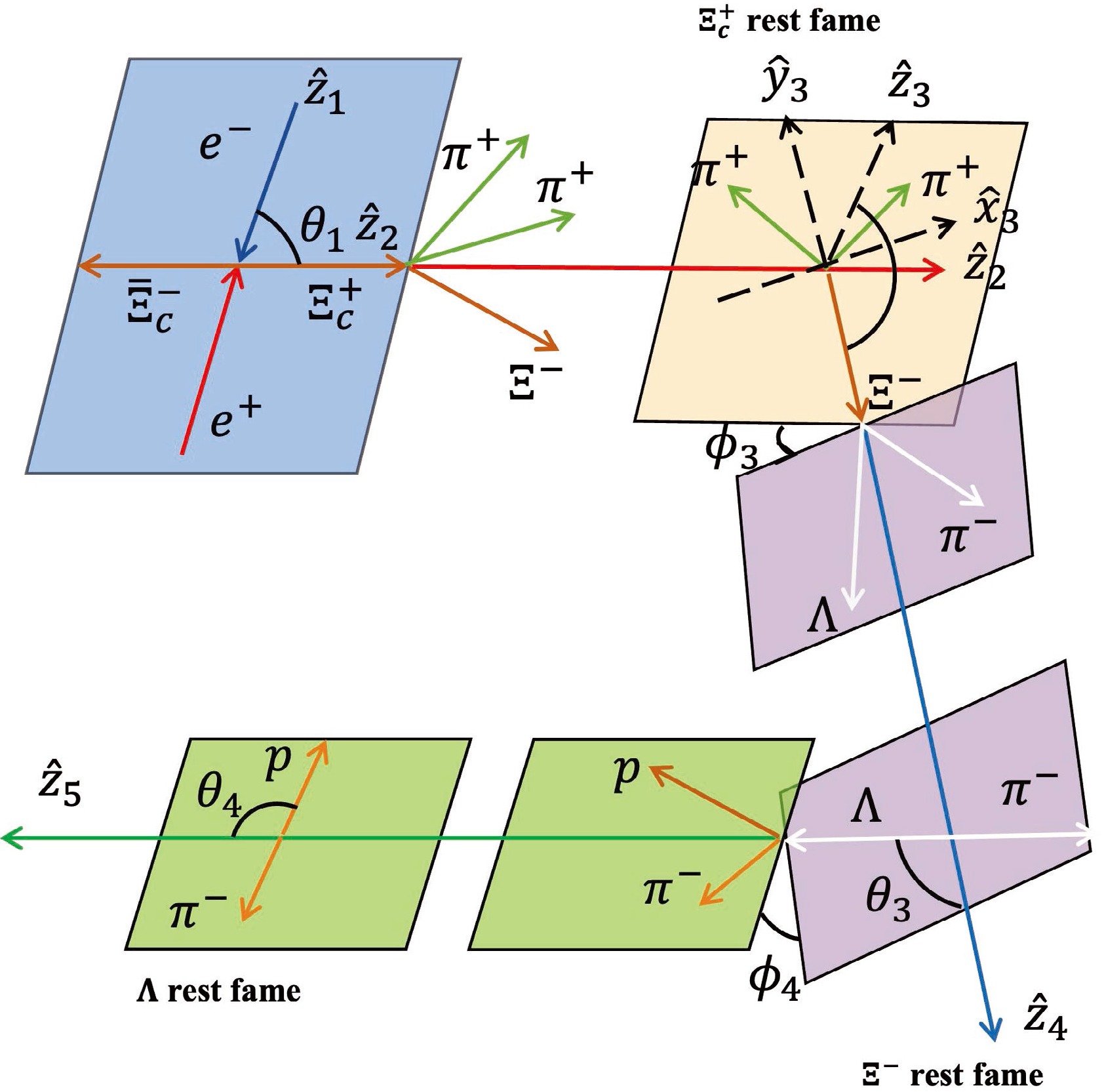
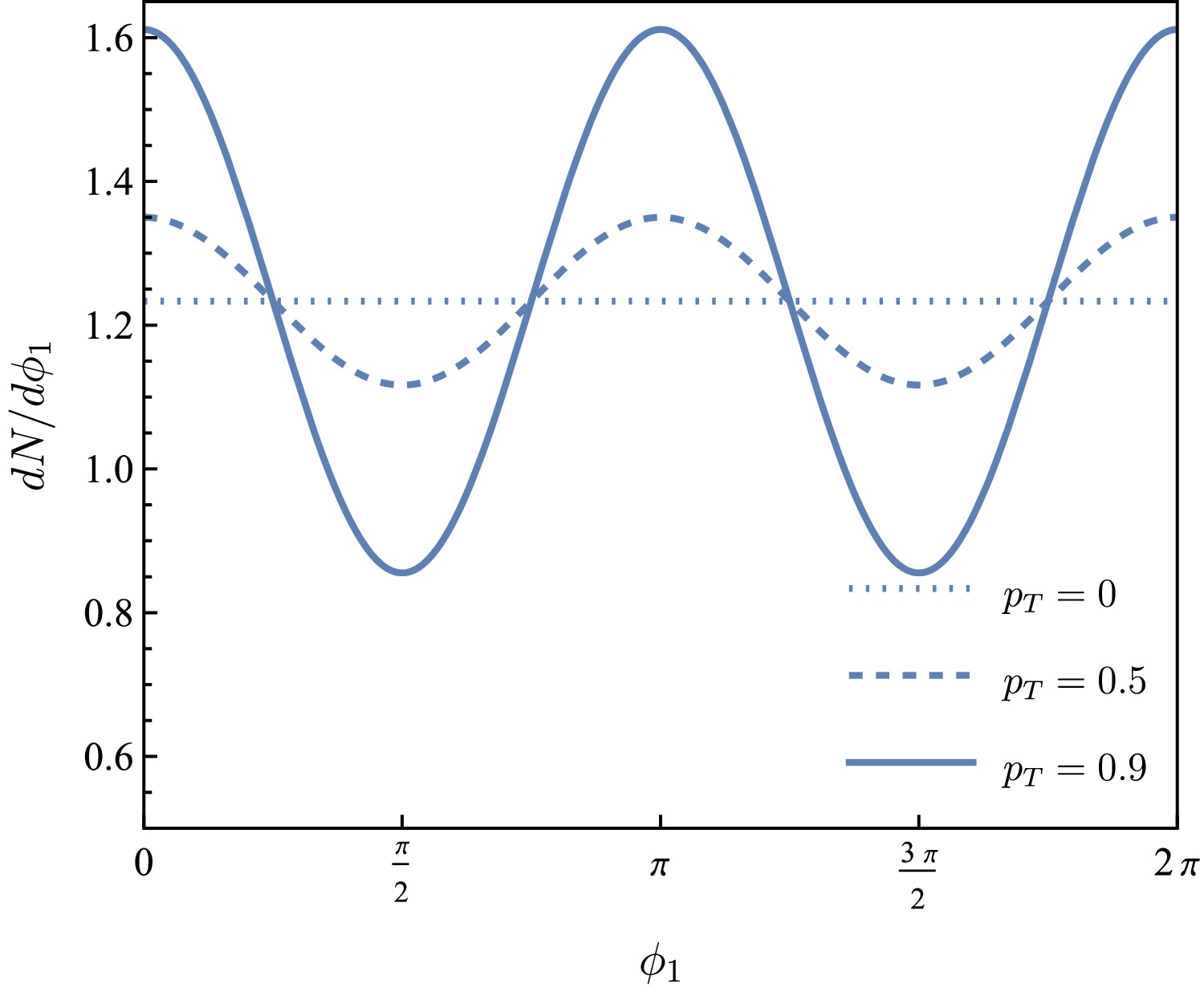
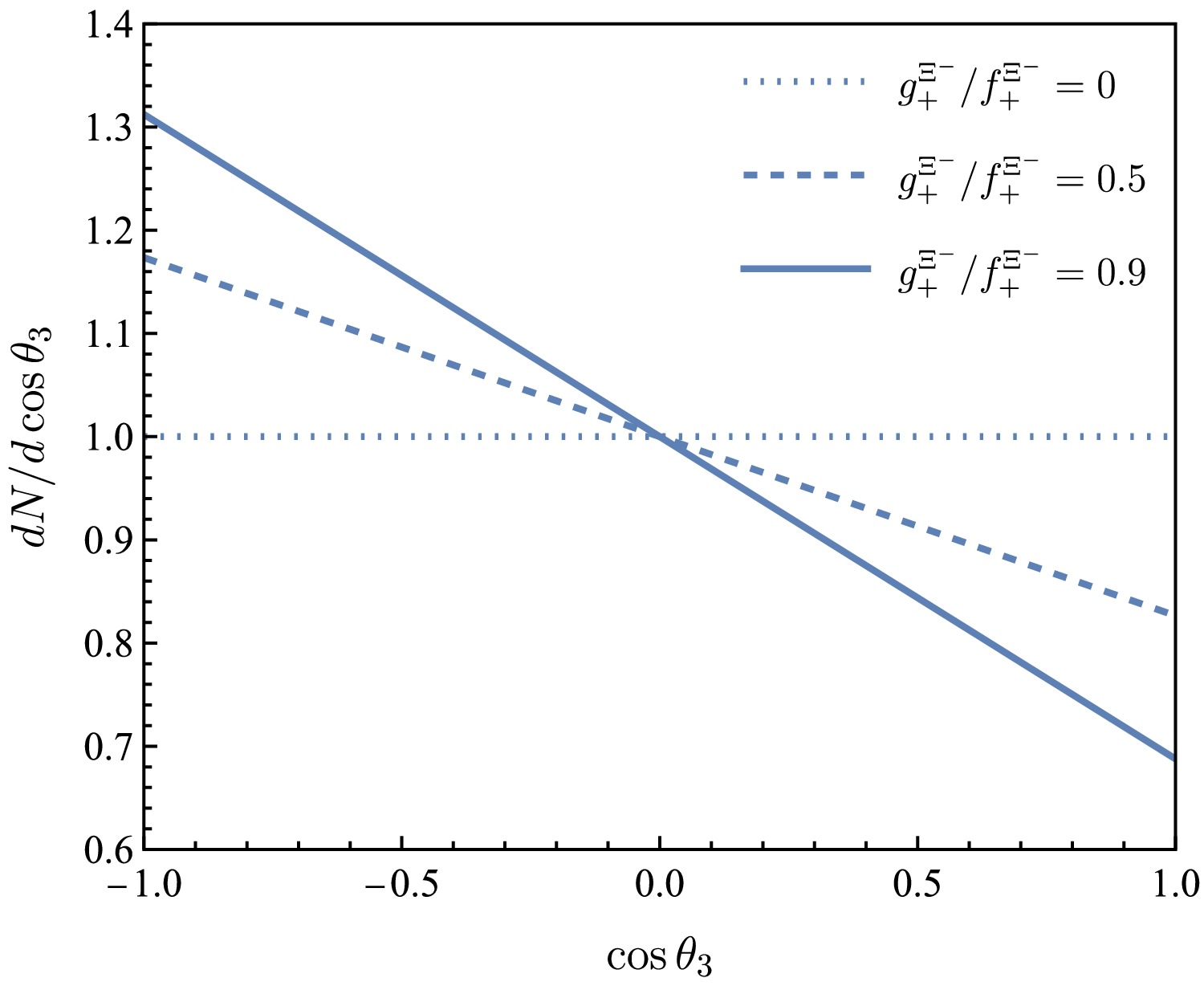
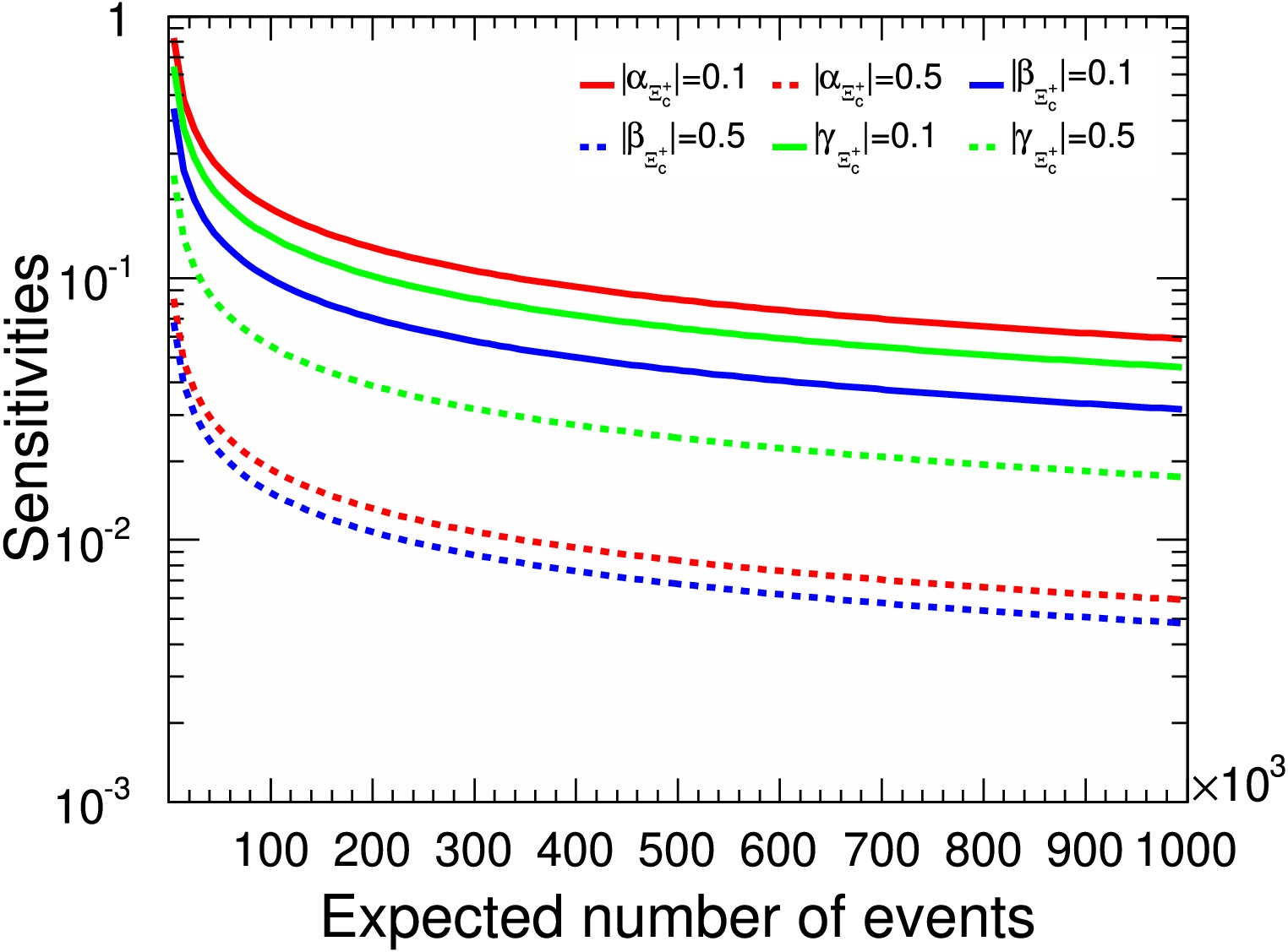
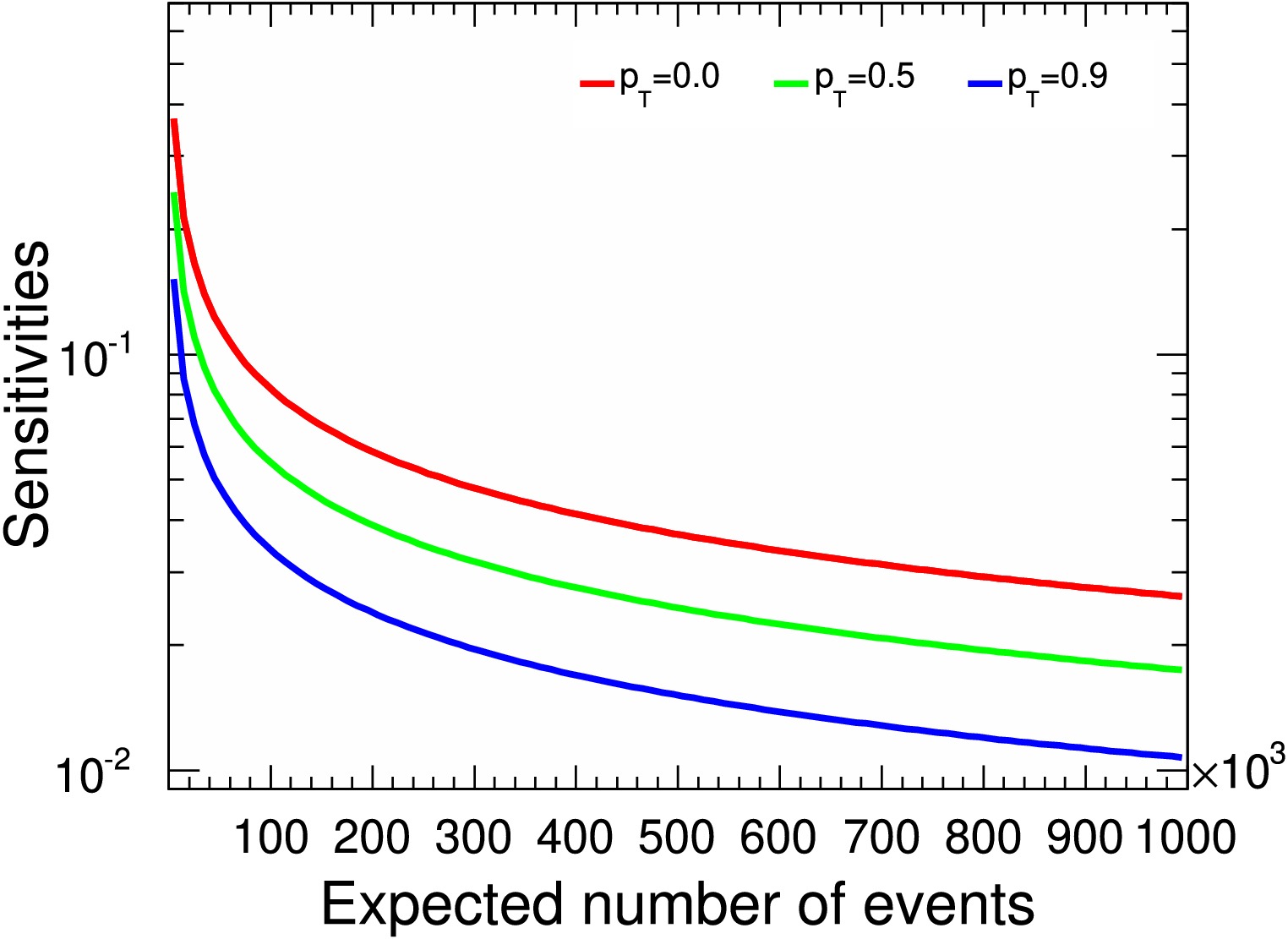
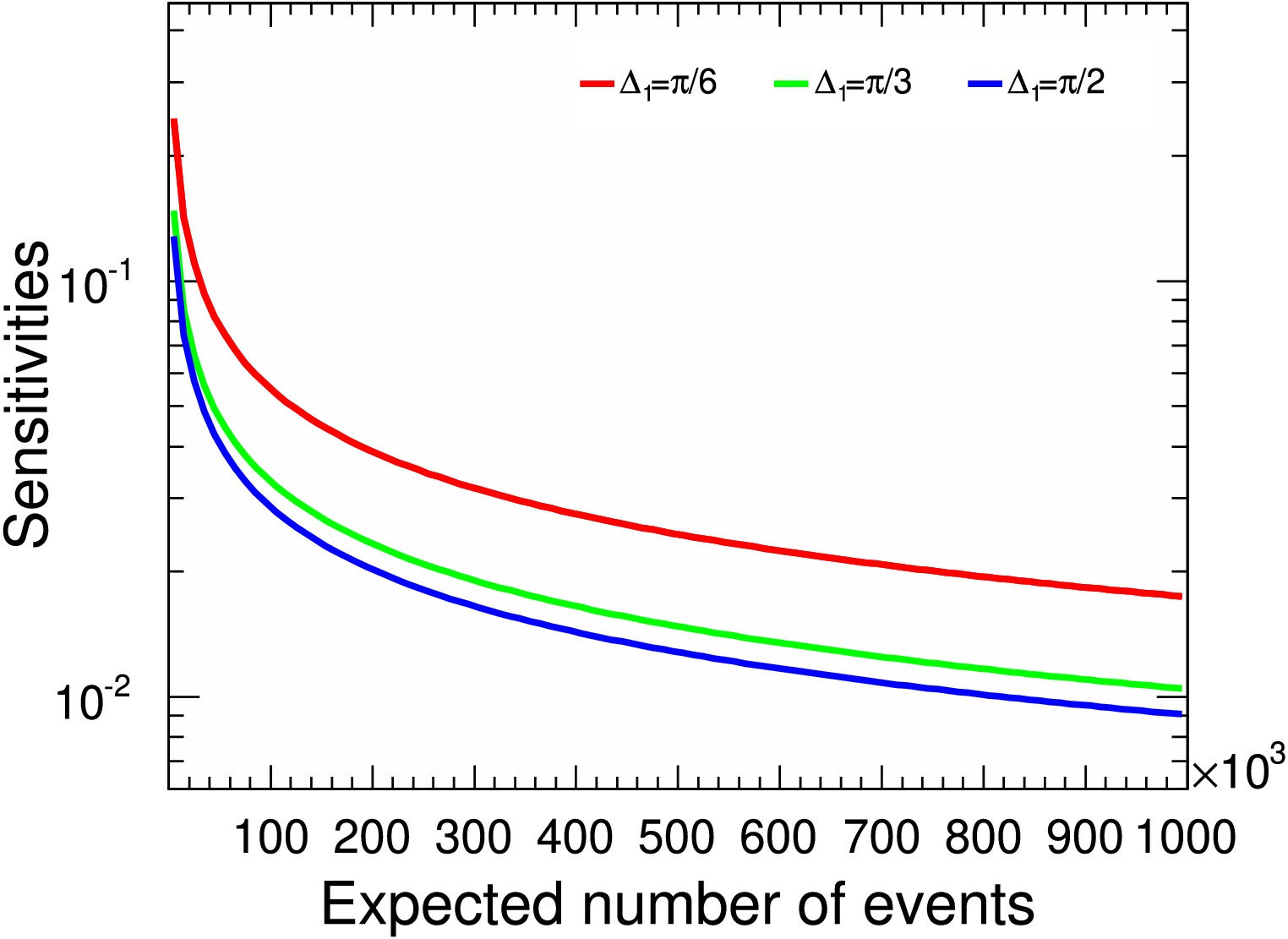
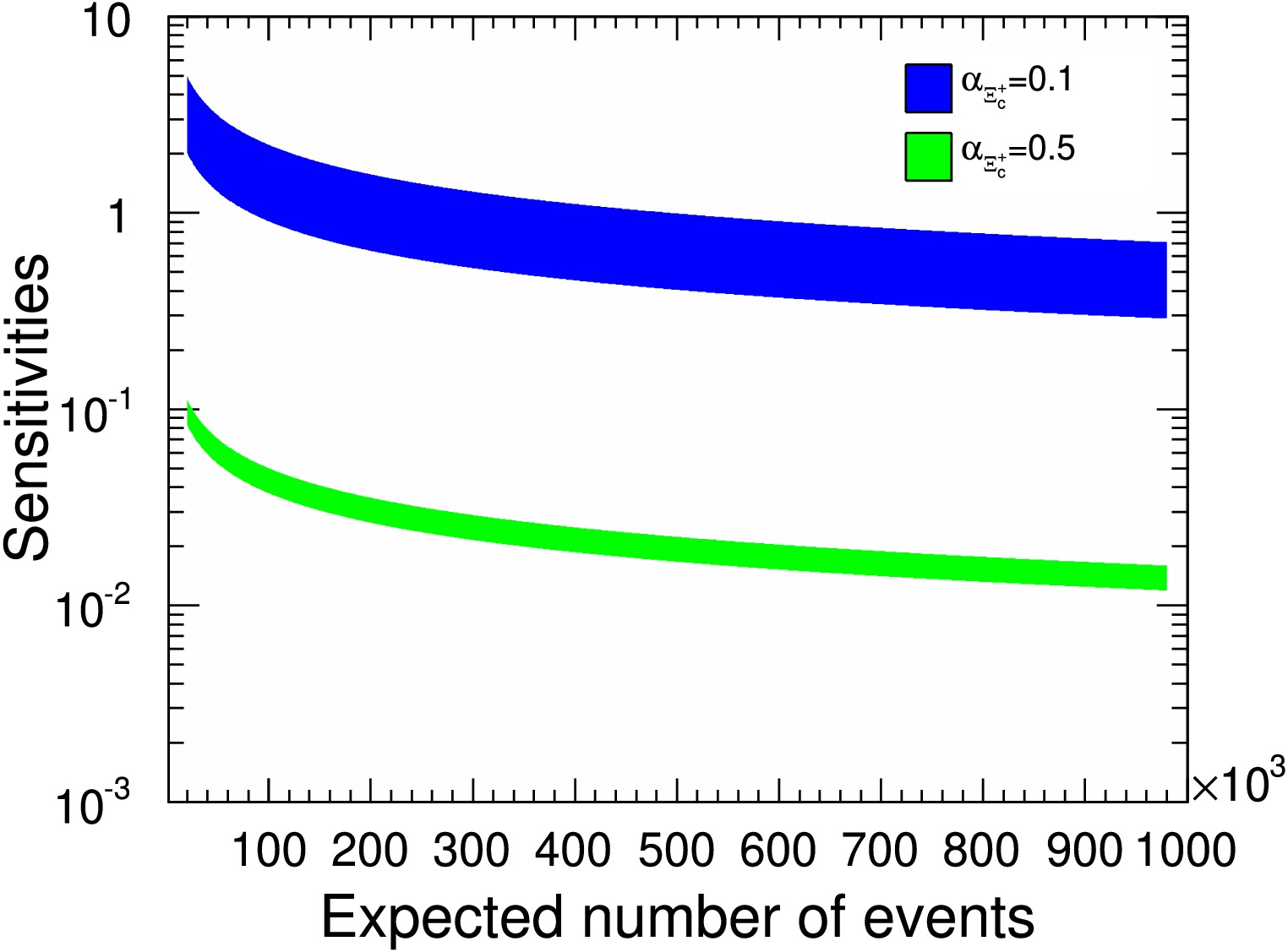
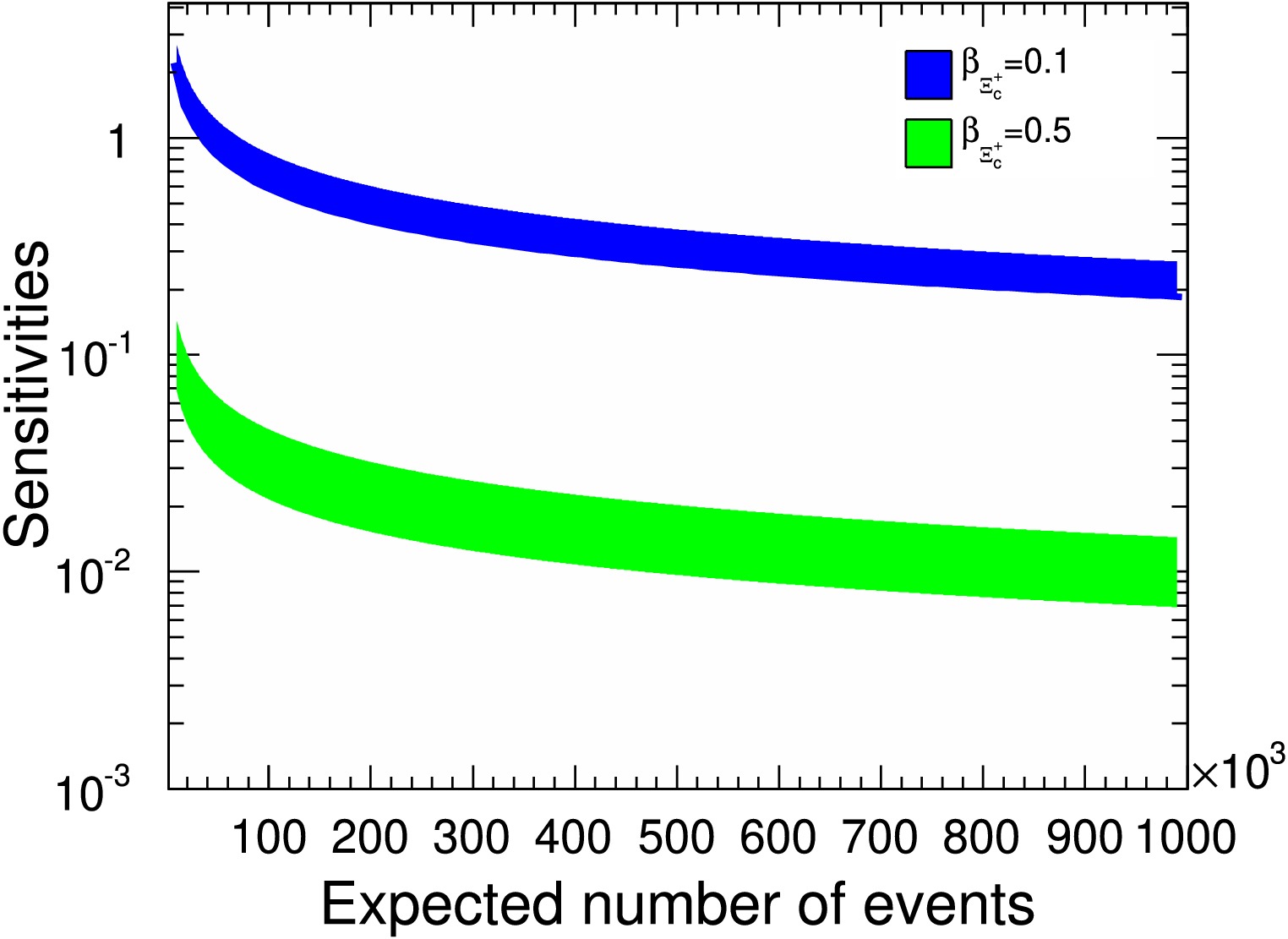
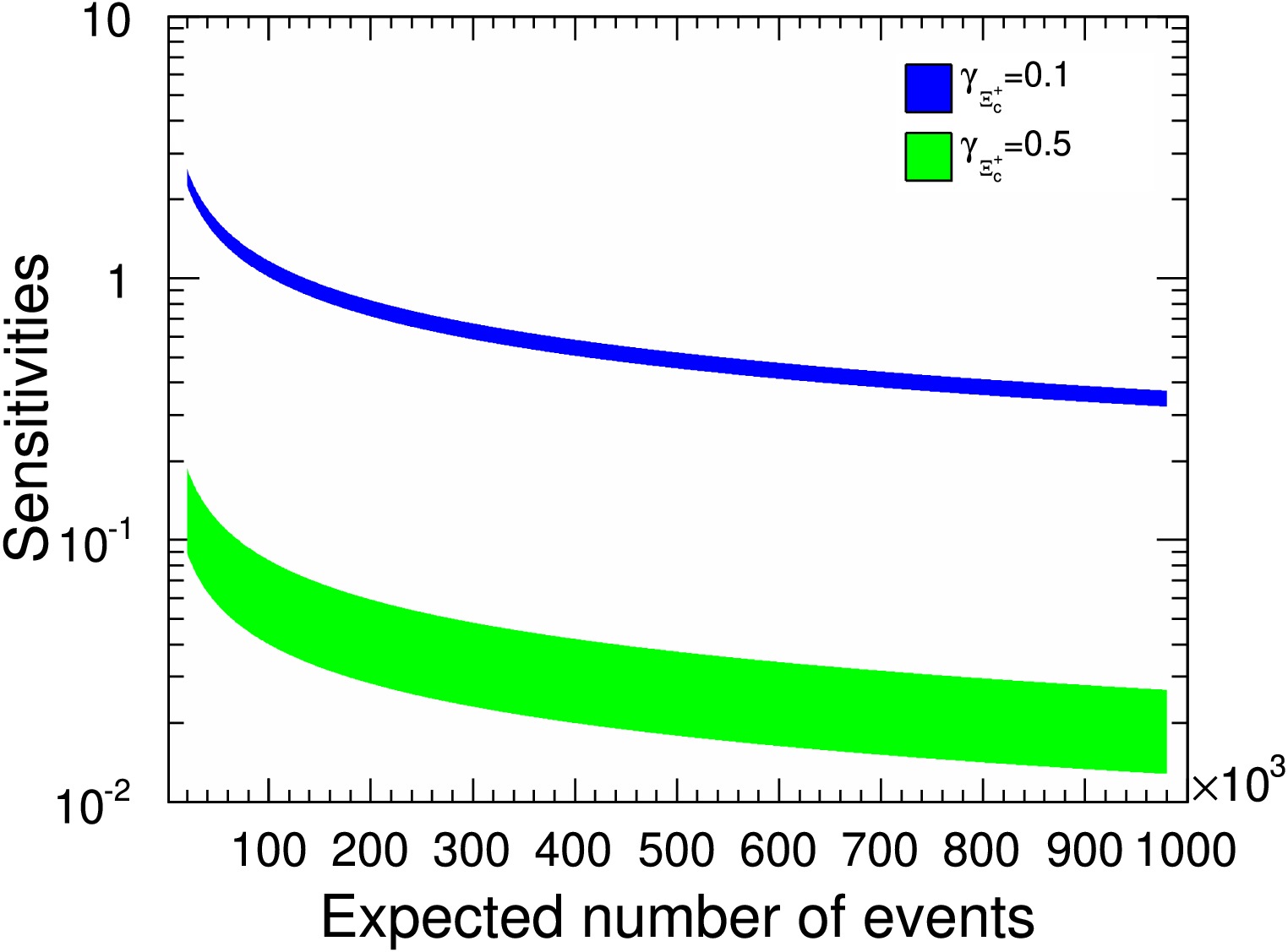
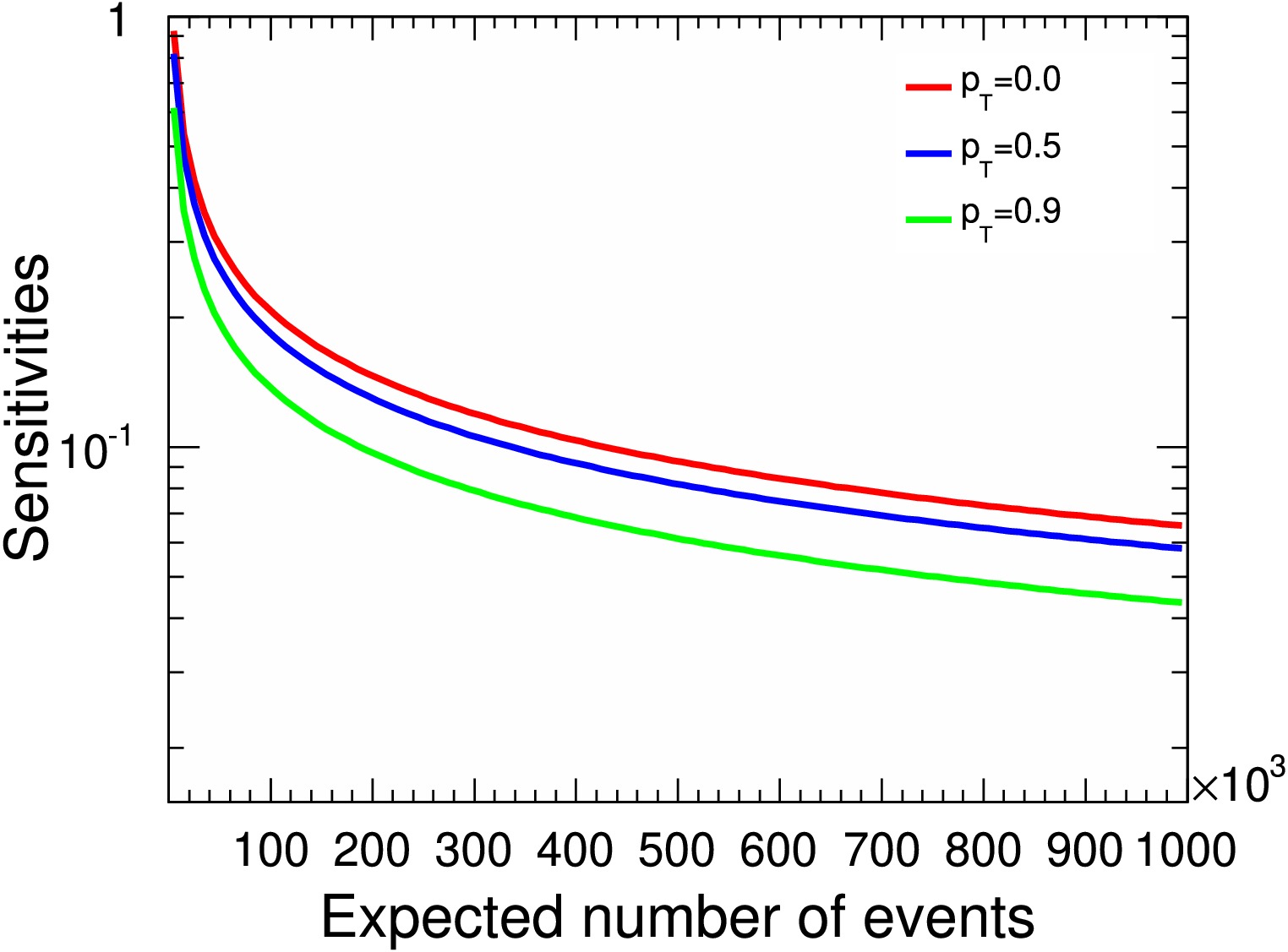
Symmetry studies represent one of the most promising frontiers in particle physics research. This investigation focuses on exploring P and\begin{document}$\rm CP $\end{document} \begin{document}$ \Xi_c^{+} $\end{document} \begin{document}$ \Xi_c^{+} $\end{document} \begin{document}$ \Xi_c^{+} \to \Xi^{-}\pi^{+}\pi^{+} $\end{document}
Symmetry studies represent one of the most promising frontiers in particle physics research. This investigation focuses on exploring P and
2026, 50(2): 023113. doi: 10.1088/1674-1137/ae144d
Abstract:
We construct a formalism that describes the resonances decaying into four pseudoscalar meson final states. This method is fully covariant and can be directly applied to the partial-wave analysis of high statistical data. Two topologies of the process are considered: two intermediate resonances, each decaying into two final mesons, and cascade decay via three meson intermediate states. In particular, we consider the production of such states in the central collision reactions and in radiative\begin{document}$J/\Psi$\end{document}
We construct a formalism that describes the resonances decaying into four pseudoscalar meson final states. This method is fully covariant and can be directly applied to the partial-wave analysis of high statistical data. Two topologies of the process are considered: two intermediate resonances, each decaying into two final mesons, and cascade decay via three meson intermediate states. In particular, we consider the production of such states in the central collision reactions and in radiative
2026, 50(2): 023114. doi: 10.1088/1674-1137/ae056c
Abstract:
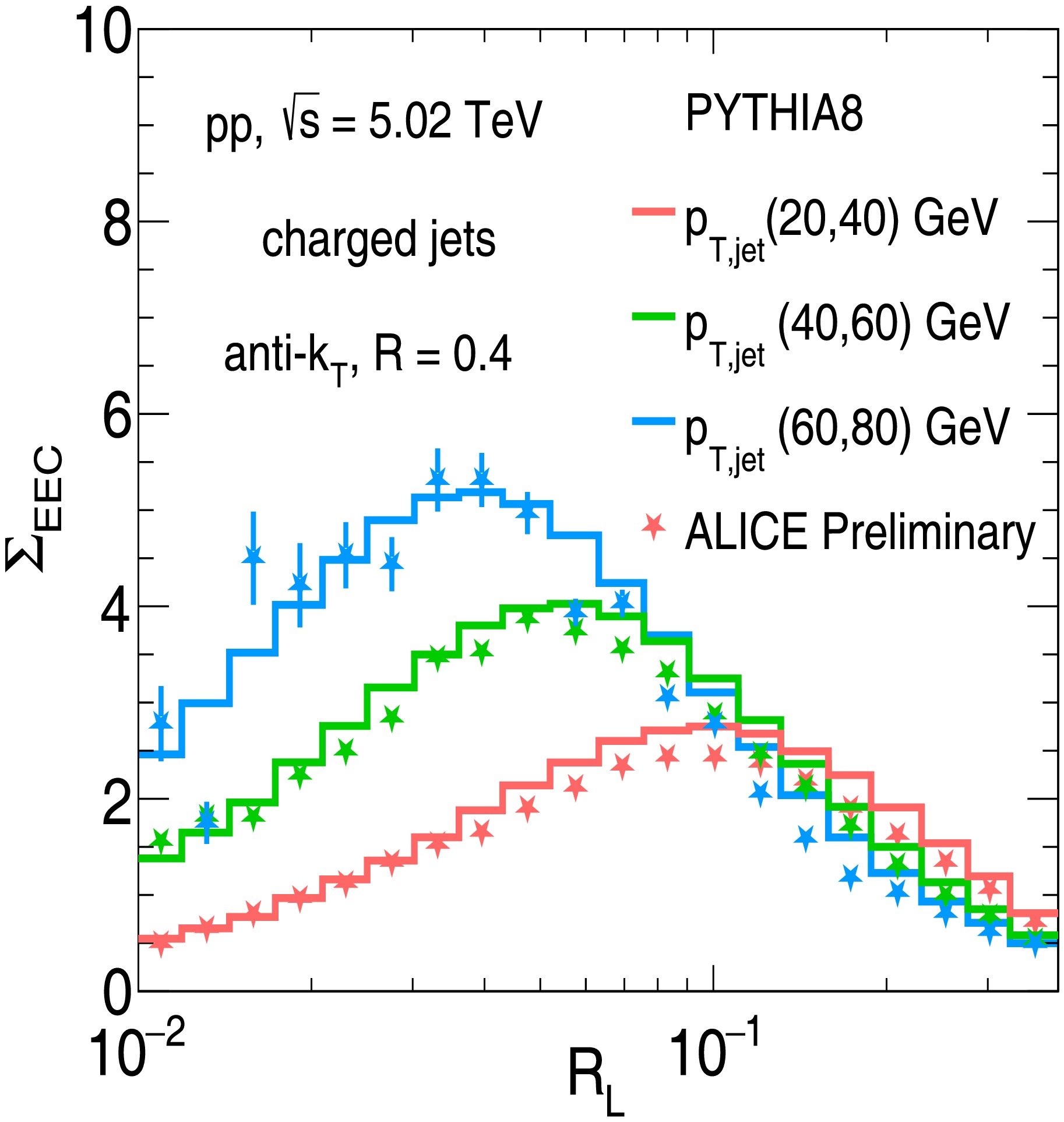
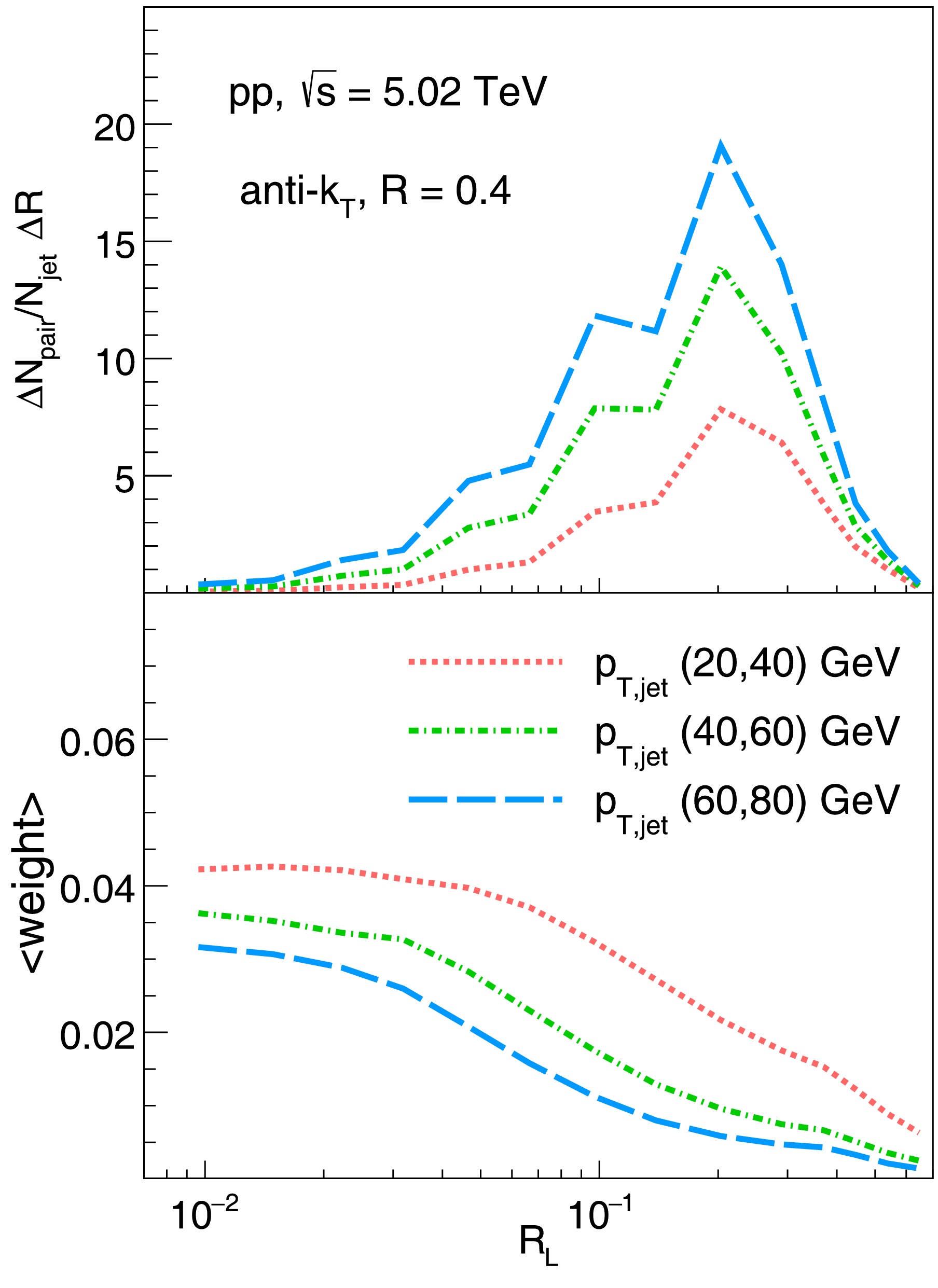
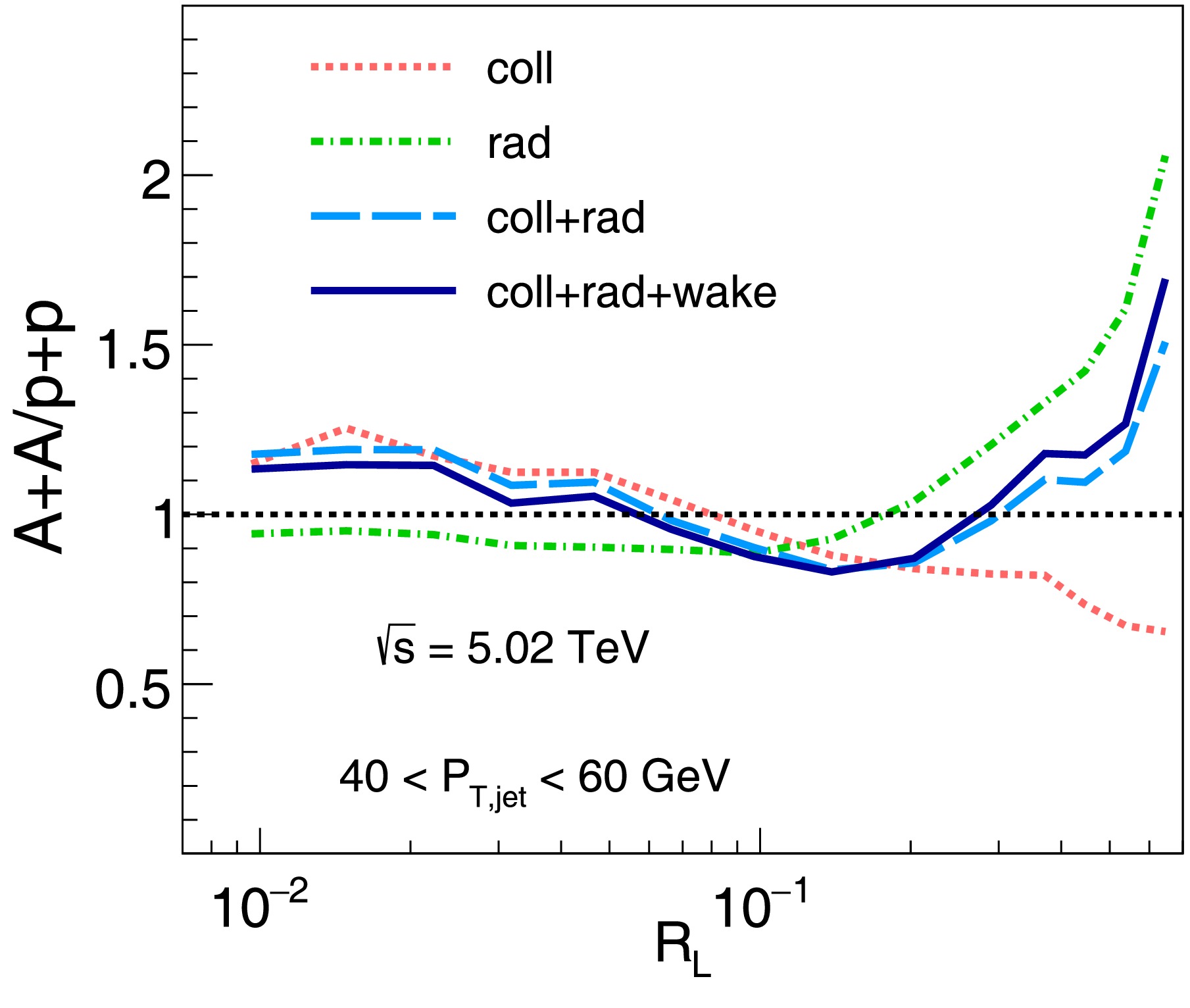
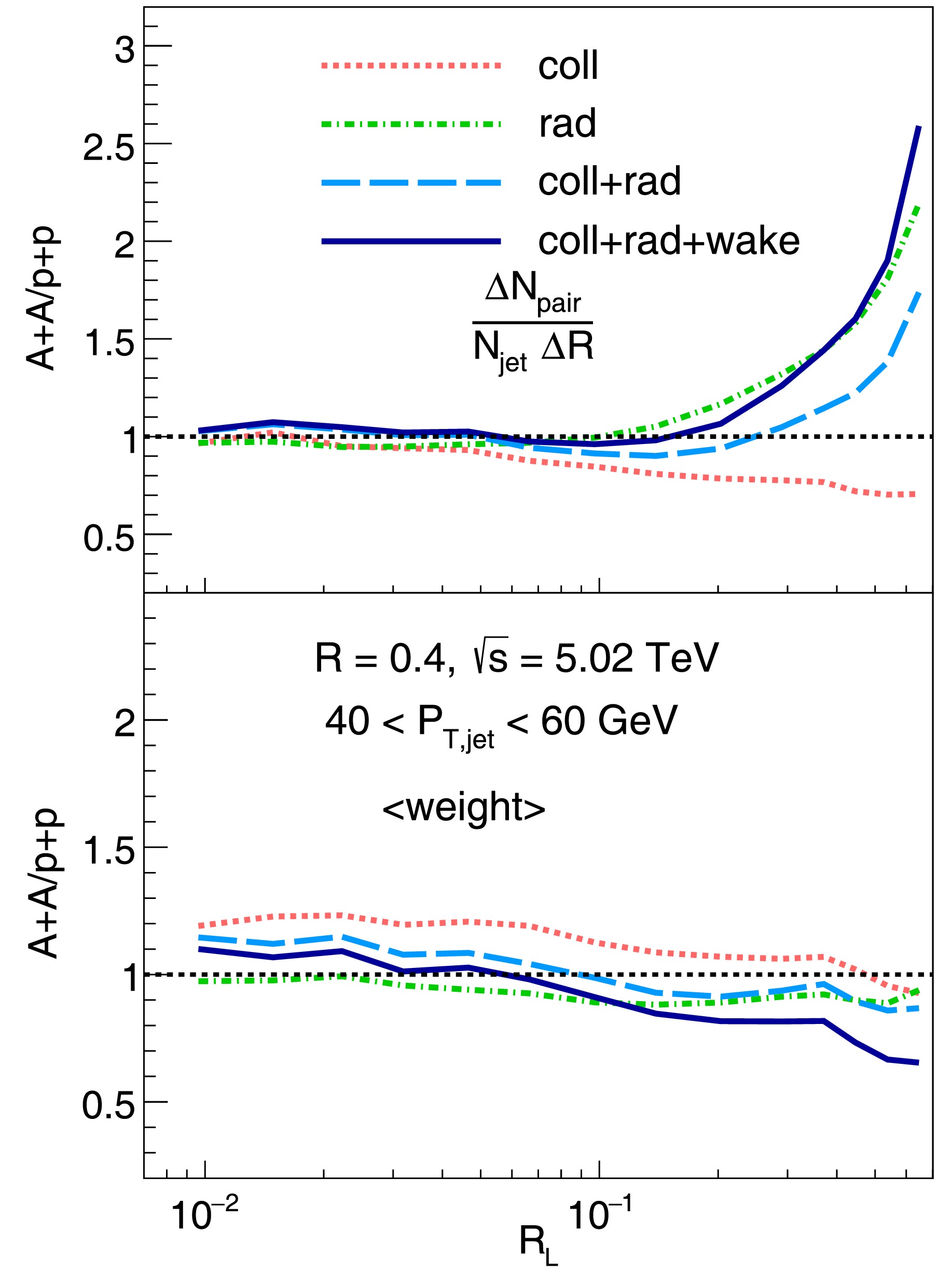
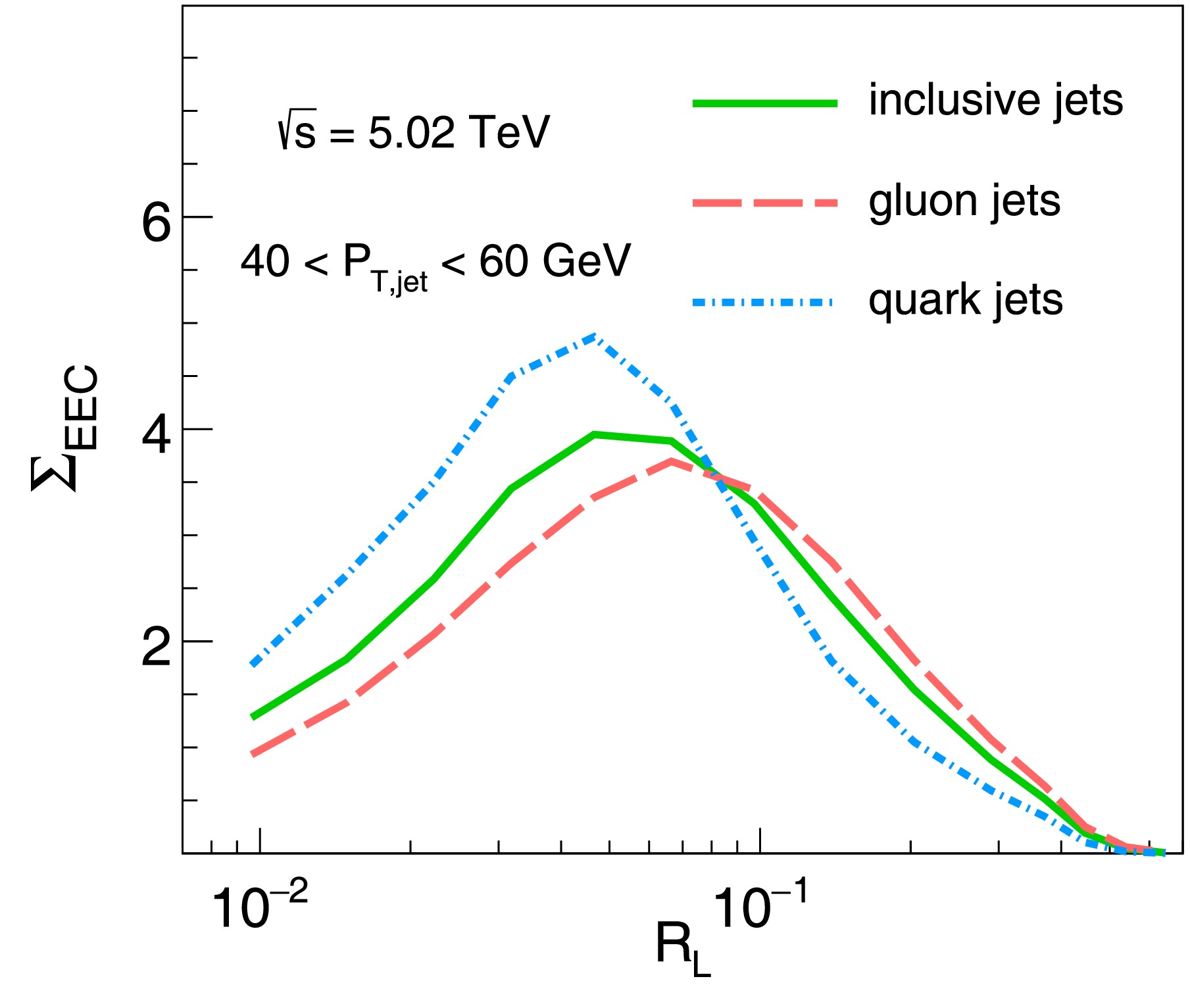
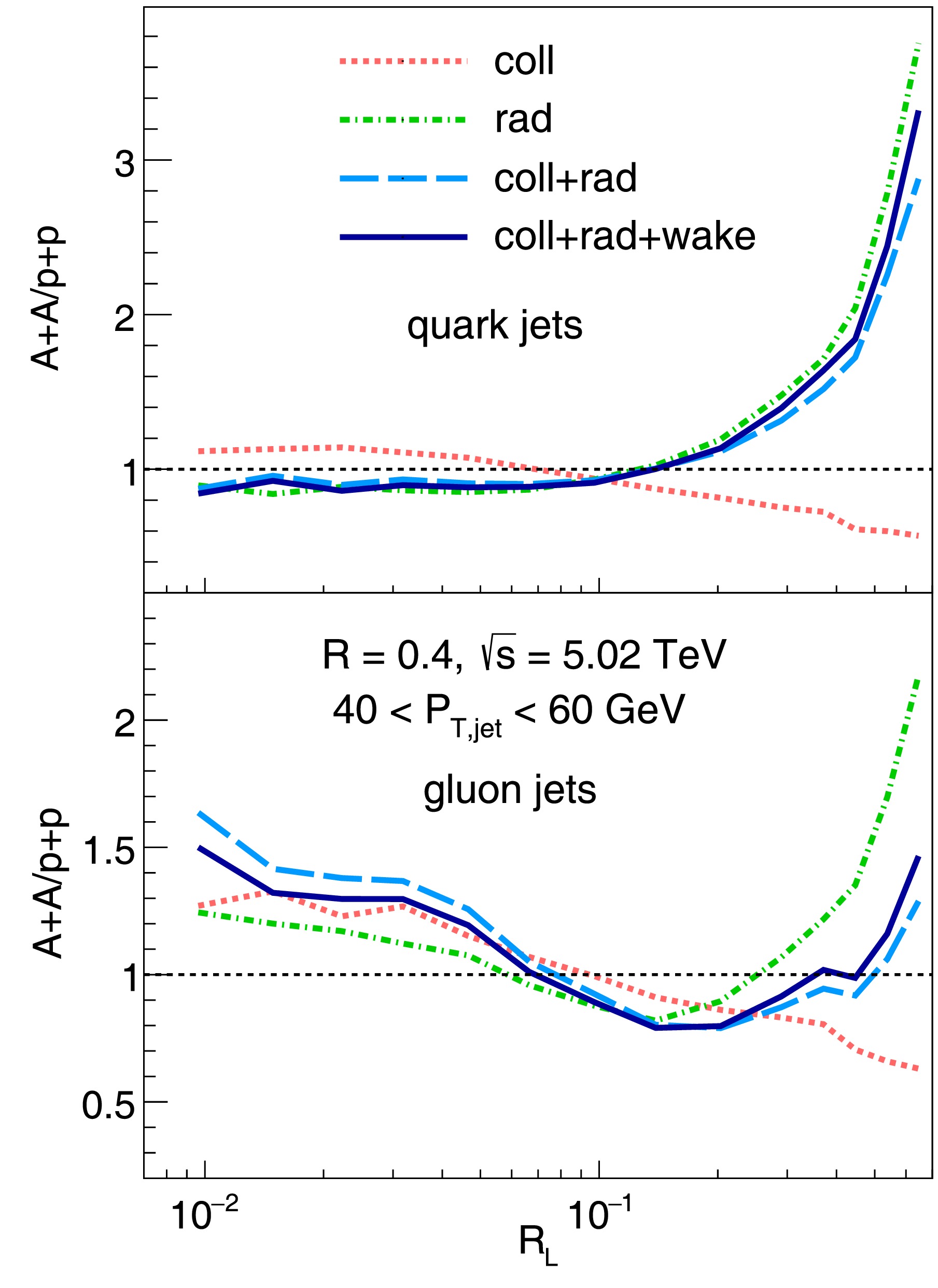
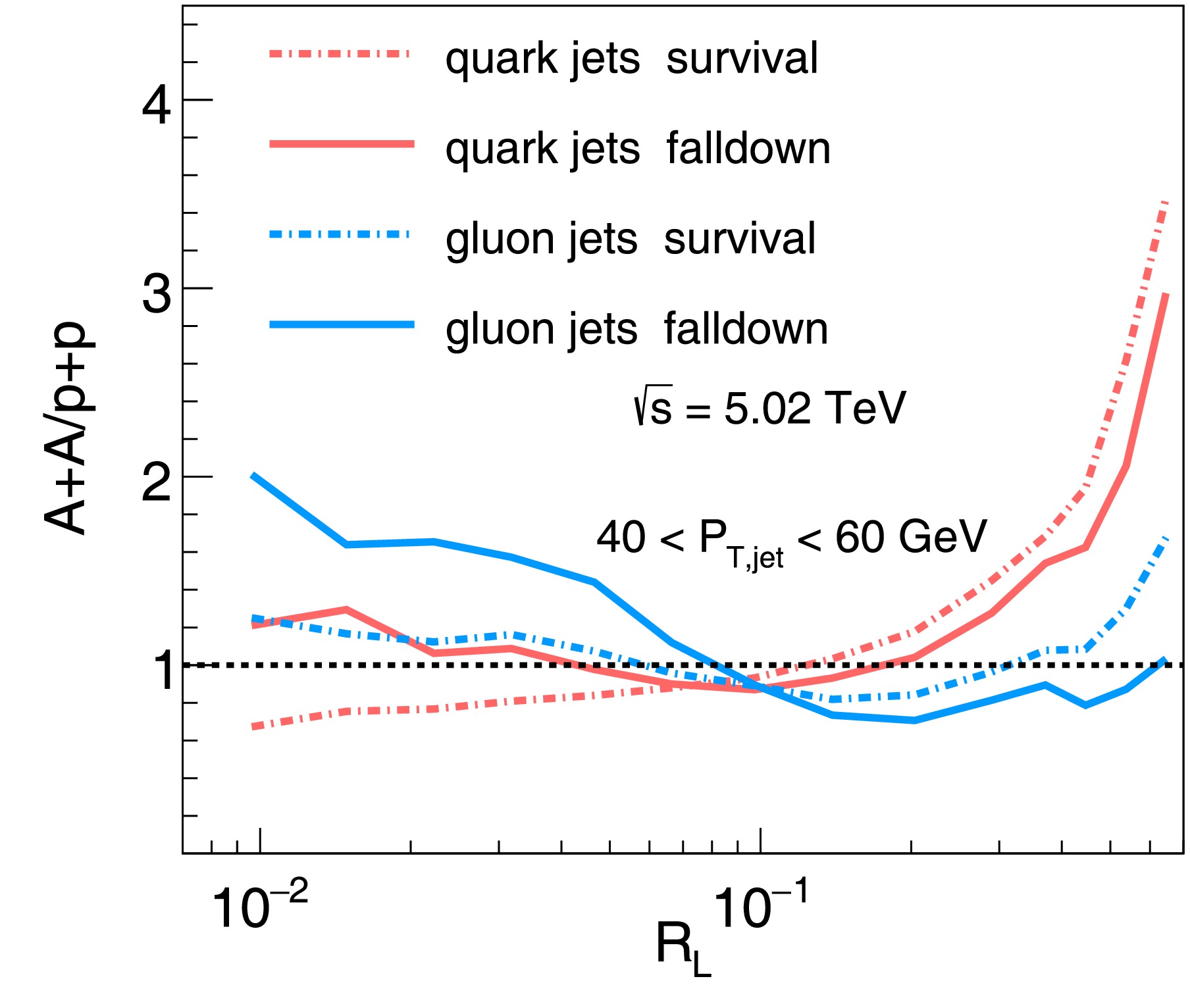
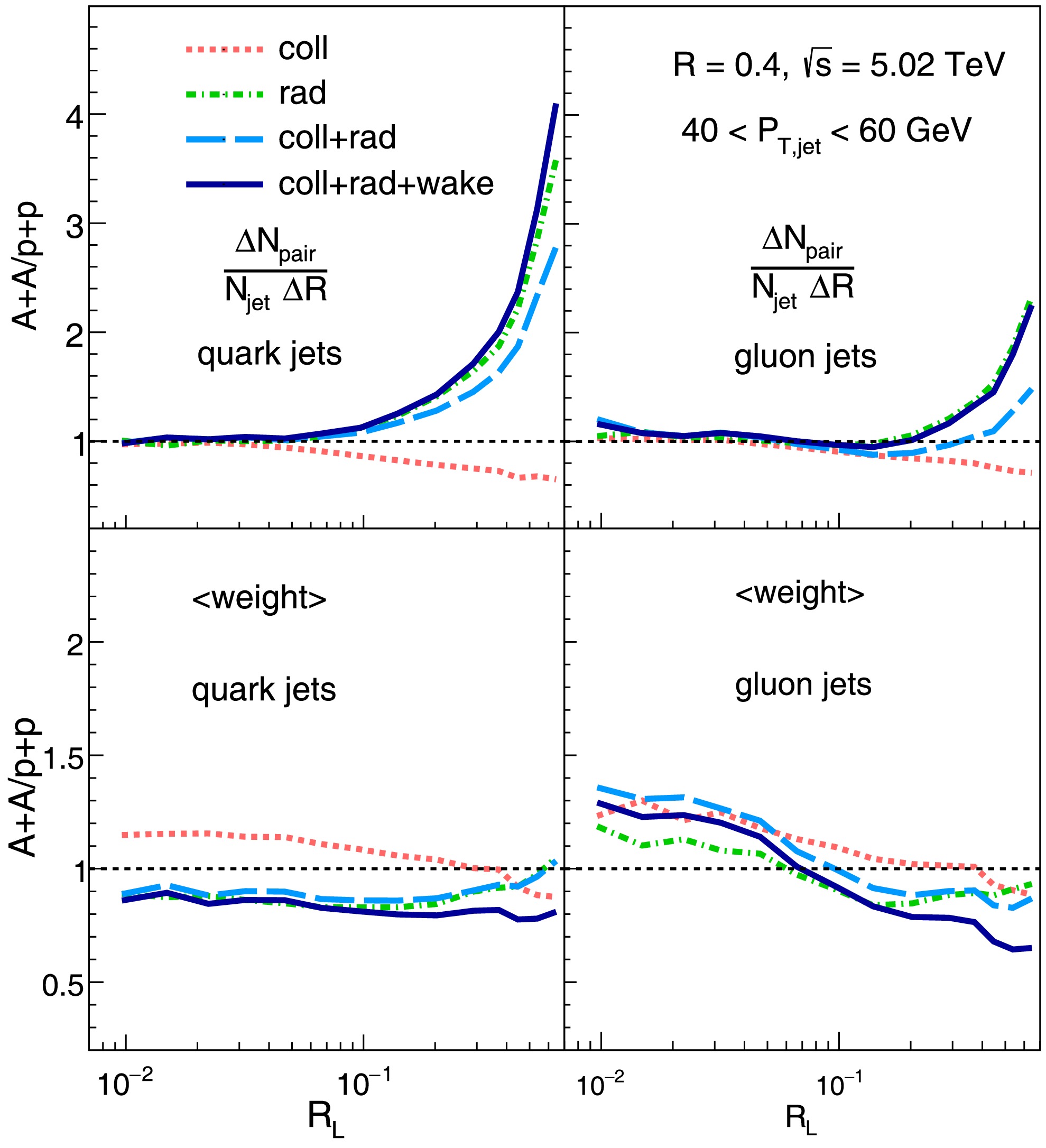
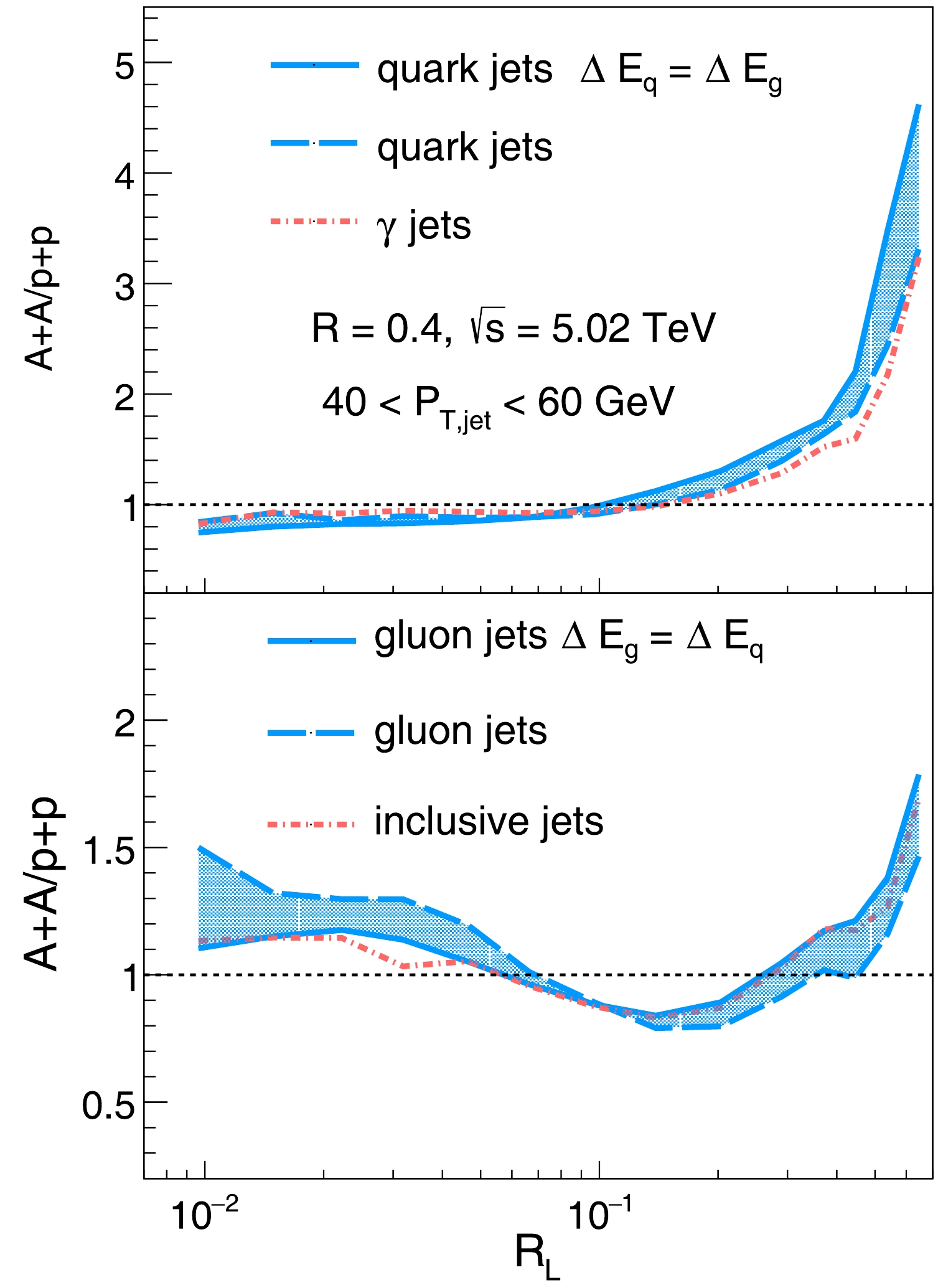
We present a systematic investigation of flavor-dependent jet quenching using energy-energy correlators (EEC) in\begin{document}$ \sqrt{s}=5.02 $\end{document} \begin{document}${R_{{\rm{L}}}}$\end{document} \begin{document}$ \langle{\rm{weight}}\rangle({R_{{\rm{L}}}}) $\end{document} \begin{document}${R_{{\rm{L}}}}$\end{document} \begin{document}$ \langle{\rm{weight}}\rangle({R_{{\rm{L}}}}) $\end{document} \begin{document}${R_{{\rm{L}}}}$\end{document} \begin{document}${R_{{\rm{L}}}}$\end{document} \begin{document}$ \hat{q} $\end{document}
We present a systematic investigation of flavor-dependent jet quenching using energy-energy correlators (EEC) in
2026, 50(2): 024001. doi: 10.1088/1674-1137/ae167d
Abstract:
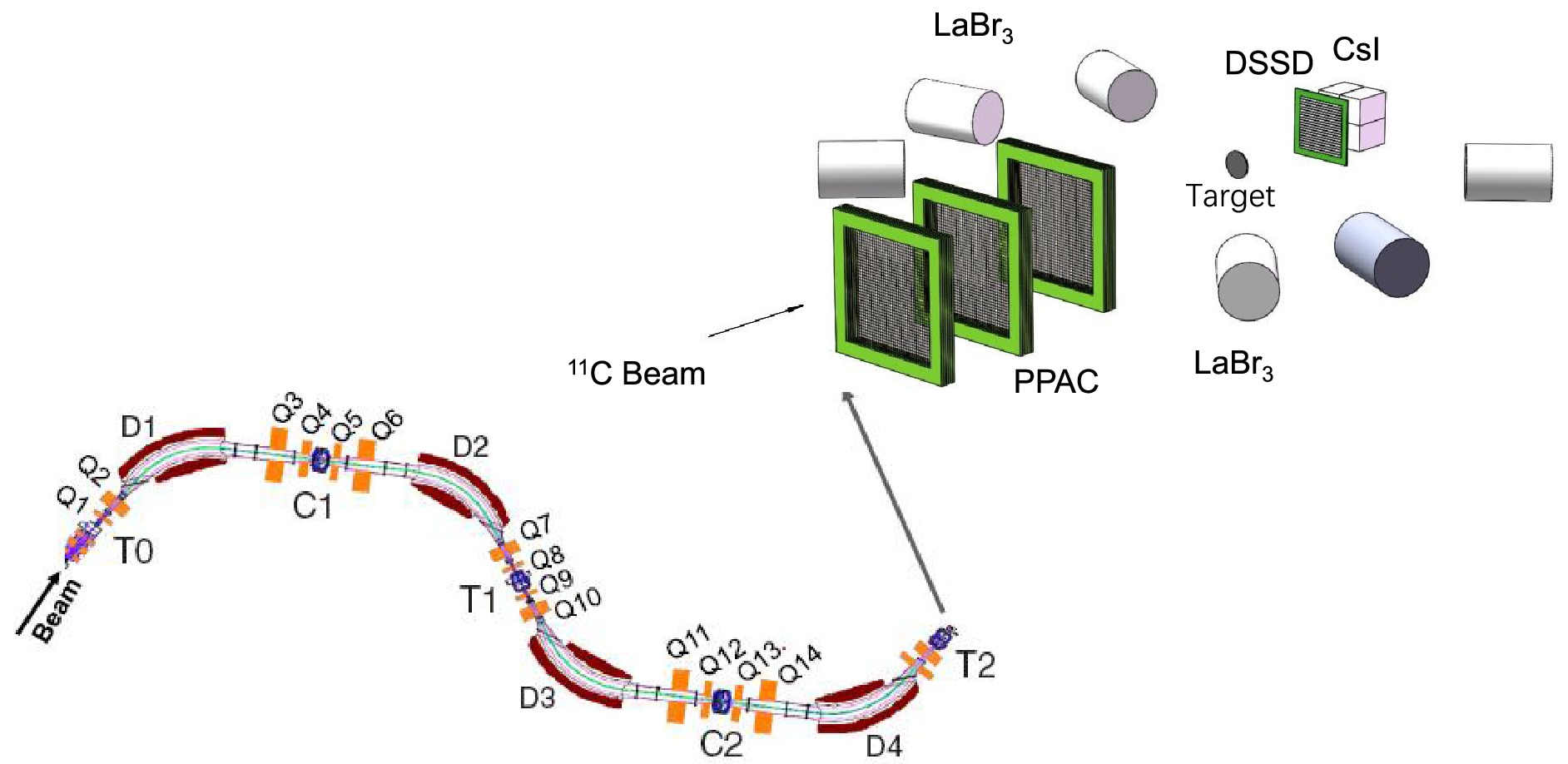
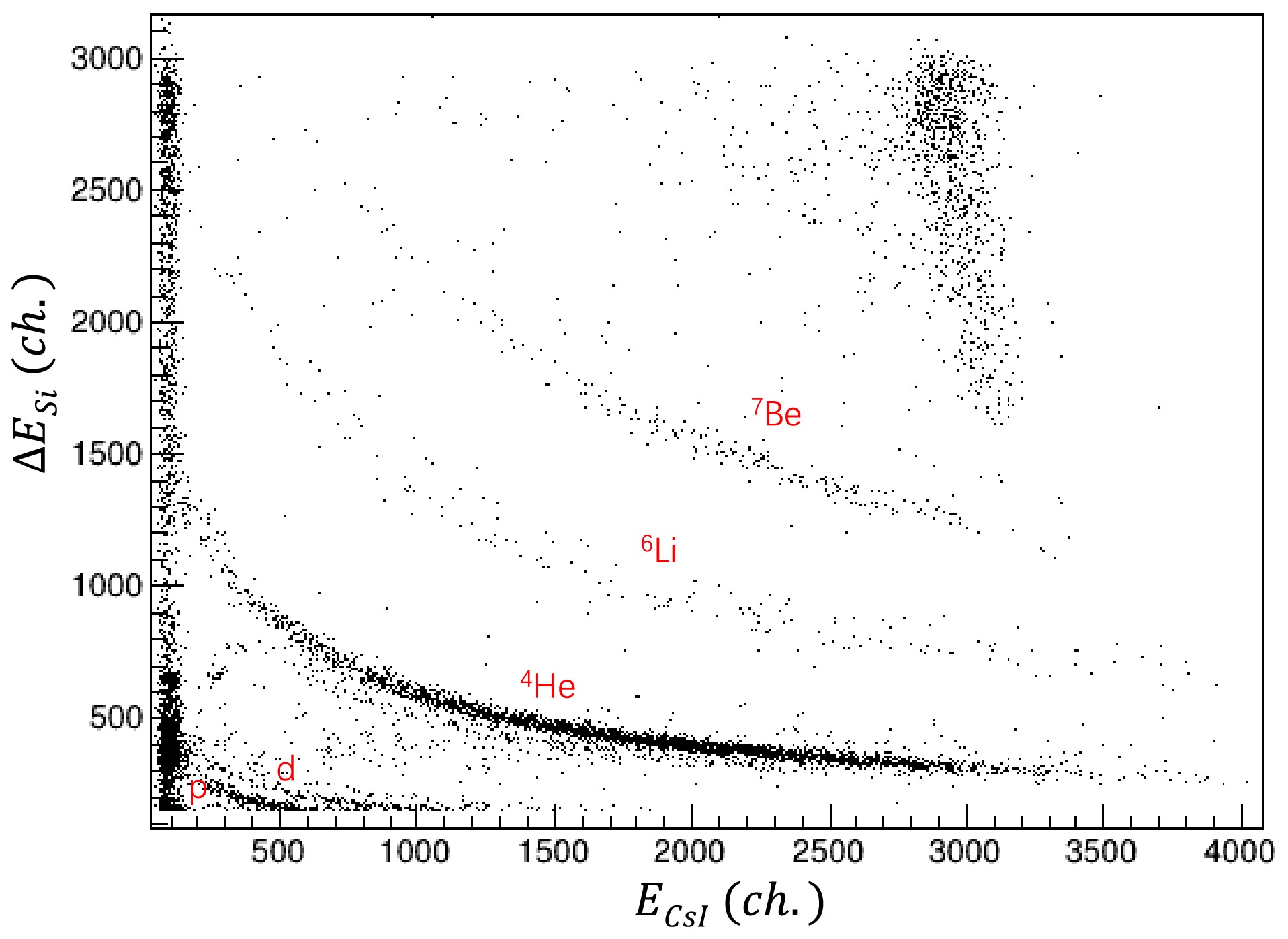
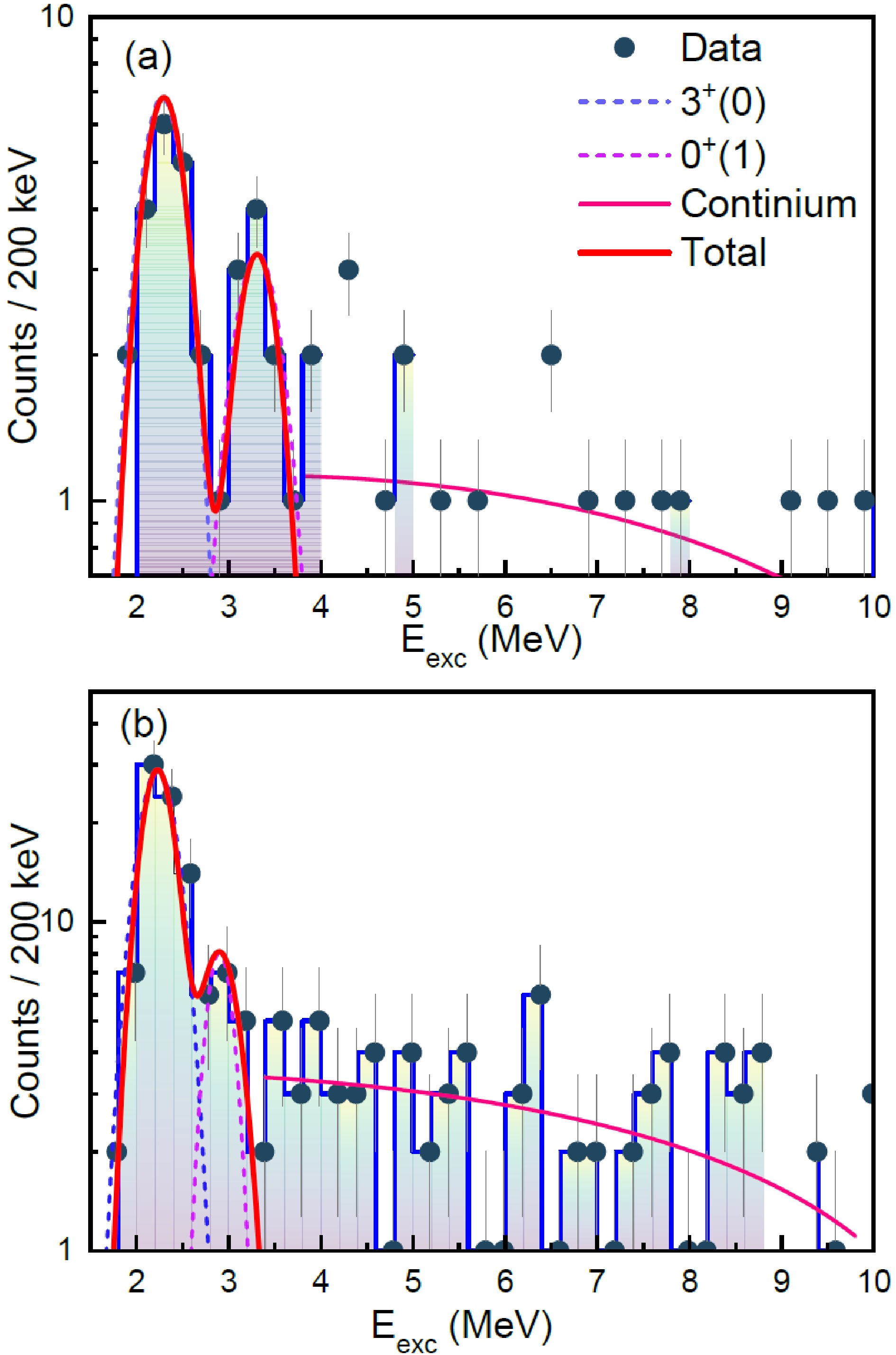
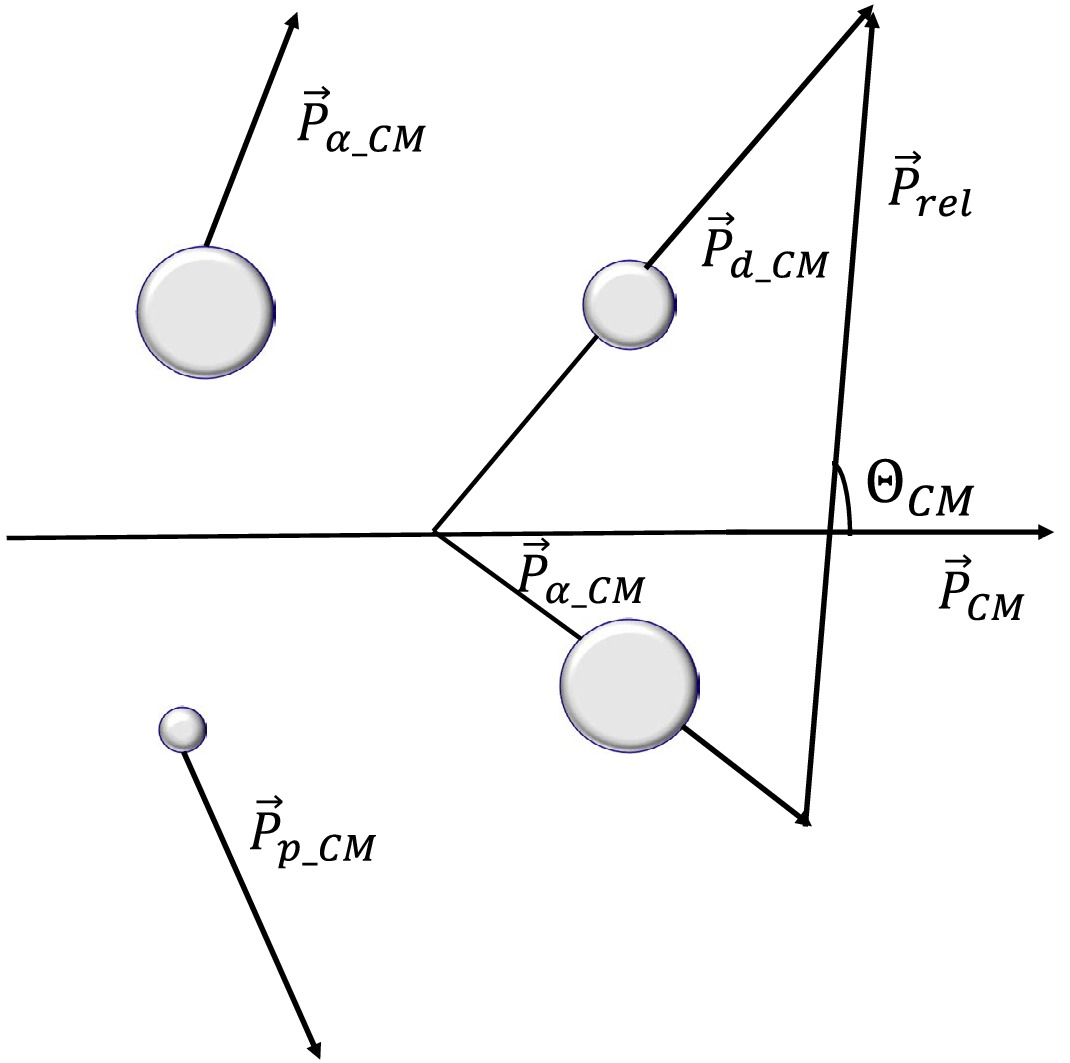
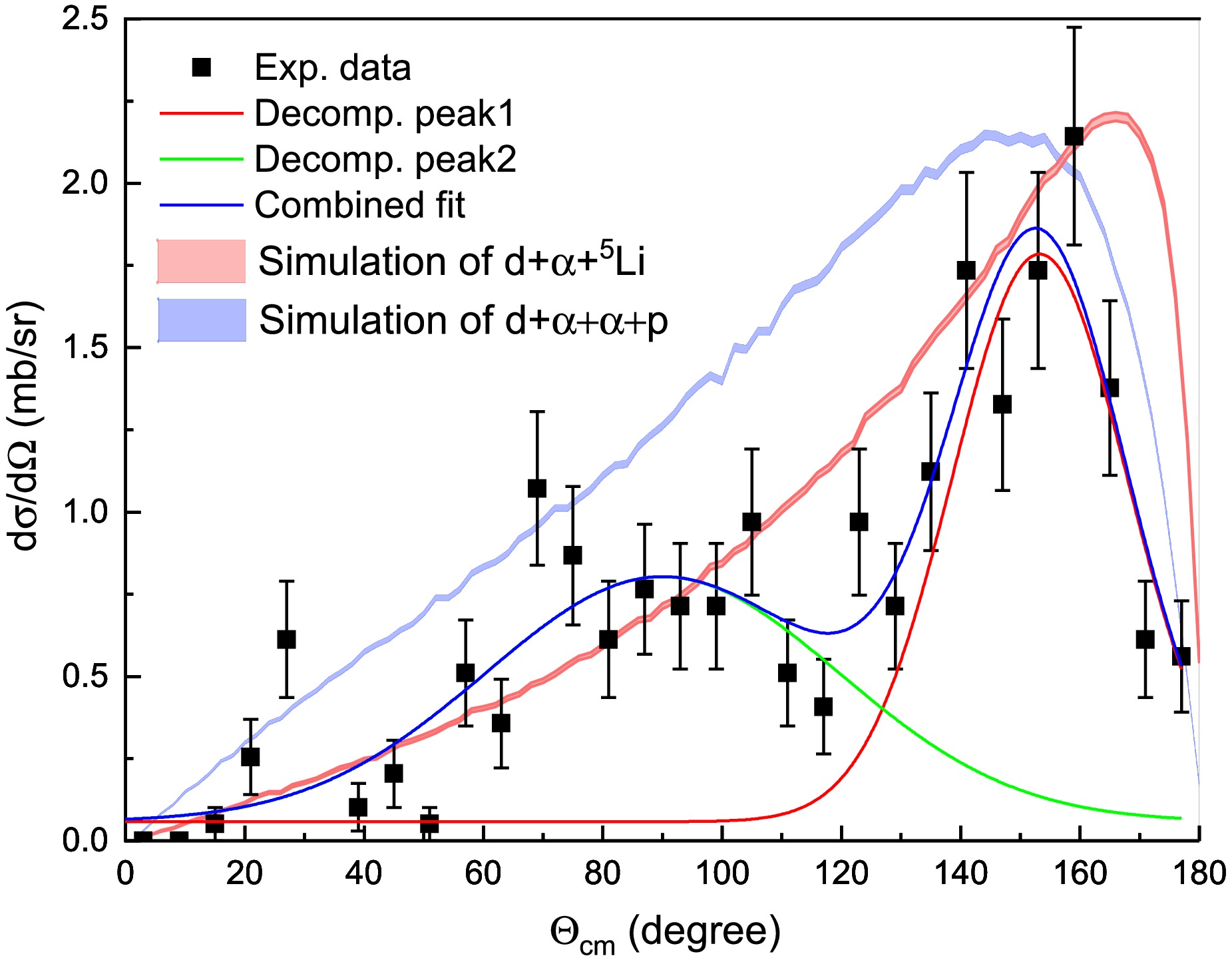
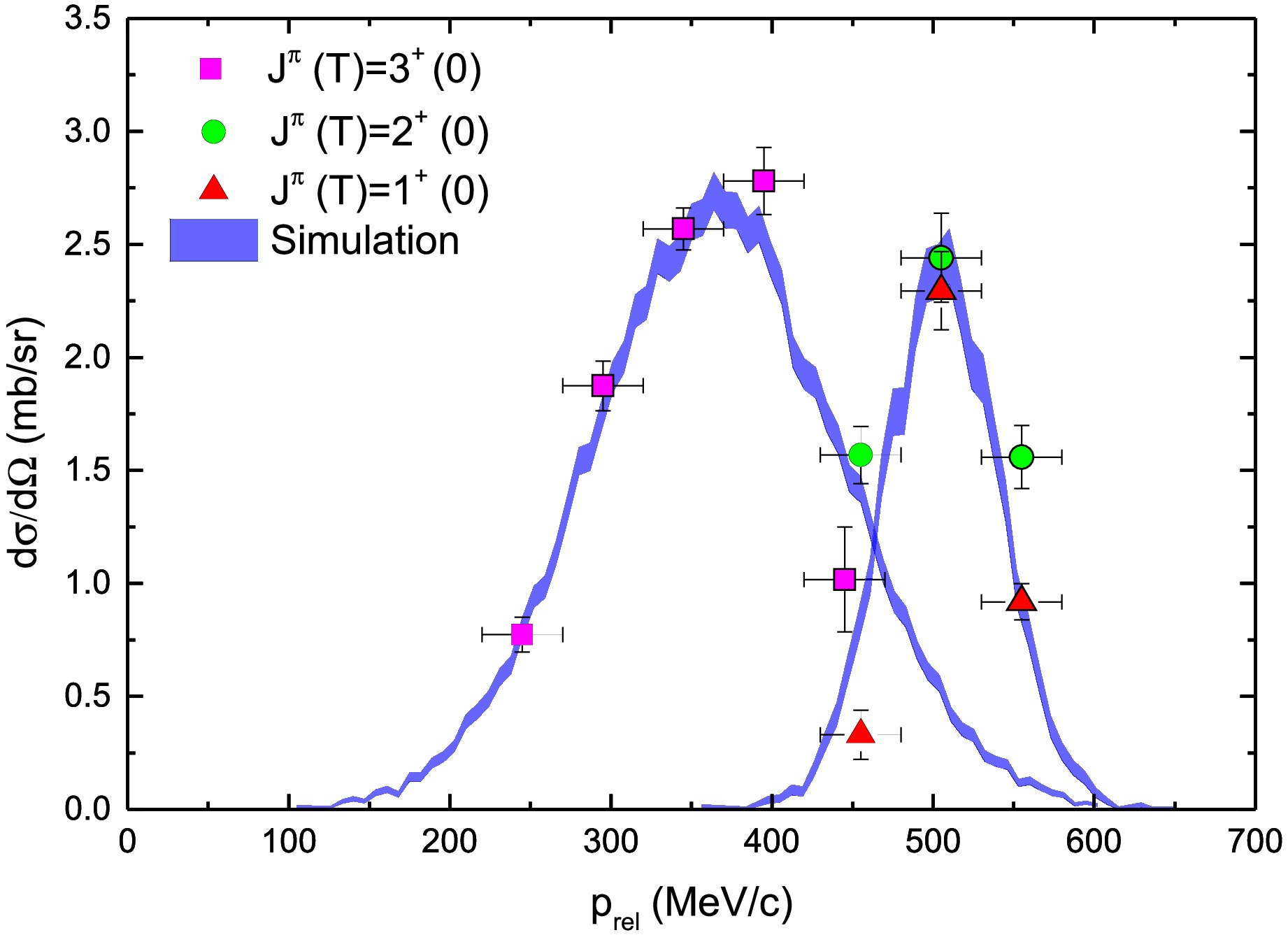
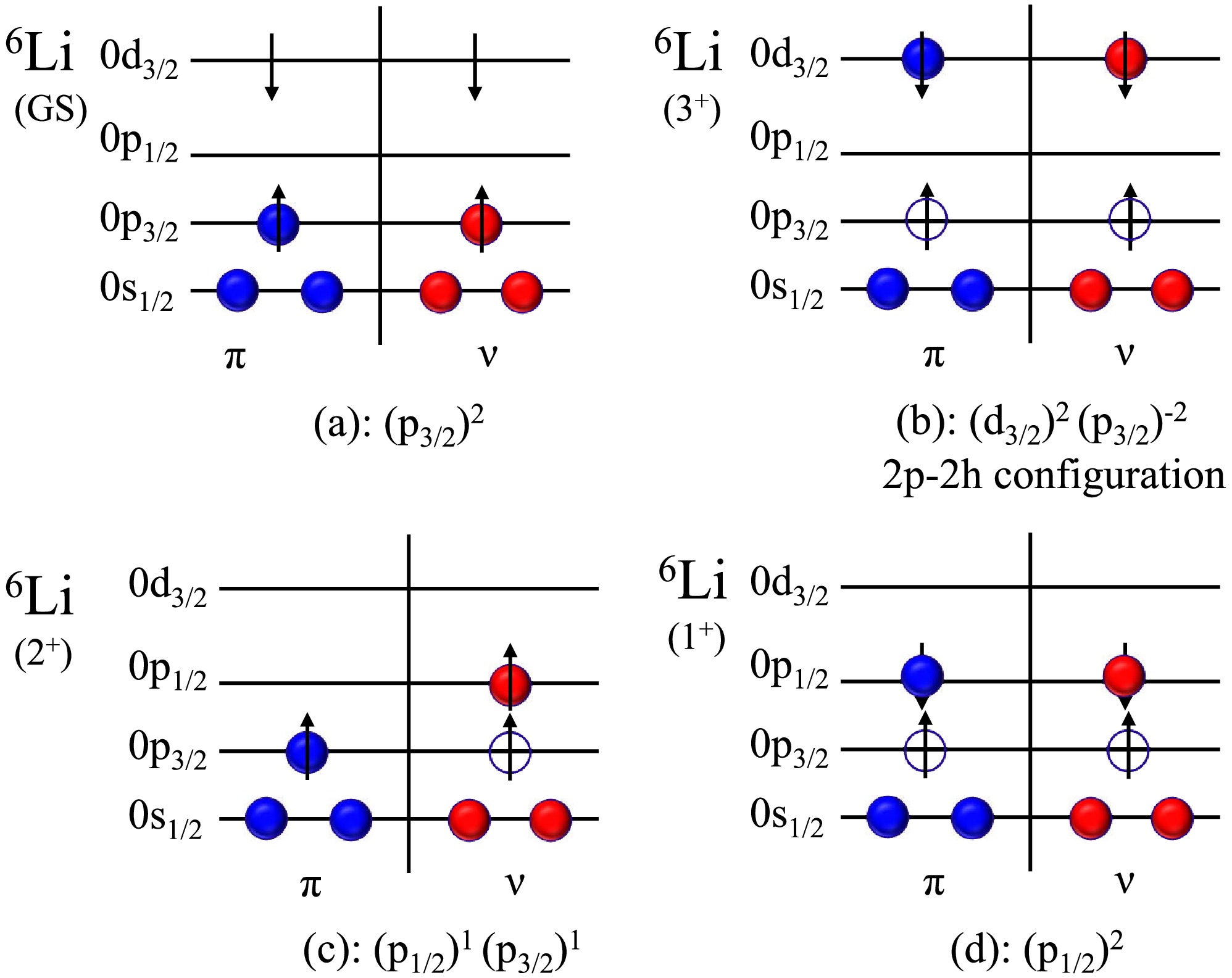
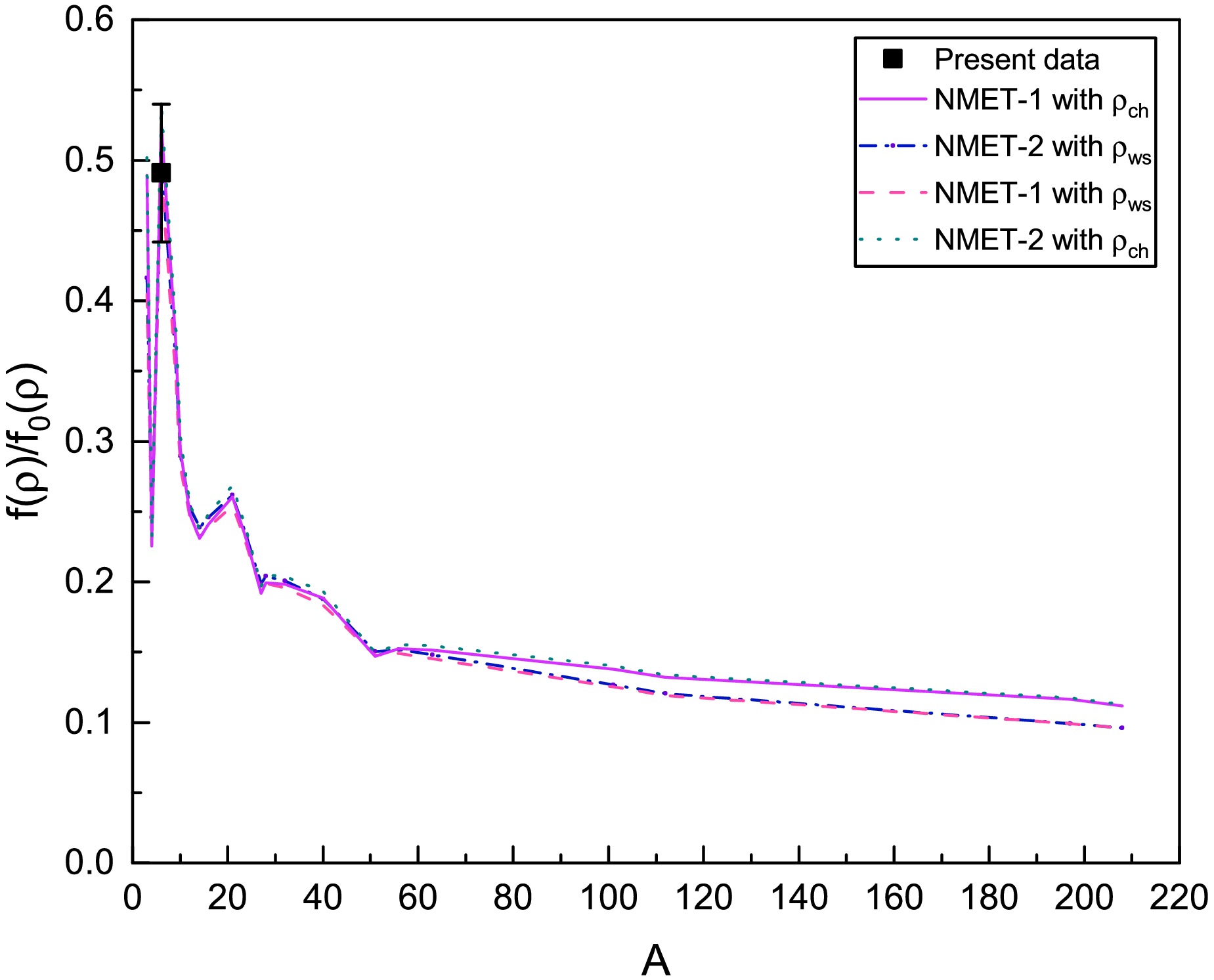
The cross section for the\begin{document}$ J^{\pi}(T)=3^{+}(0) $\end{document} \begin{document}$ ^{6} $\end{document} \begin{document}$ ^{6} $\end{document} \begin{document}$ T=0 $\end{document} \begin{document}$ J^{\pi}(T)=0^{+}(1) $\end{document} \begin{document}$ T=1 $\end{document} \begin{document}$ ^{6} $\end{document}
The cross section for the
2026, 50(2): 024101. doi: 10.1088/1674-1137/ae0999
Abstract:
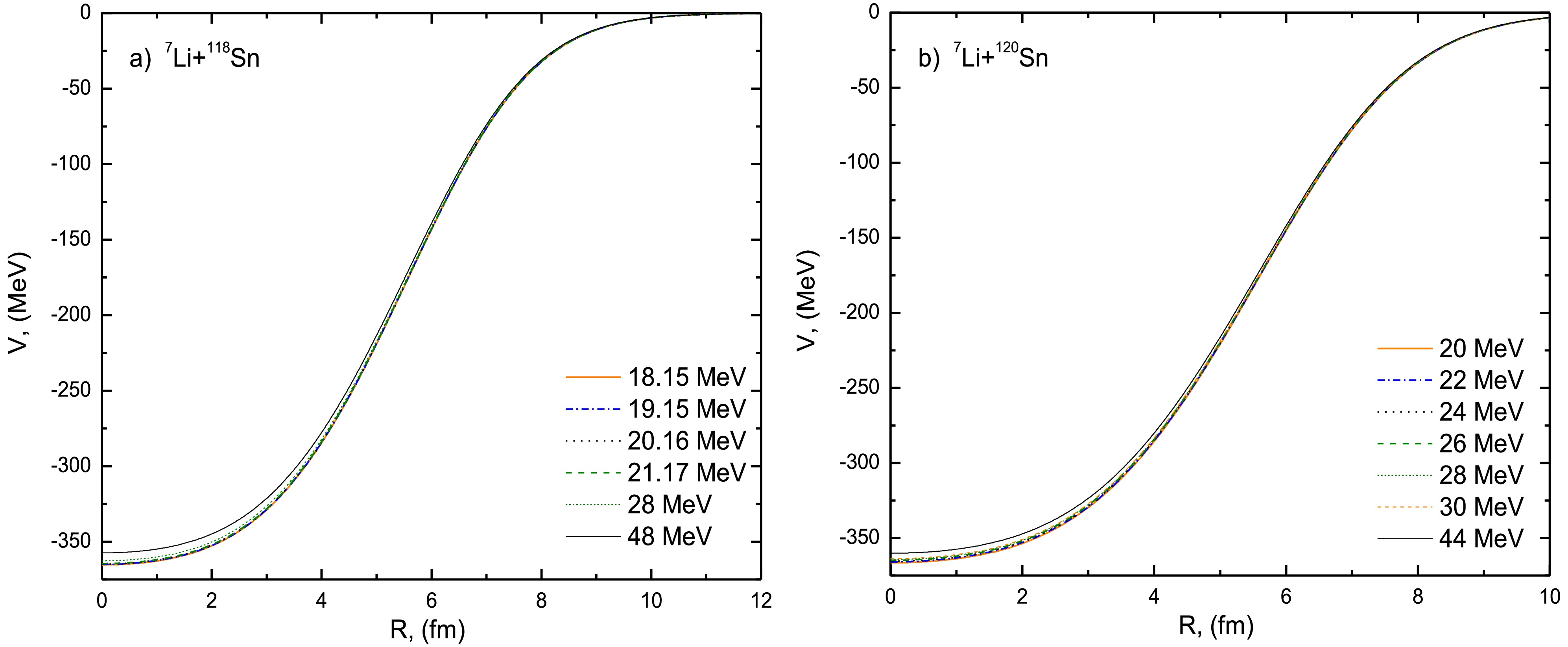
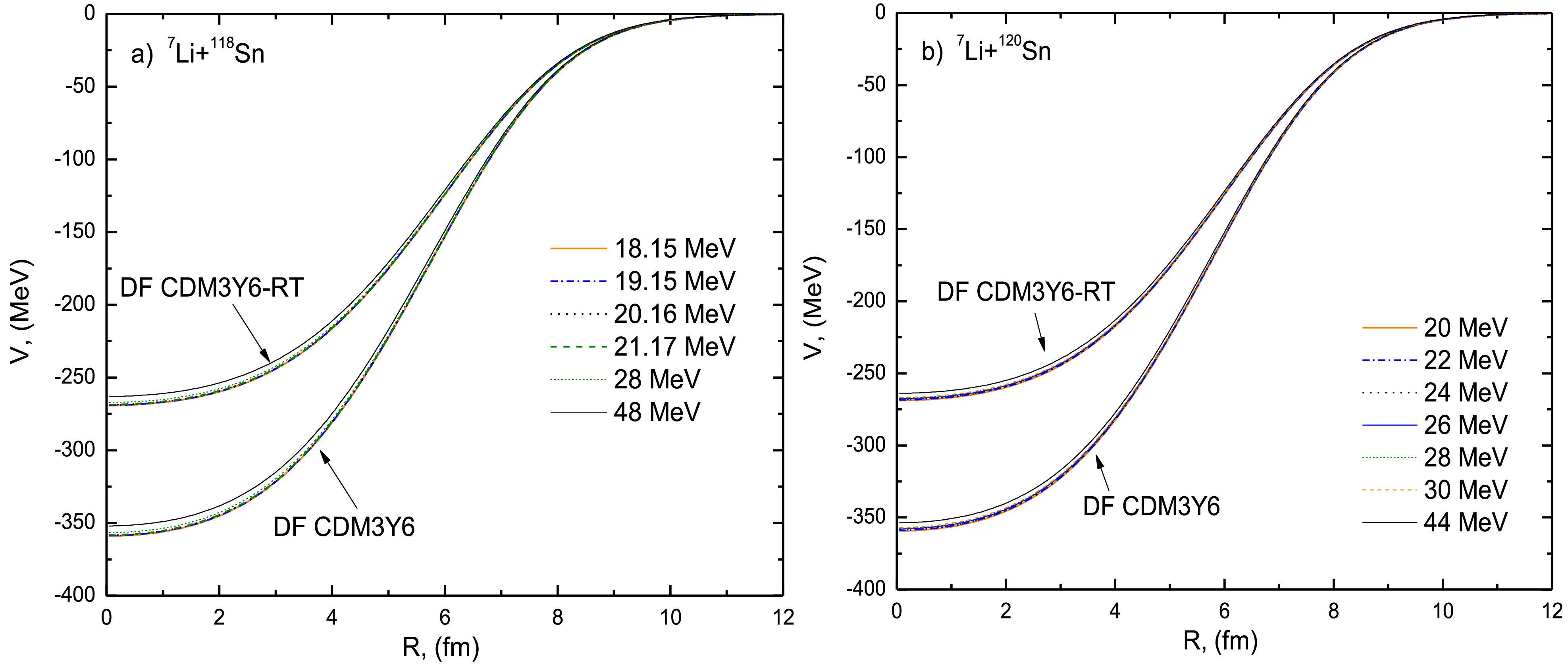
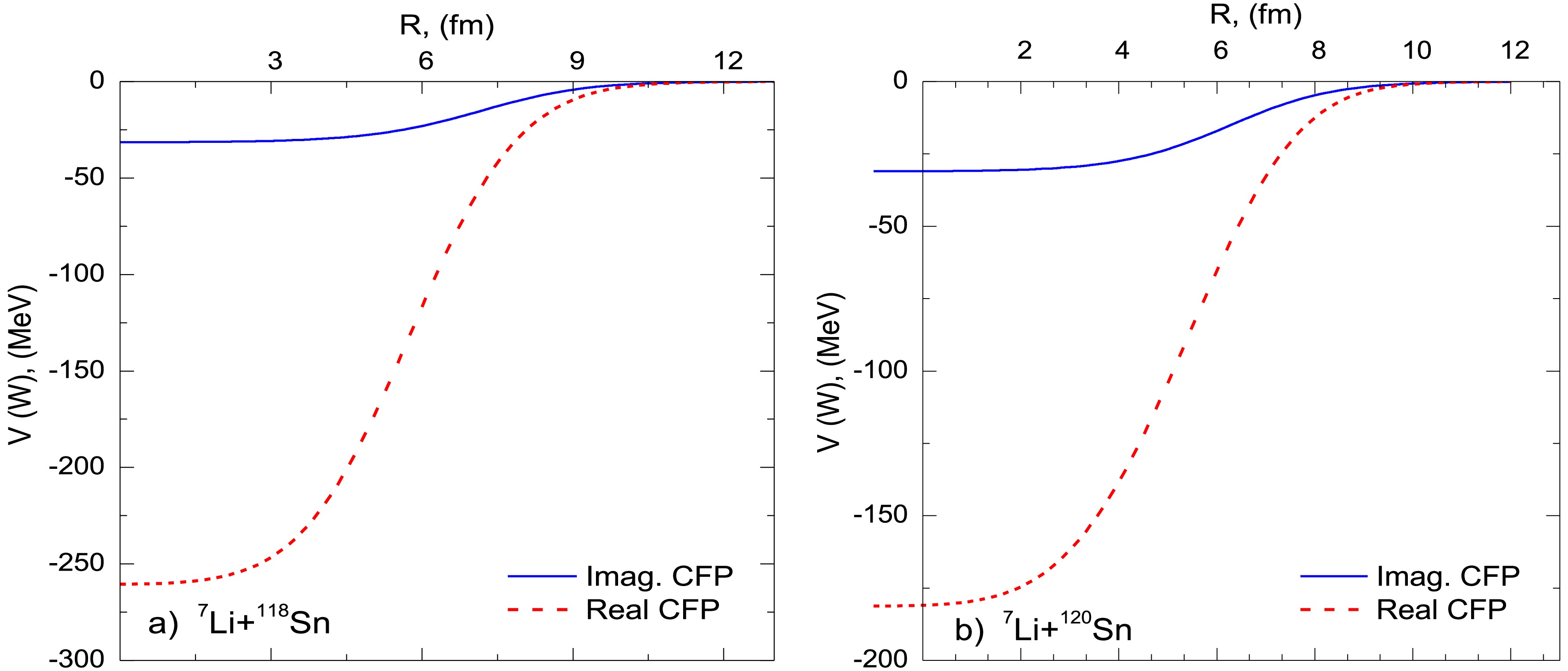
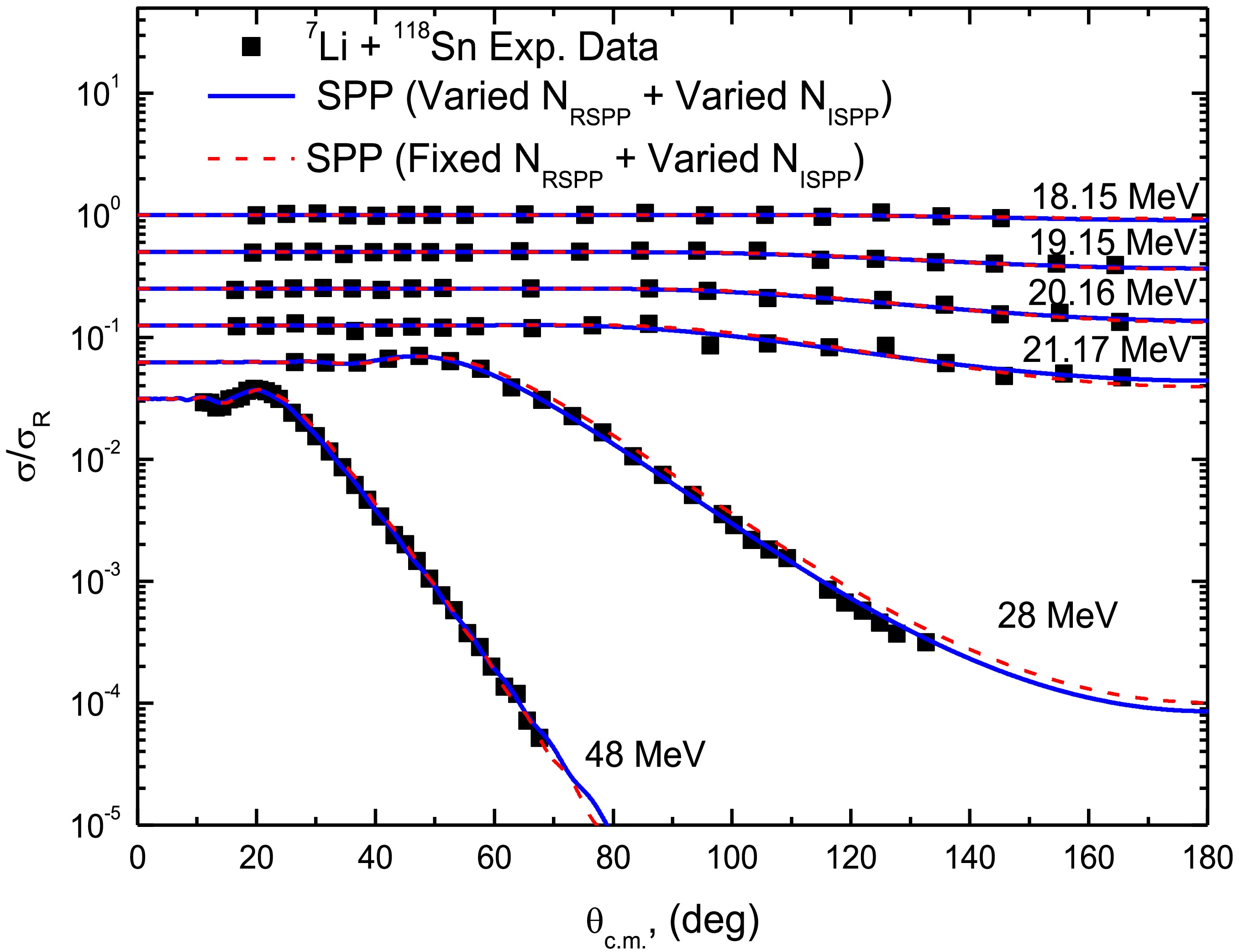
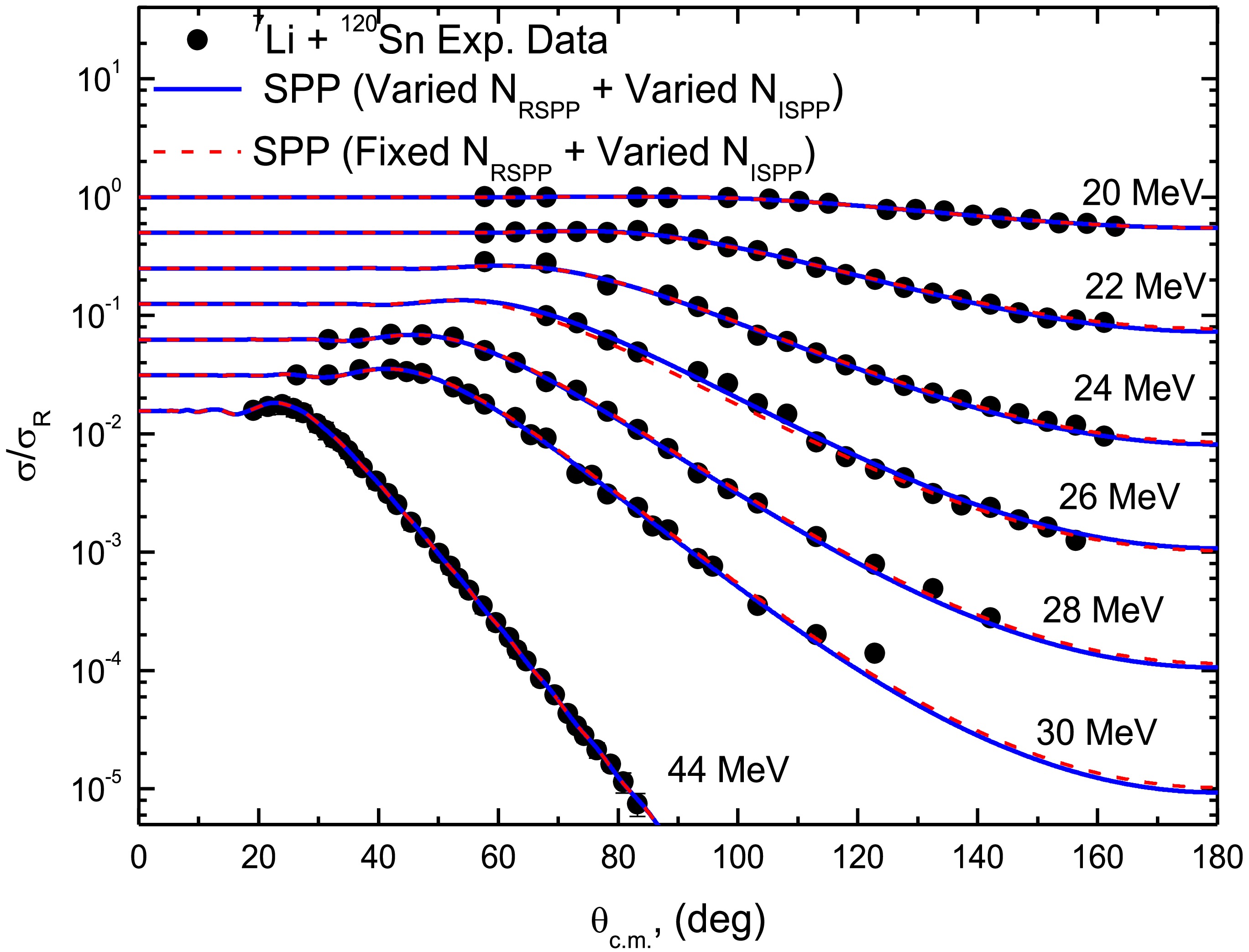
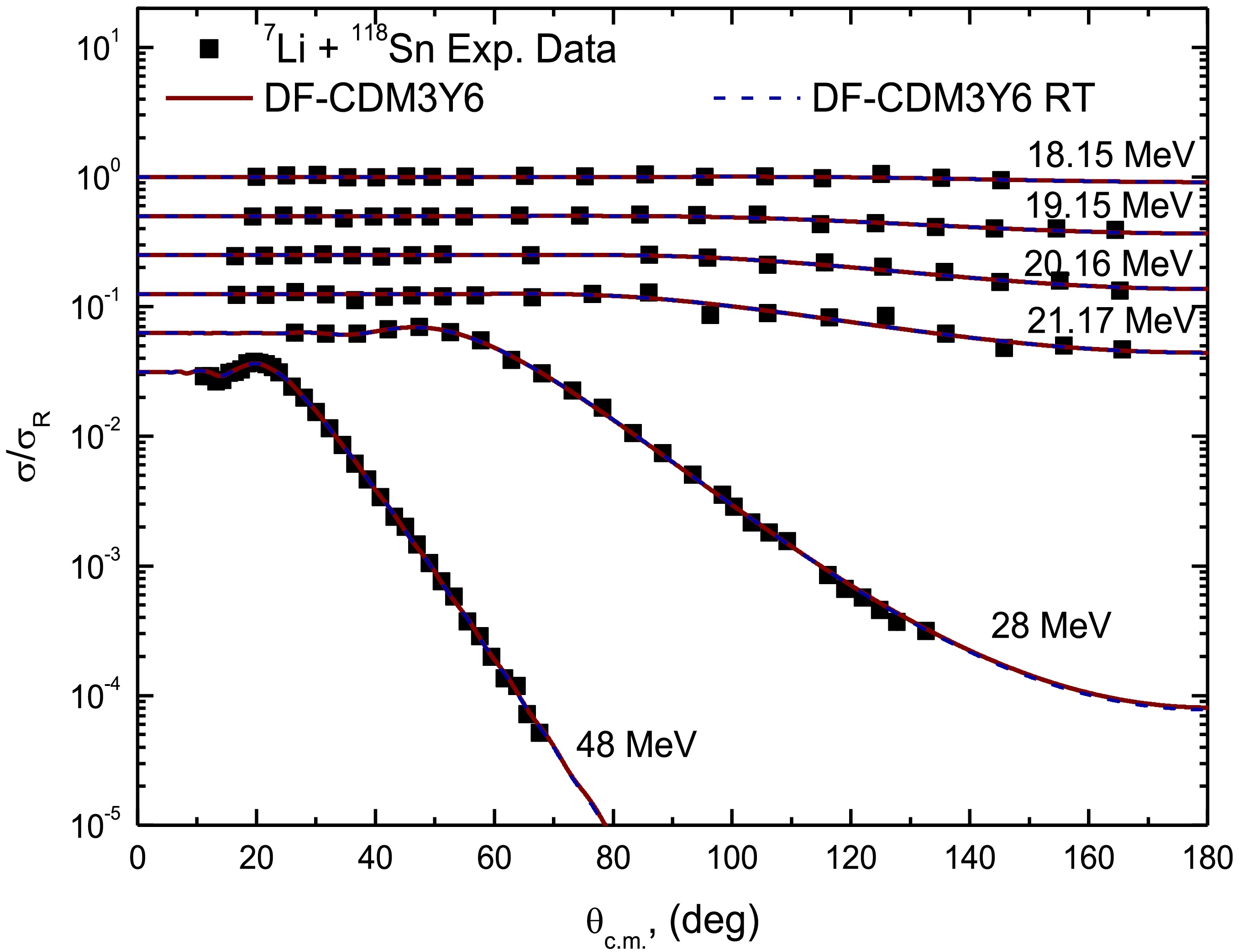
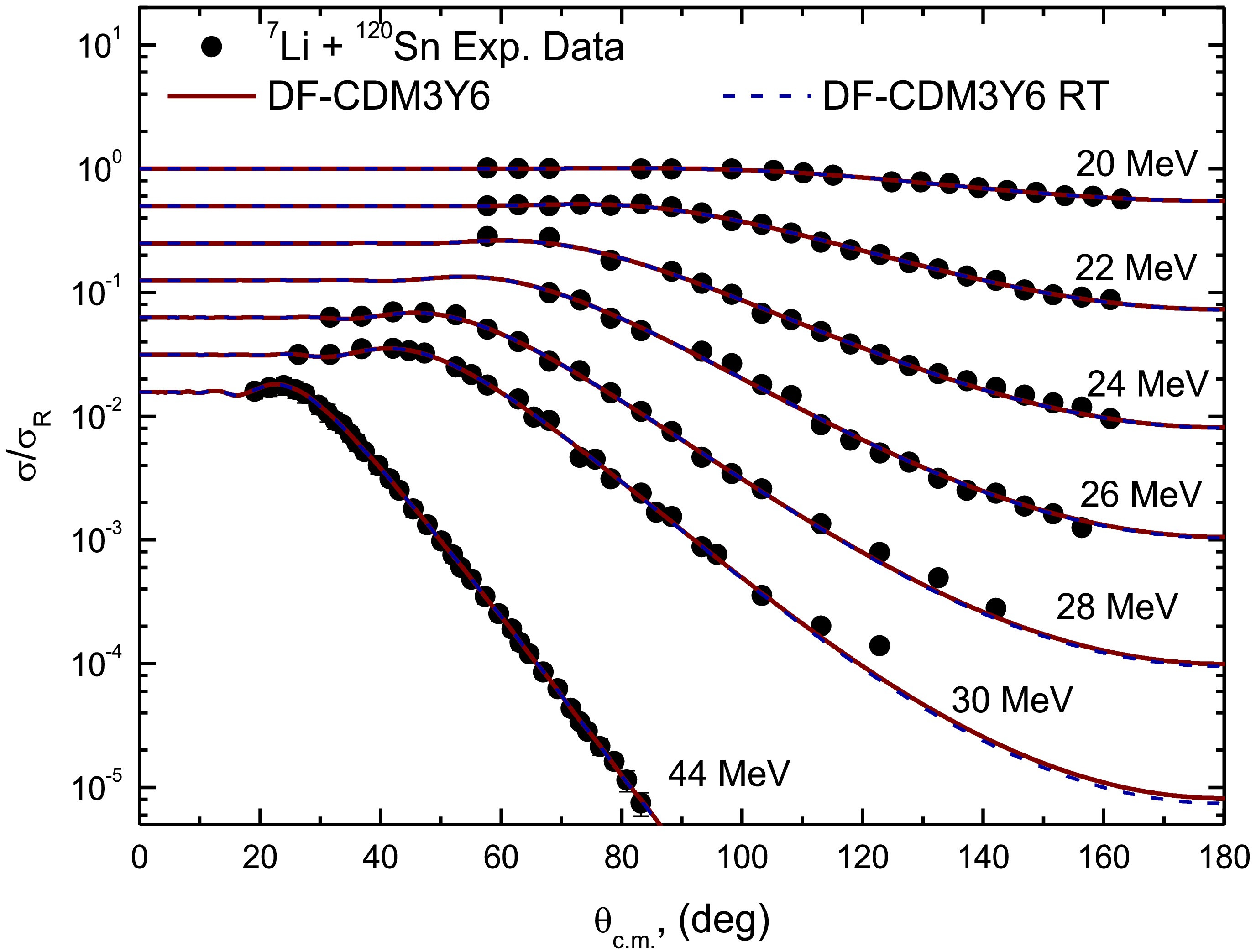
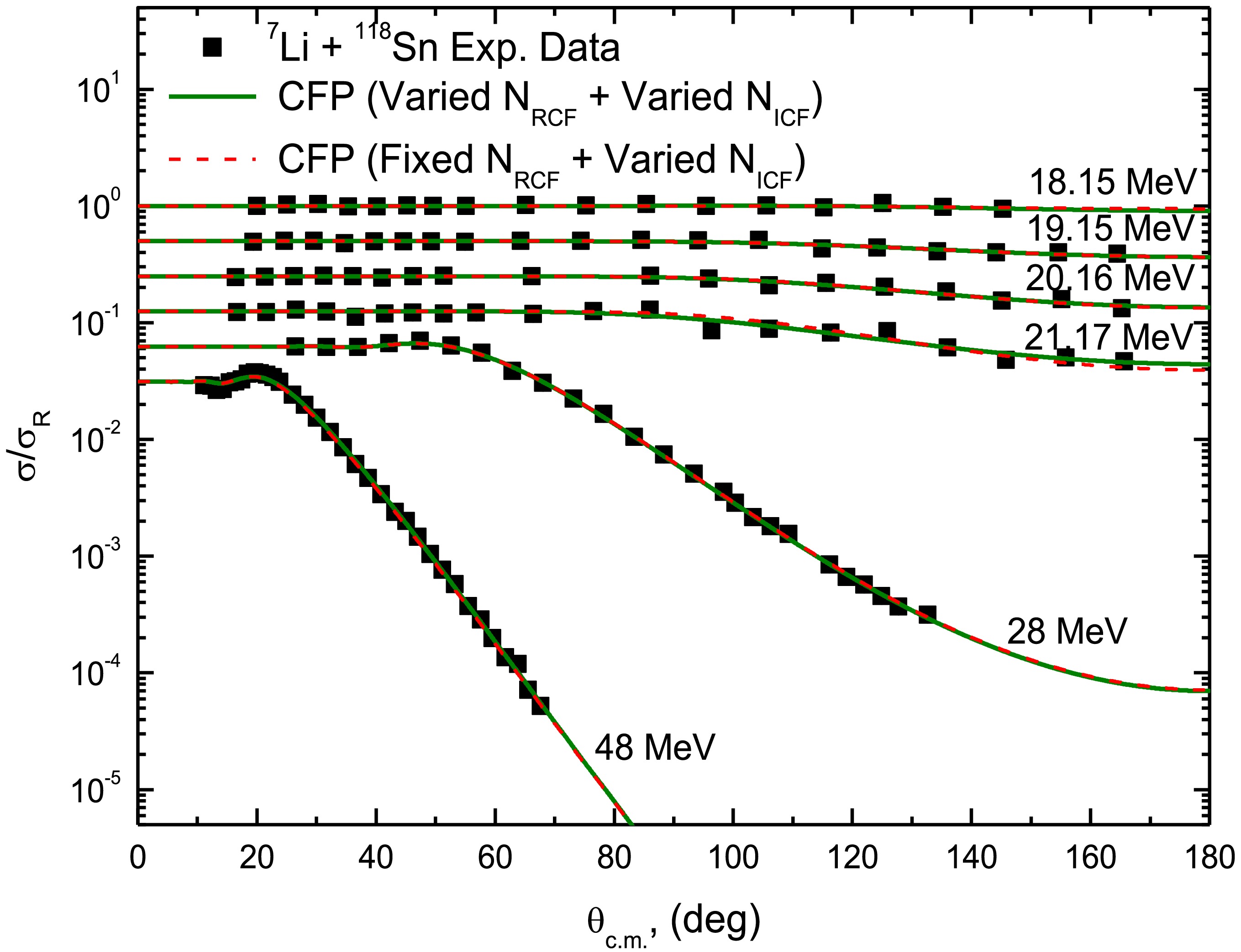
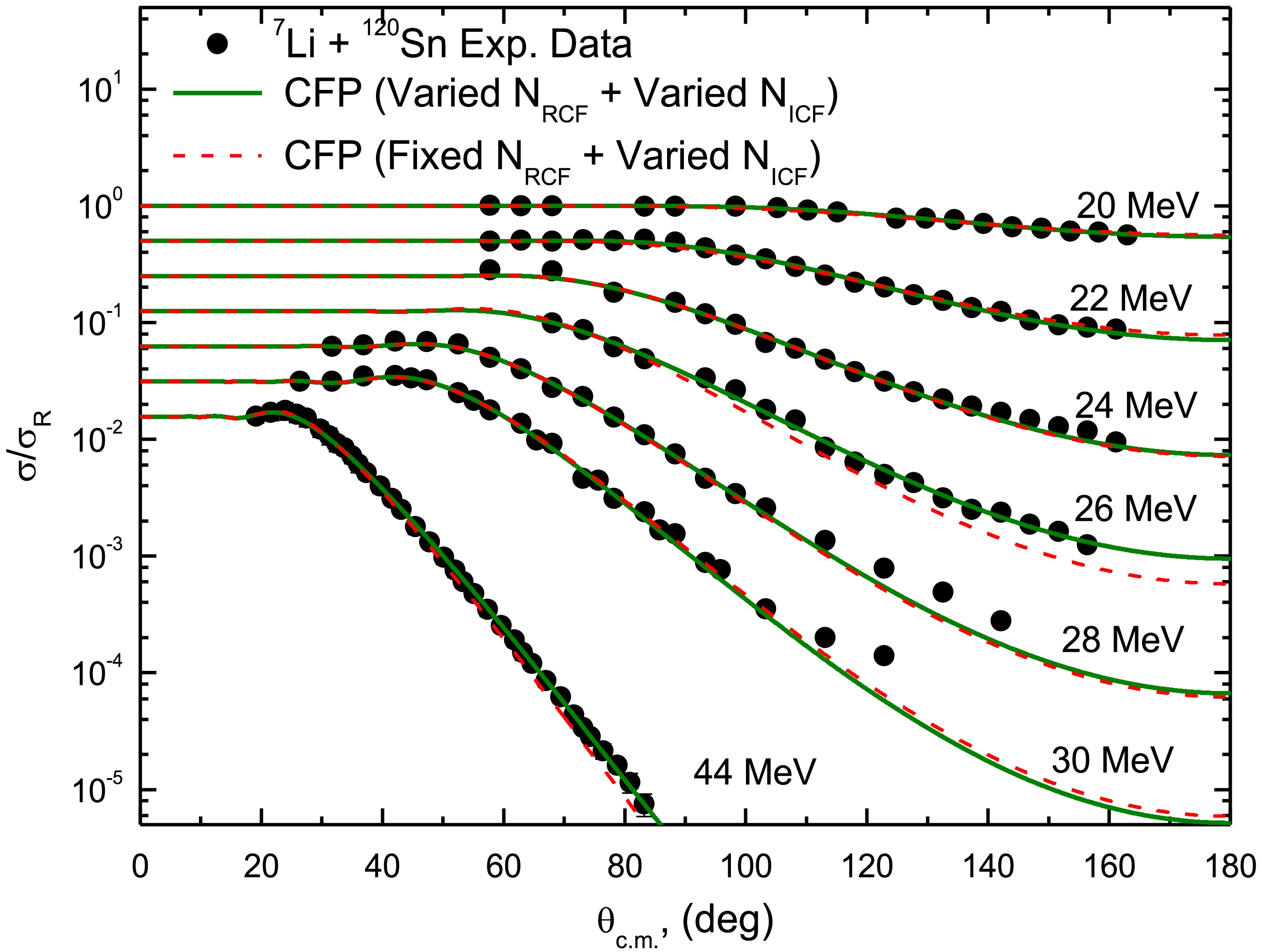
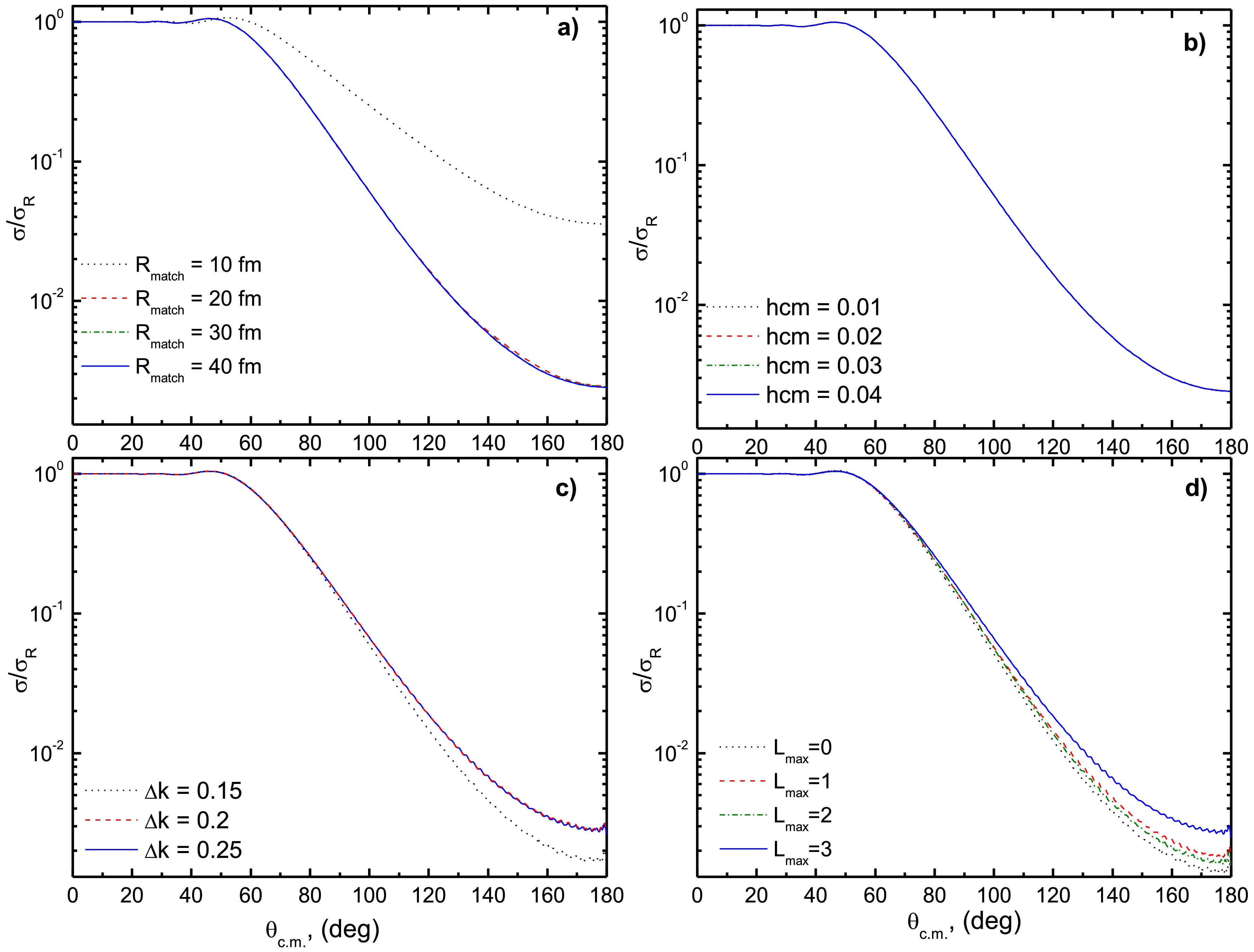
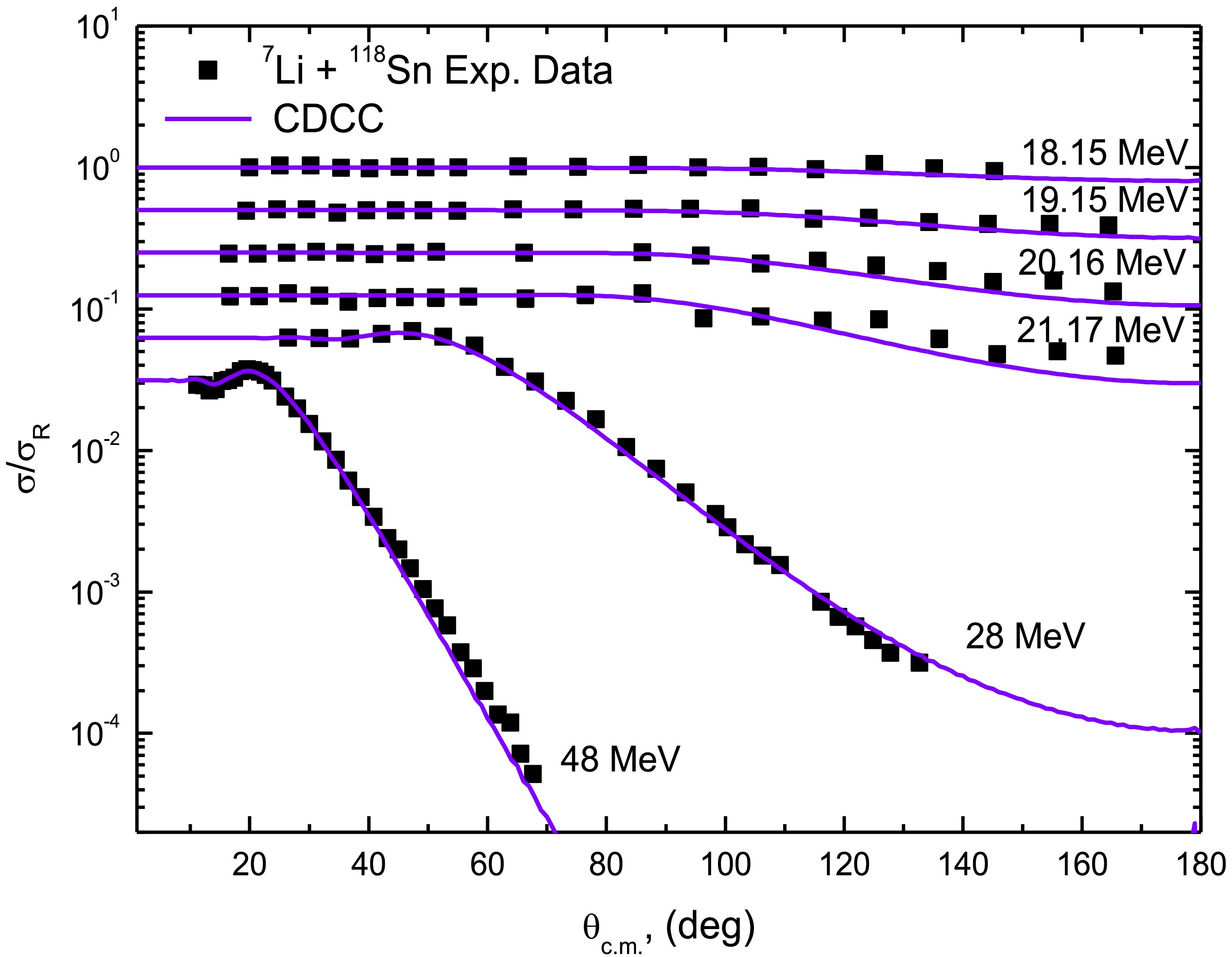
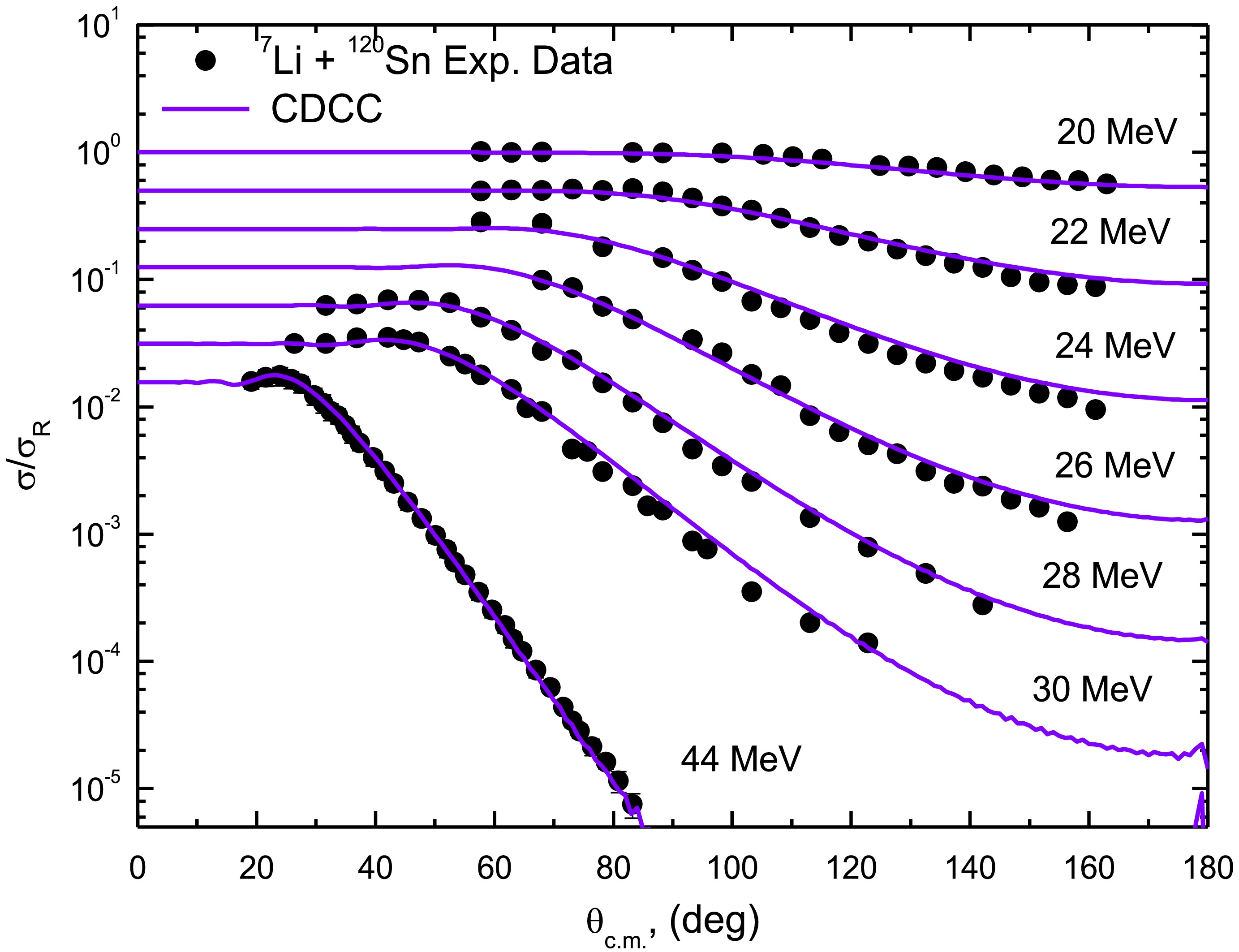
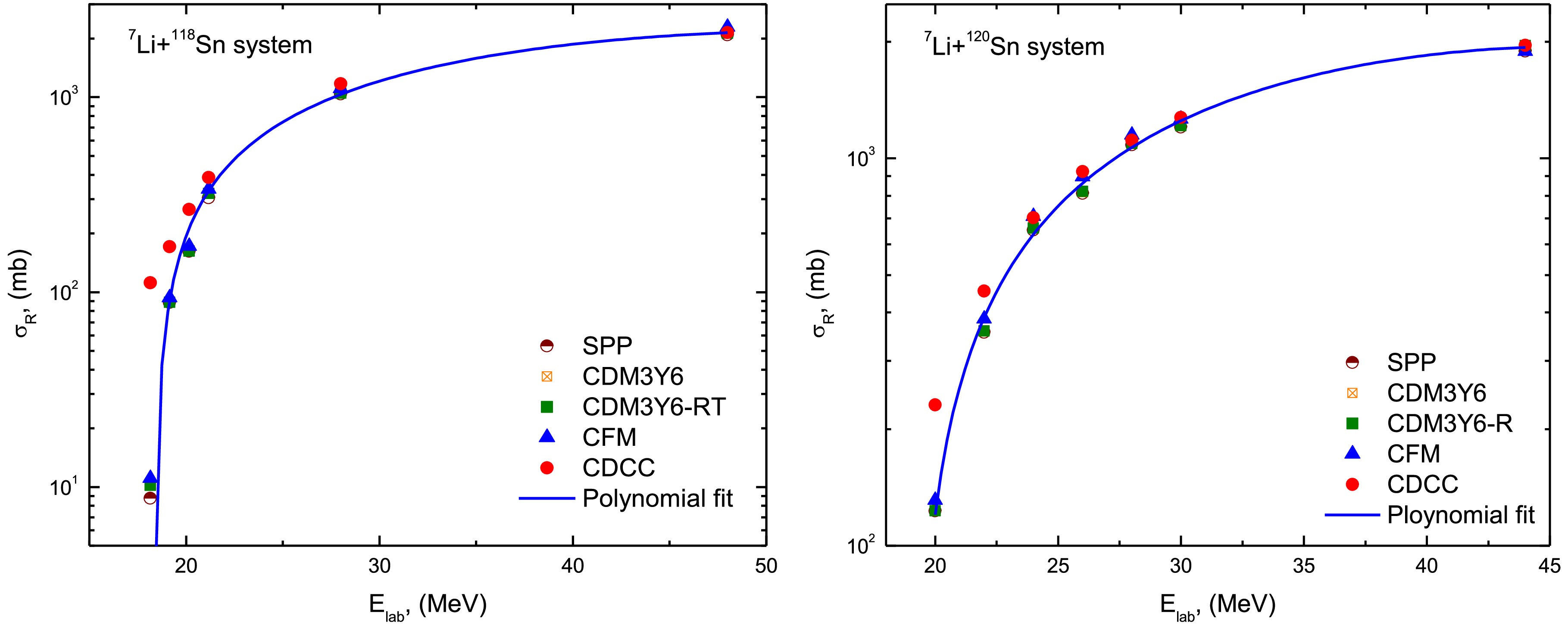
The breakup of weakly-bound projectiles has been shown to significantly influence scattering processes, including elastic scattering. In this context, we revisit the angular distributions (ADs) for the elastic scattering of 7Li from 118Sn and 120Sn targets. The study analyzes 7Li + 118Sn ADs over the energy range of 18.15–48 MeV and 7Li + 120Sn ADs from 20 to 44 MeV, utilizing various nuclear interaction models, including the São Paulo potential, CDM3Y6 potential (with and without the rearrangement term), and cluster folding model. The results indicate that the real component of the folded potentials must be scaled down by 40–65% to achieve an accurate fit to the experimental ADs, underscoring the prominent role of 7Li breakup effects. Interestingly, the conventional threshold anomaly observed in reactions involving tightly bound nuclei is not present. Further analysis using the continuum discretized coupled channels (CDCC) approach provides excellent agreement with the data, reinforcing these findings.
The breakup of weakly-bound projectiles has been shown to significantly influence scattering processes, including elastic scattering. In this context, we revisit the angular distributions (ADs) for the elastic scattering of 7Li from 118Sn and 120Sn targets. The study analyzes 7Li + 118Sn ADs over the energy range of 18.15–48 MeV and 7Li + 120Sn ADs from 20 to 44 MeV, utilizing various nuclear interaction models, including the São Paulo potential, CDM3Y6 potential (with and without the rearrangement term), and cluster folding model. The results indicate that the real component of the folded potentials must be scaled down by 40–65% to achieve an accurate fit to the experimental ADs, underscoring the prominent role of 7Li breakup effects. Interestingly, the conventional threshold anomaly observed in reactions involving tightly bound nuclei is not present. Further analysis using the continuum discretized coupled channels (CDCC) approach provides excellent agreement with the data, reinforcing these findings.
2026, 50(2): 024102. doi: 10.1088/1674-1137/ae07b5
Abstract:
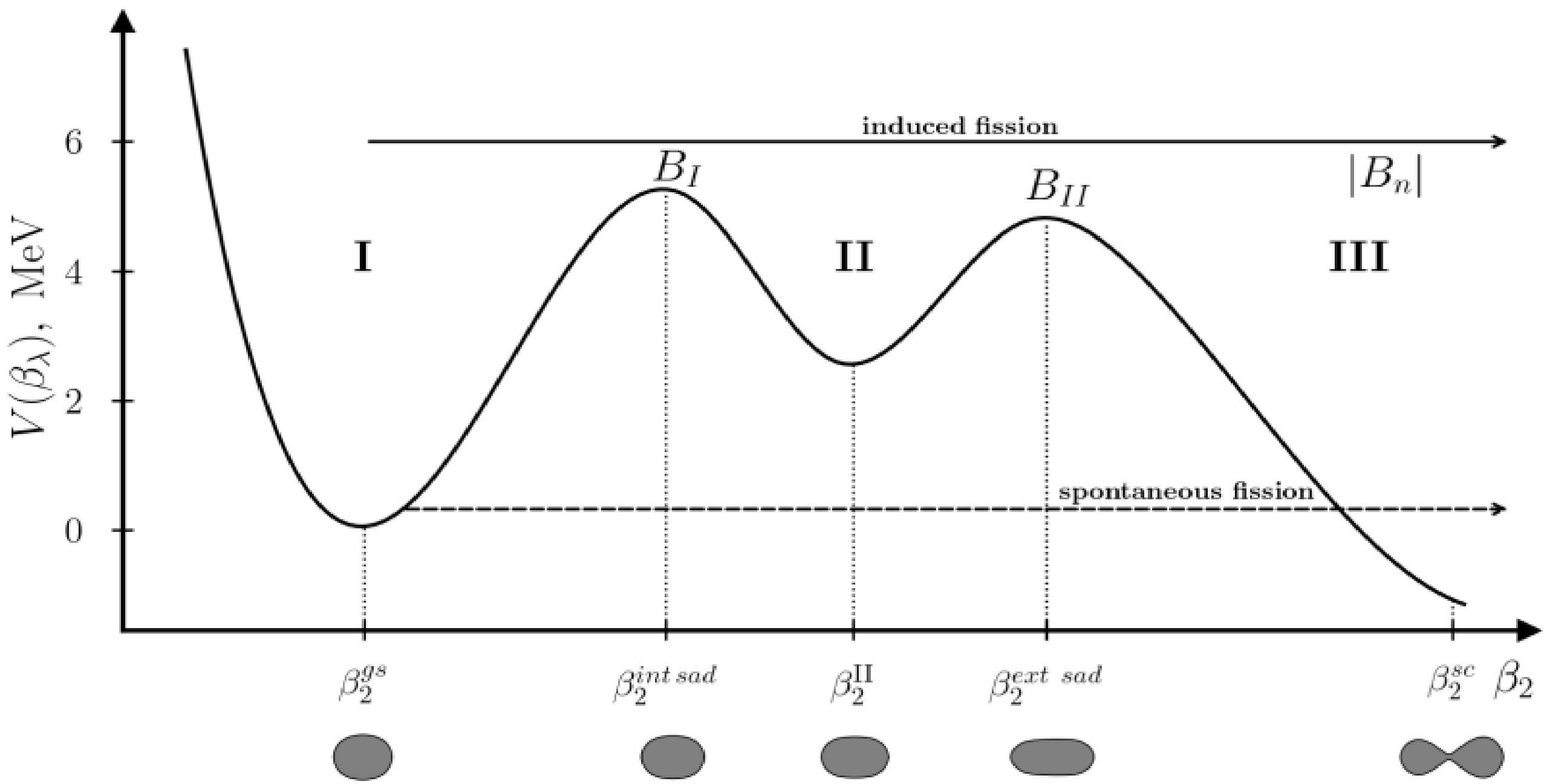
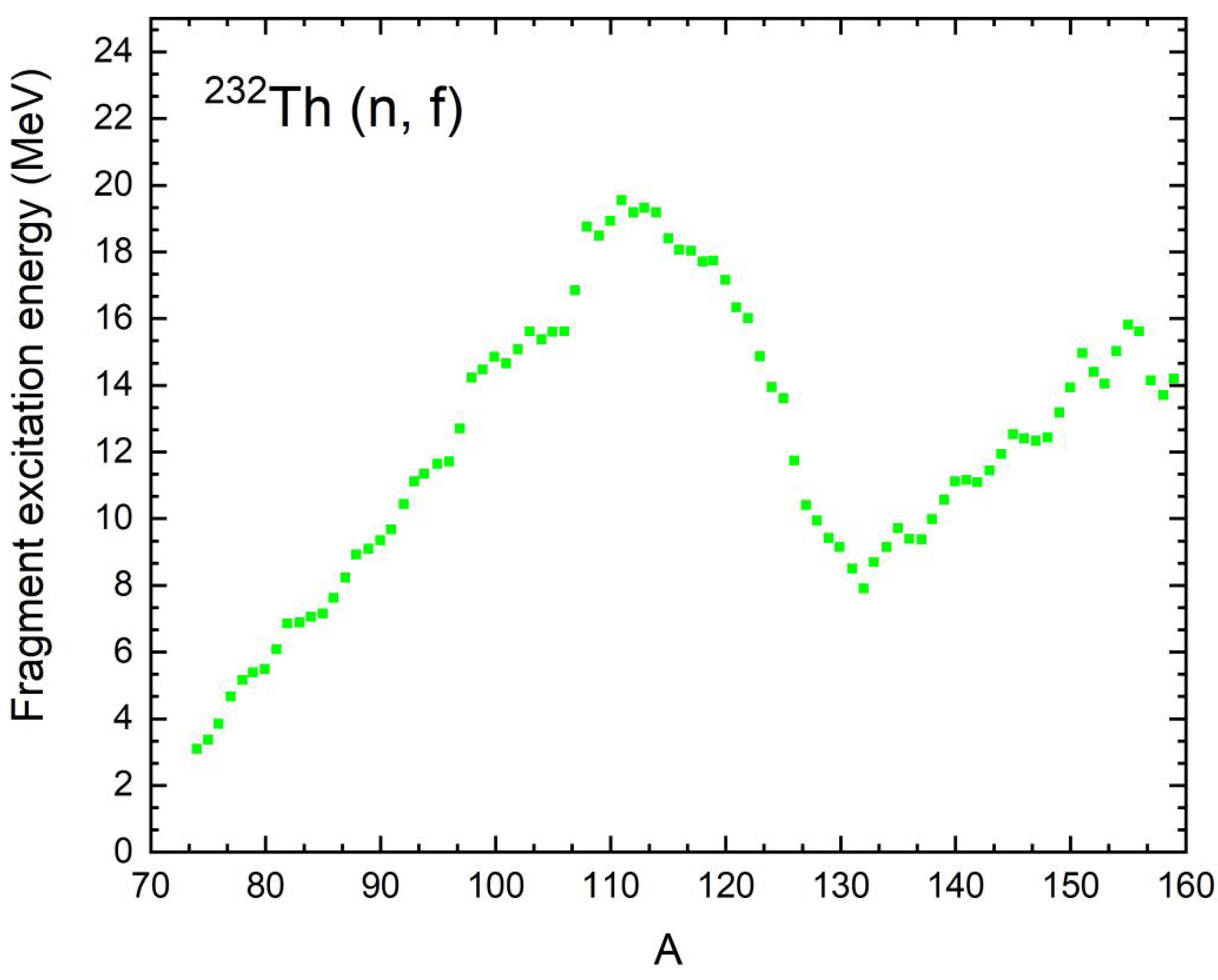
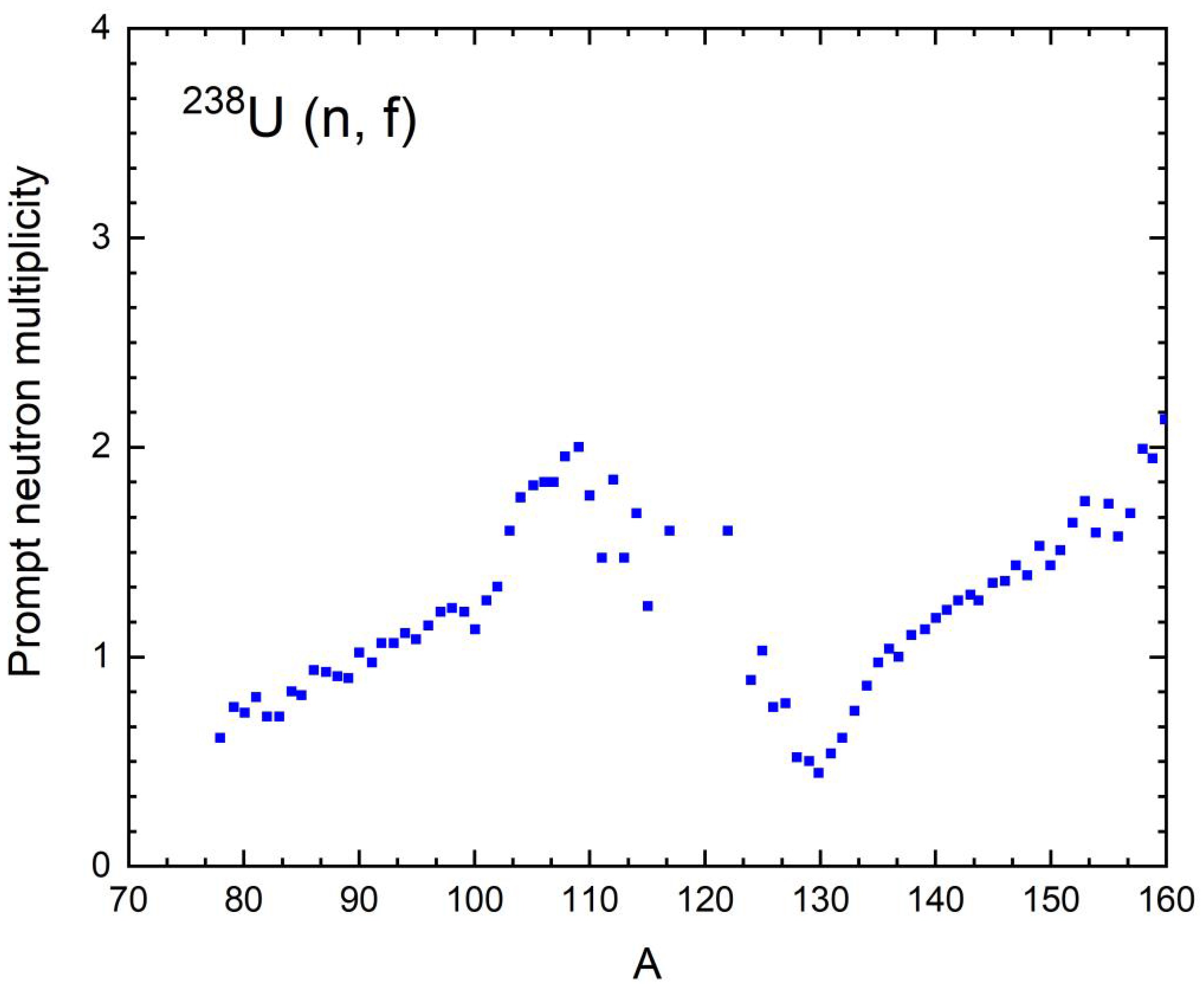
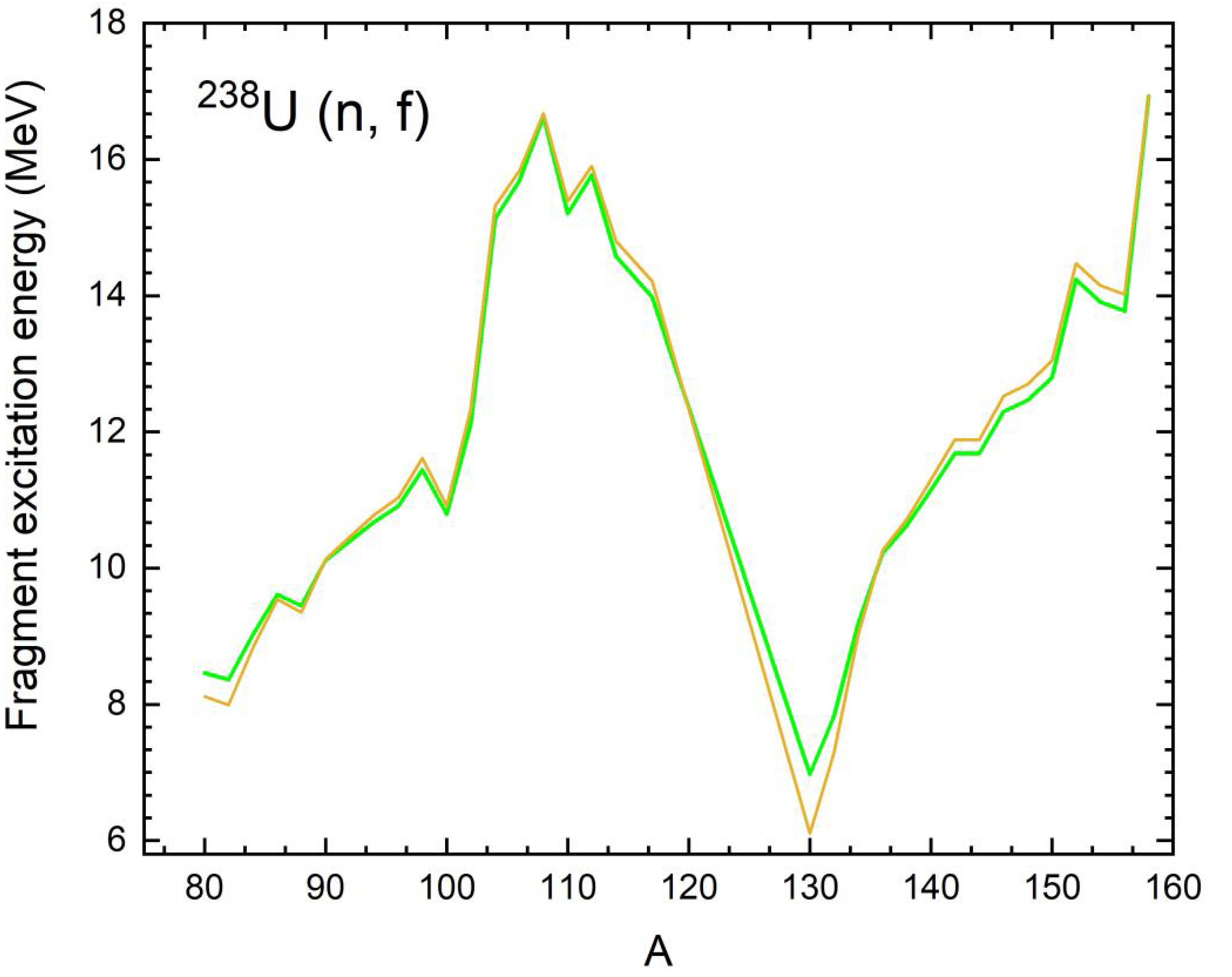
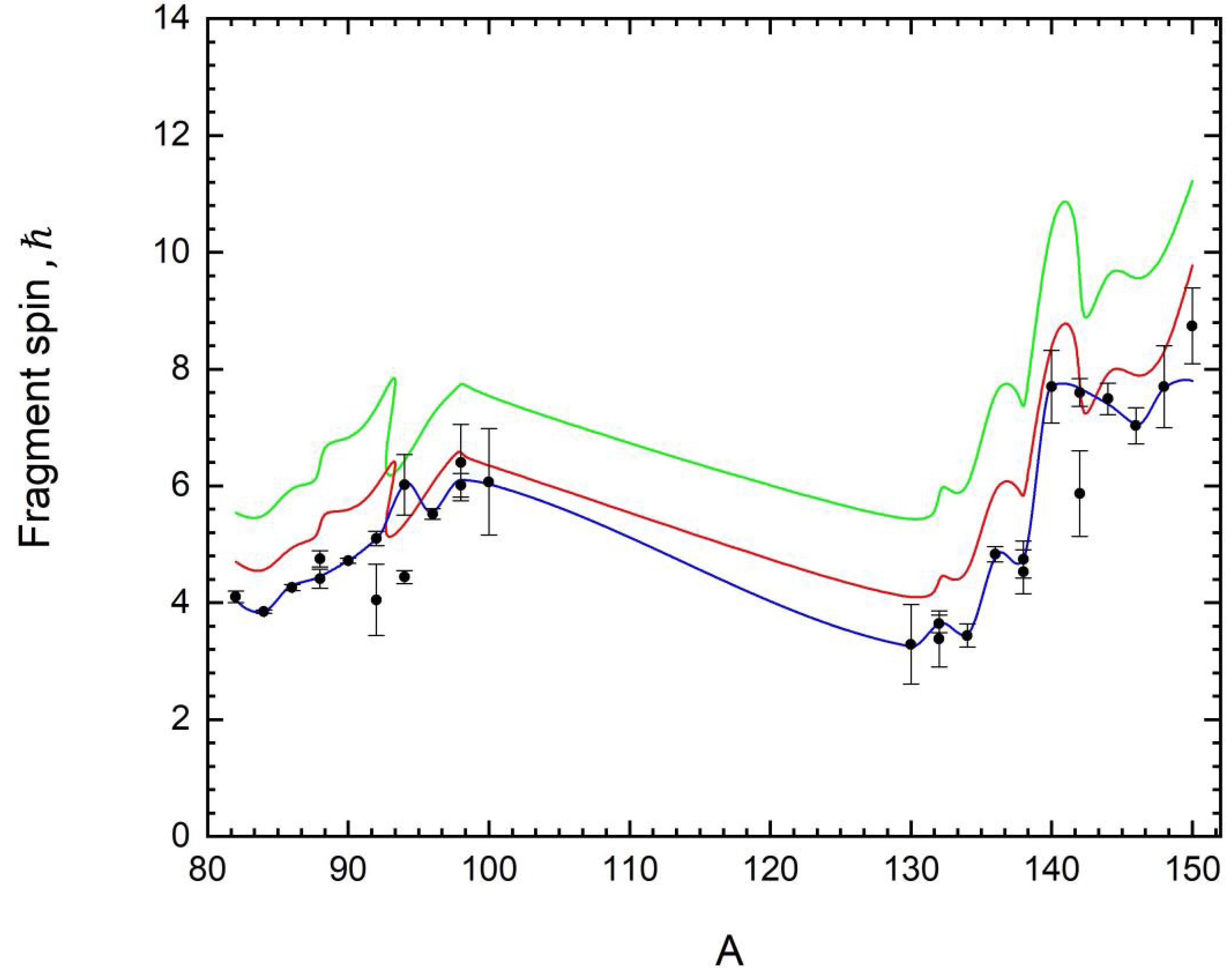
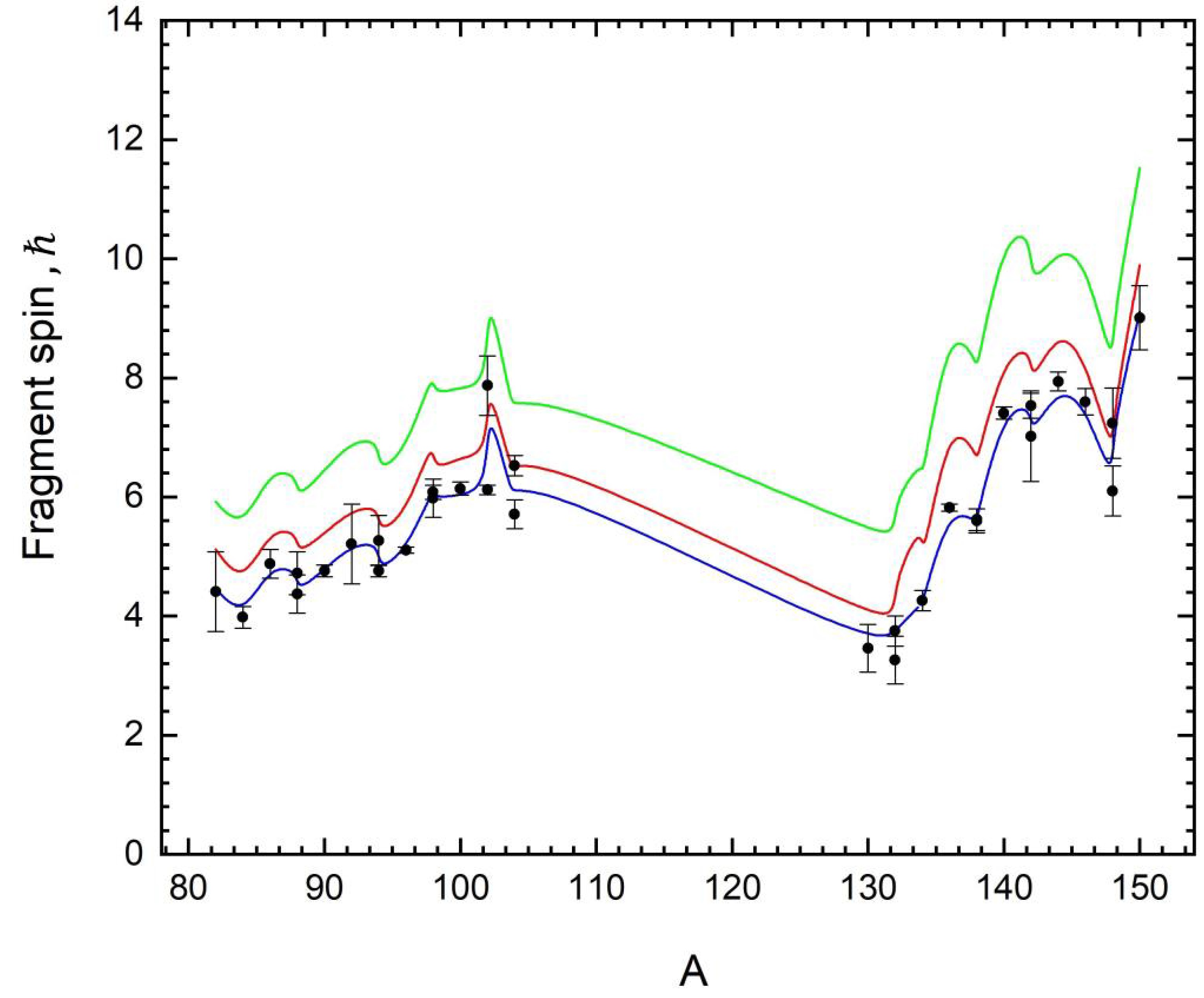
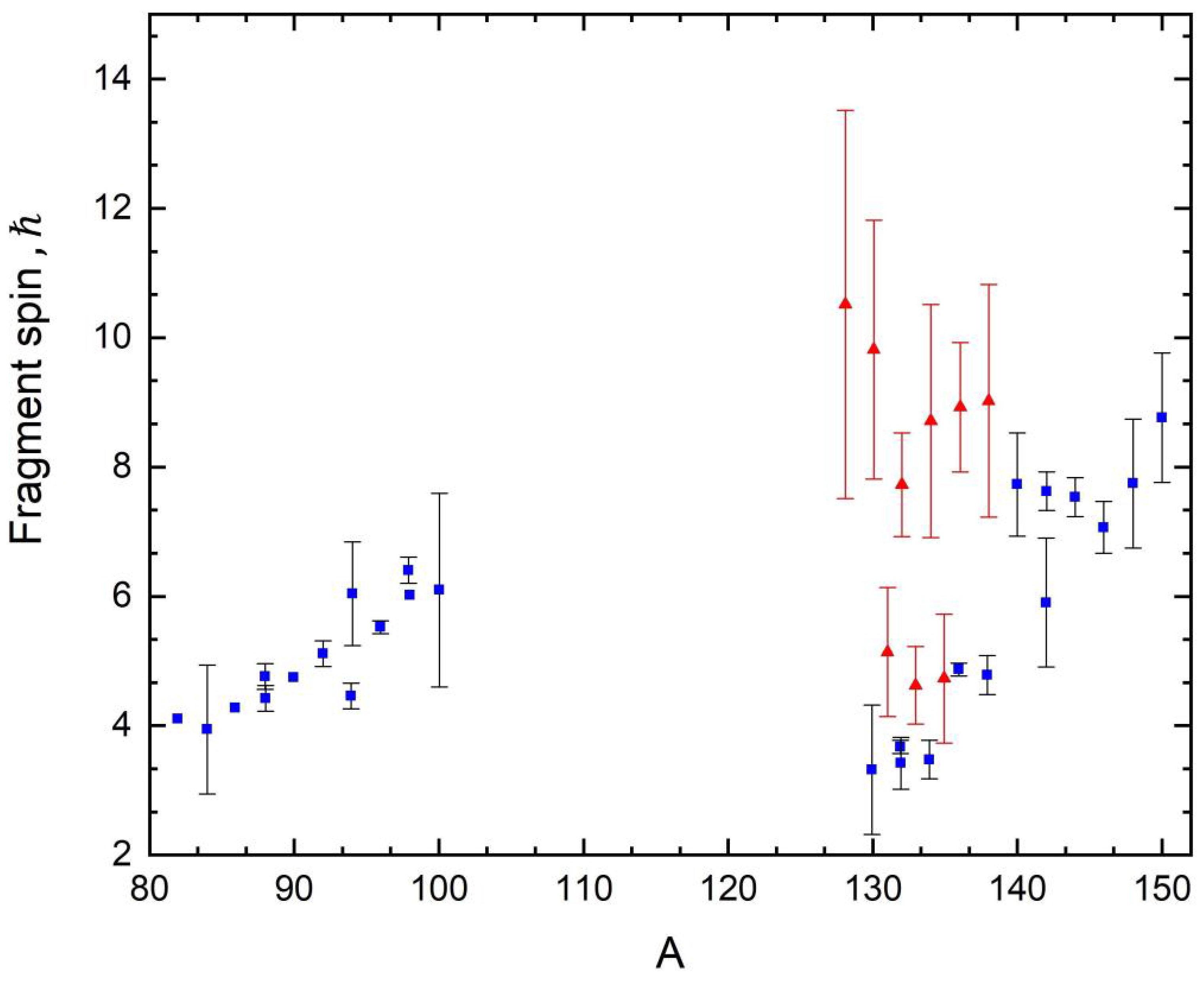
This study develops an innovative theoretical framework that integrates a macroscopic liquid-drop model with microscopic superfluid theory to calculate moments of inertia for fission fragments, extending our previous spontaneous fission approach to include the neutron-induced threshold fission of\begin{document}$ {}^{232}{\rm Th}\left( {n,f} \right) $\end{document} \begin{document}$ {}^{238}{\text{U}}\left( {n,f} \right) $\end{document}
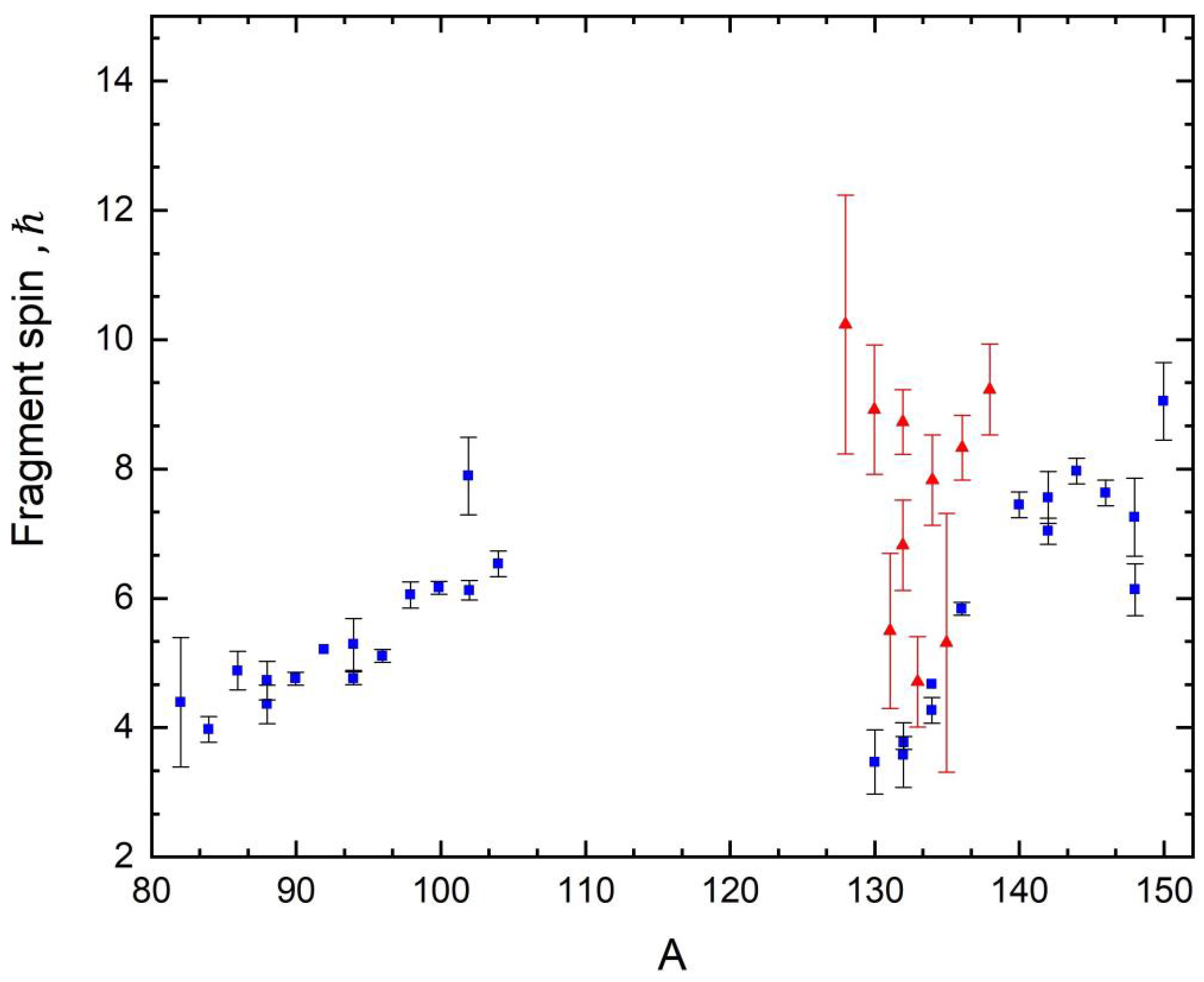
This study develops an innovative theoretical framework that integrates a macroscopic liquid-drop model with microscopic superfluid theory to calculate moments of inertia for fission fragments, extending our previous spontaneous fission approach to include the neutron-induced threshold fission of
2026, 50(2): 024103. doi: 10.1088/1674-1137/ae118a
Abstract:
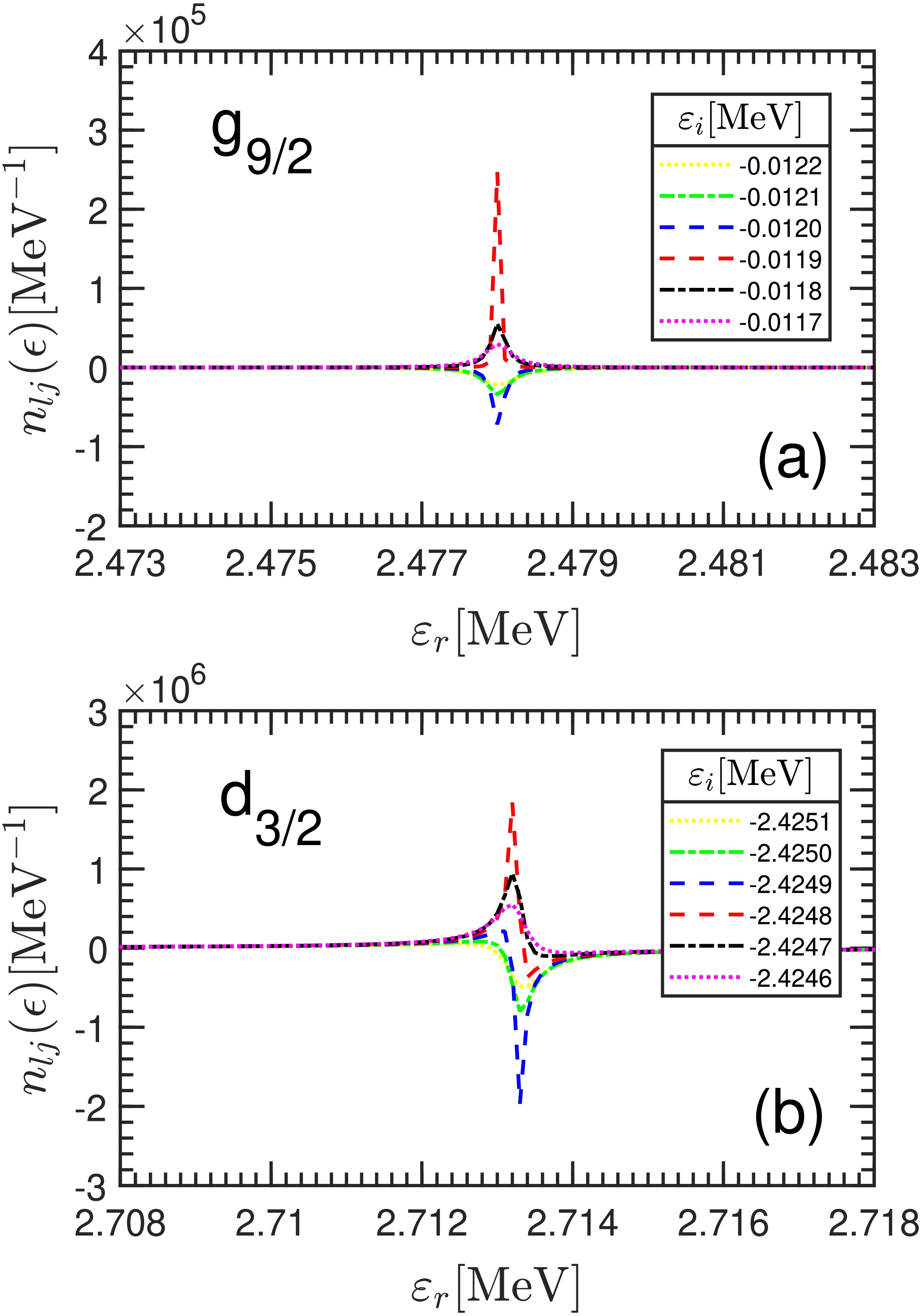
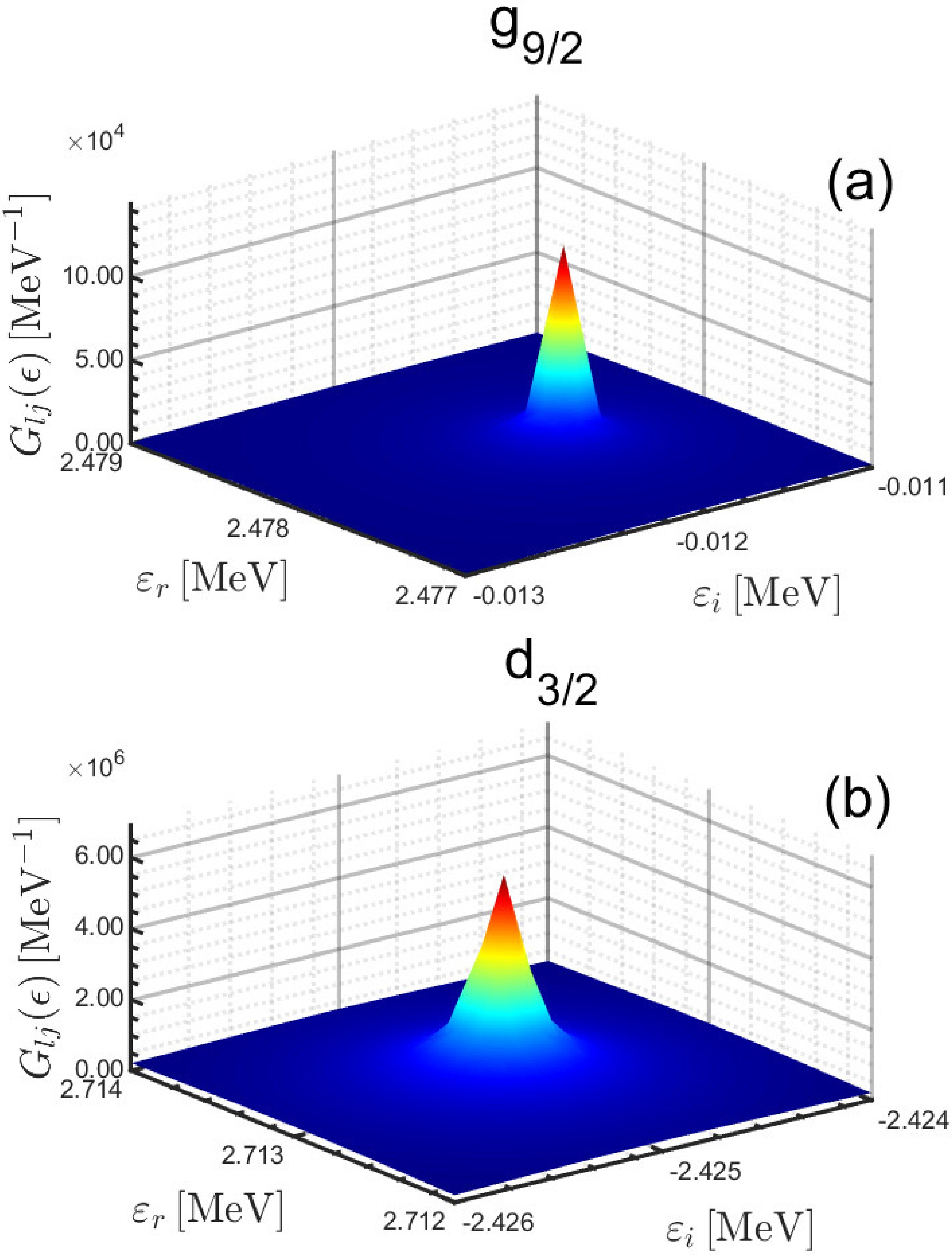
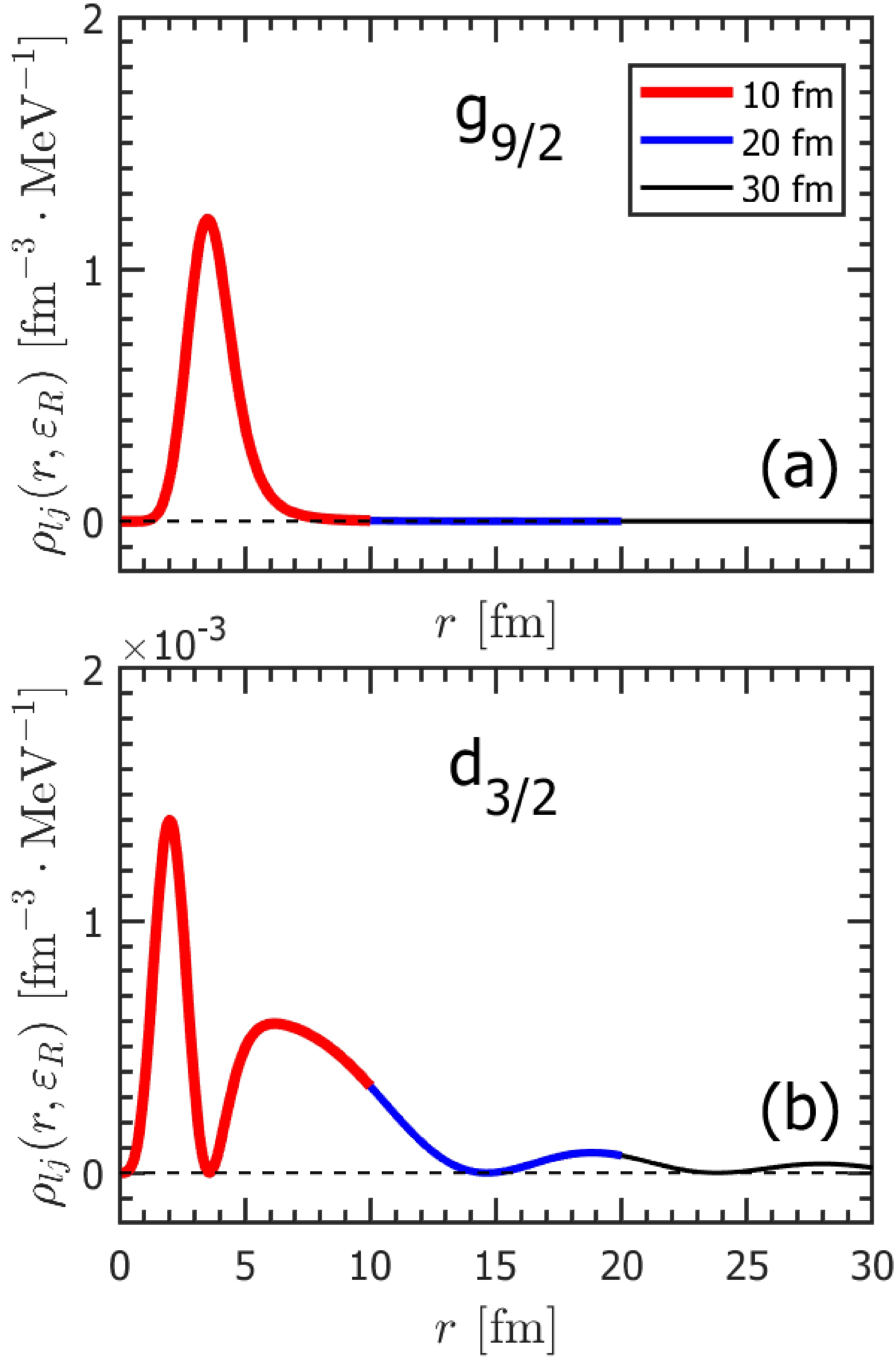
The Schrödinger equation with Woods-Saxon type potentials is solved using the Green's function (GF) method. Taking nucleus\begin{document}$^{40}\mathrm{Ca}$\end{document}
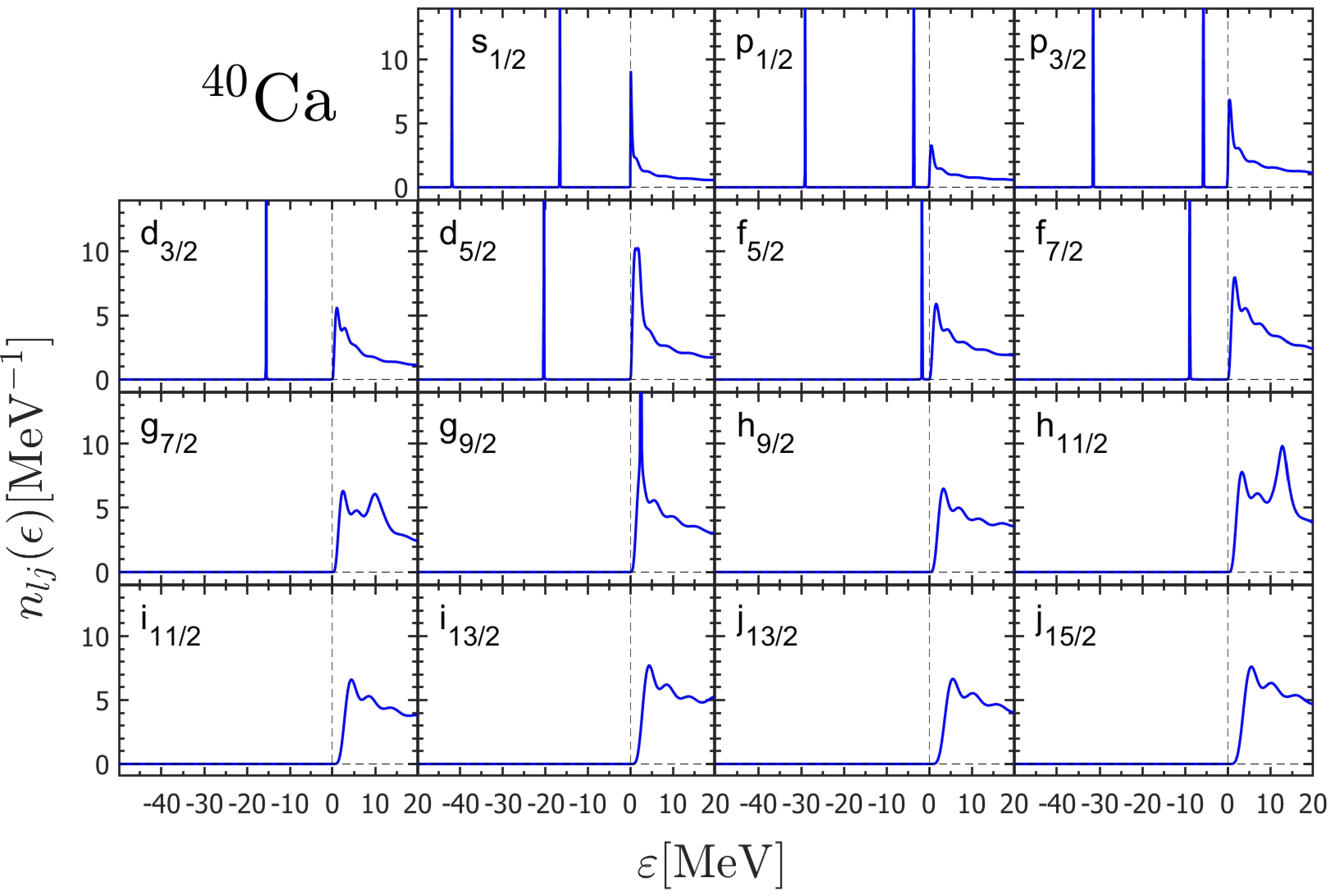
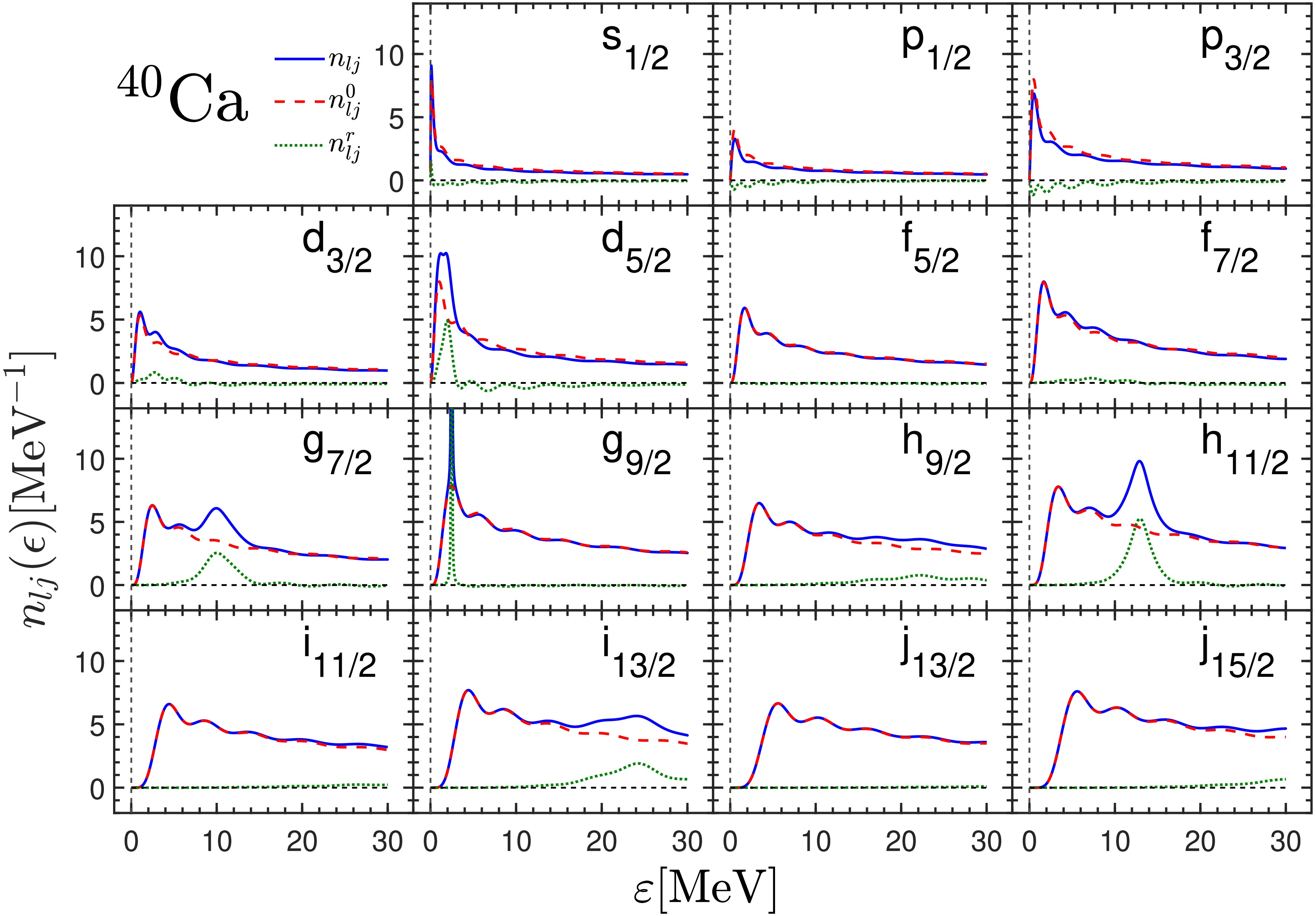
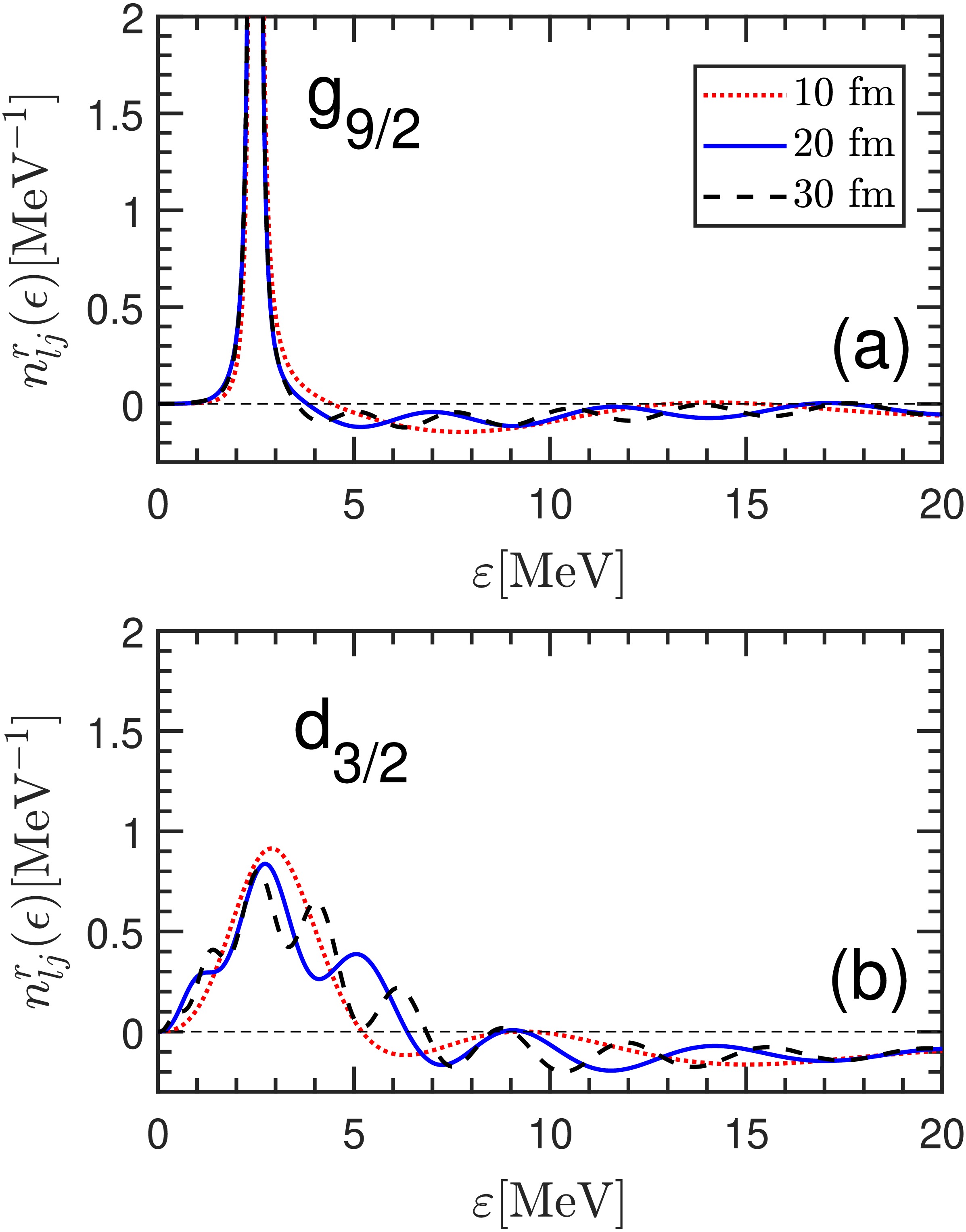
The Schrödinger equation with Woods-Saxon type potentials is solved using the Green's function (GF) method. Taking nucleus
2026, 50(2): 024104. doi: 10.1088/1674-1137/ae1449
Abstract:
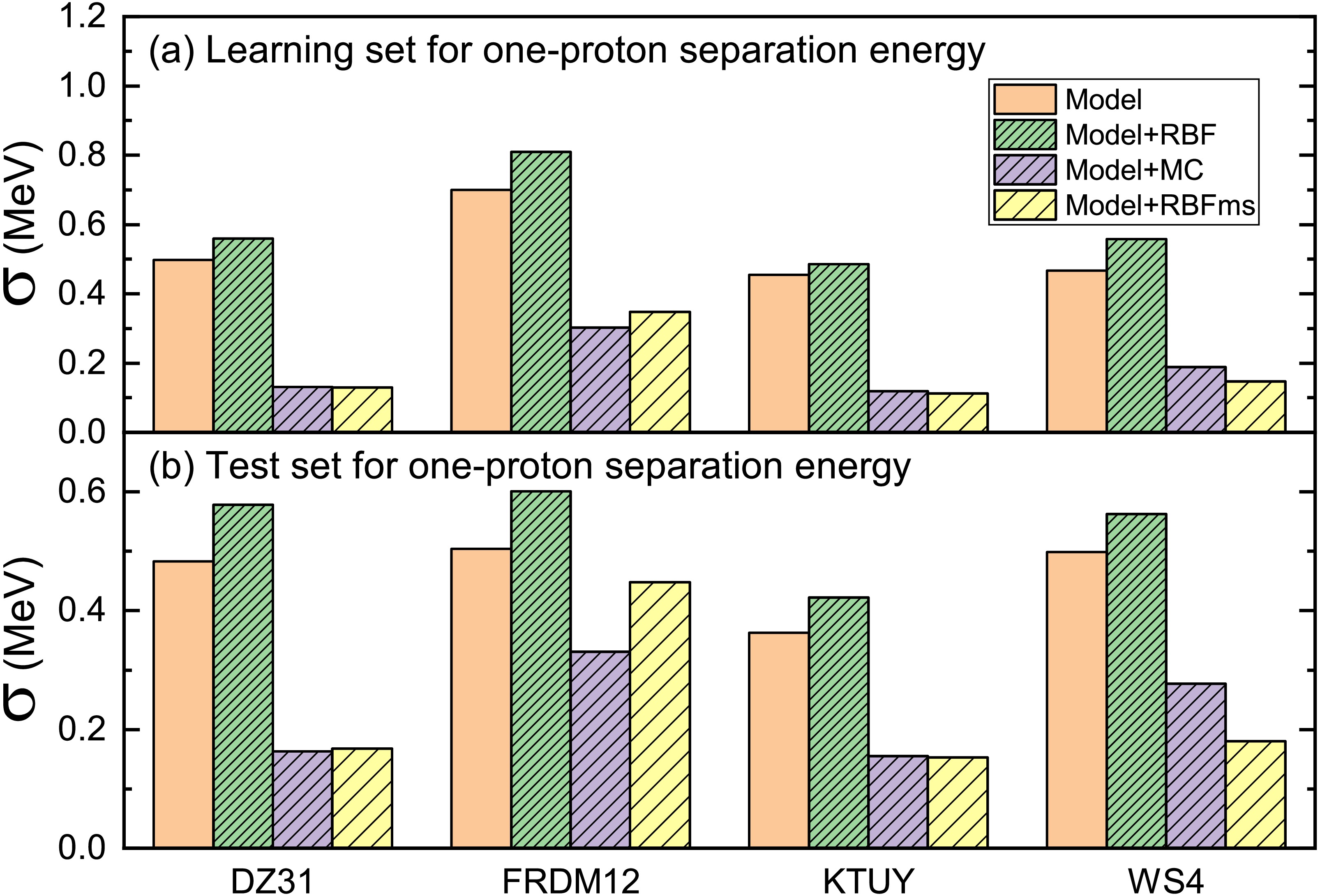
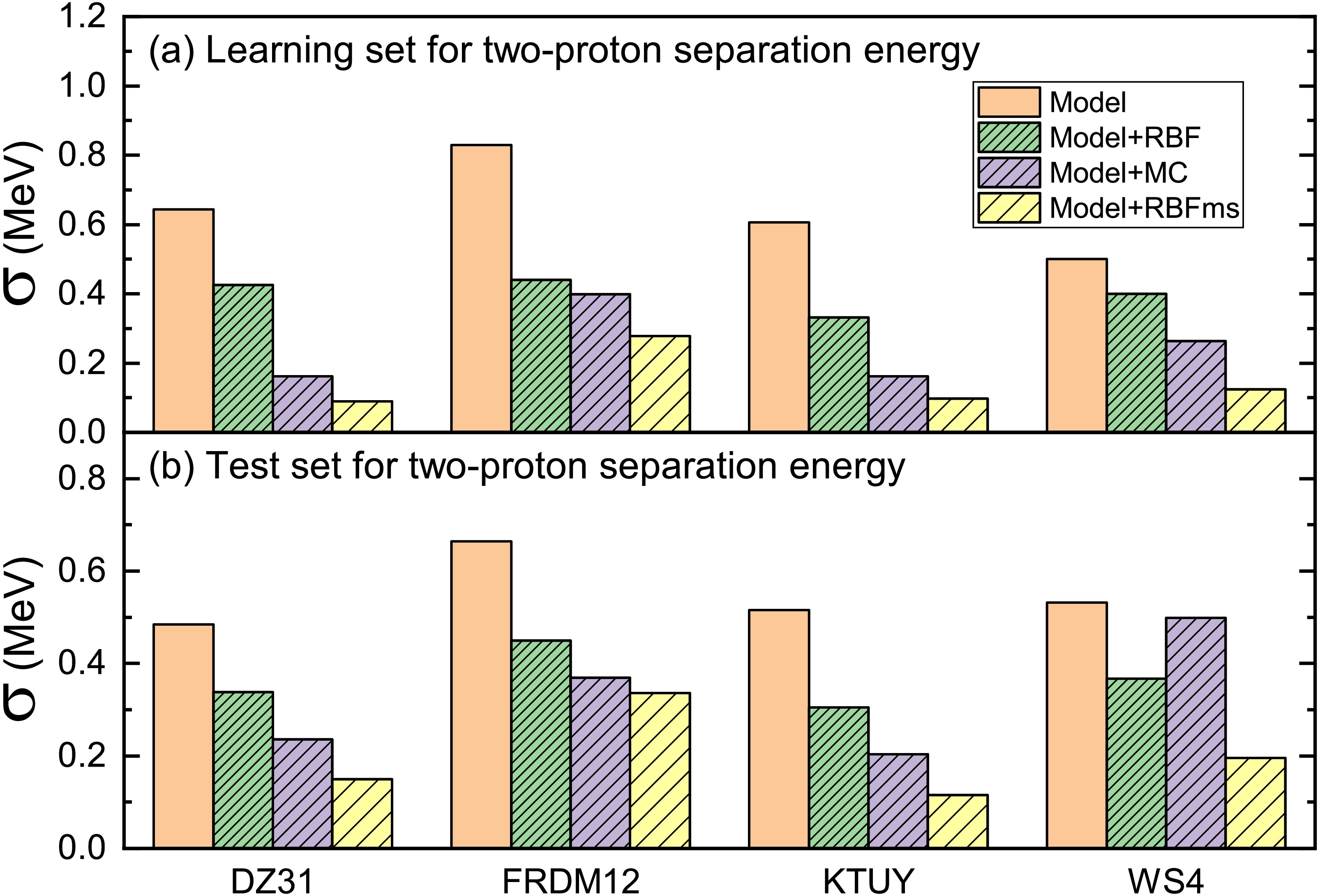
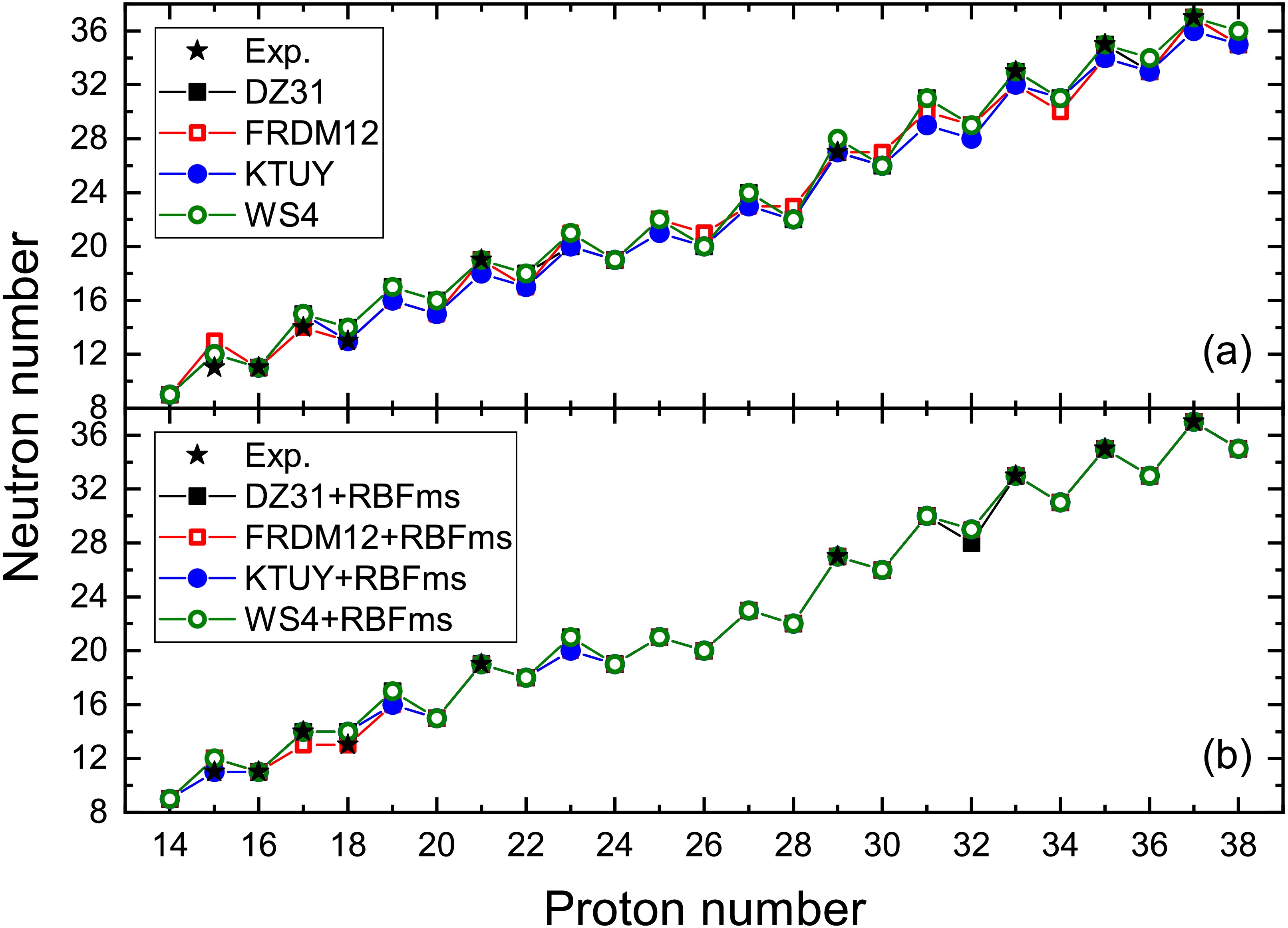
Mirror symmetry is combined with the radial basis function (RBF) approach to improve the prediction accuracy of proton separation energy. Compared with the traditional RBF approach, the RBF combined with mirror symmetry (RBFms) mainly involves training the residual of the one/two-proton separation energy deviation of the nucleus and the one/two-neutron separation energy deviation of its mirror nucleus. The KTUY model combined with the RBFms approach yields a root-mean-square (rms) deviation of 0.113 MeV for one-proton separation energies of 143 nuclei, while the DZ31 model combined with the RBFms approach achieves an rms deviation of 0.089 MeV for two-proton separation energies of 115 nuclei. In the region where the proton number\begin{document}$ Z=14-38 $\end{document}
Mirror symmetry is combined with the radial basis function (RBF) approach to improve the prediction accuracy of proton separation energy. Compared with the traditional RBF approach, the RBF combined with mirror symmetry (RBFms) mainly involves training the residual of the one/two-proton separation energy deviation of the nucleus and the one/two-neutron separation energy deviation of its mirror nucleus. The KTUY model combined with the RBFms approach yields a root-mean-square (rms) deviation of 0.113 MeV for one-proton separation energies of 143 nuclei, while the DZ31 model combined with the RBFms approach achieves an rms deviation of 0.089 MeV for two-proton separation energies of 115 nuclei. In the region where the proton number
2026, 50(2): 024105. doi: 10.1088/1674-1137/ae1183
Abstract:
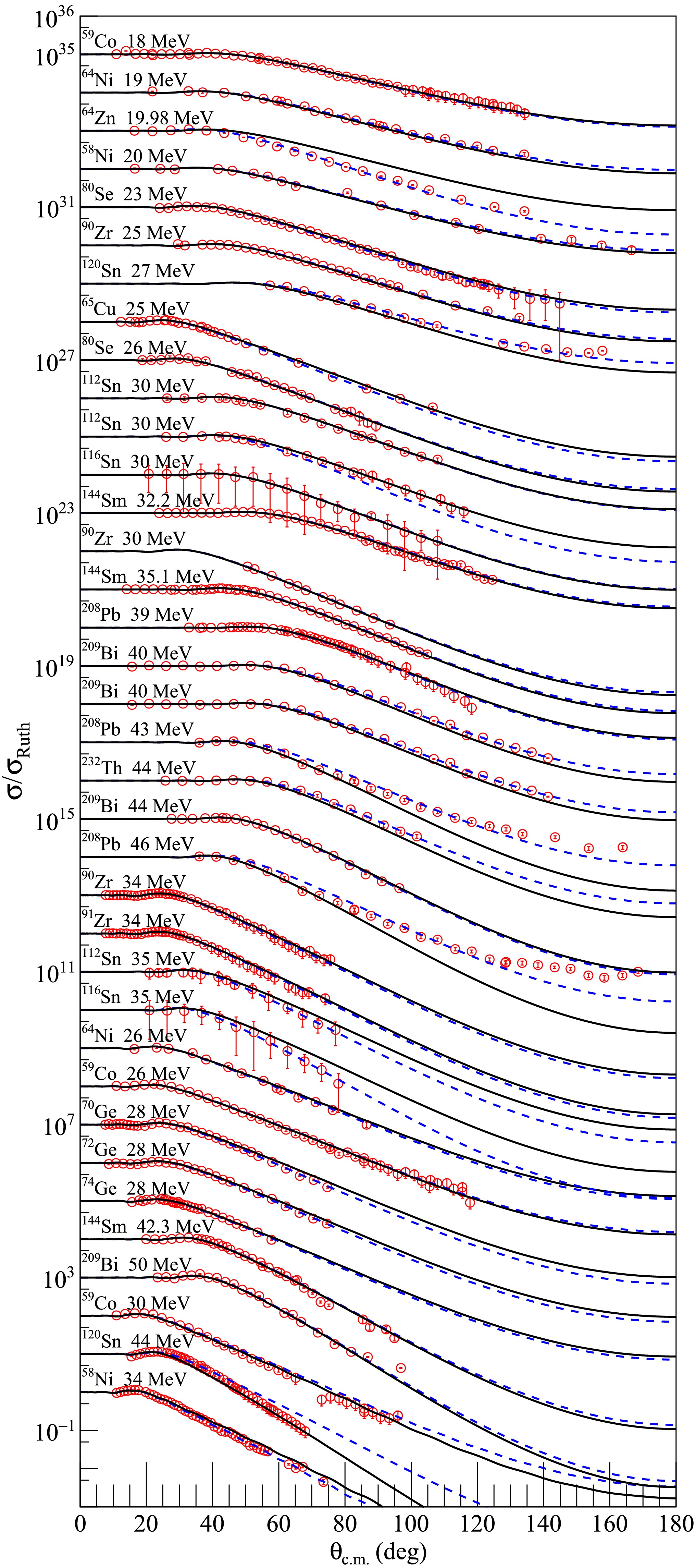
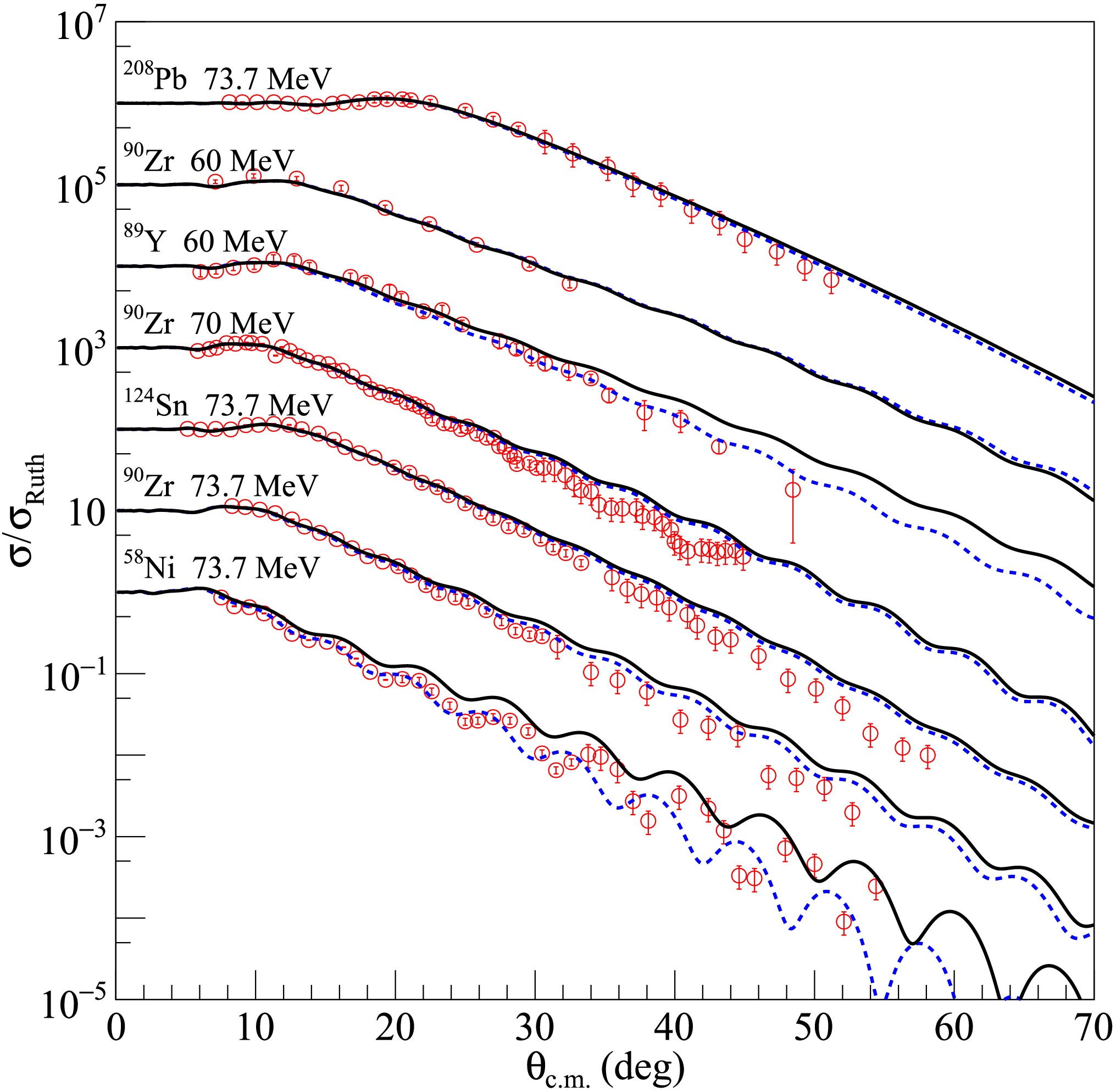
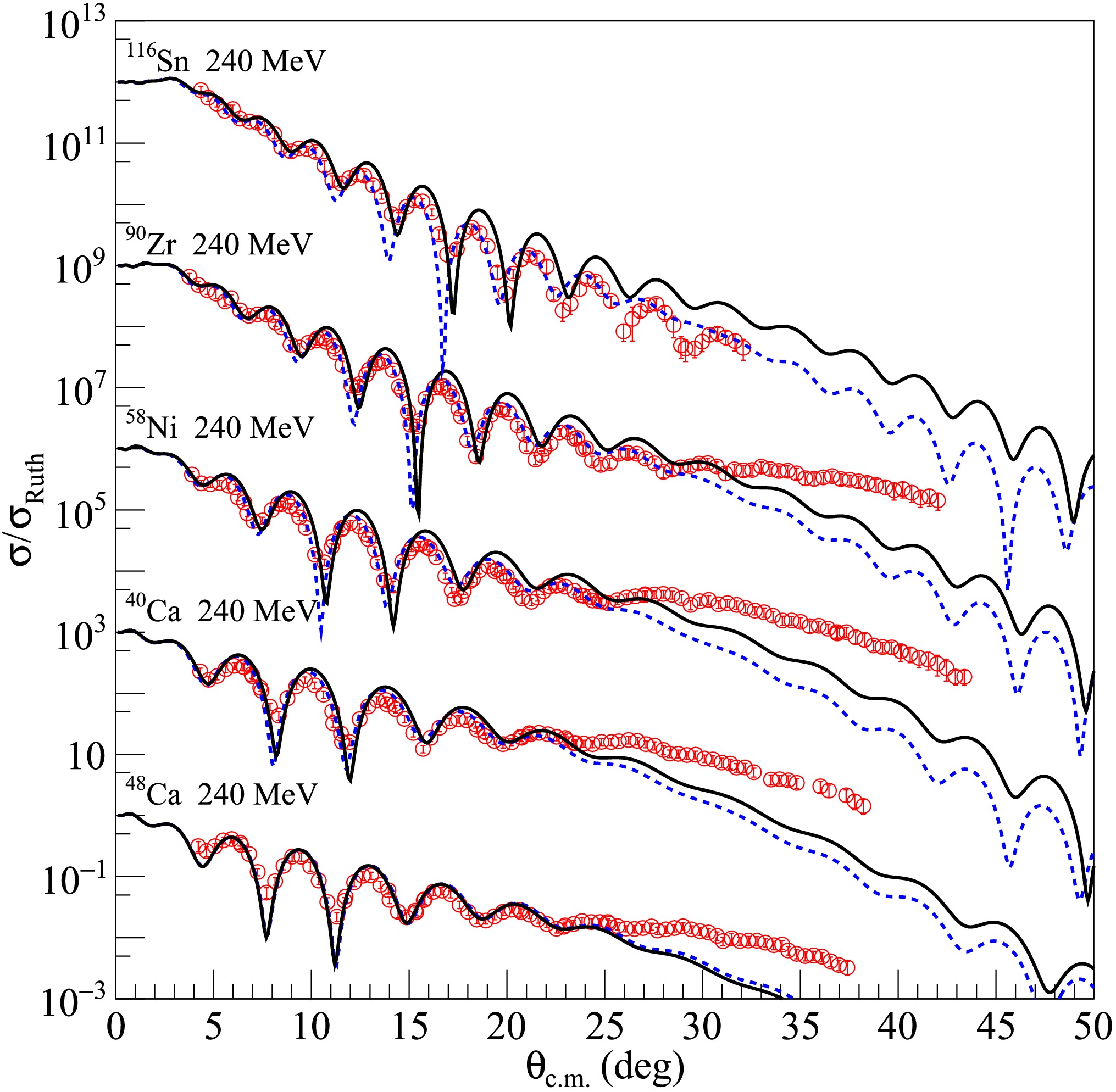
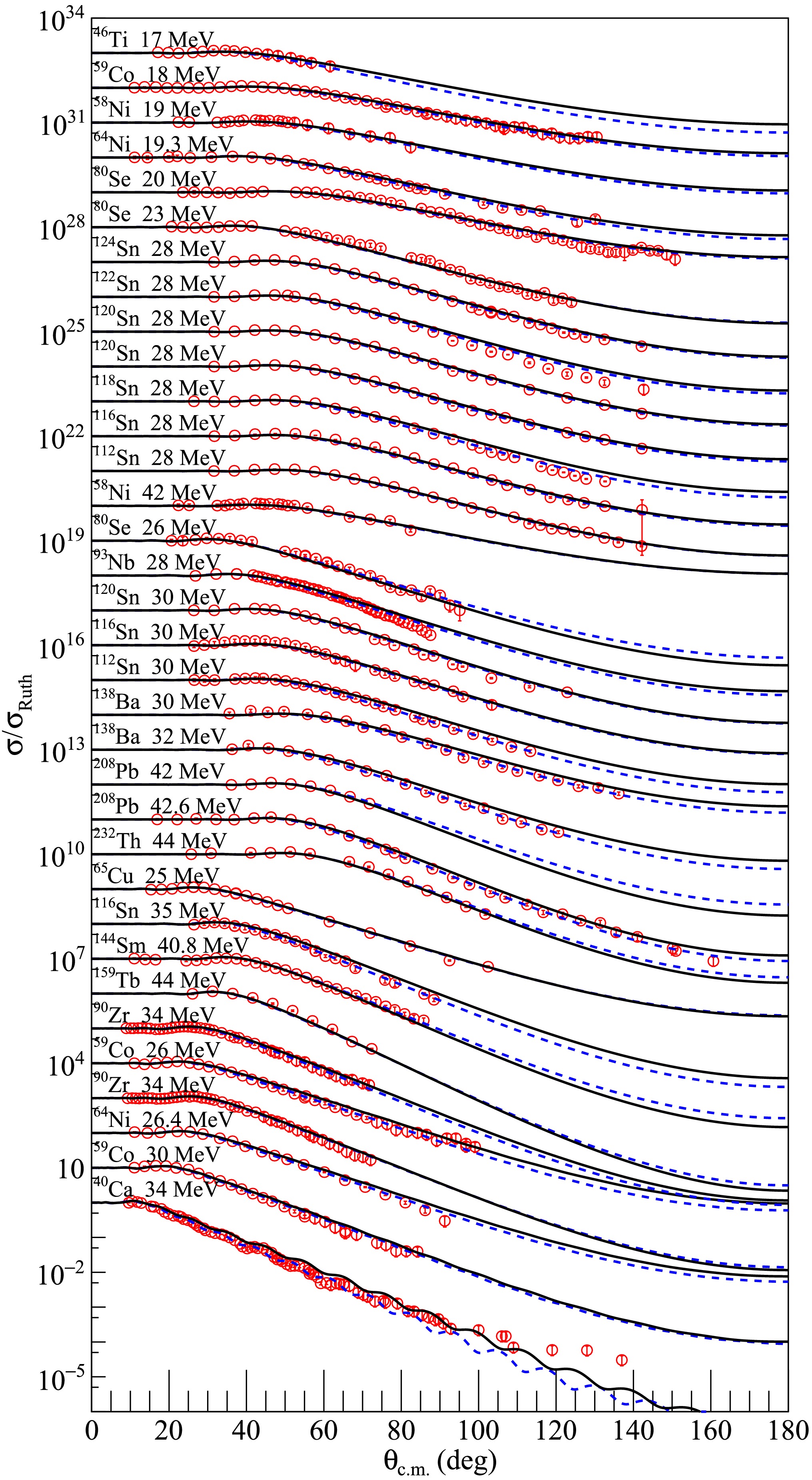
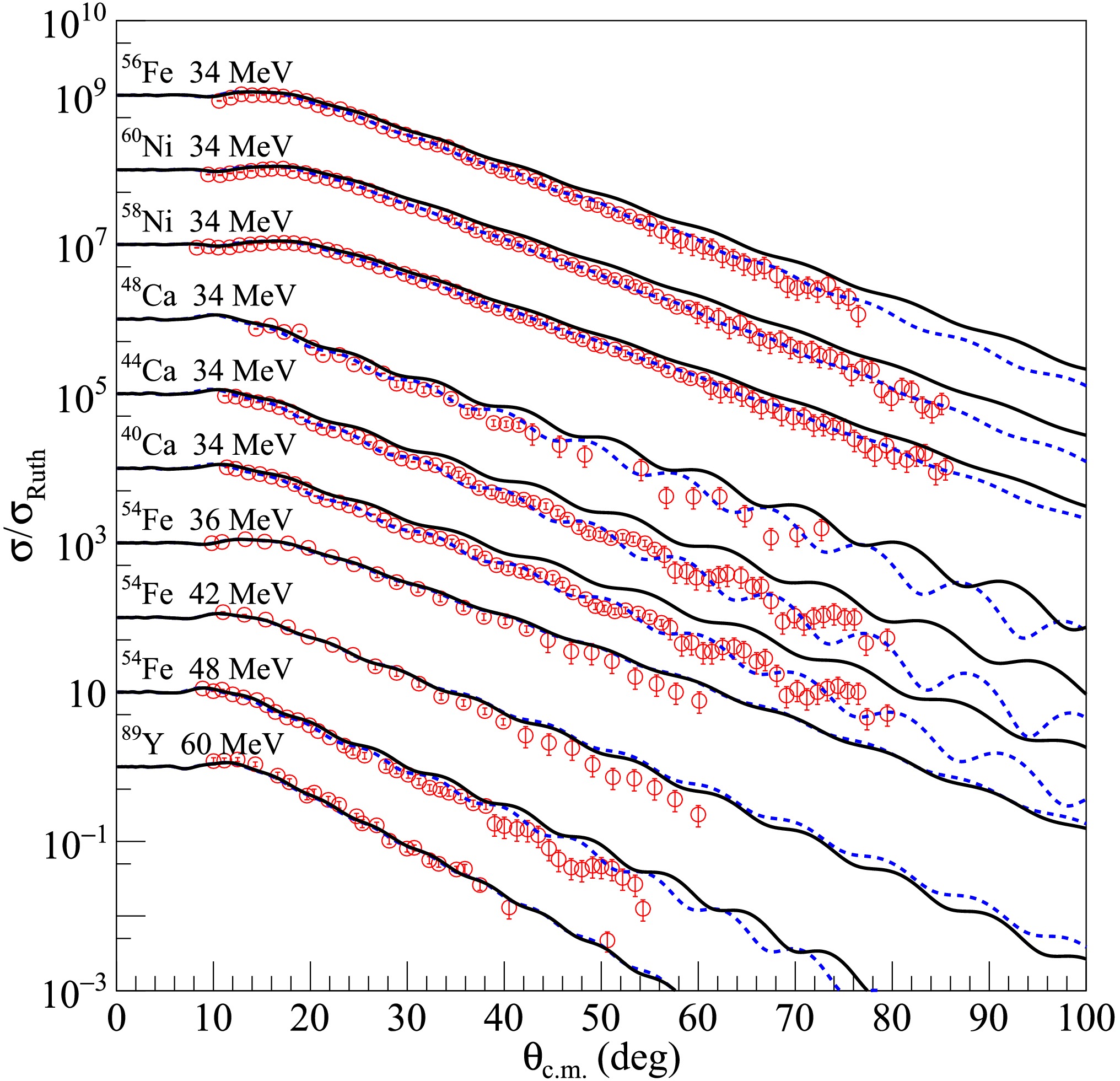
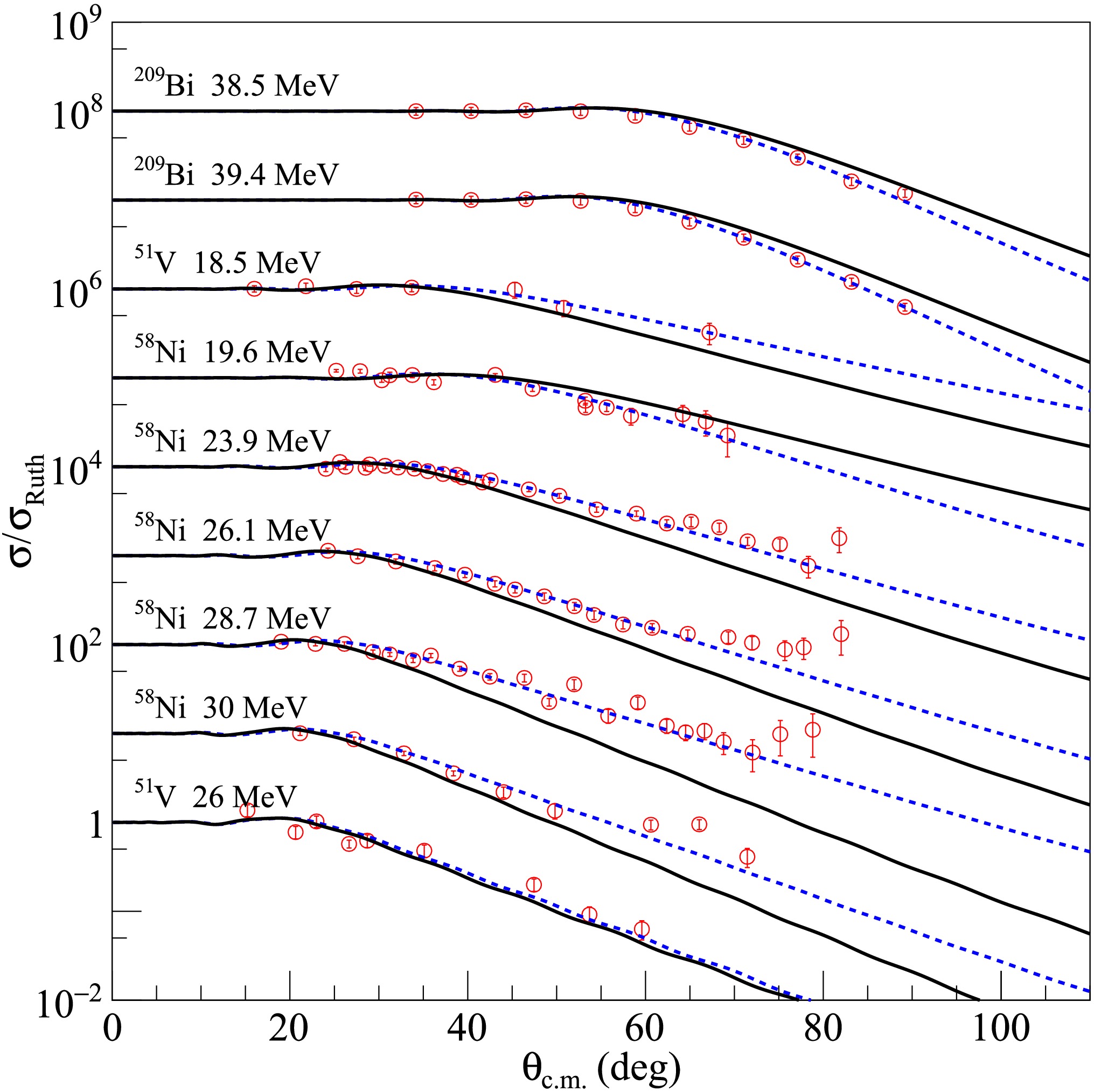
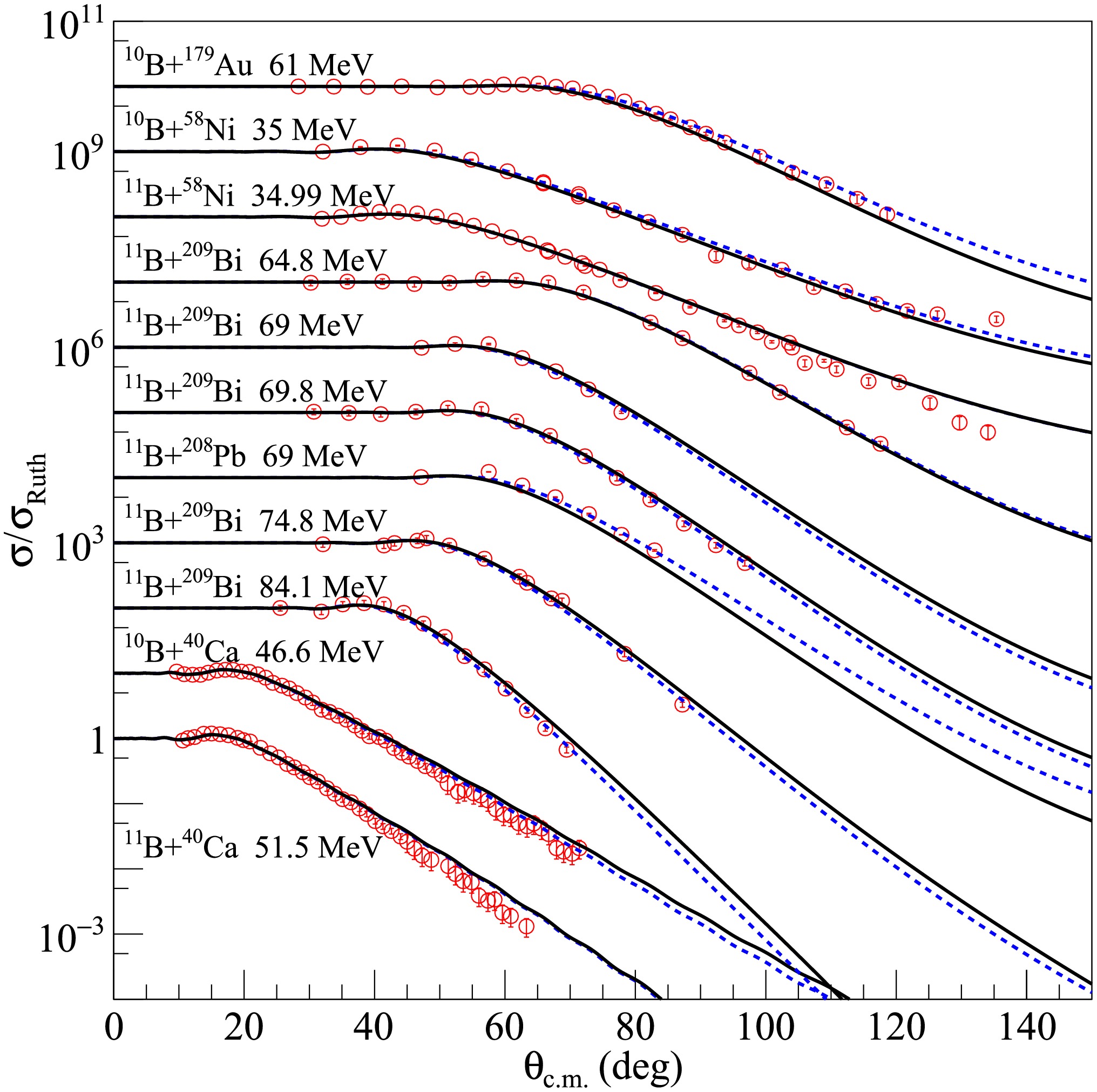
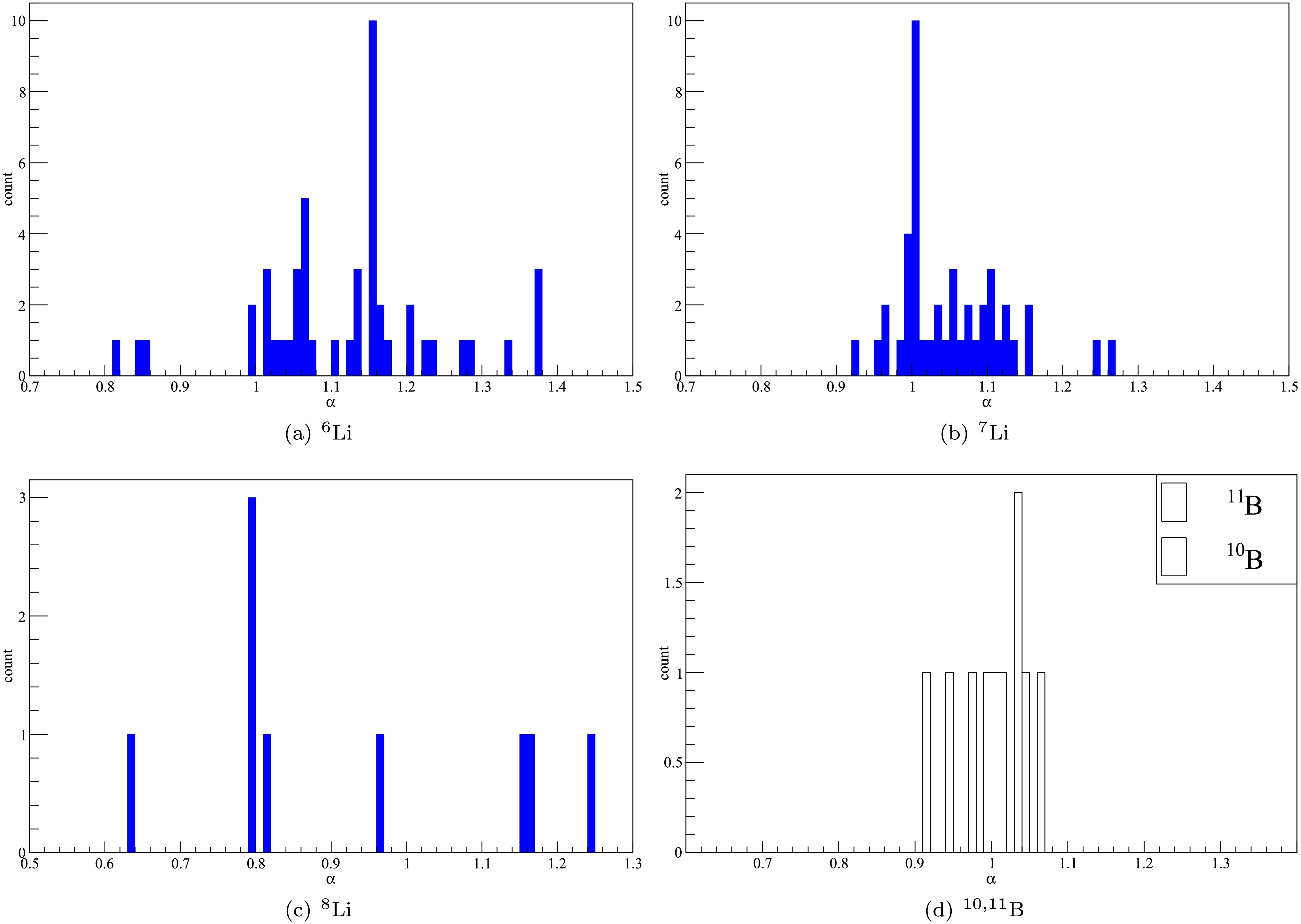
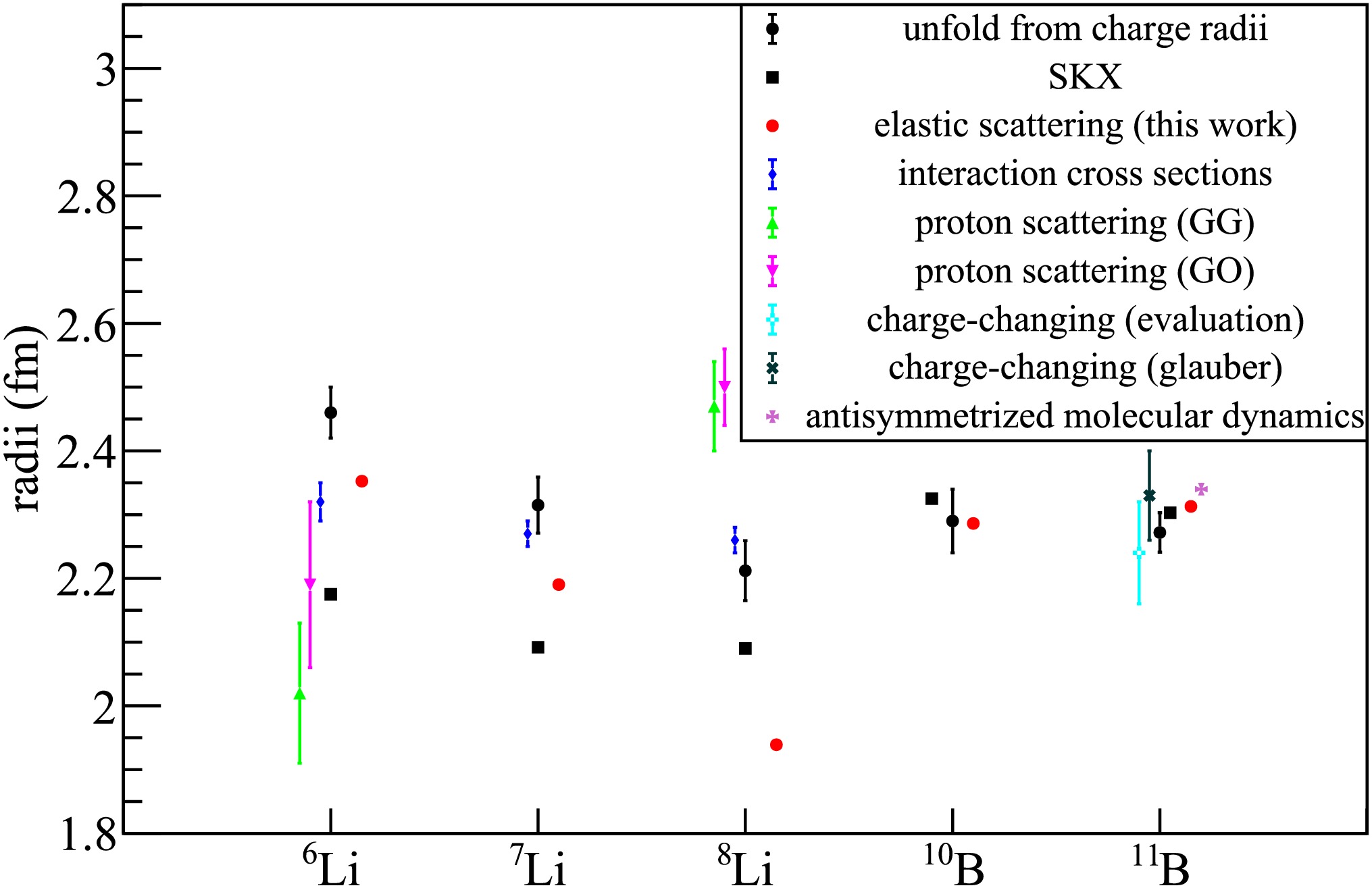
The root mean square (rms) nuclear proton radii of 6,7,8Li and 10,11B projectiles are systematically investigated by analyzing elastic scattering data from target nuclei with mass numbers ranging from 40 to 209 at incident energies exceeding Coulomb barriers. The analyses employ a consistent single-folding model potential based on the Bruyères Jeukenne-Lejeune-Mahaux (JLMB) nucleon-nucleus interaction model, incorporating 112 sets of elastic scattering data to derive the projectile nuclear radii. This approach yields individual radii for each set, from which the mean rms proton radius is extracted as a characteristic parameter for the projectile nuclei. The rms proton radii of 6,7Li and 10,11B nuclei, obtained from optical model fits, demonstrate good agreement with experimental measurements and existing theoretical predictions. Notably, a significantly smaller nuclear radius of 8Li is observed compared to values derived from intermediate-energy proton elastic scattering cross-section measurements, which may be attributed to additional dynamical effects specific to the 8Li projectile.
The root mean square (rms) nuclear proton radii of 6,7,8Li and 10,11B projectiles are systematically investigated by analyzing elastic scattering data from target nuclei with mass numbers ranging from 40 to 209 at incident energies exceeding Coulomb barriers. The analyses employ a consistent single-folding model potential based on the Bruyères Jeukenne-Lejeune-Mahaux (JLMB) nucleon-nucleus interaction model, incorporating 112 sets of elastic scattering data to derive the projectile nuclear radii. This approach yields individual radii for each set, from which the mean rms proton radius is extracted as a characteristic parameter for the projectile nuclei. The rms proton radii of 6,7Li and 10,11B nuclei, obtained from optical model fits, demonstrate good agreement with experimental measurements and existing theoretical predictions. Notably, a significantly smaller nuclear radius of 8Li is observed compared to values derived from intermediate-energy proton elastic scattering cross-section measurements, which may be attributed to additional dynamical effects specific to the 8Li projectile.
2026, 50(2): 024106. doi: 10.1088/1674-1137/ae167b
Abstract:
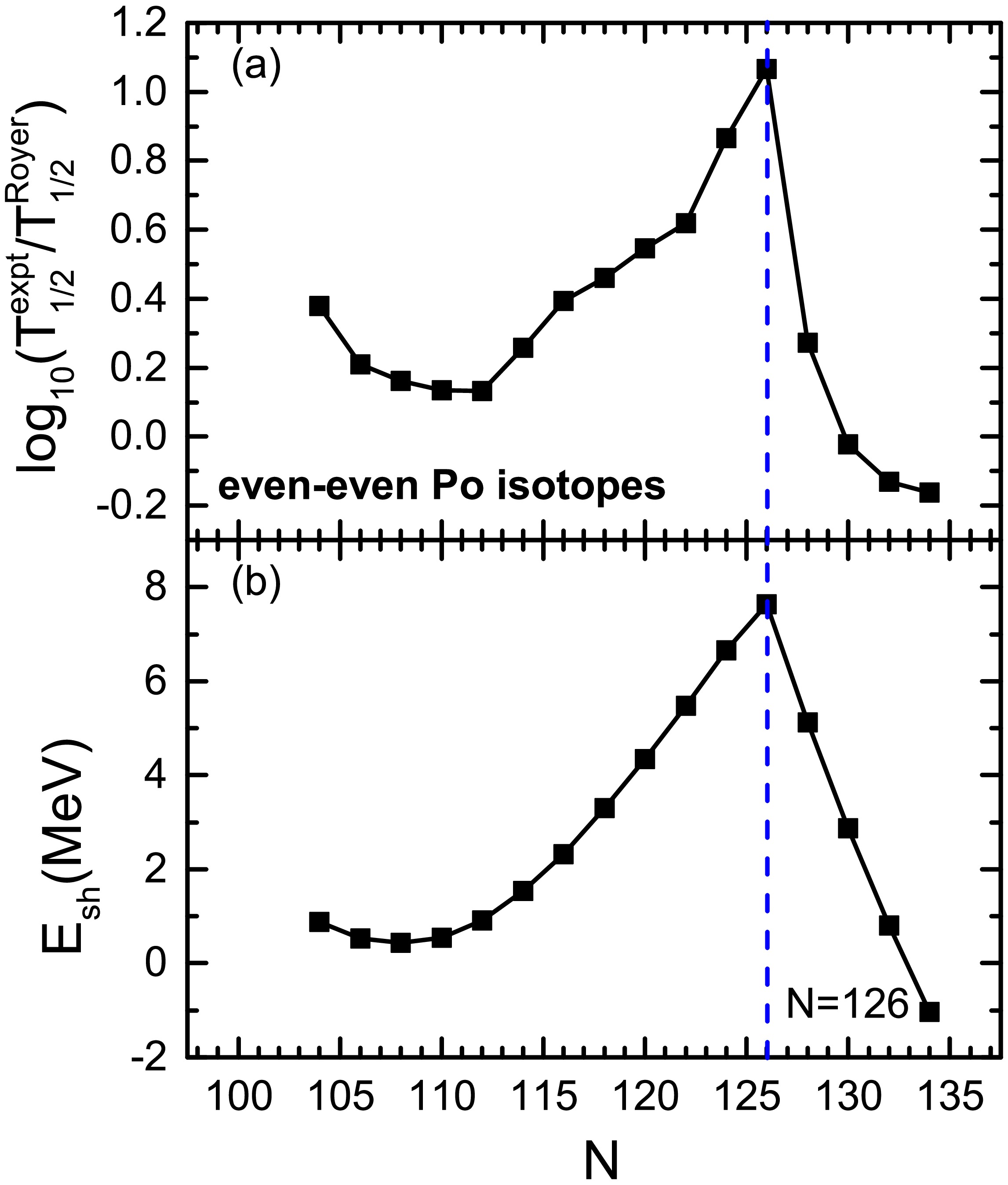
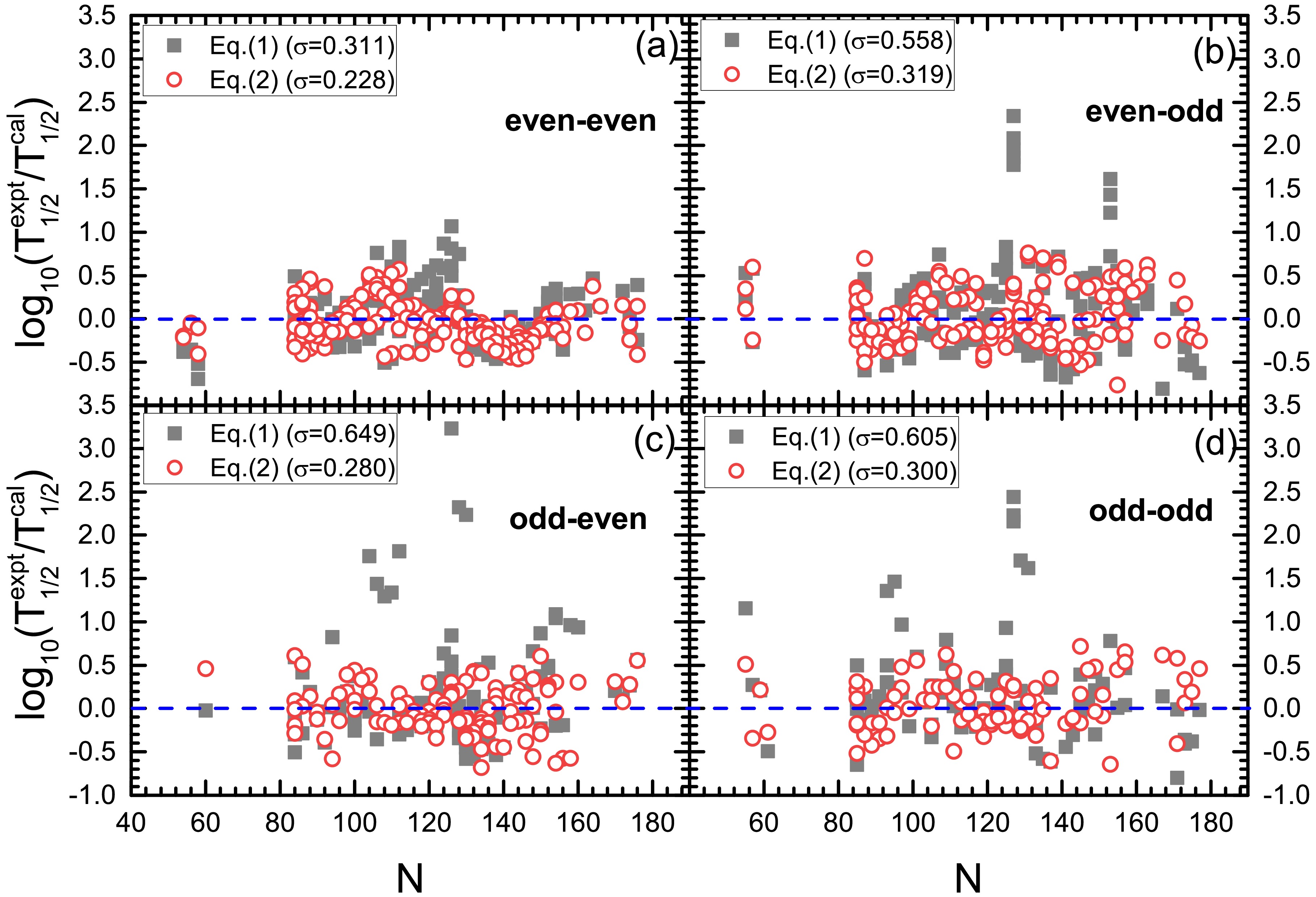
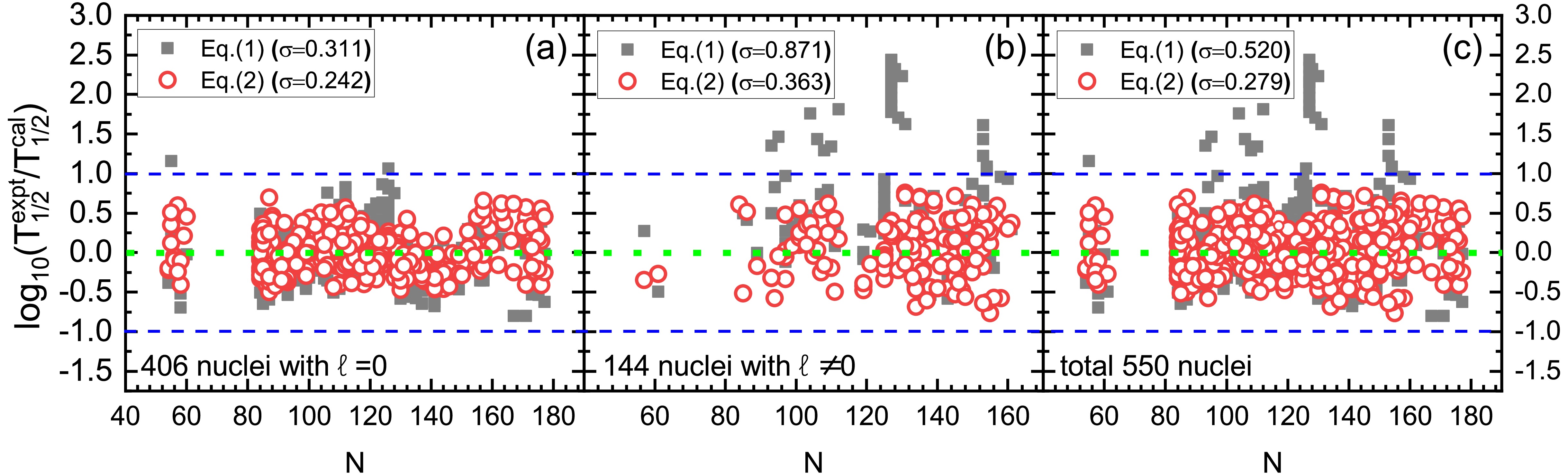
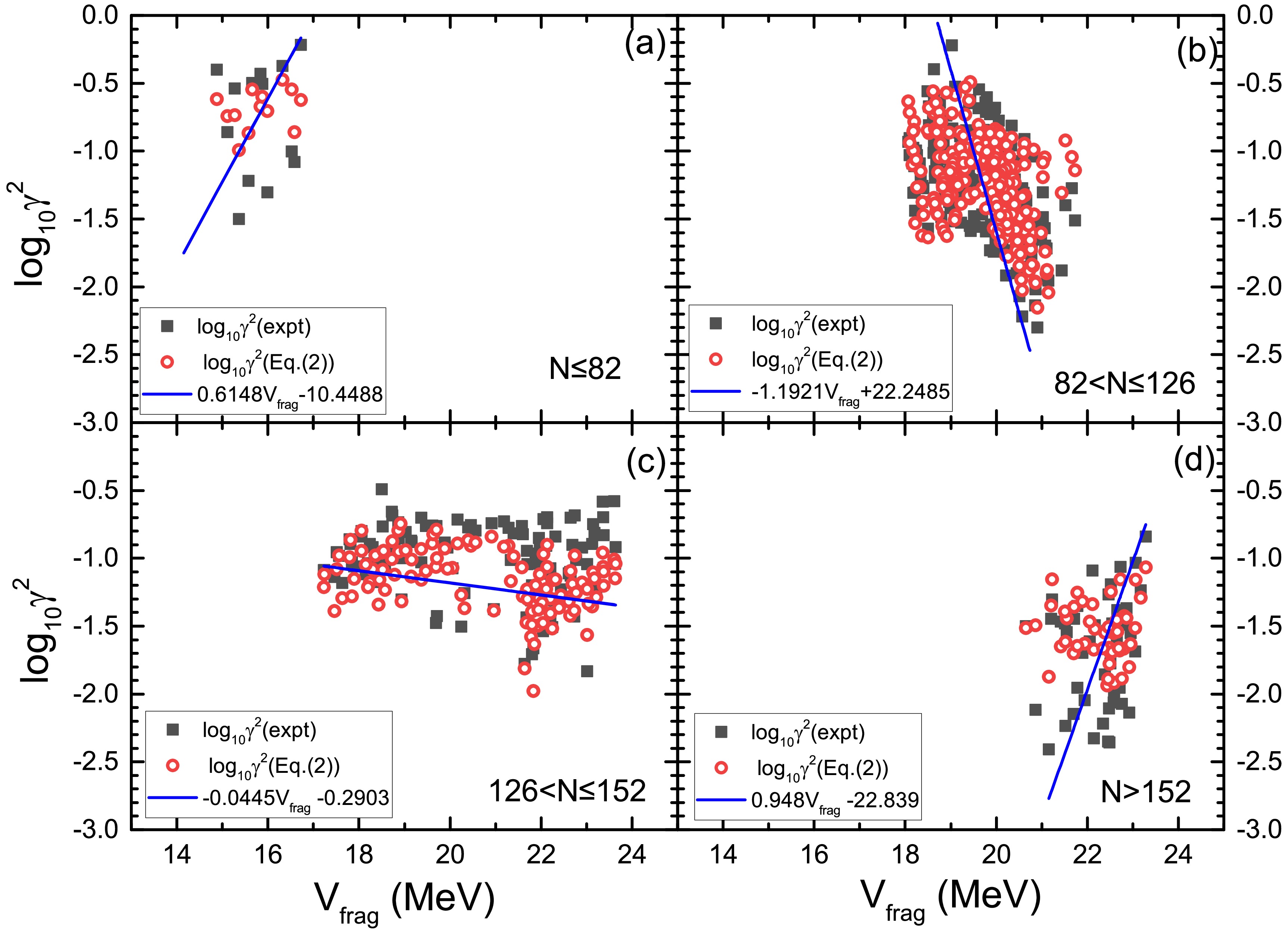
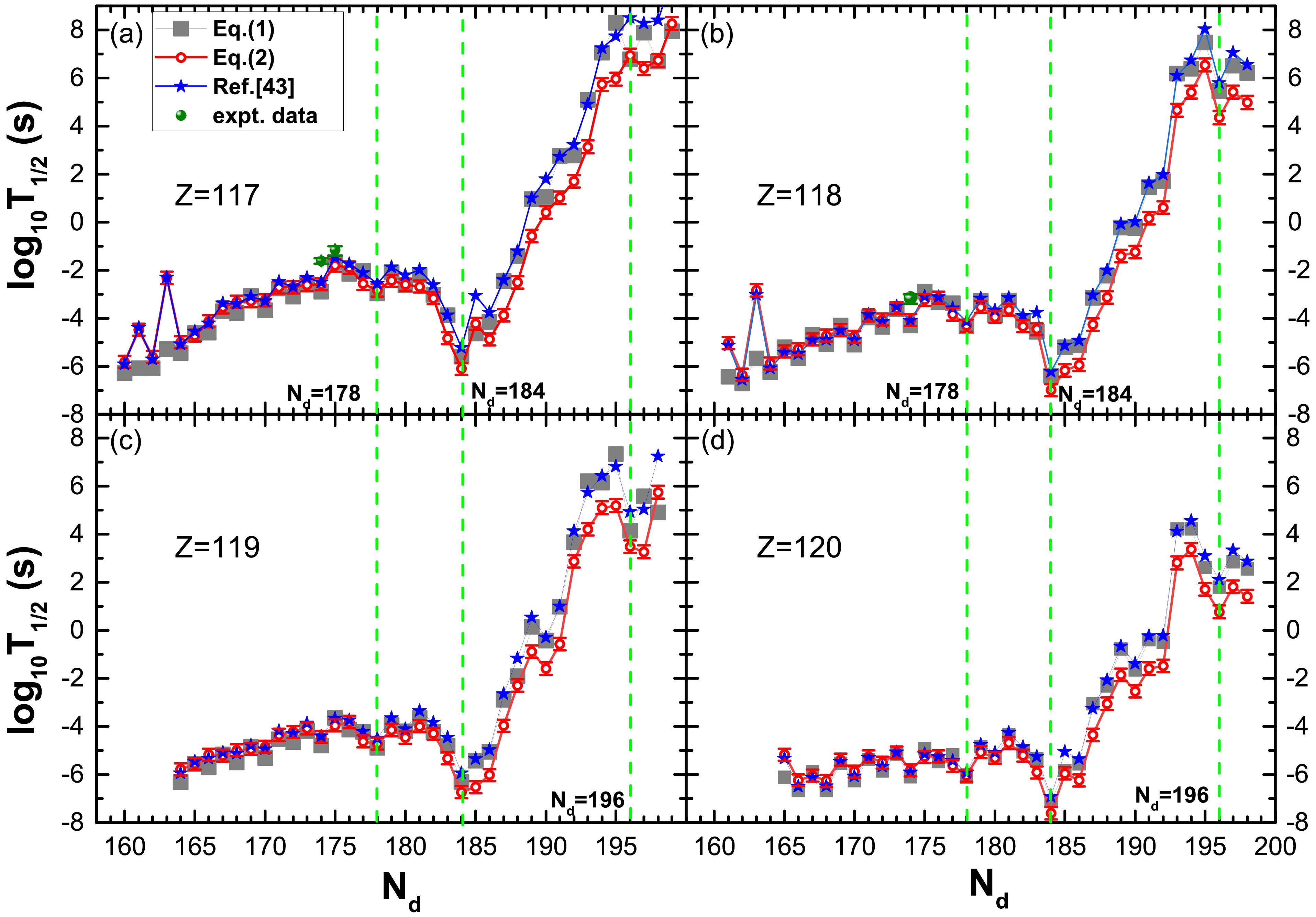
The Royer law is a widely used empirical relation for calculating α-decay half-lives; however, it requires 12 parity-dependent parameters. It exhibits systematic deviations near the\begin{document}$ N = 126 $\end{document} \begin{document}$ Z = 117-120 $\end{document}
The Royer law is a widely used empirical relation for calculating α-decay half-lives; however, it requires 12 parity-dependent parameters. It exhibits systematic deviations near the
2026, 50(2): 024107. doi: 10.1088/1674-1137/ae1444
Abstract:
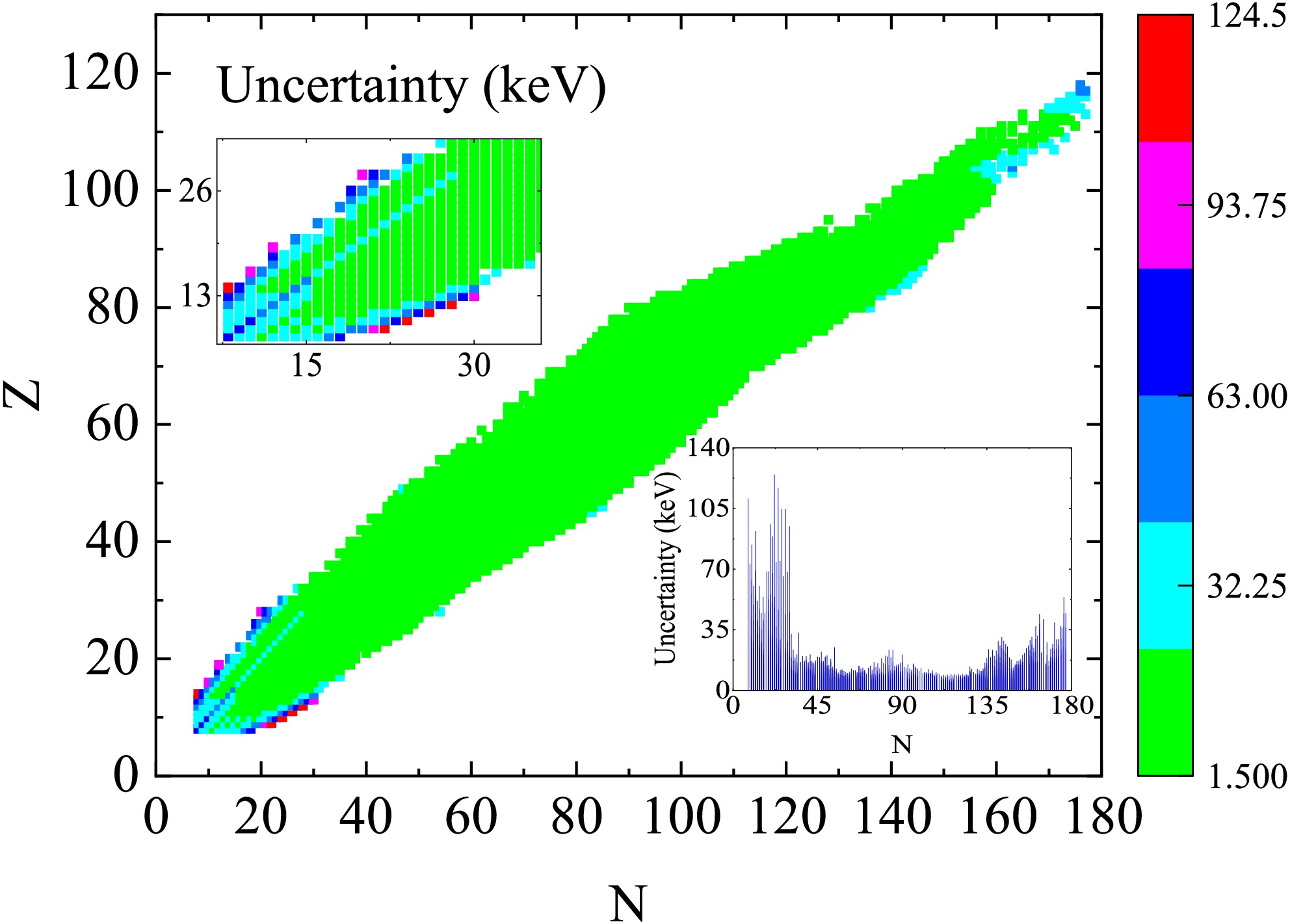
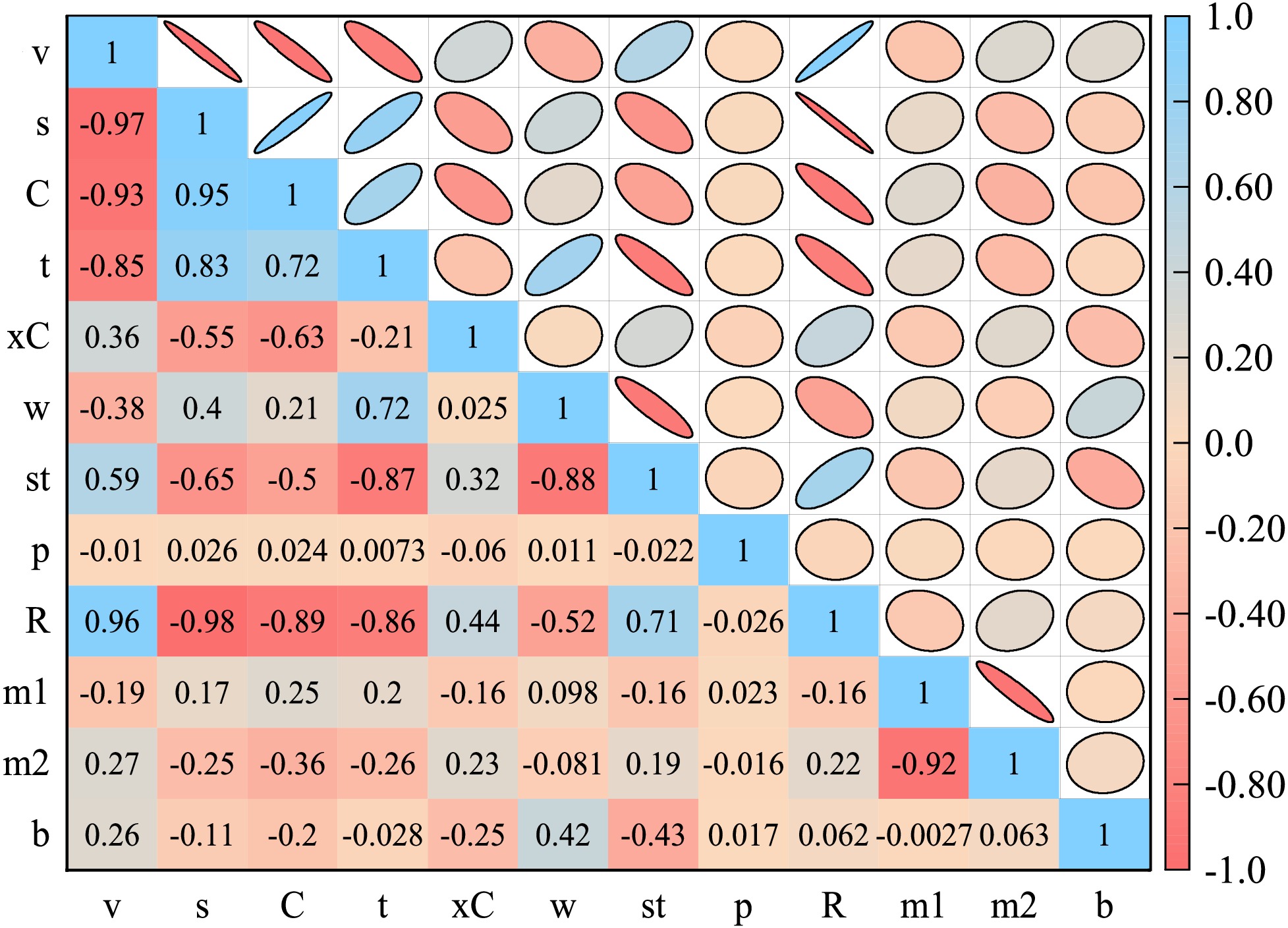
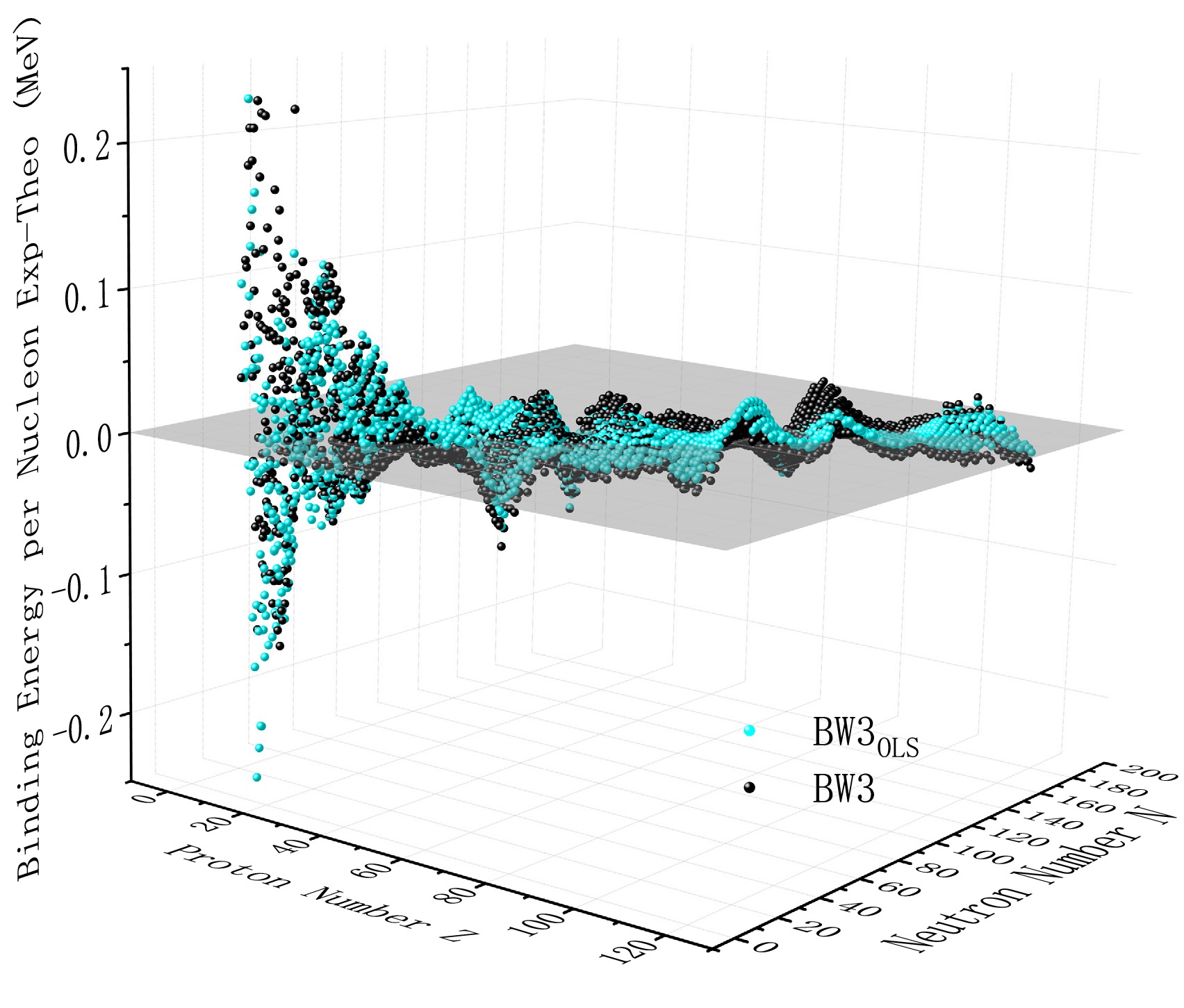
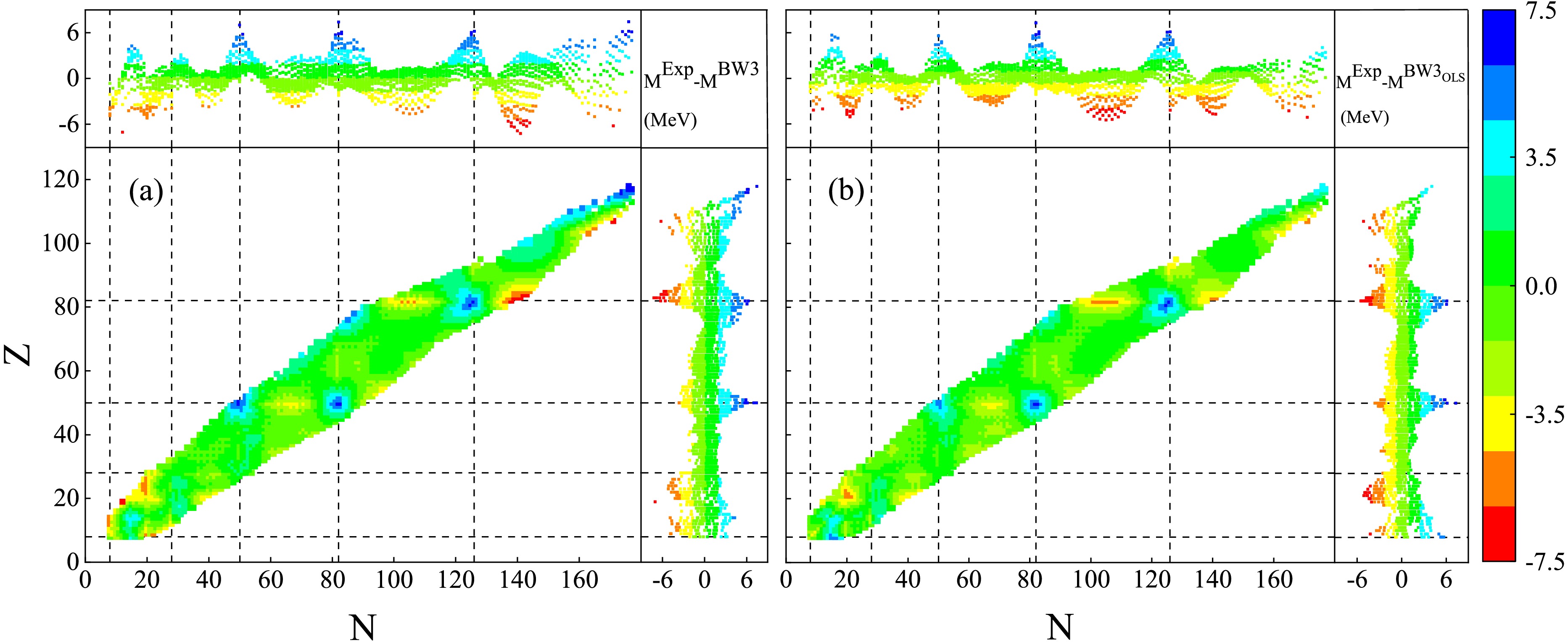
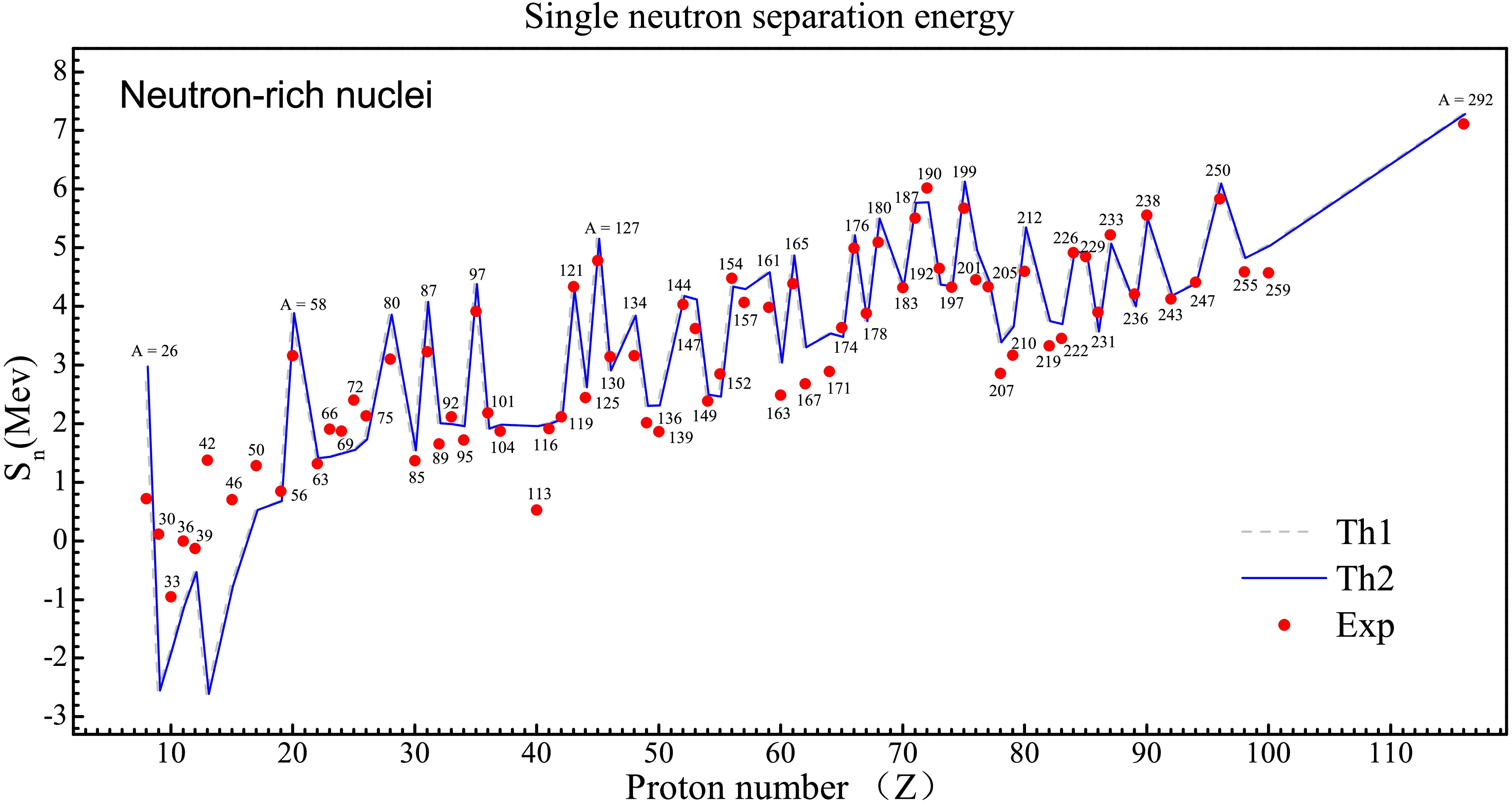
This study performed a statistical analysis of the correlation and uncertainty of parameters in the classical liquid drop mass formula (namely BW3 type) via regression, along with the theoretical impact of error propagation. Within the improved BW3 formula, the total deviation between evaluation and experiment can be reduced to 1.66 MeV, involving a reduction from 2.89 (2.42) MeV to 1.92 (1.89) MeV in the proton(neutron)-dripline region. Ridge regression validation verified this total deviation as the optimal point in the present mass model. Through trend coefficients and Pearson linear-correlation analysis, obvious collinearity was identified between volume, surface, Coulomb, and curvature terms, with notable correlation among high-order symmetry energy and surface symmetry terms. The theoretical derivation of the distribution of binding energy error was then achieved through error propagation analysis. Across the nuclide chart, the error uncertainty of mass predictions varies from 1.996 to 124.469 keV, demonstrating a convex trend of the initial decrease of evaluation error followed by an increase versus the neutron number.
This study performed a statistical analysis of the correlation and uncertainty of parameters in the classical liquid drop mass formula (namely BW3 type) via regression, along with the theoretical impact of error propagation. Within the improved BW3 formula, the total deviation between evaluation and experiment can be reduced to 1.66 MeV, involving a reduction from 2.89 (2.42) MeV to 1.92 (1.89) MeV in the proton(neutron)-dripline region. Ridge regression validation verified this total deviation as the optimal point in the present mass model. Through trend coefficients and Pearson linear-correlation analysis, obvious collinearity was identified between volume, surface, Coulomb, and curvature terms, with notable correlation among high-order symmetry energy and surface symmetry terms. The theoretical derivation of the distribution of binding energy error was then achieved through error propagation analysis. Across the nuclide chart, the error uncertainty of mass predictions varies from 1.996 to 124.469 keV, demonstrating a convex trend of the initial decrease of evaluation error followed by an increase versus the neutron number.
2026, 50(2): 024108. doi: 10.1088/1674-1137/ae18ae
Abstract:
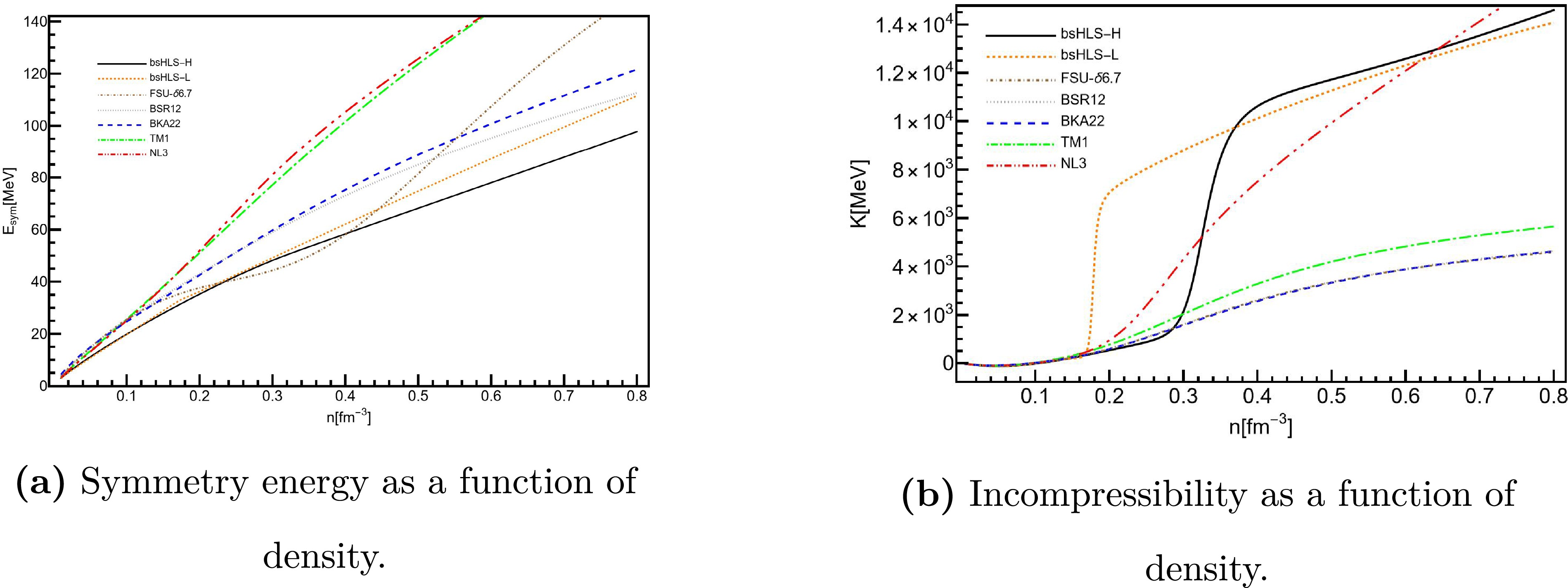
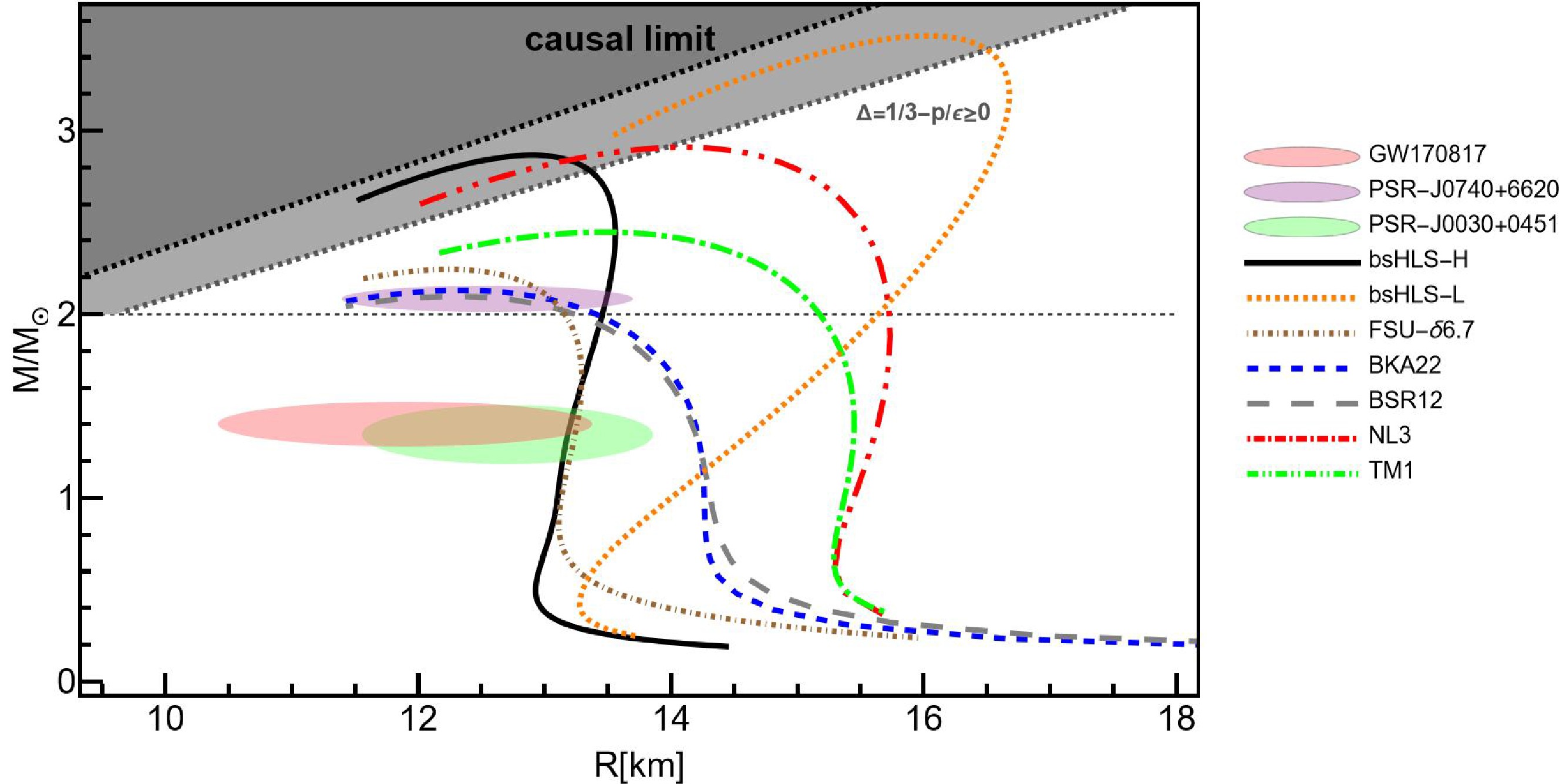
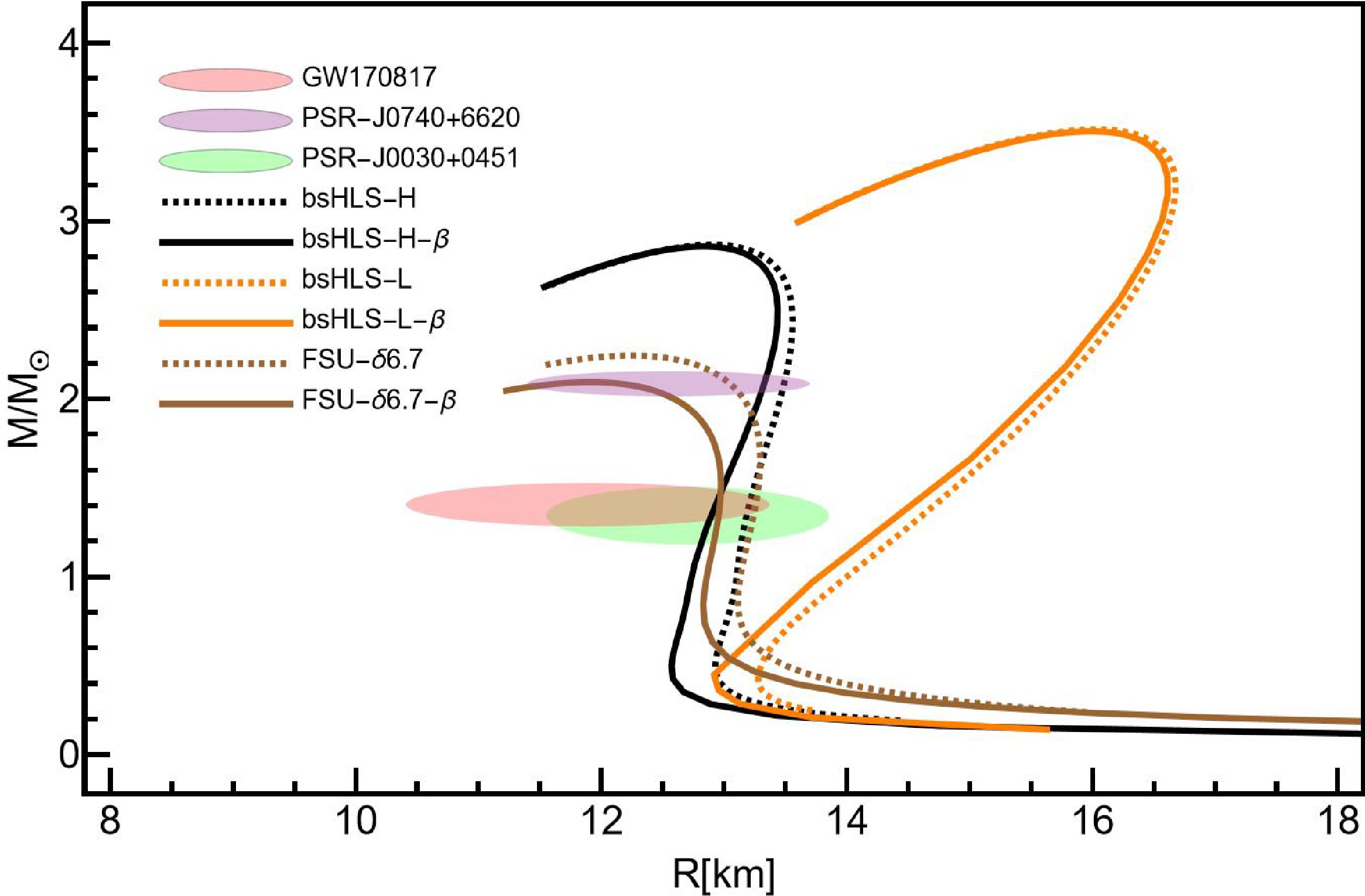
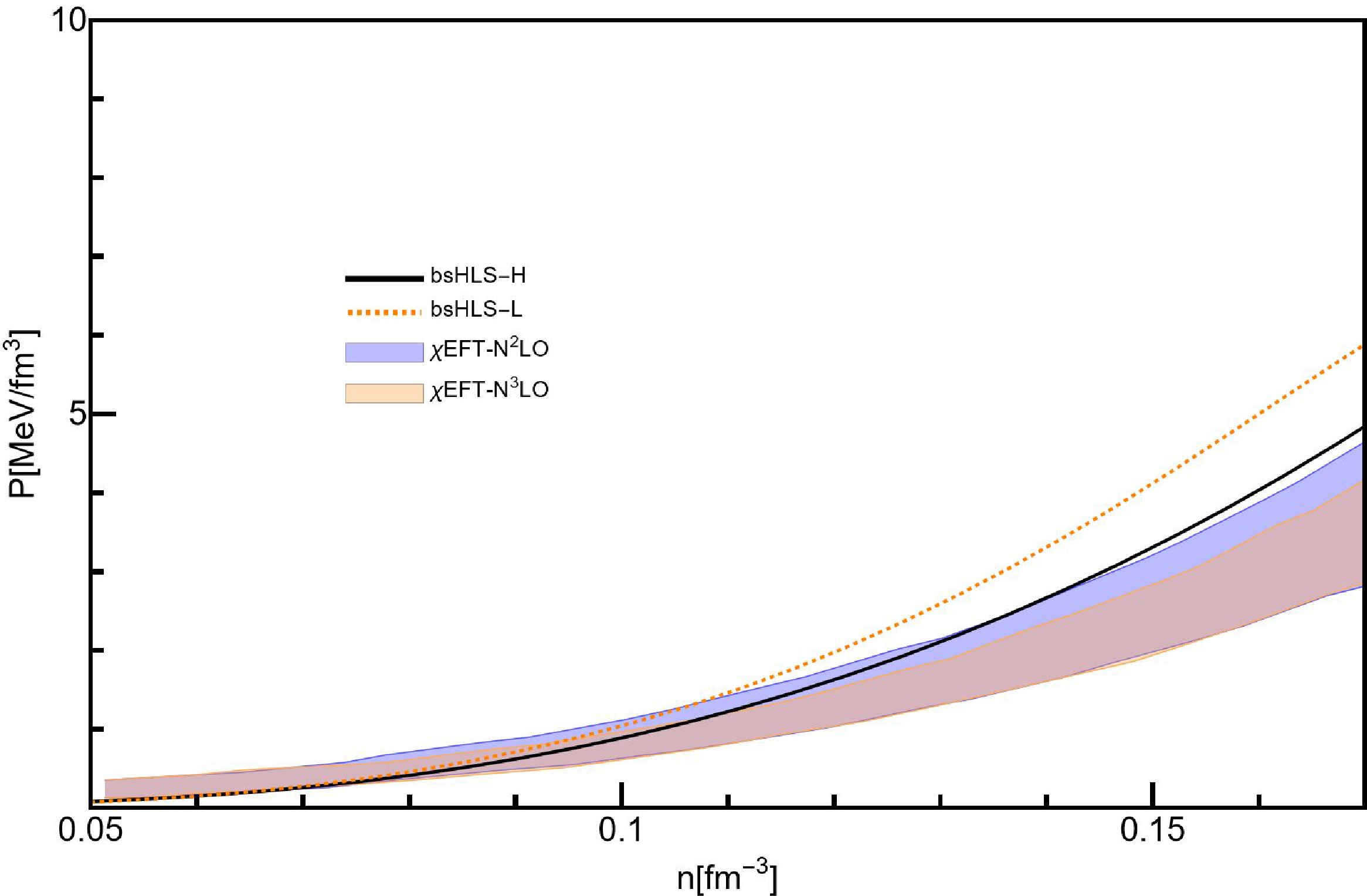
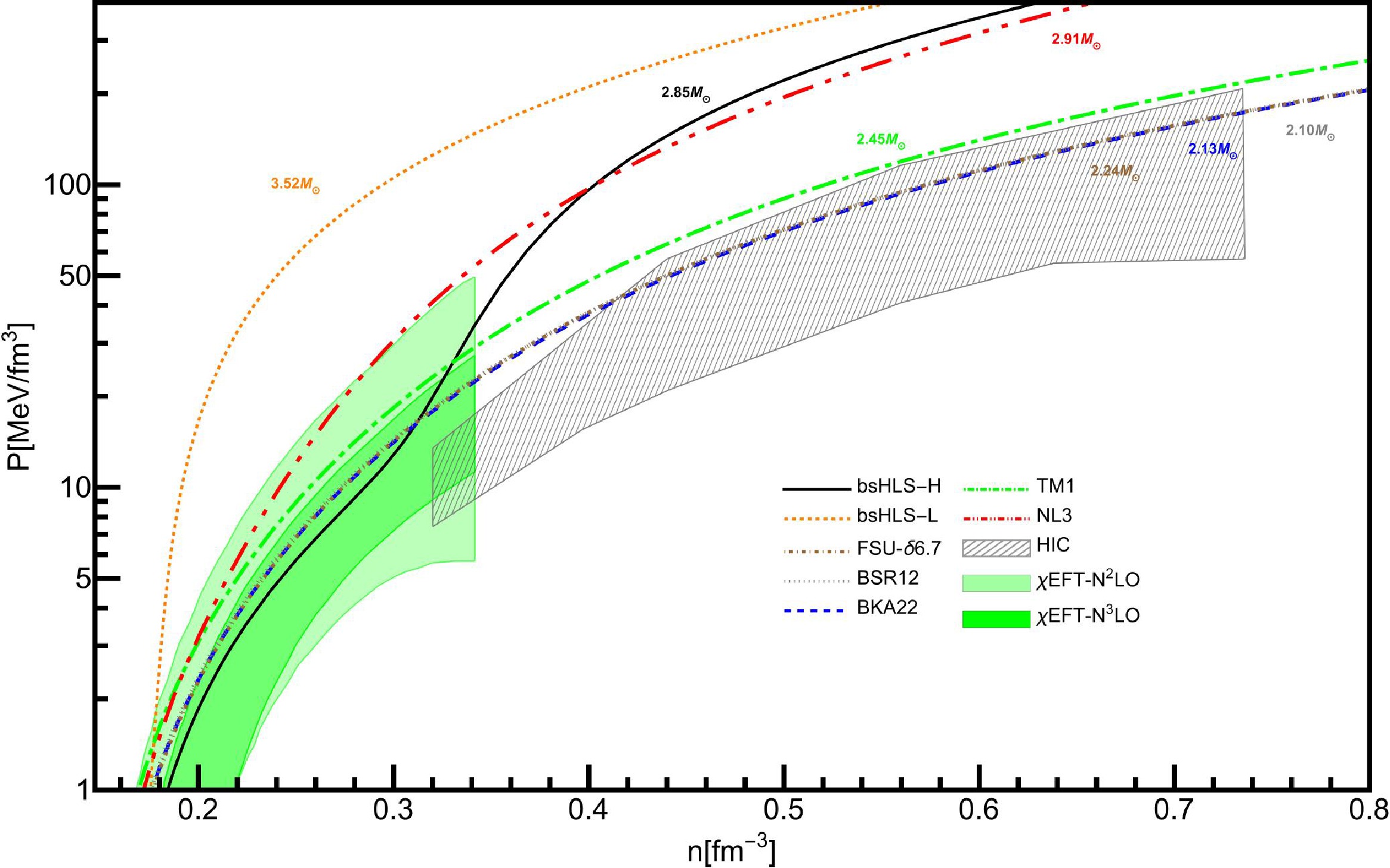
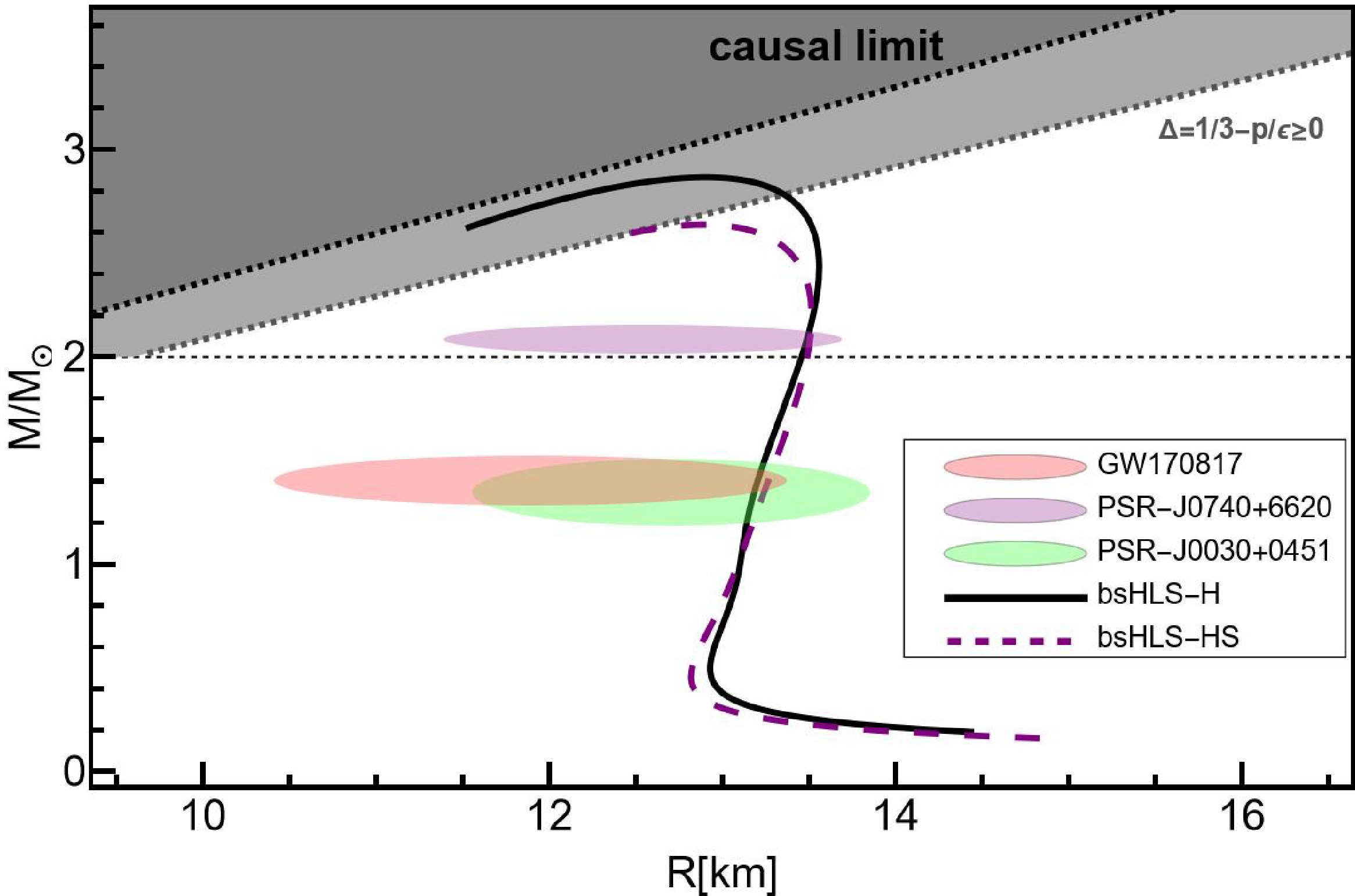
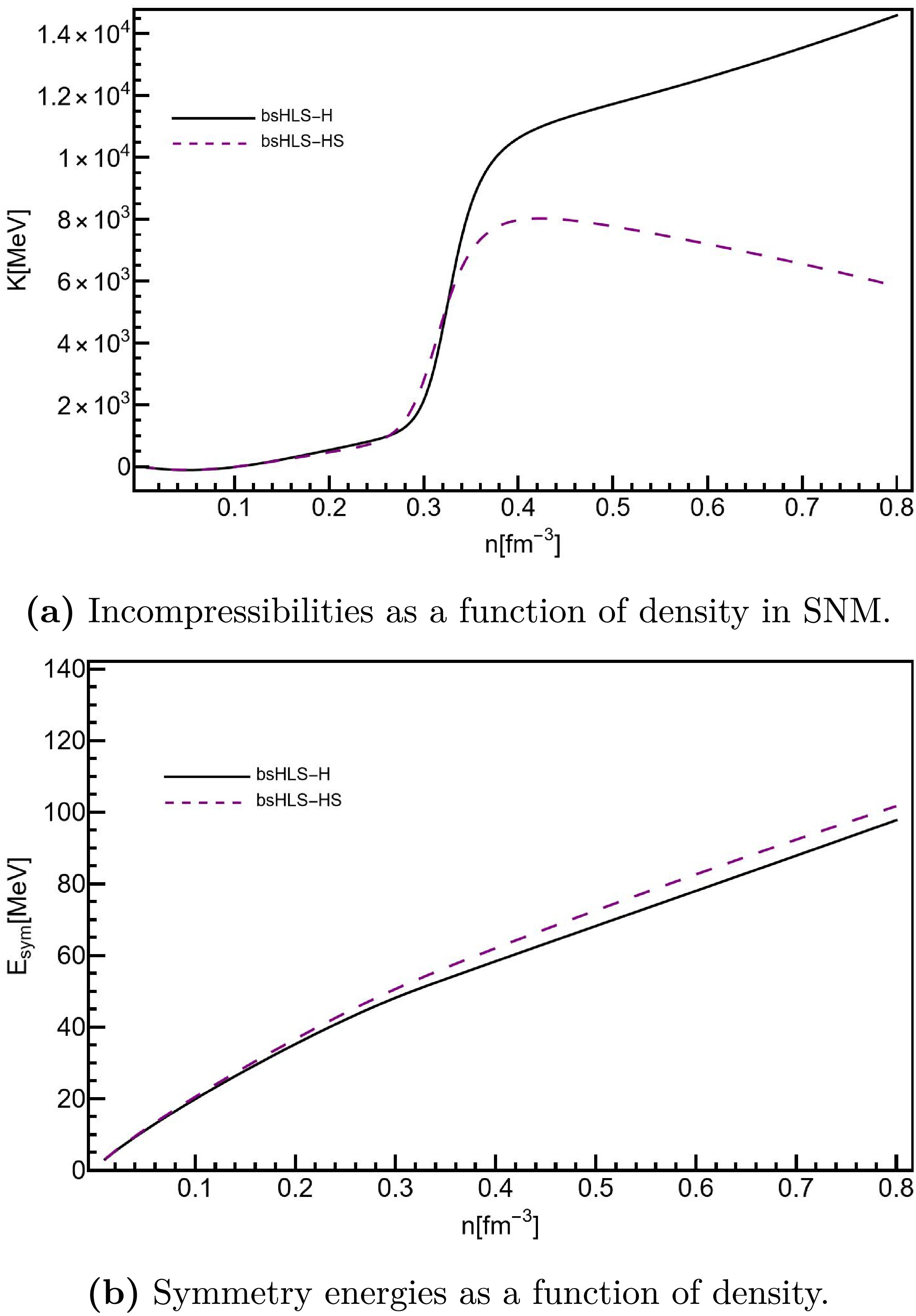
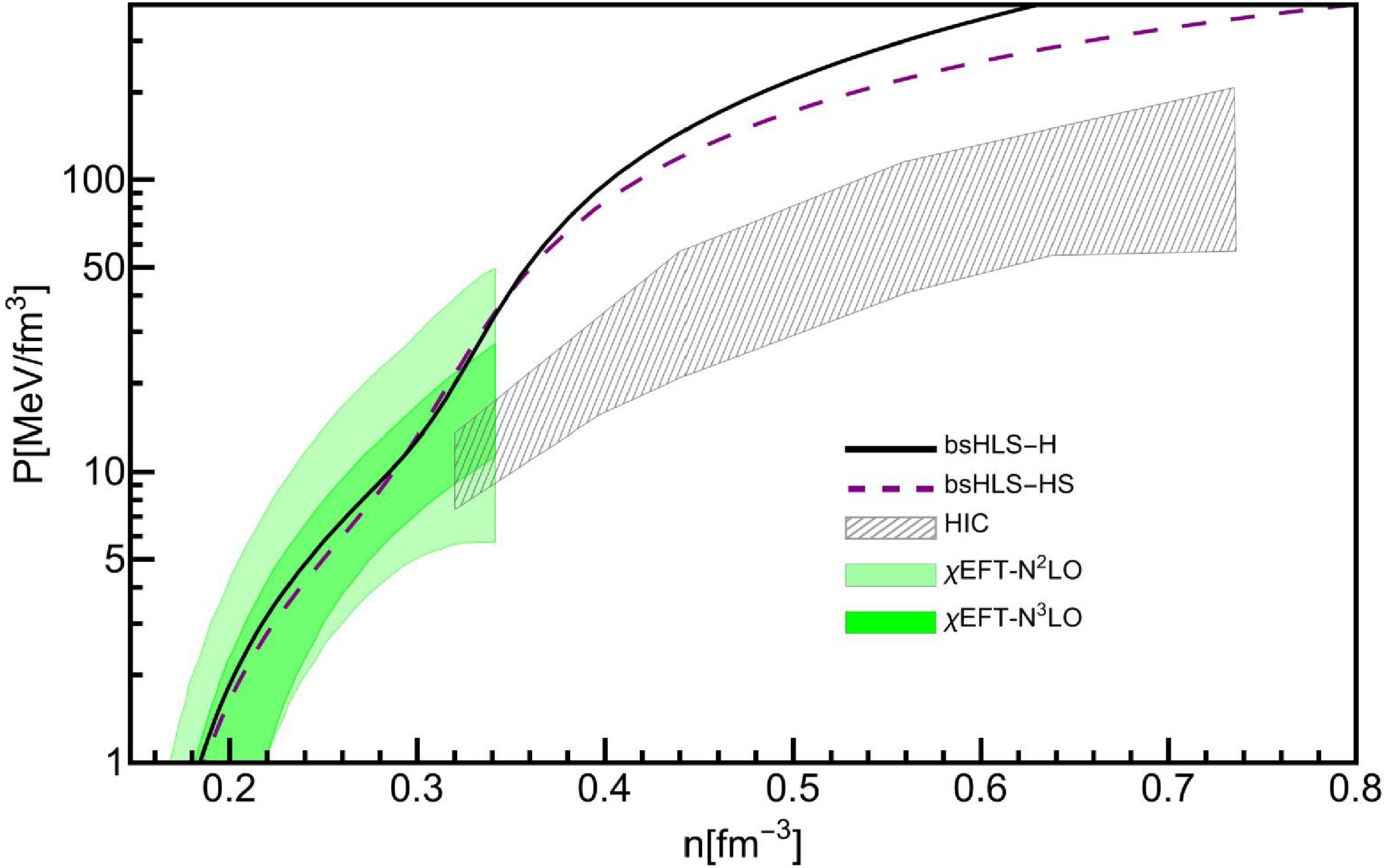
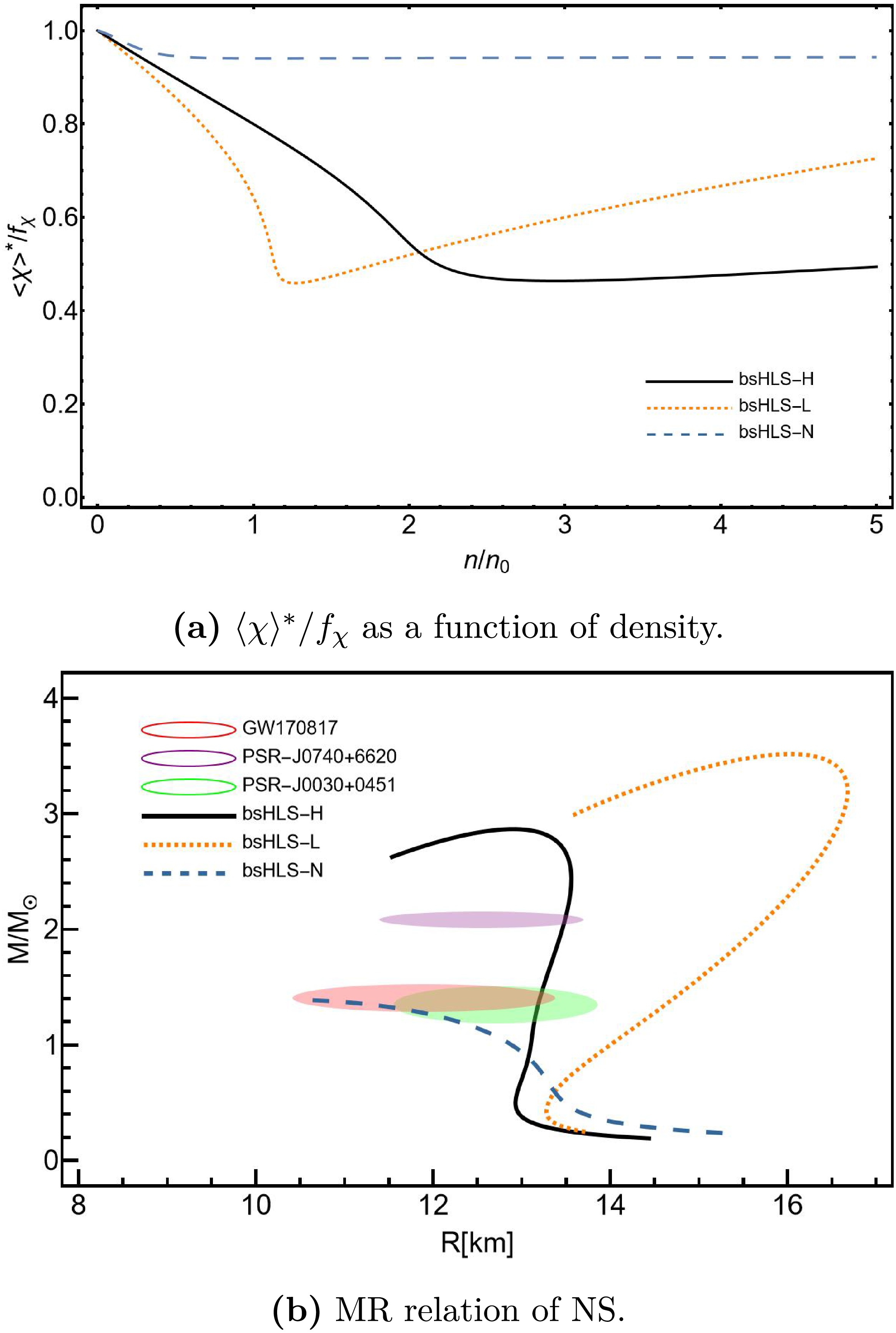
Chiral effective theory has become a powerful tool for studying the low-energy properties of QCD. In this study, we apply an extended chiral effective theory—chiral-scale effective theory—including a dilatonic scalar meson to study nuclear matter. It is found that the properties around saturation density can be well reproduced. Compared to Walecka-type models in nuclear matter studies, our approach improves the behavior of symmetry energy in describing empirical data without introducing an additional isovector scalar meson δ to make it soft at intermediate densities. Moreover, the predicted neutron star mass-radius relations fall within the constraints of GW170817, PSR J0740+6620, and PSR J0030+0451, while the maximum neutron star mass can reach\begin{document}$\gtrsim 2.5M_{\odot}$\end{document}
Chiral effective theory has become a powerful tool for studying the low-energy properties of QCD. In this study, we apply an extended chiral effective theory—chiral-scale effective theory—including a dilatonic scalar meson to study nuclear matter. It is found that the properties around saturation density can be well reproduced. Compared to Walecka-type models in nuclear matter studies, our approach improves the behavior of symmetry energy in describing empirical data without introducing an additional isovector scalar meson δ to make it soft at intermediate densities. Moreover, the predicted neutron star mass-radius relations fall within the constraints of GW170817, PSR J0740+6620, and PSR J0030+0451, while the maximum neutron star mass can reach
2026, 50(2): 024109. doi: 10.1088/1674-1137/ae19dc
Abstract:
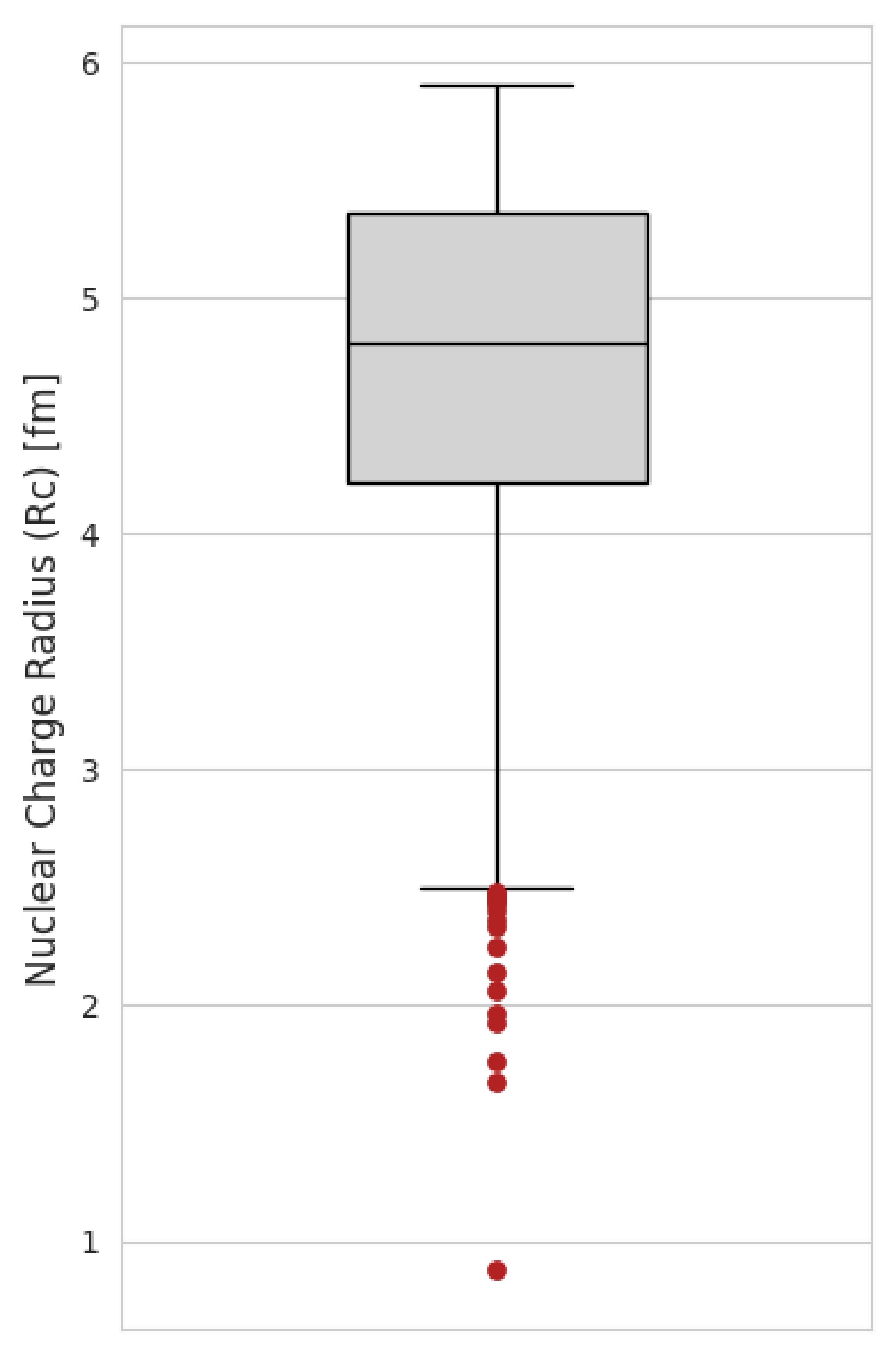
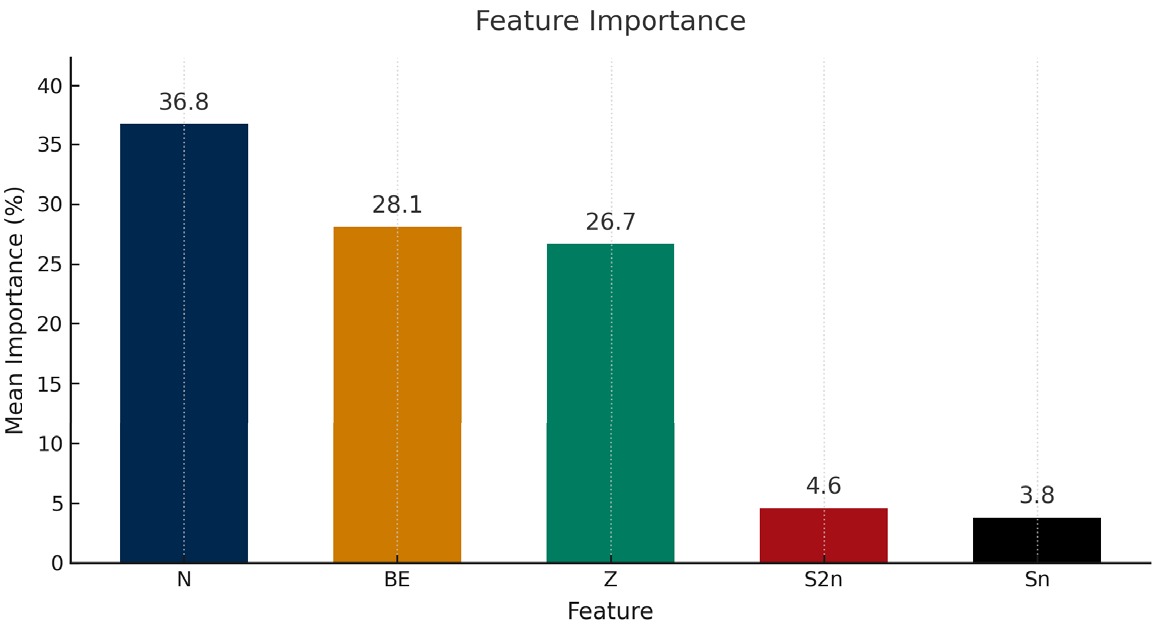
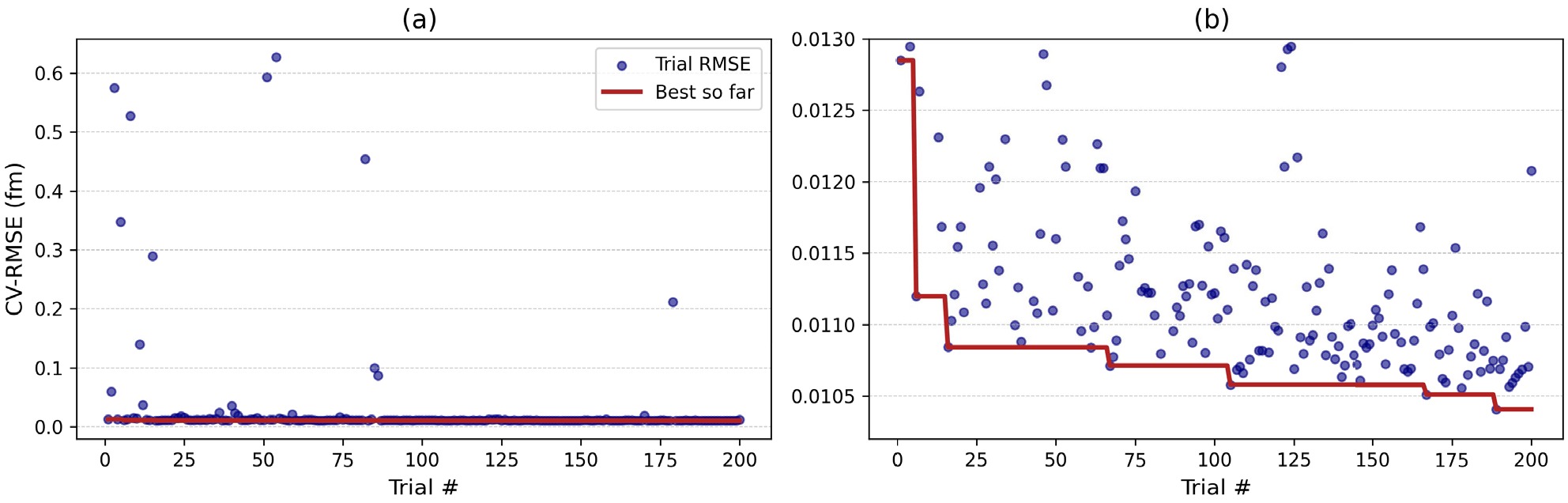
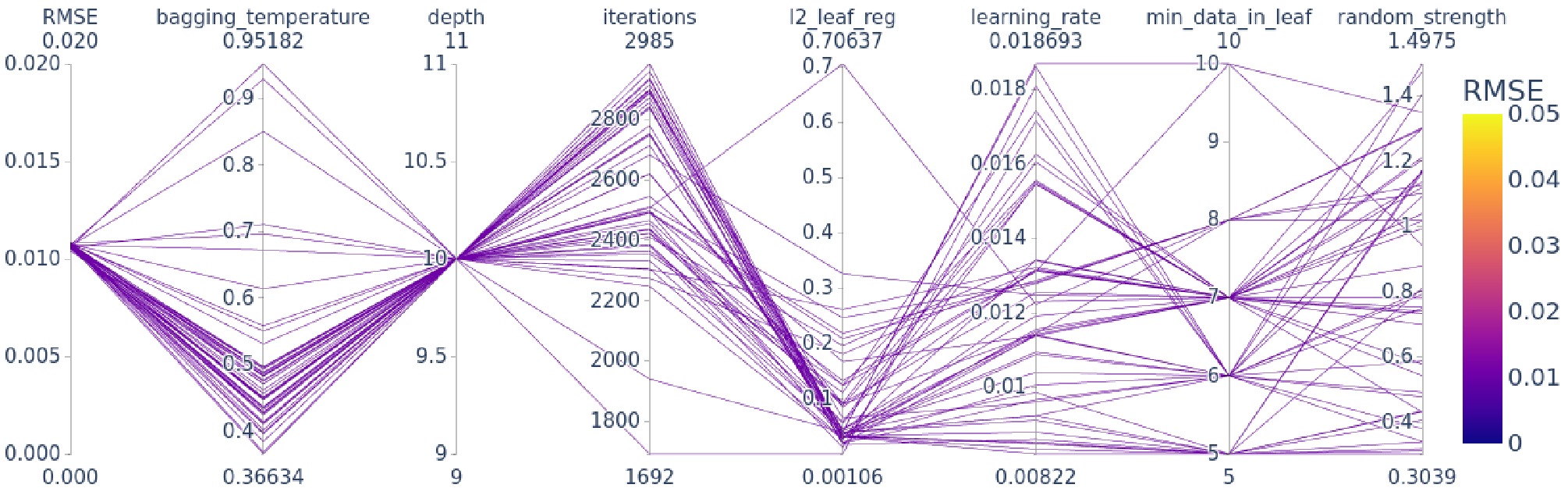
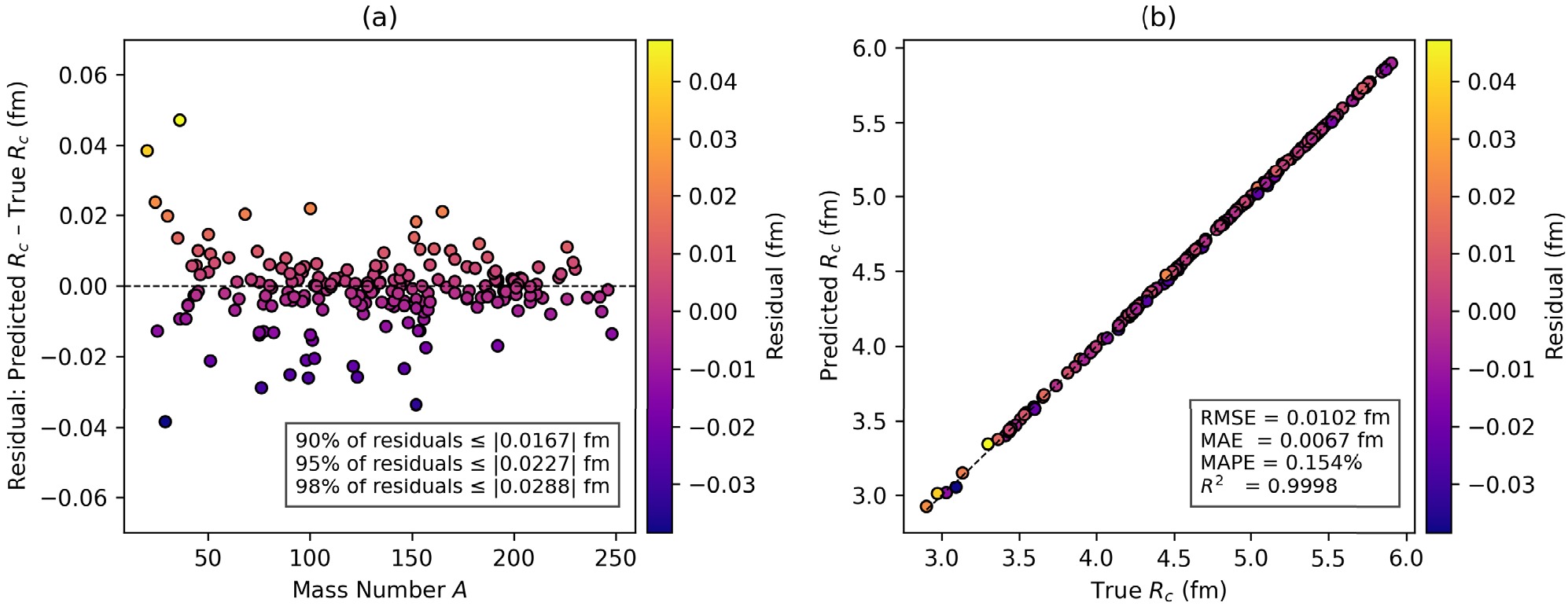
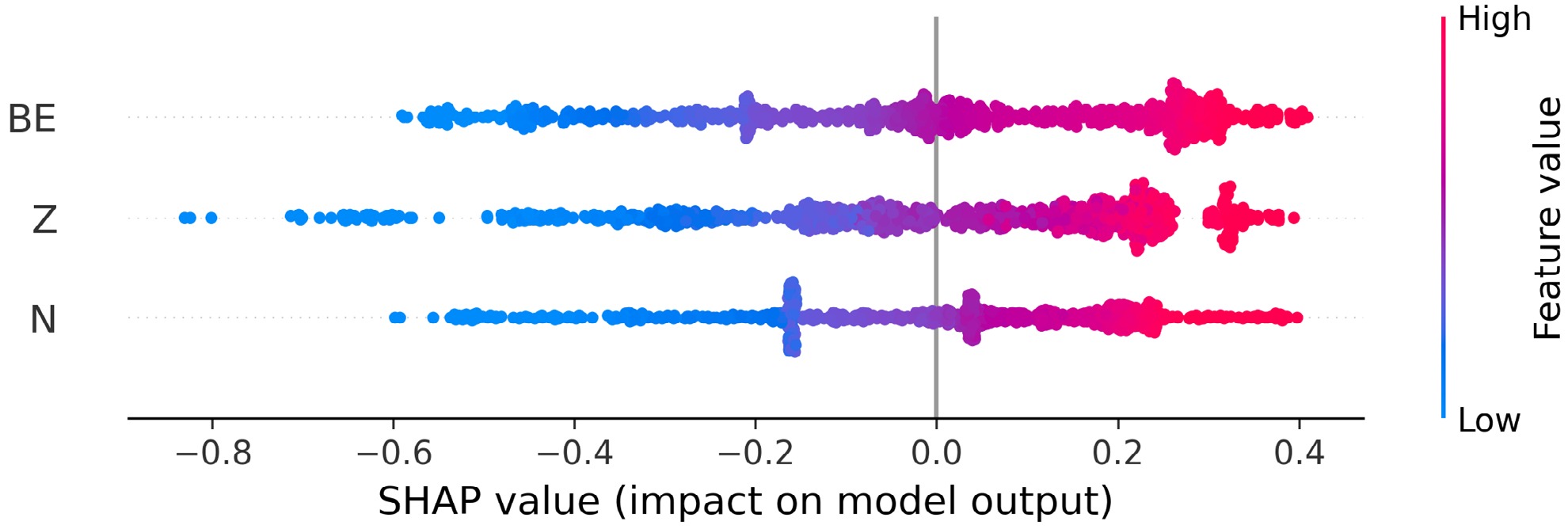
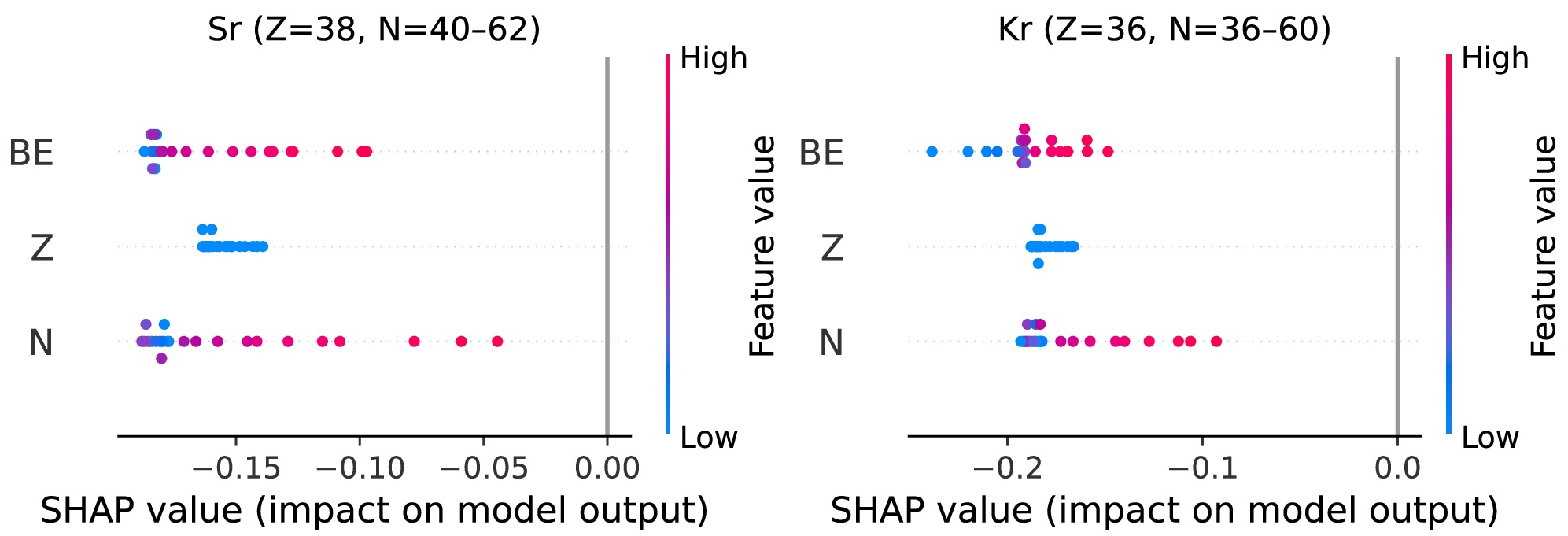
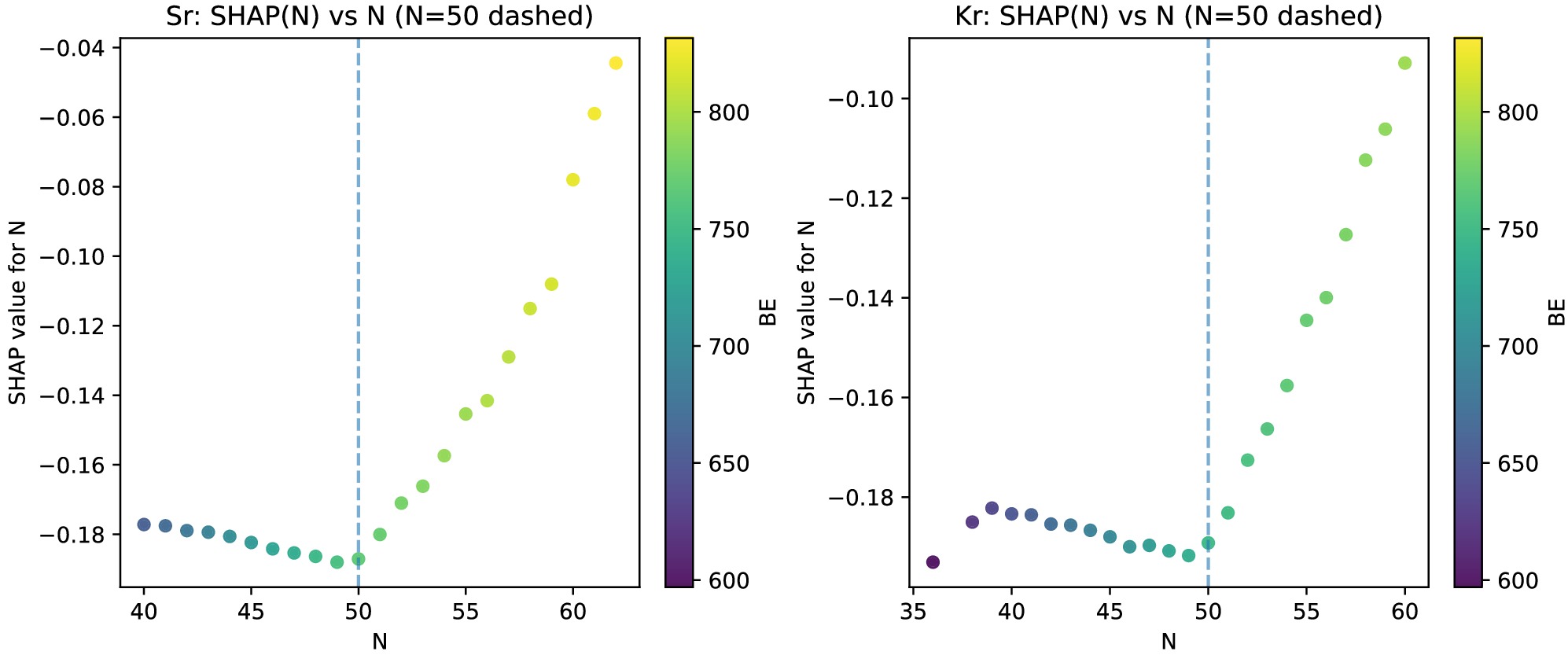
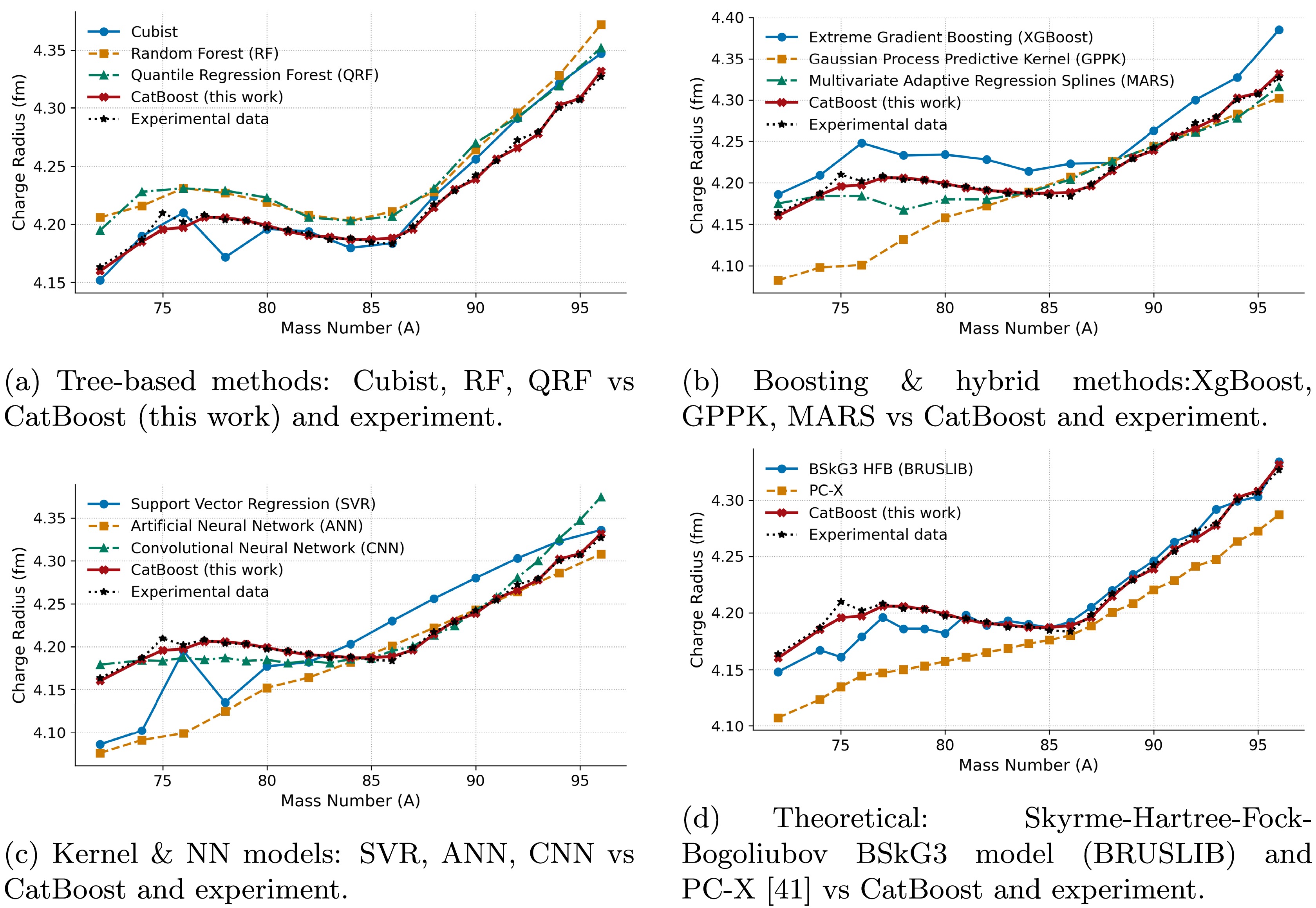
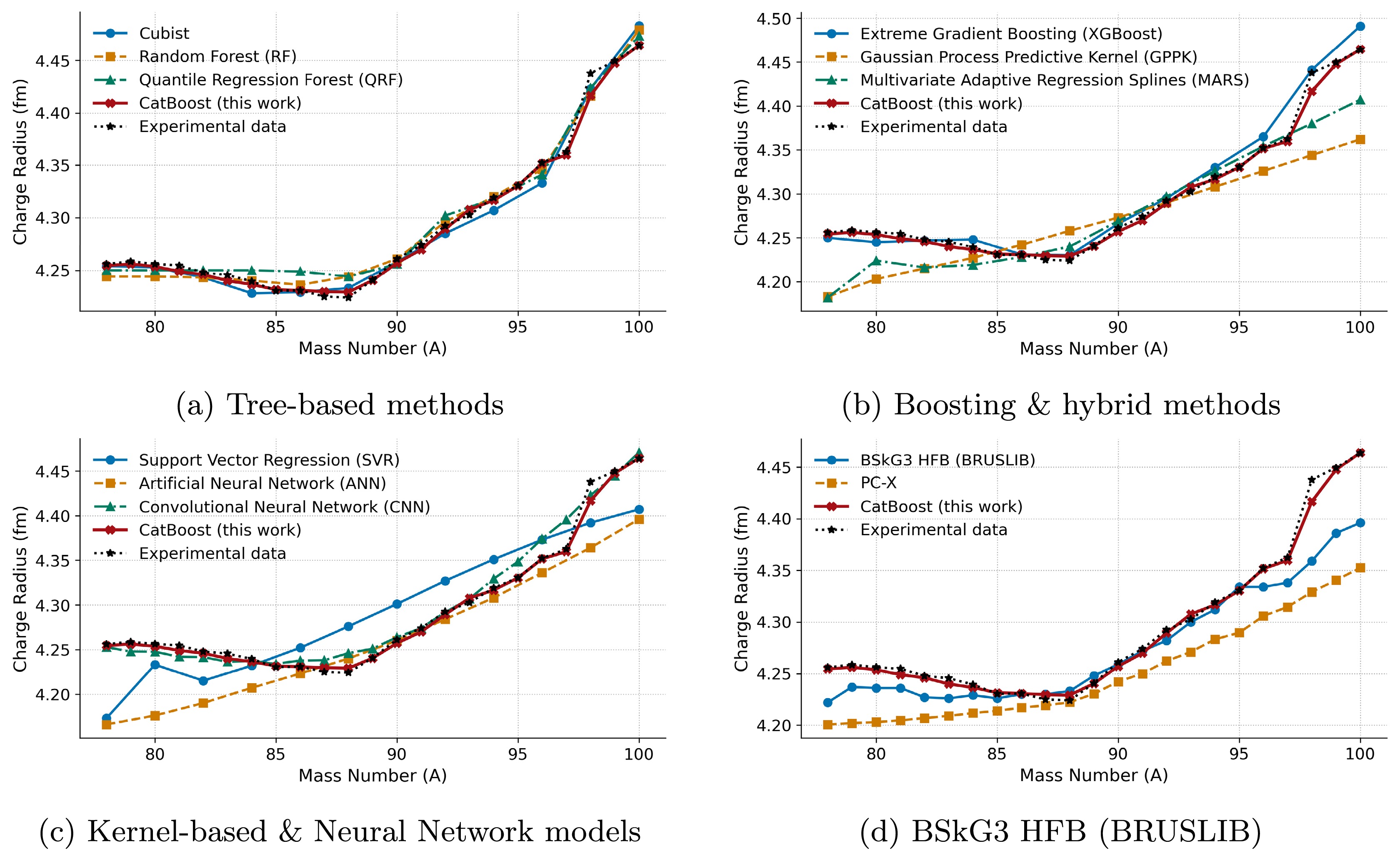
Understanding nuclear shape, behavior, and stability, as well as improving nuclear models, depends on the precise determination of ground-state nuclear charge radii. Existing experimental techniques are limited to extremely narrow regions of the nuclear chart; theoretical models, including relativistic Hartree-Bogoliubov (RHB) and Hartree-Fock-Bogoliubov (HFB), predict broad trends of nuclear properties but miss fine isotopic features such as odd-even staggering effects and shell-closure kinks. High computational time and cost are other obstacles to theoretical approaches. Although machine-learning algorithms have made significant progress in predicting charge radii, they are still hindered by a lack of balanced data and characteristics, primarily centered around\begin{document}$ A\ge40 $\end{document} \begin{document}$ Z\ge20 $\end{document} \begin{document}$ A\ge17 $\end{document} \begin{document}$ Z\ge8 $\end{document} \begin{document}$ N=50 $\end{document}
Understanding nuclear shape, behavior, and stability, as well as improving nuclear models, depends on the precise determination of ground-state nuclear charge radii. Existing experimental techniques are limited to extremely narrow regions of the nuclear chart; theoretical models, including relativistic Hartree-Bogoliubov (RHB) and Hartree-Fock-Bogoliubov (HFB), predict broad trends of nuclear properties but miss fine isotopic features such as odd-even staggering effects and shell-closure kinks. High computational time and cost are other obstacles to theoretical approaches. Although machine-learning algorithms have made significant progress in predicting charge radii, they are still hindered by a lack of balanced data and characteristics, primarily centered around
2026, 50(2): 025101. doi: 10.1088/1674-1137/ae1375
Abstract:
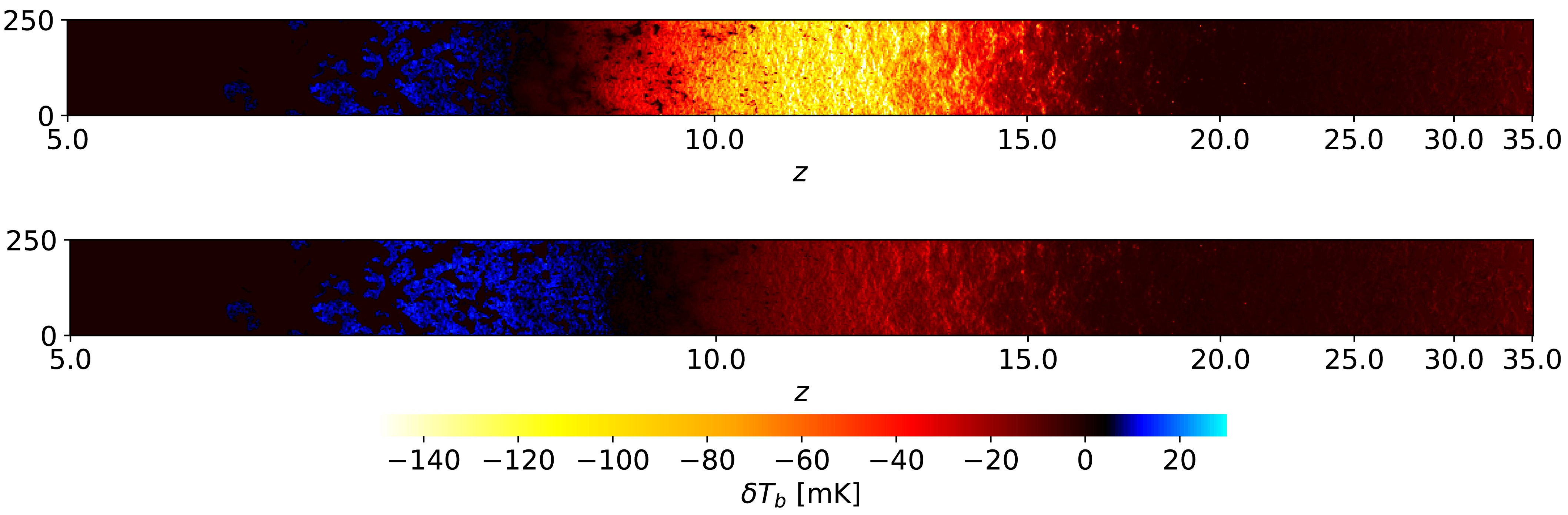
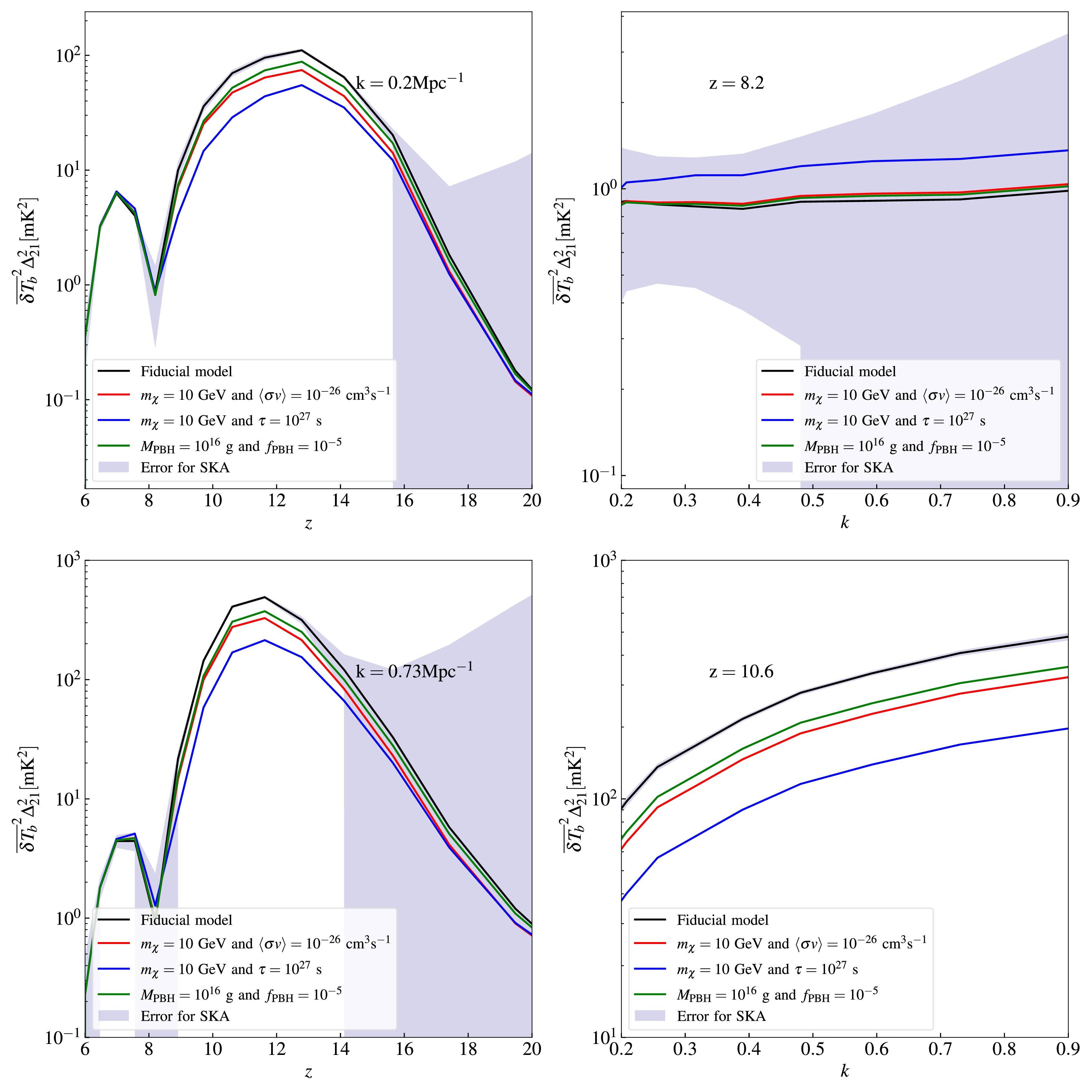
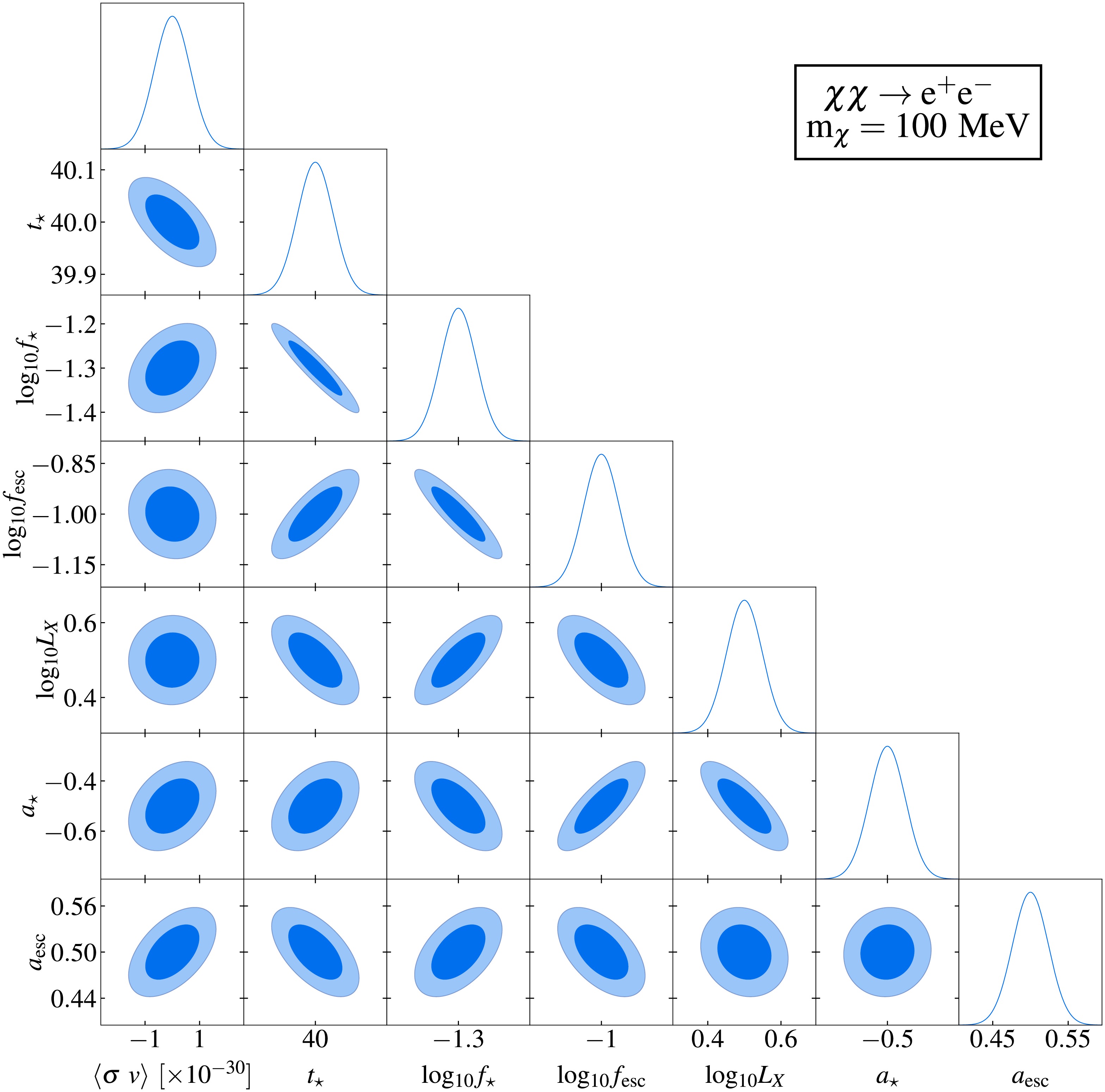
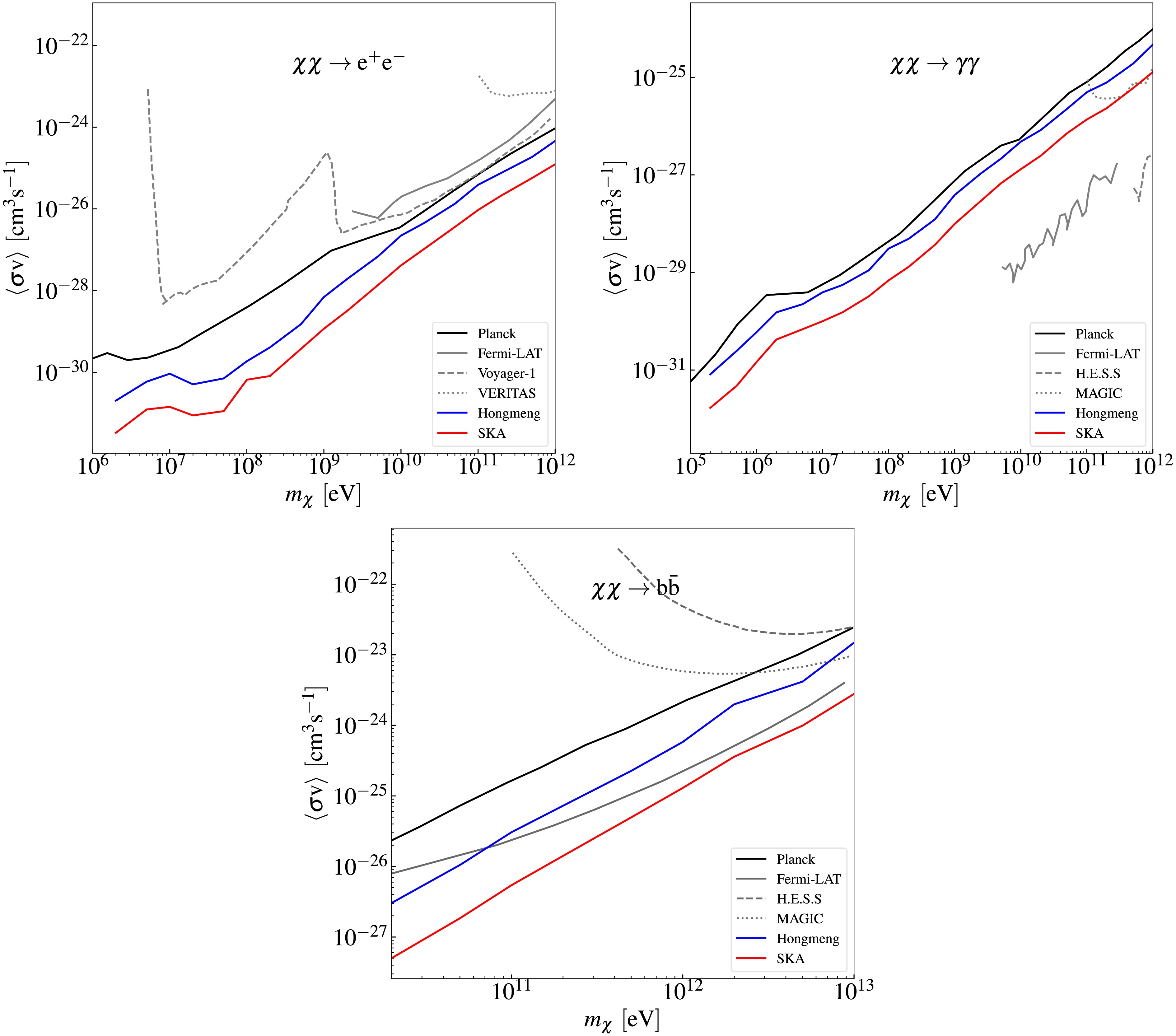
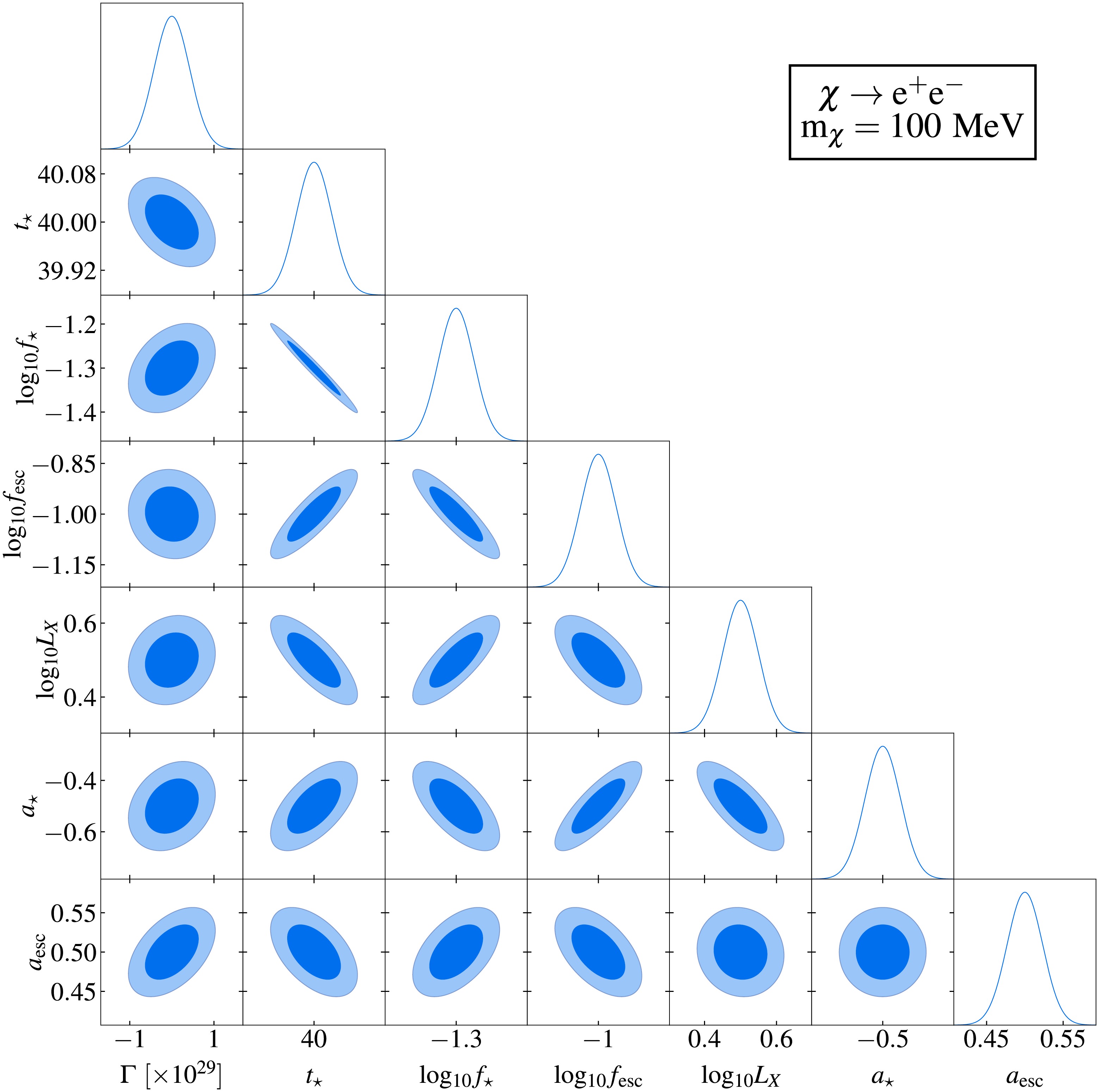
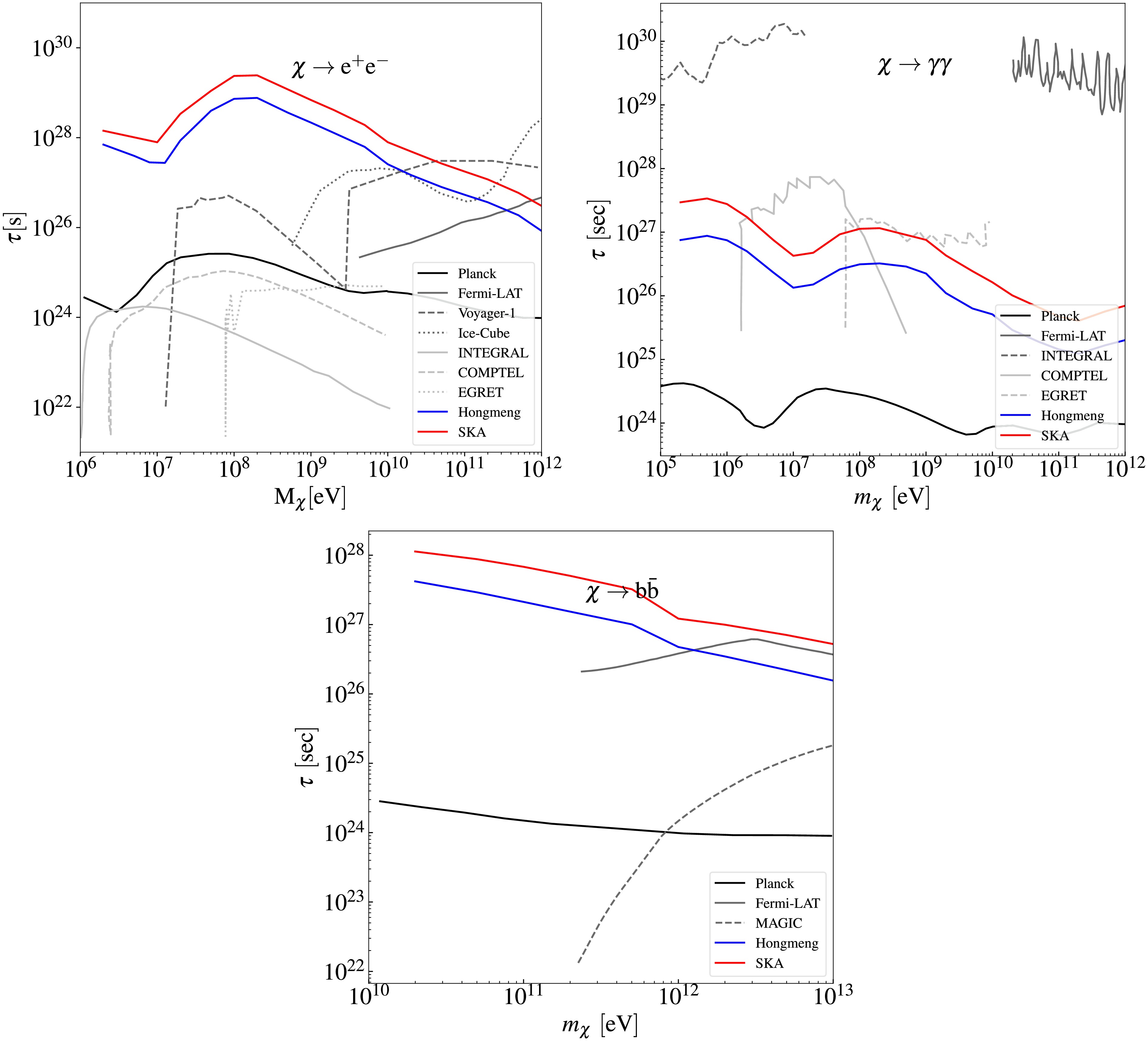
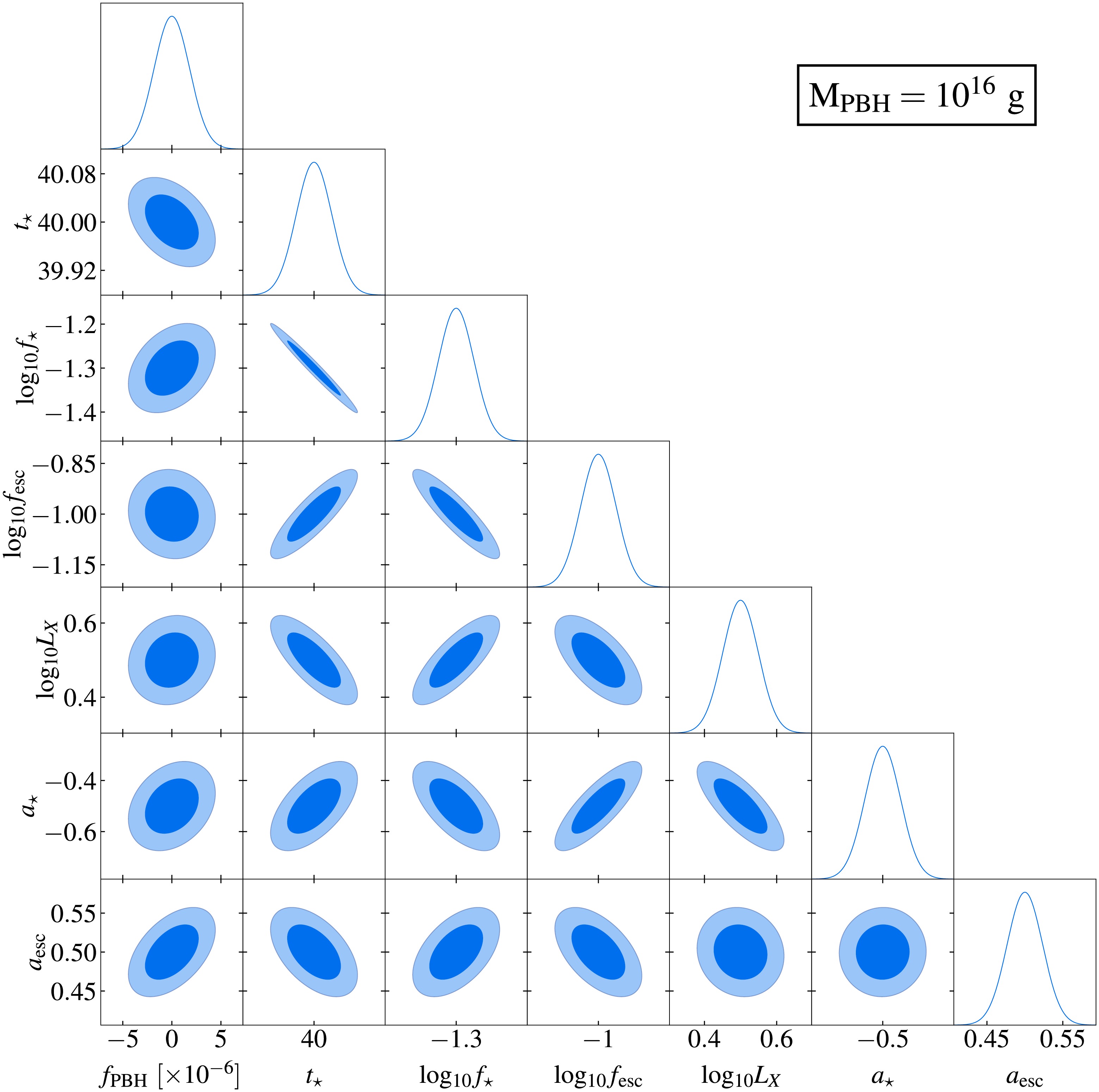
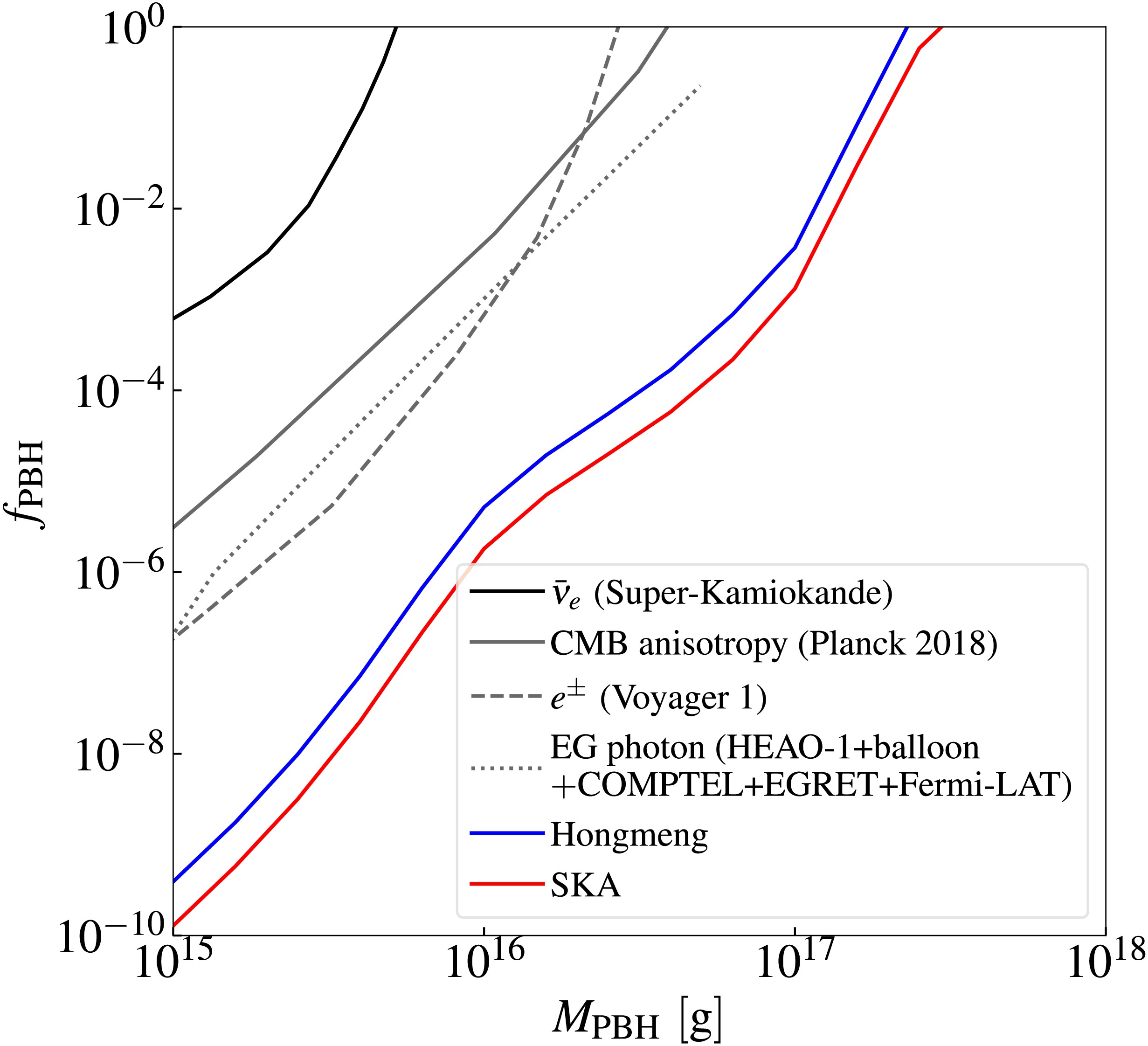
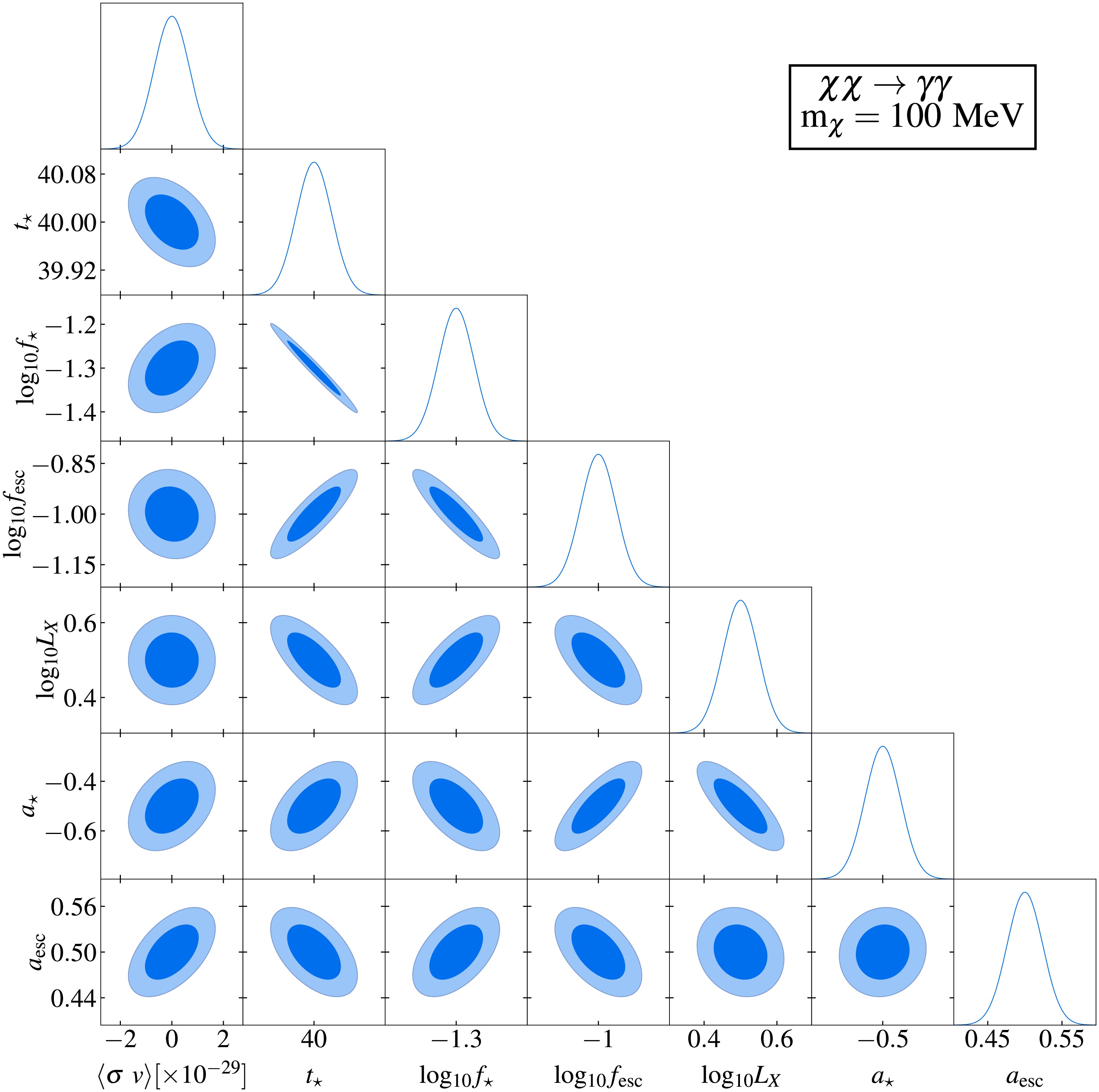
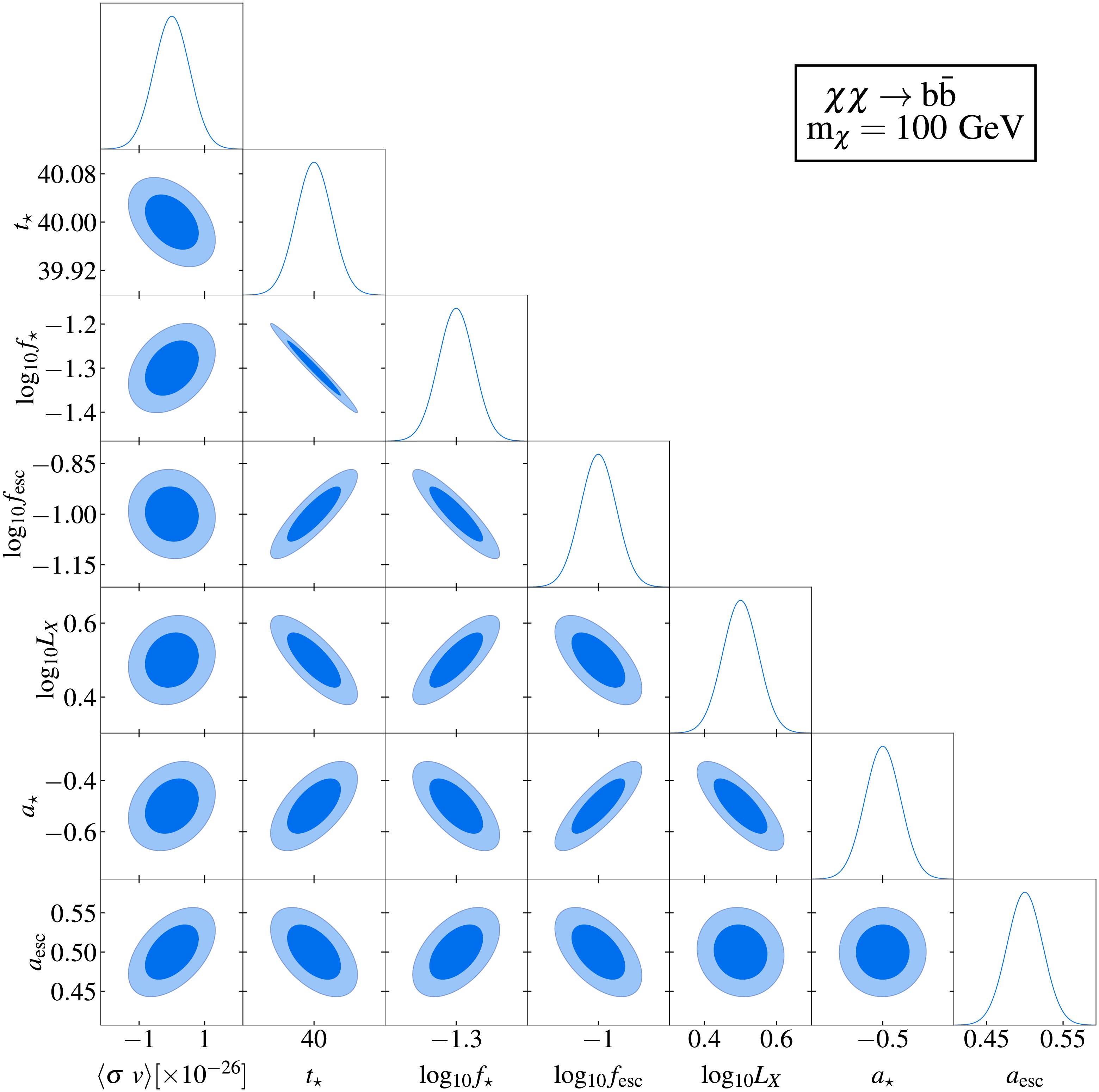
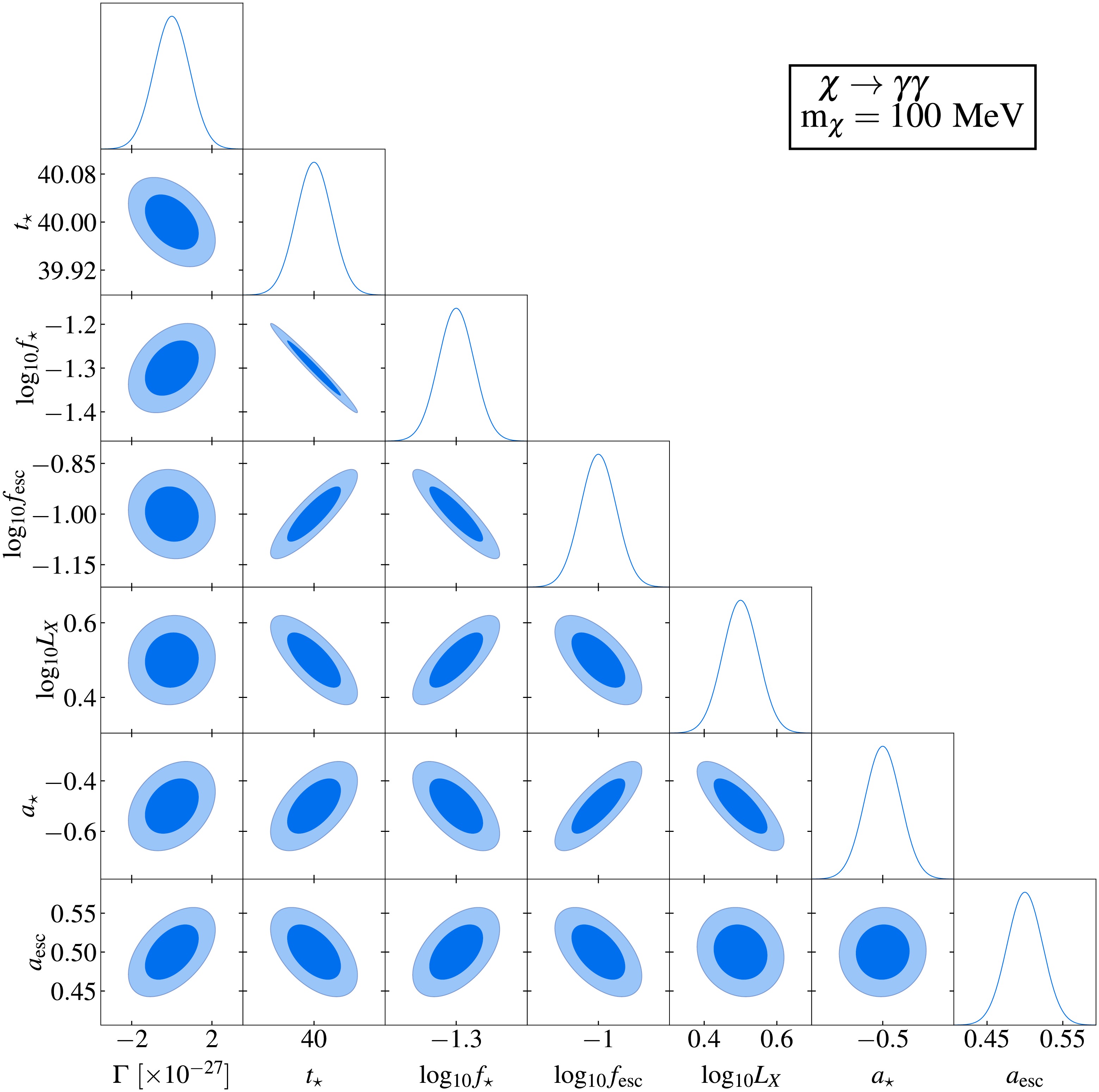
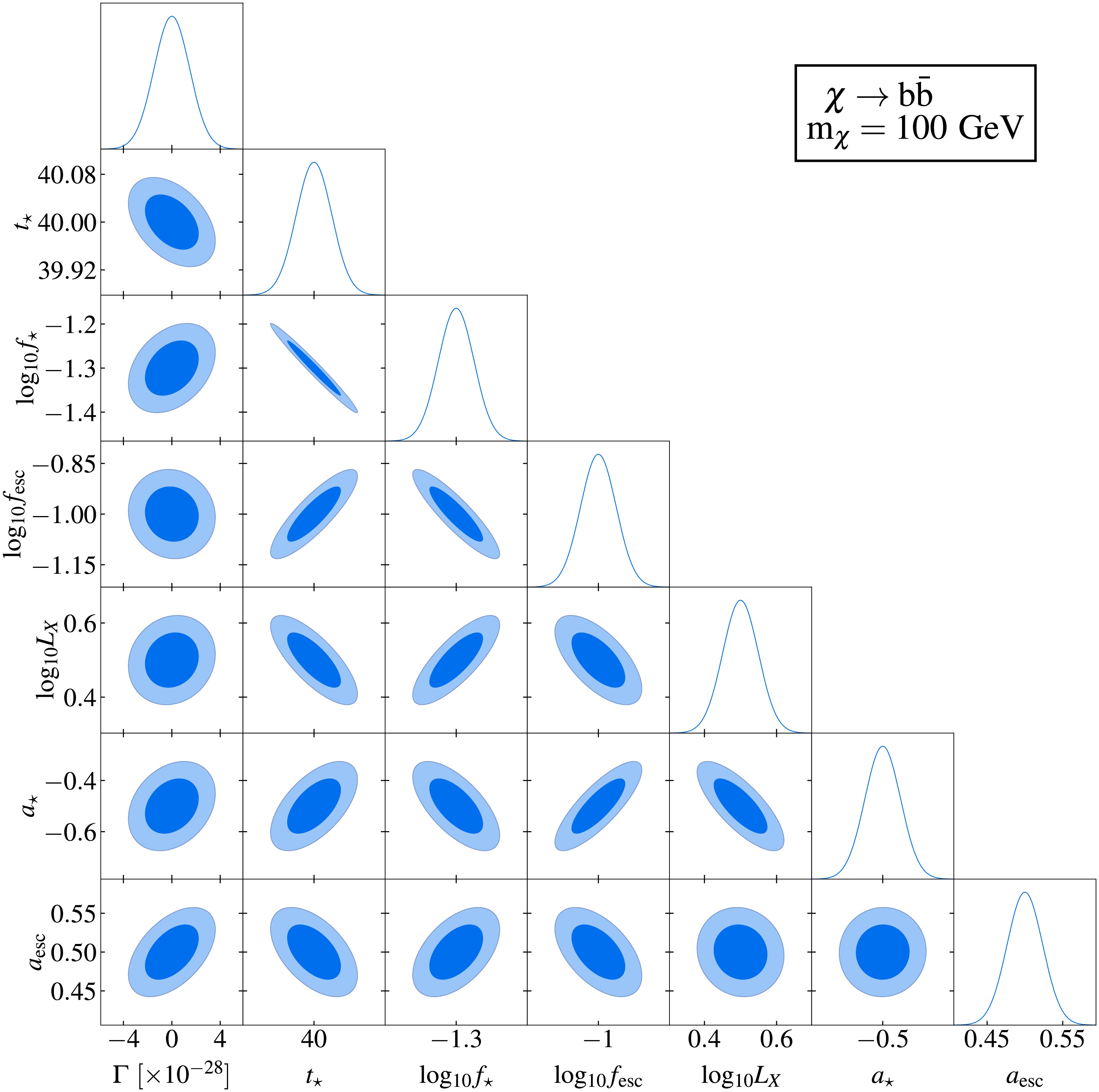
Probing the nature of dark matter (DM) remains an outstanding problem in modern cosmology. The 21 cm signal, a sensitive tracer of neutral hydrogen during the cosmic dawn, provides a unique means to investigate DM nature during this critical epoch. The annihilation and decay of DM particles, as well as Hawking radiation of primordial black holes (PBHs), can modify the thermal and ionization histories of the early universe, leaving distinctive imprints on the 21 cm power spectrum. Therefore, the redshifted 21 cm power spectrum serves as an effective tool for investigating such DM processes. In this work, we systematically assess the potential of the upcoming Square Kilometre Array (SKA) to constrain DM and PBH parameters using the 21 cm power spectrum. Assuming 10,000 h of integration time, the SKA is projected to reach sensitivities of\begin{document}$ \langle\sigma v\rangle \leq 10^{-28}\,{{\rm{cm}}}^{3}\,{{\rm{s}}}^{-1} $\end{document} \begin{document}$ \tau\ge10^{28}\, \rm{s} $\end{document} \begin{document}$ 10\; {{\rm{GeV}}} $\end{document} \begin{document}$ 10^{16}\,{{\rm{g}}} $\end{document} \begin{document}$ f_{{{\rm{PBH}}}} \leq 10^{-6} $\end{document} \begin{document}$ 10^{17}\,{{\rm{g}}} $\end{document}
Probing the nature of dark matter (DM) remains an outstanding problem in modern cosmology. The 21 cm signal, a sensitive tracer of neutral hydrogen during the cosmic dawn, provides a unique means to investigate DM nature during this critical epoch. The annihilation and decay of DM particles, as well as Hawking radiation of primordial black holes (PBHs), can modify the thermal and ionization histories of the early universe, leaving distinctive imprints on the 21 cm power spectrum. Therefore, the redshifted 21 cm power spectrum serves as an effective tool for investigating such DM processes. In this work, we systematically assess the potential of the upcoming Square Kilometre Array (SKA) to constrain DM and PBH parameters using the 21 cm power spectrum. Assuming 10,000 h of integration time, the SKA is projected to reach sensitivities of
2026, 50(2): 025102. doi: 10.1088/1674-1137/ae1442
Abstract:
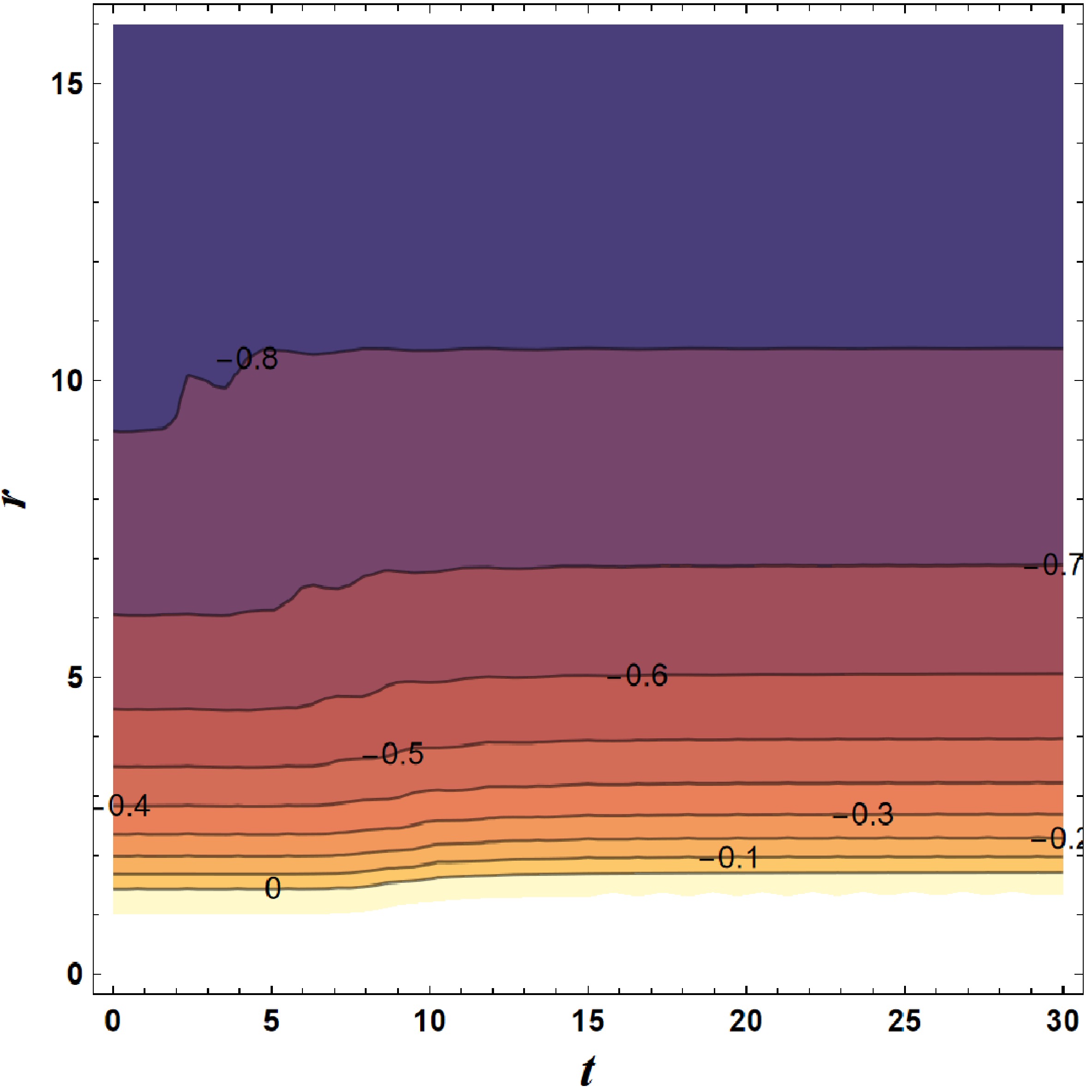
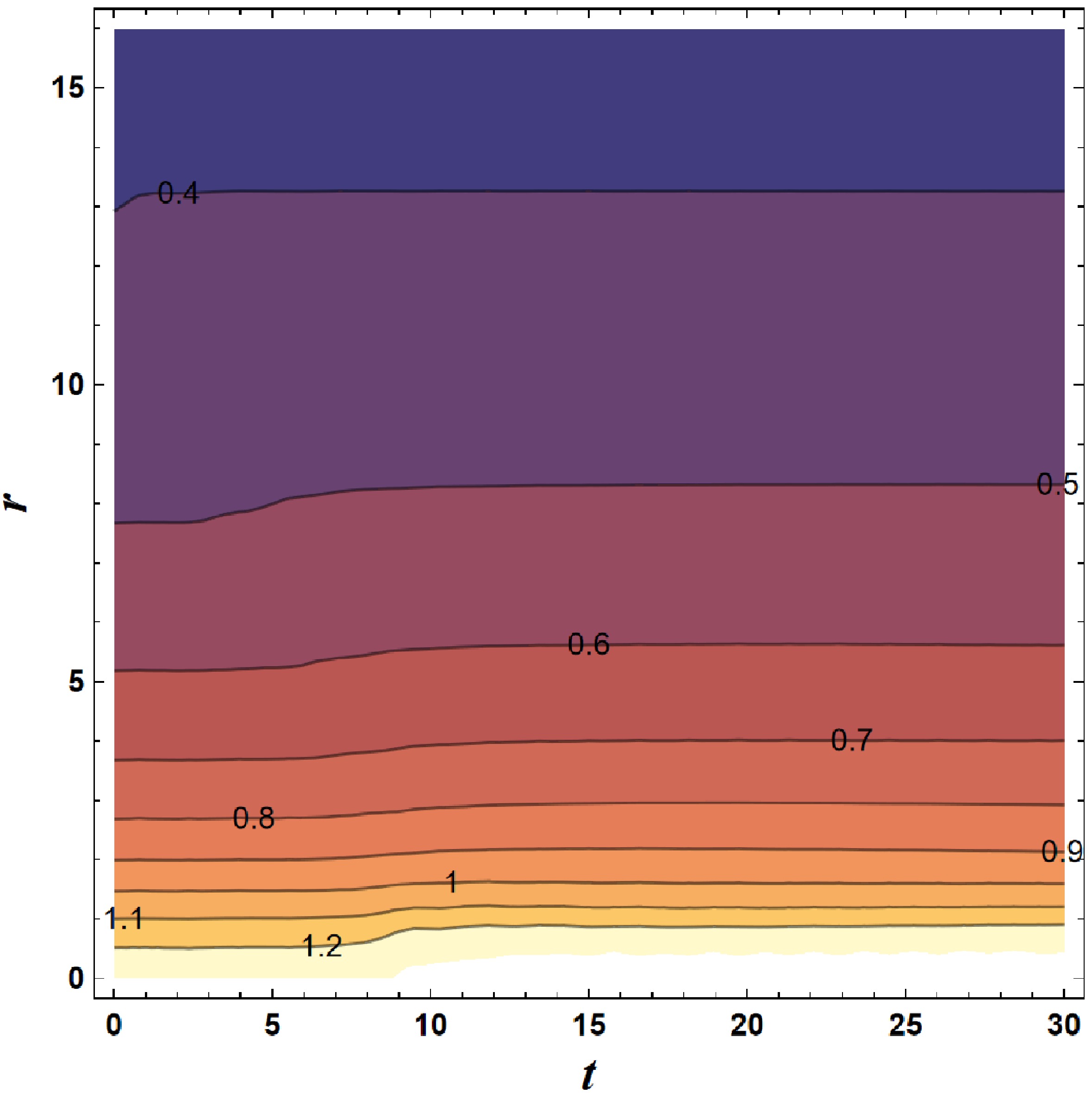
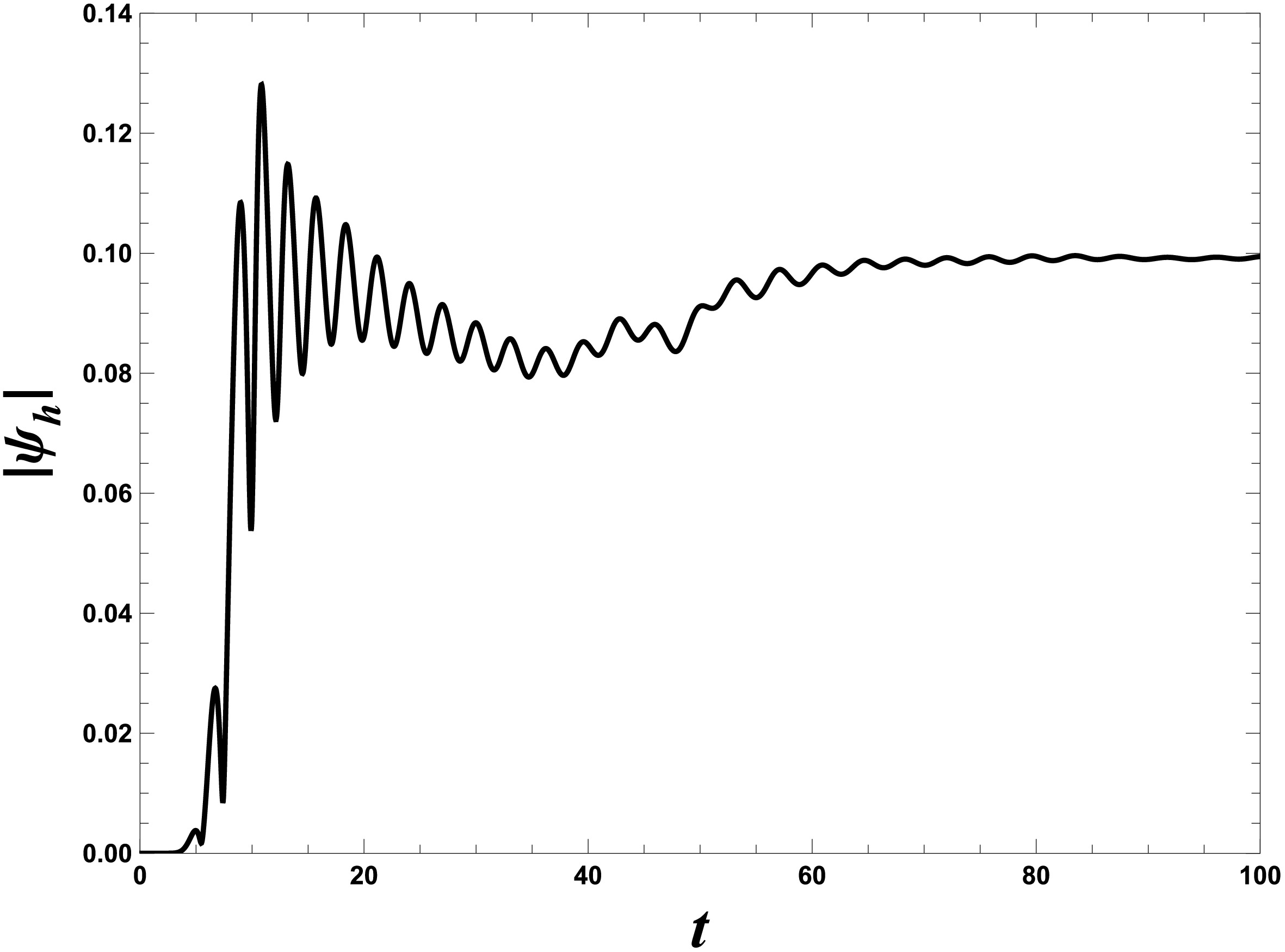
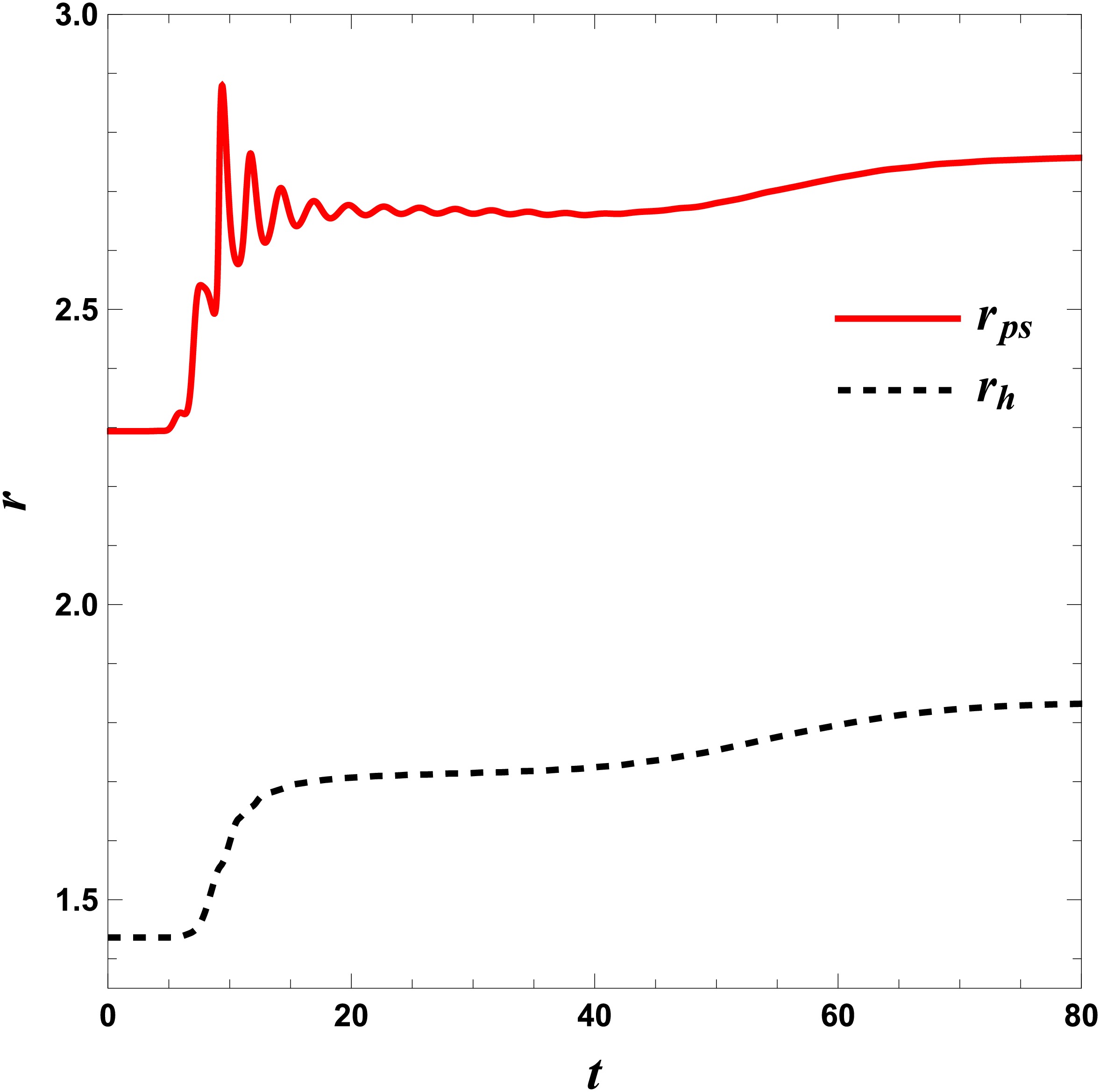
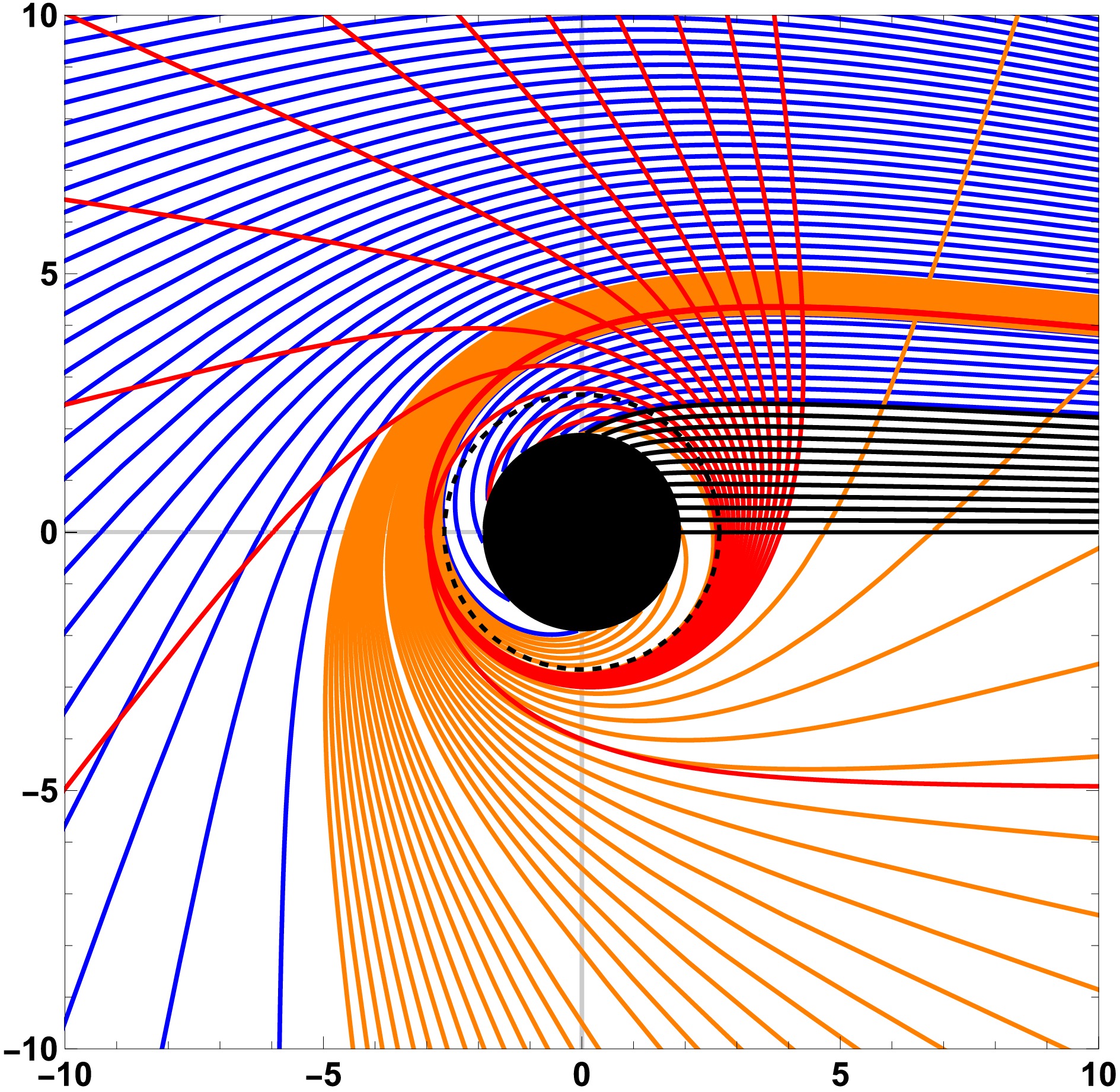
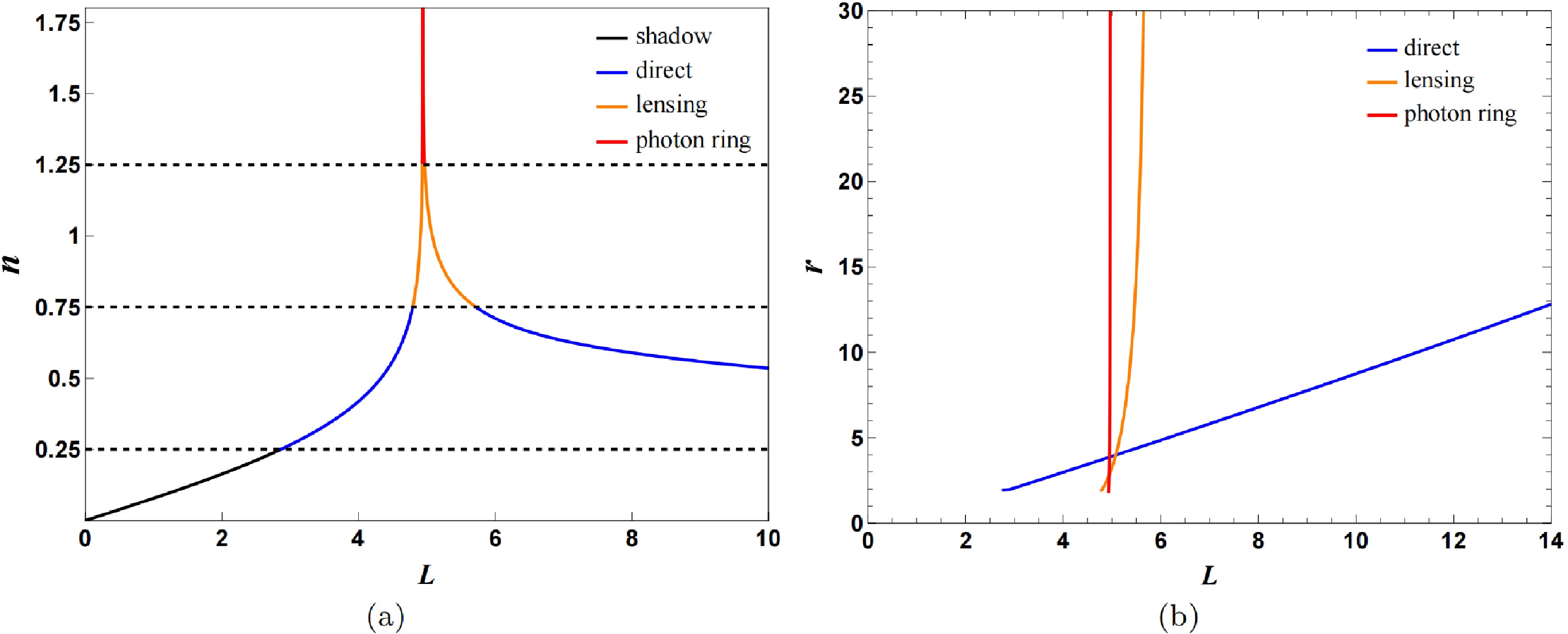
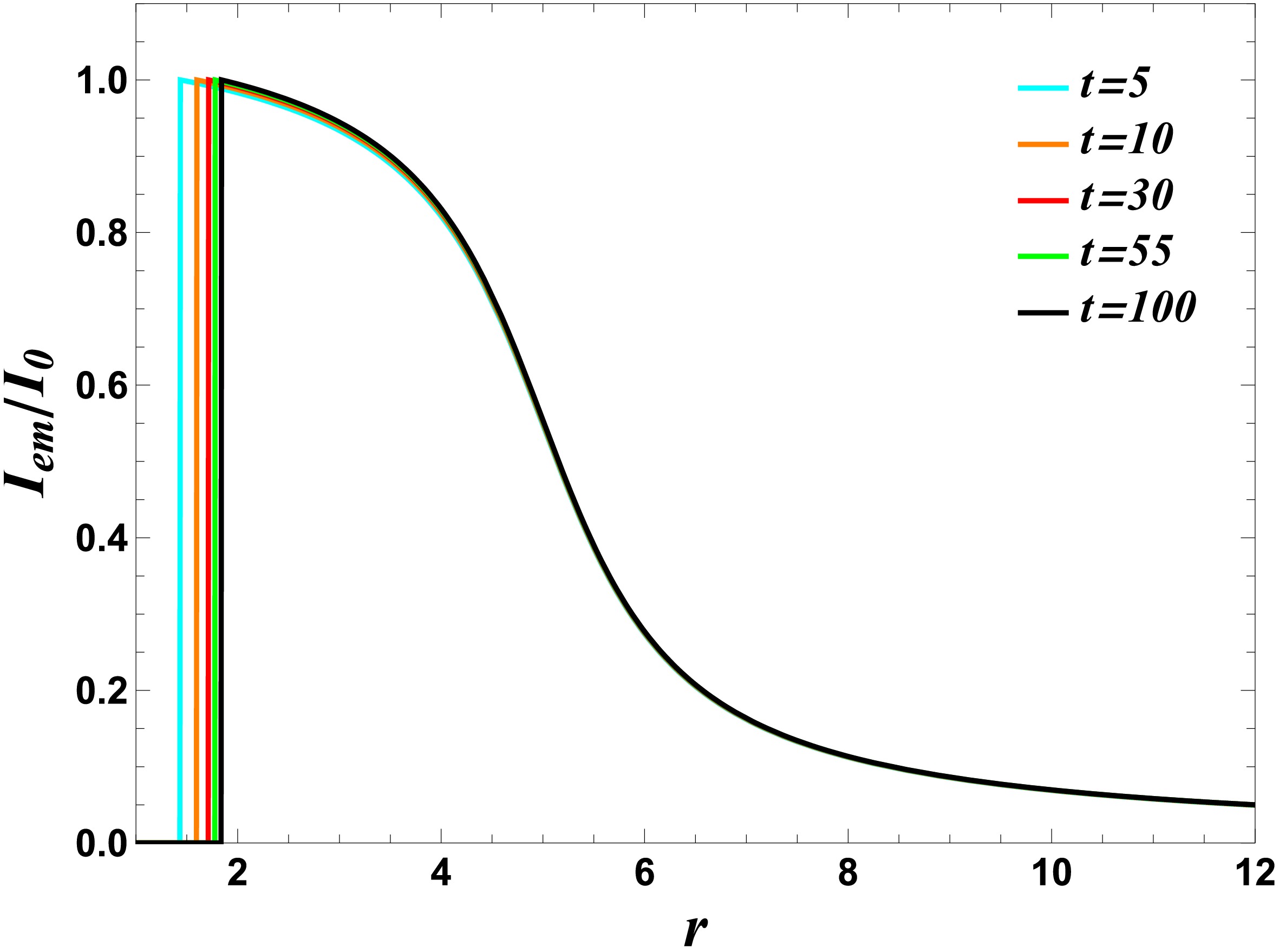
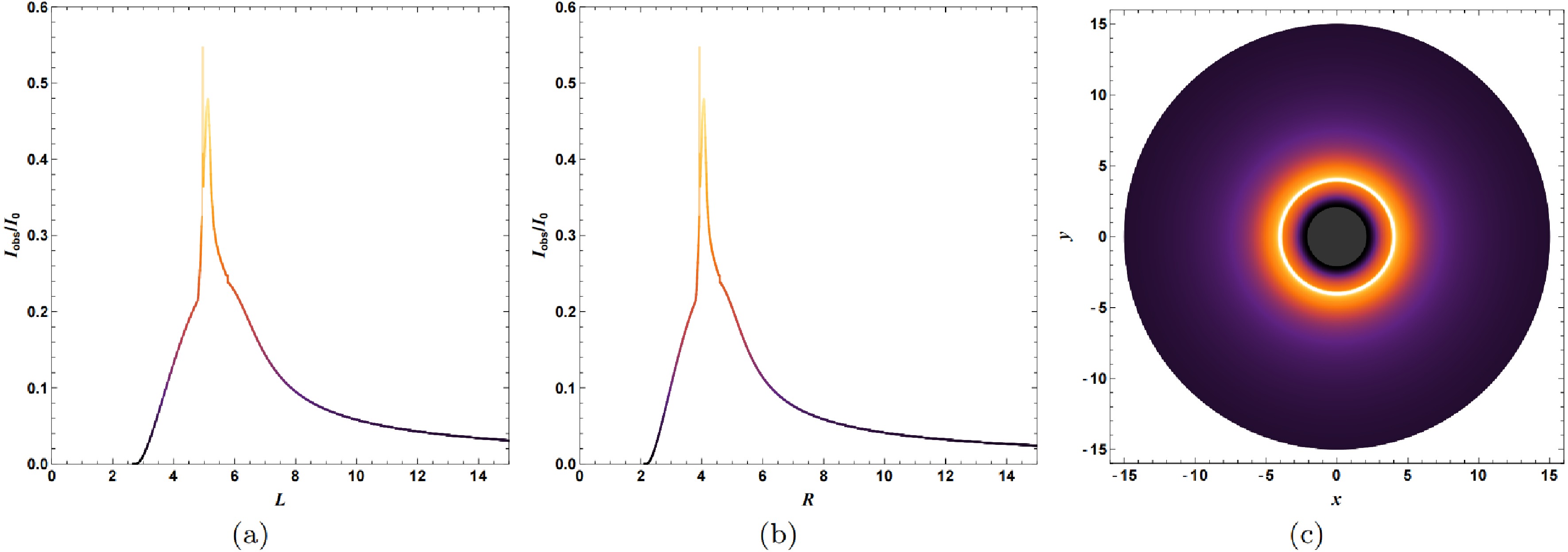
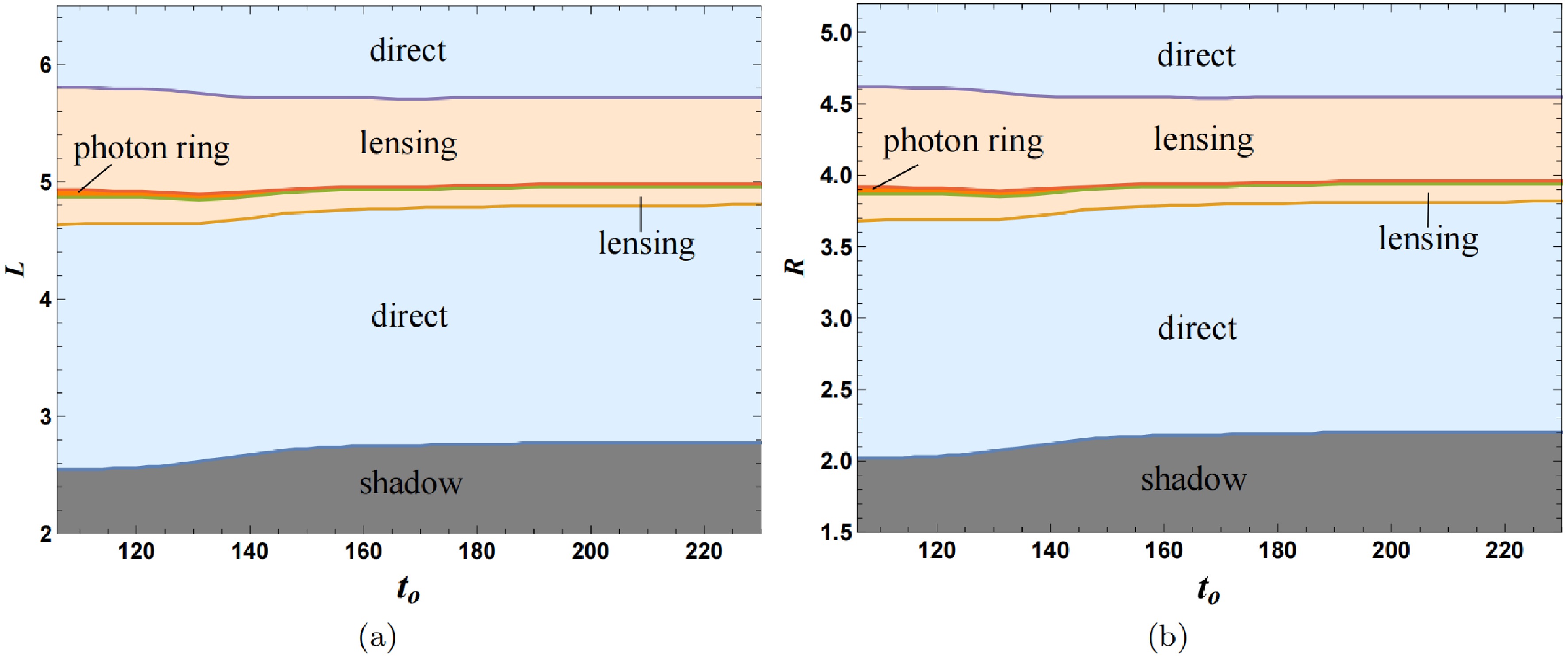
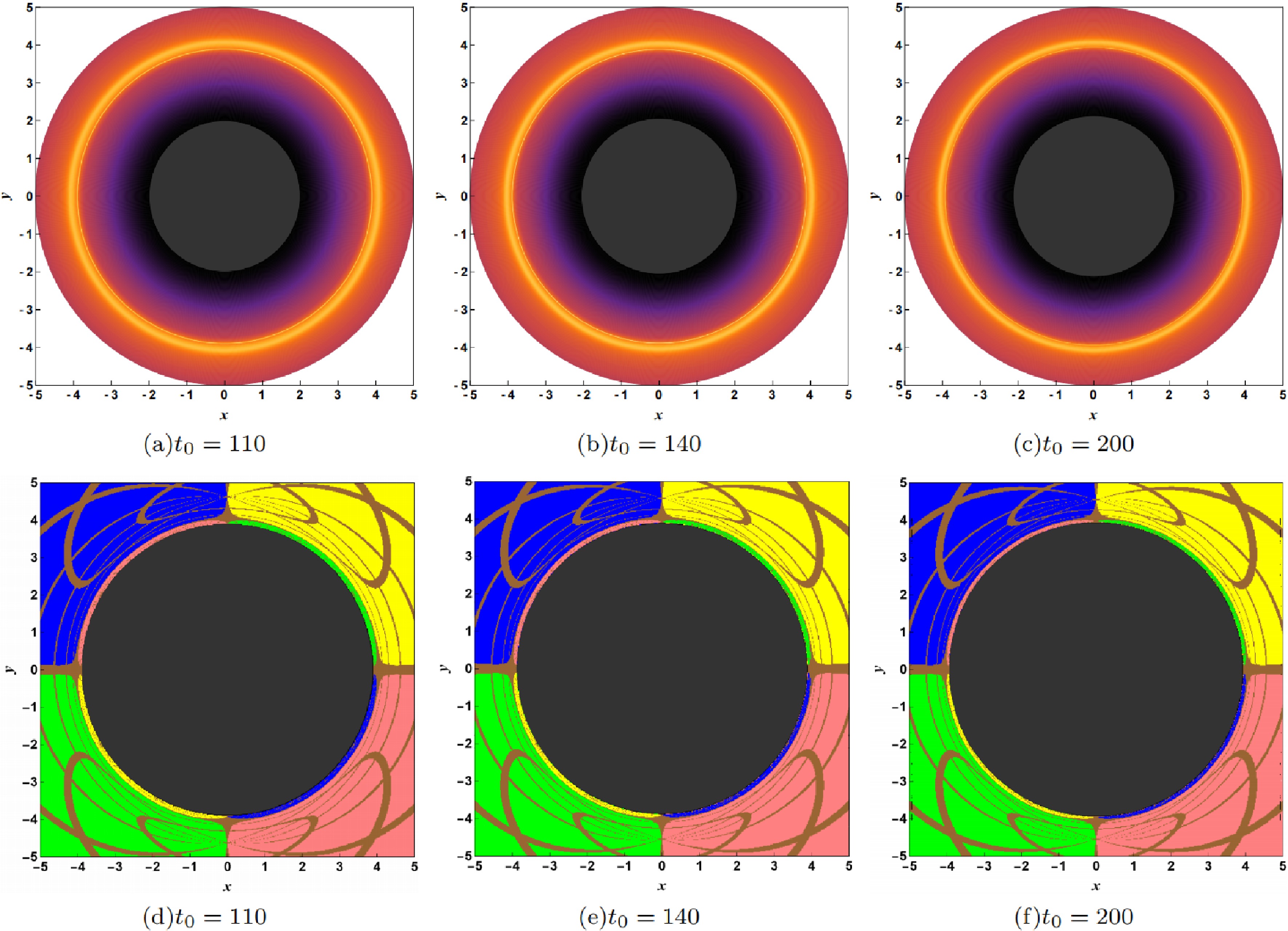
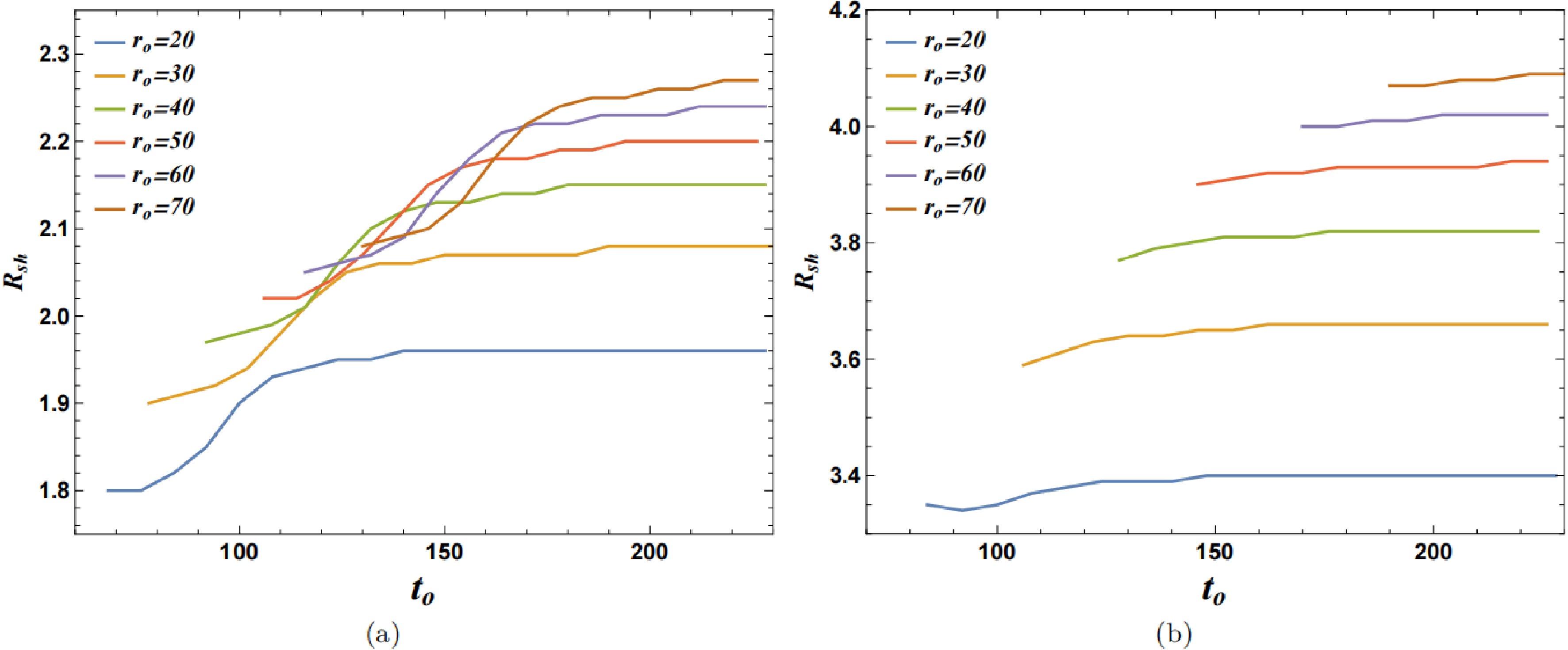
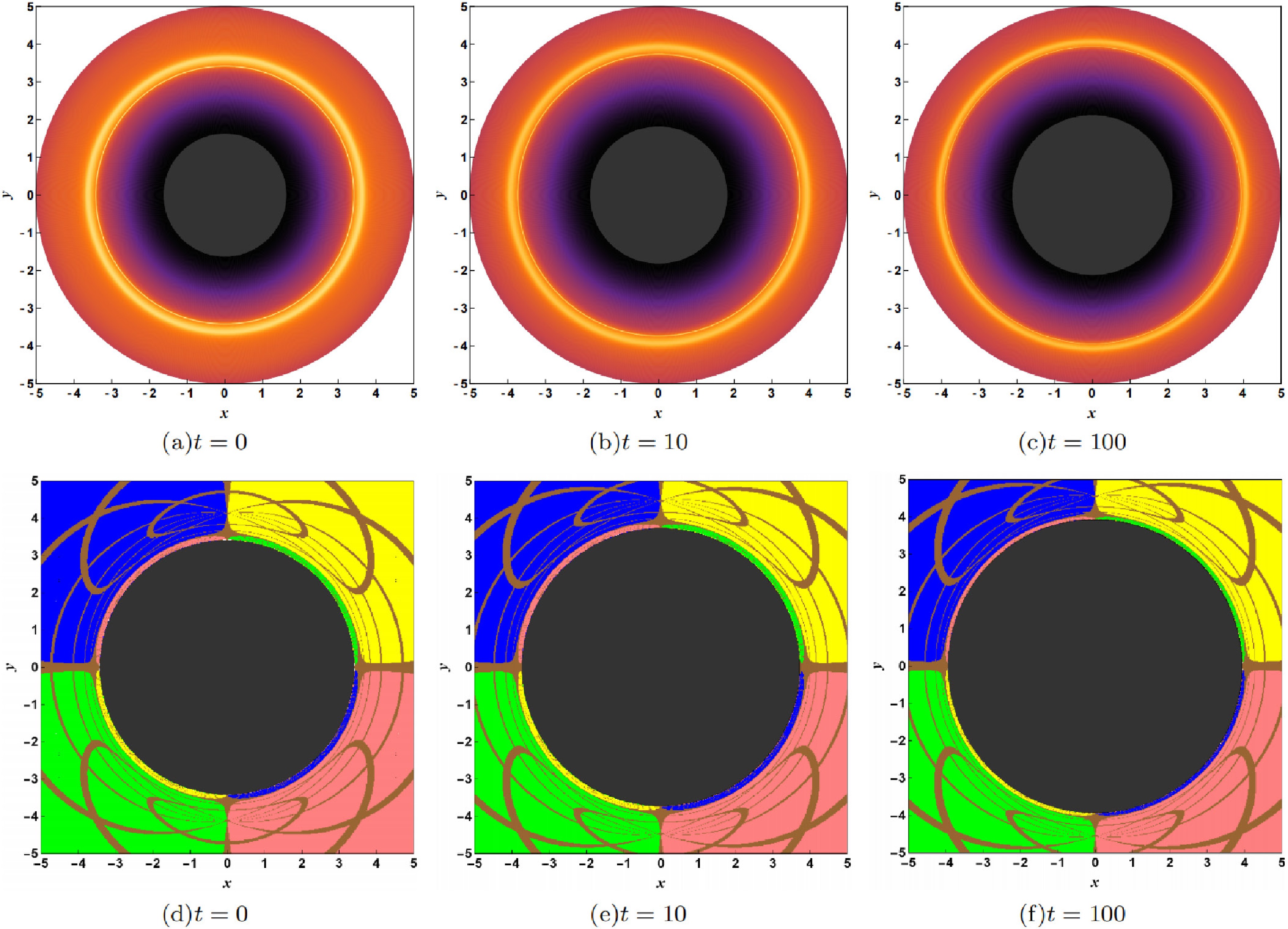
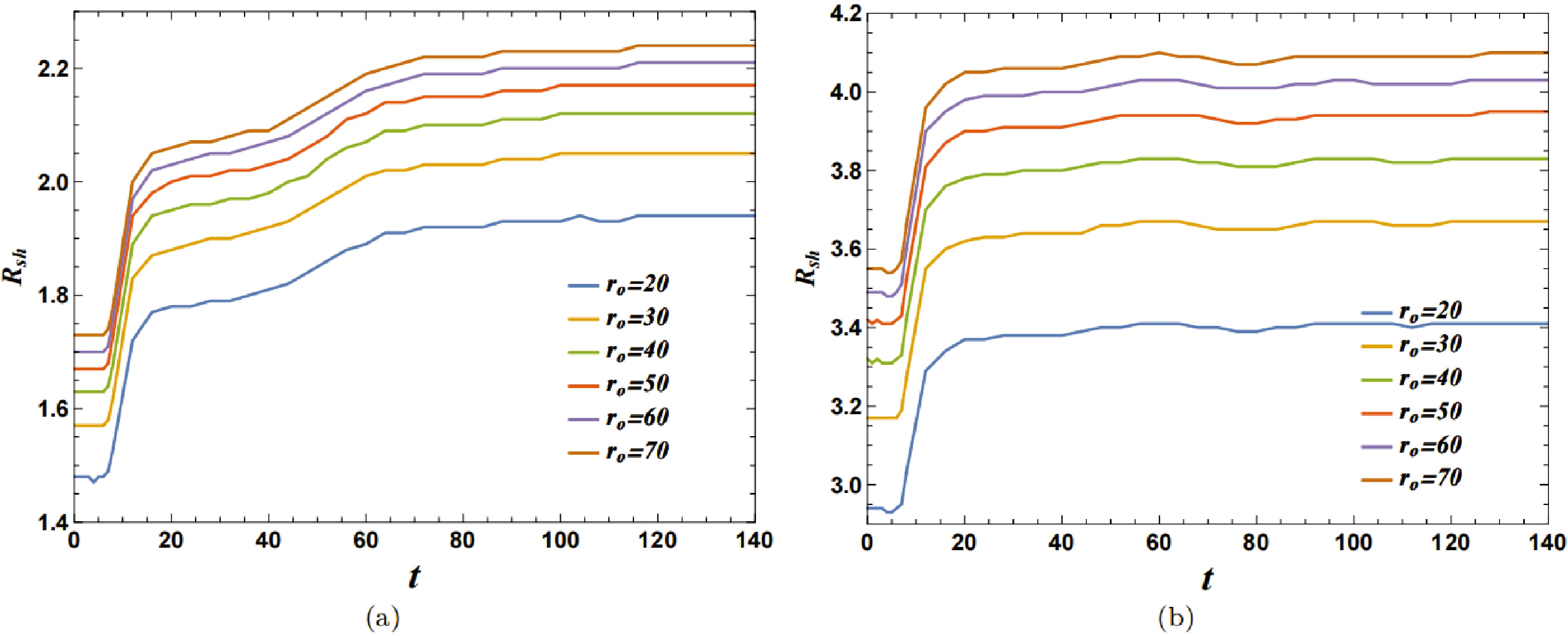
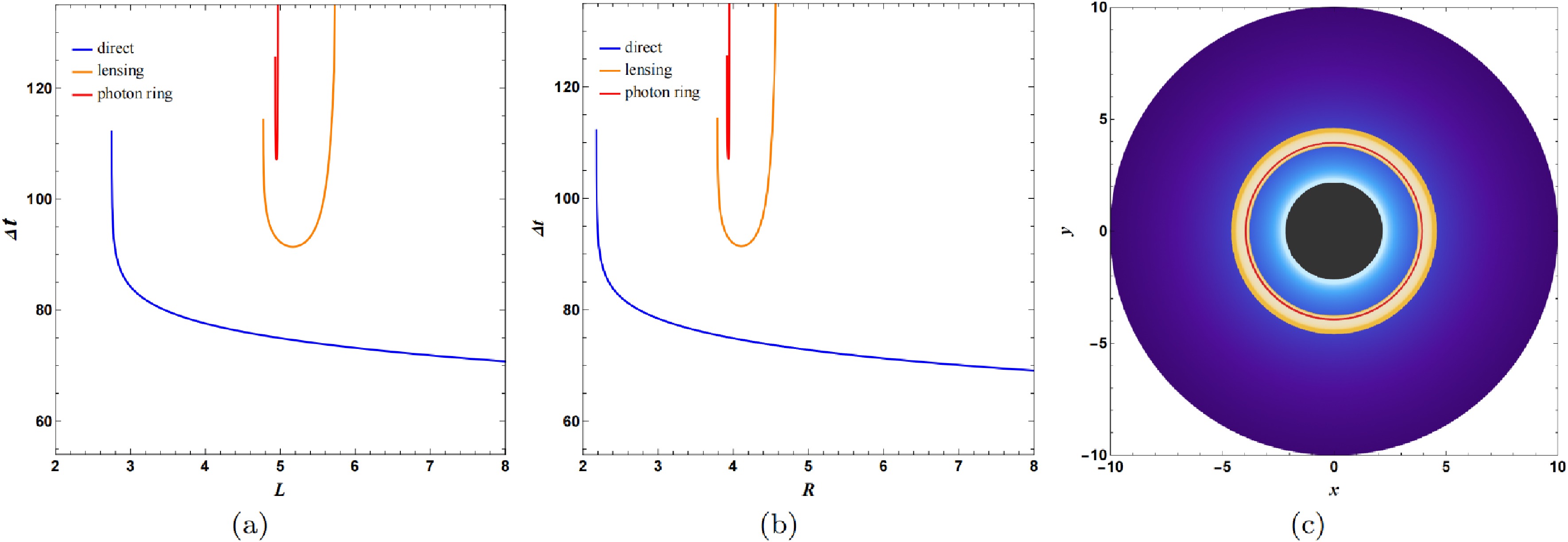
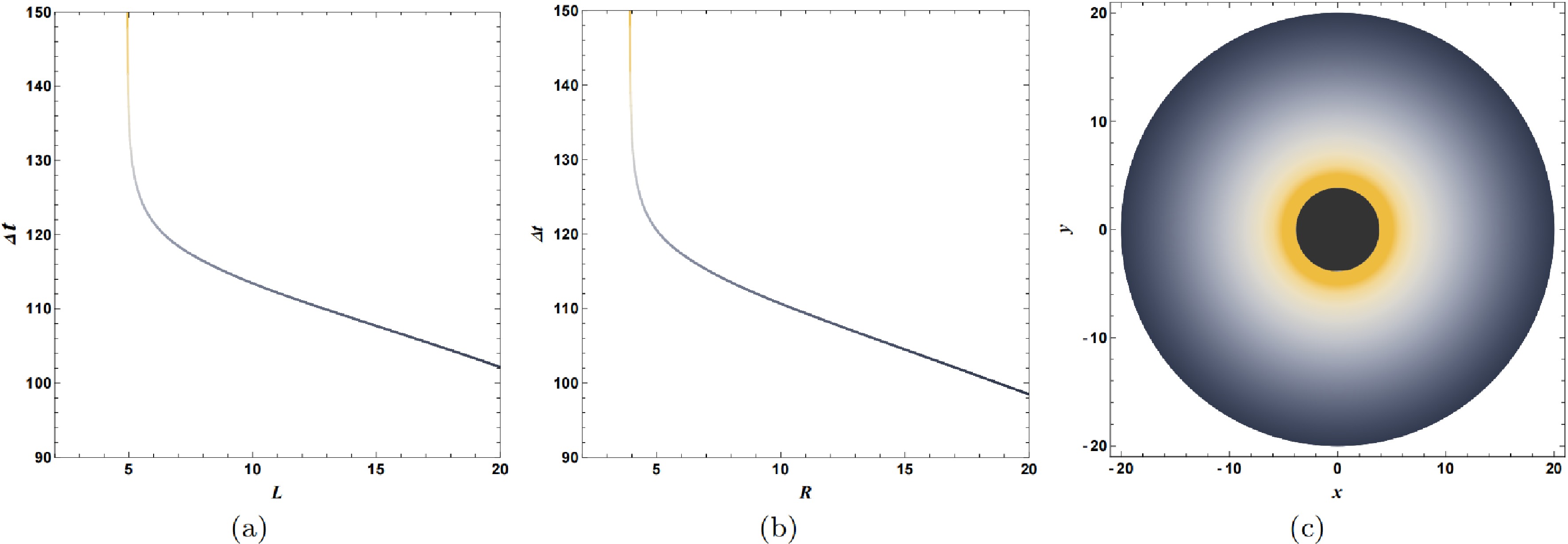
We investigate the dynamic shadows of a black hole with a self-interacting massive complex scalar hair. The complex scalar field\begin{document}$\psi$\end{document} \begin{document}$|\psi_{\rm h}|$\end{document} \begin{document}$r_{\rm ps}$\end{document} \begin{document}$|\psi_{\rm h}|$\end{document} \begin{document}$\psi$\end{document} \begin{document}$r_{\rm h}$\end{document} \begin{document}$R_{\rm sh}$\end{document} \begin{document}$t_{\rm o}$\end{document} \begin{document}$R_{\rm sh}$\end{document} \begin{document}$t_{\rm o}$\end{document} \begin{document}$t$\end{document} \begin{document}$R_{\rm sh}$\end{document} \begin{document}$r_{\rm h}$\end{document} \begin{document}$R_{\rm sh}$\end{document} \begin{document}$r_{\rm ps}$\end{document} \begin{document}$r_{\rm ps}$\end{document} \begin{document}$\psi$\end{document} \begin{document}$\psi$\end{document} \begin{document}$\psi$\end{document} \begin{document}$R_{\rm sh}$\end{document} \begin{document}$\Delta t$\end{document}
We investigate the dynamic shadows of a black hole with a self-interacting massive complex scalar hair. The complex scalar field
2026, 50(2): 025103. doi: 10.1088/1674-1137/ae1202
Abstract:
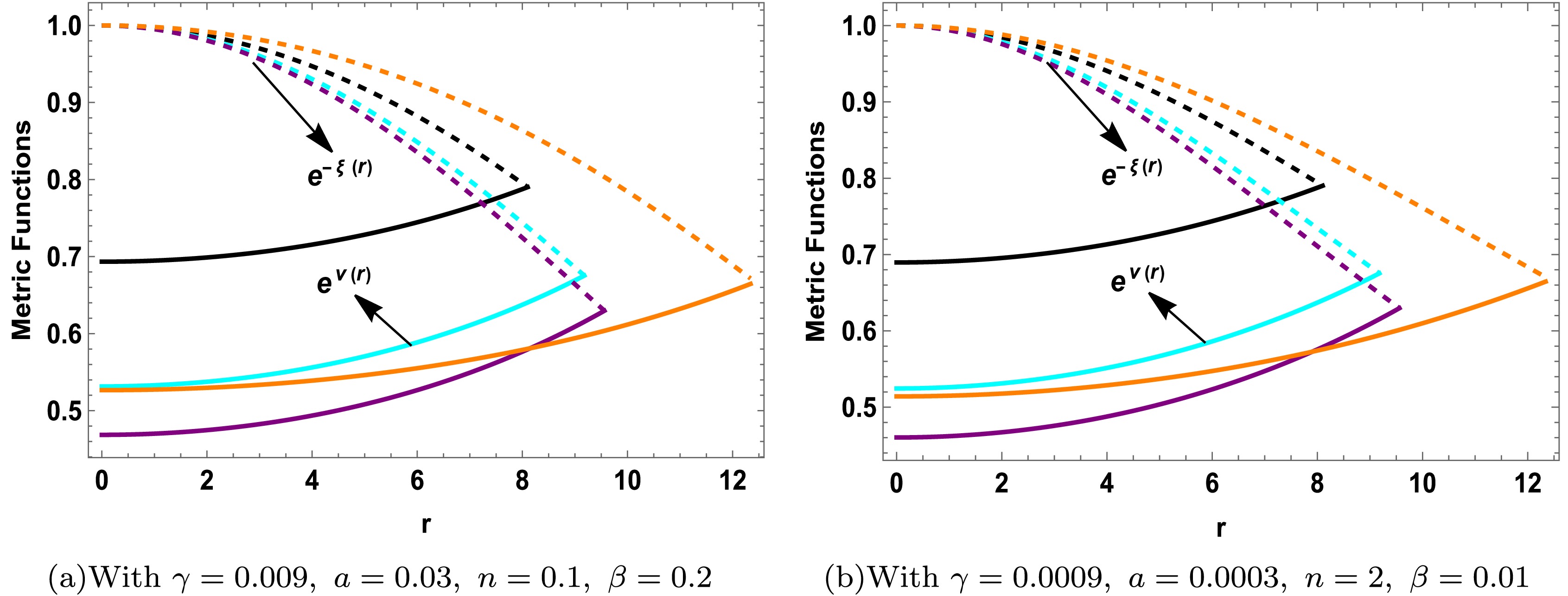
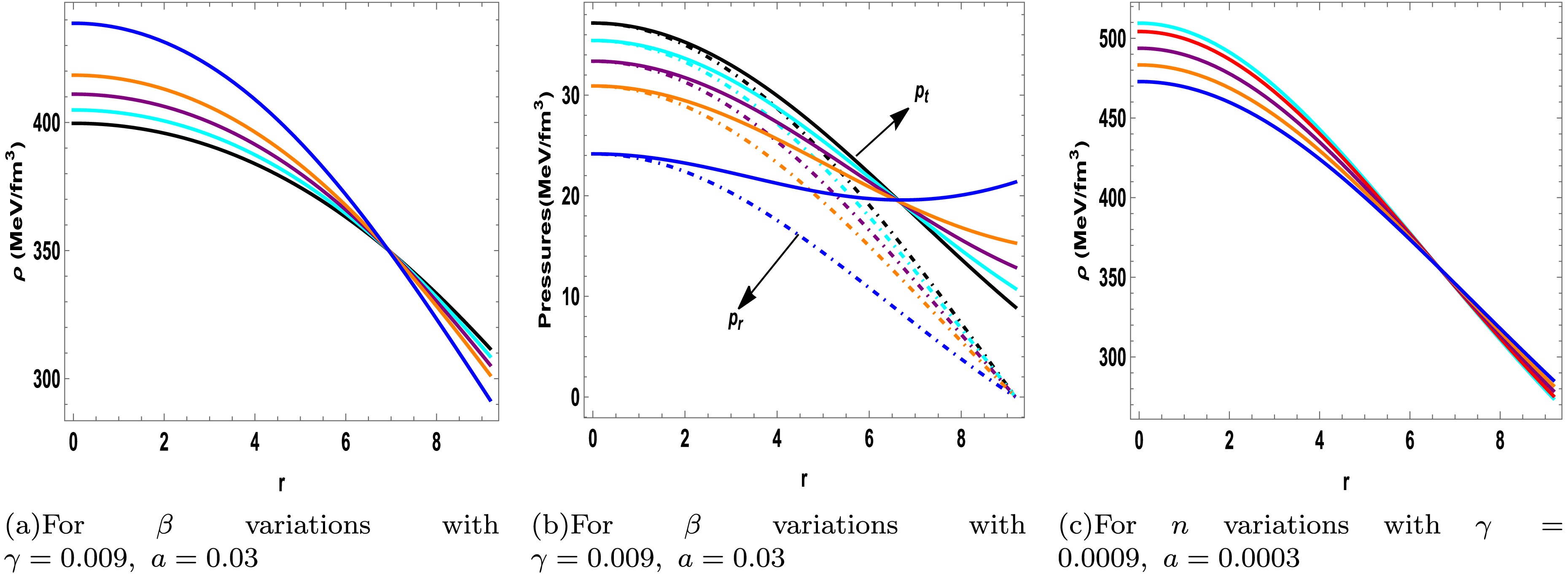
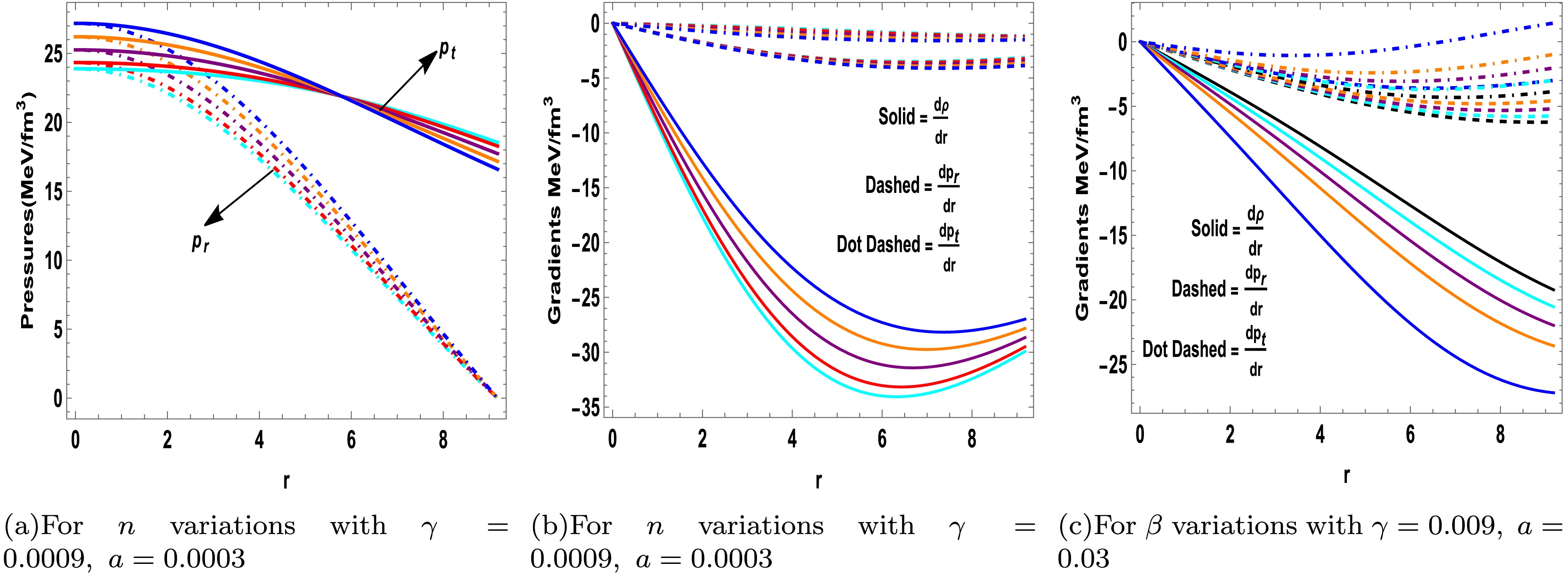
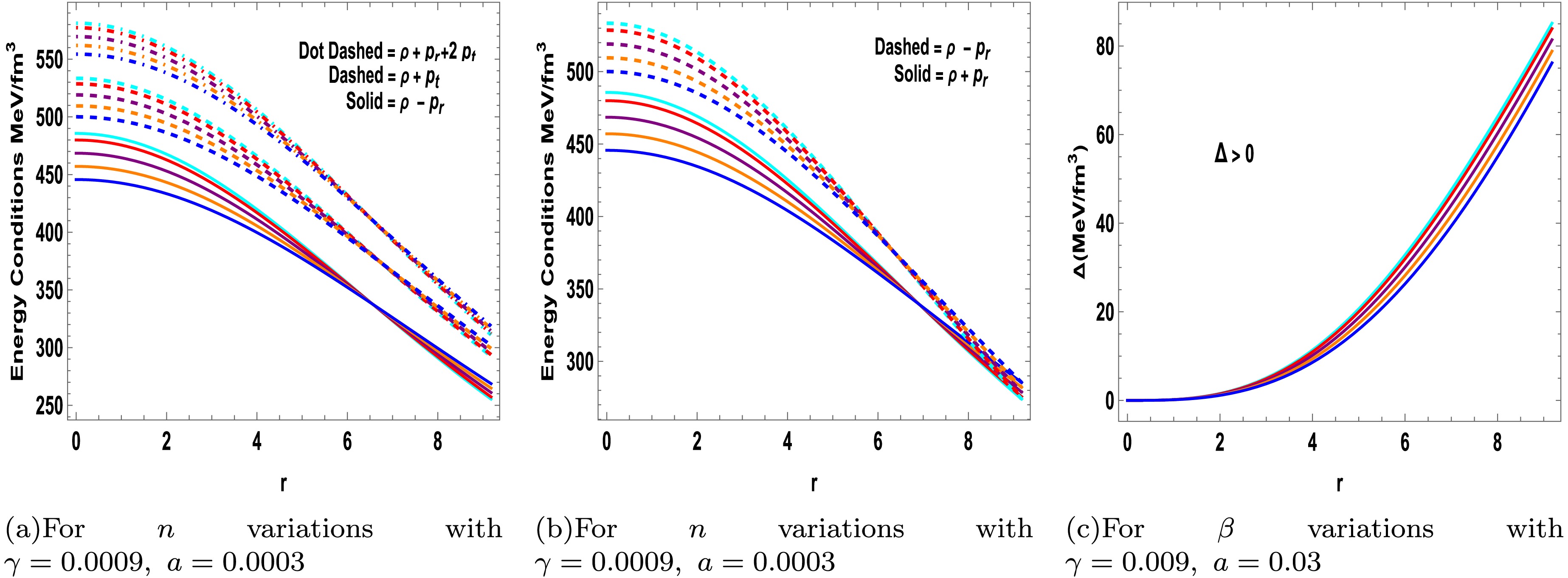
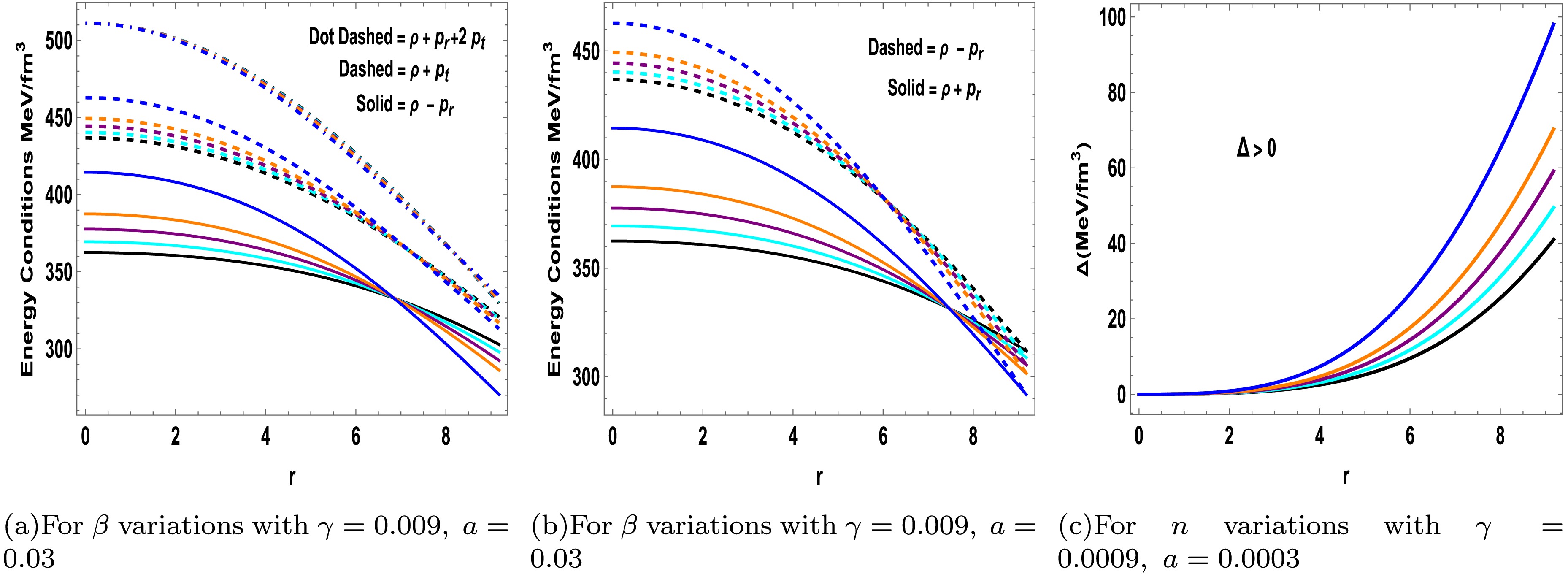
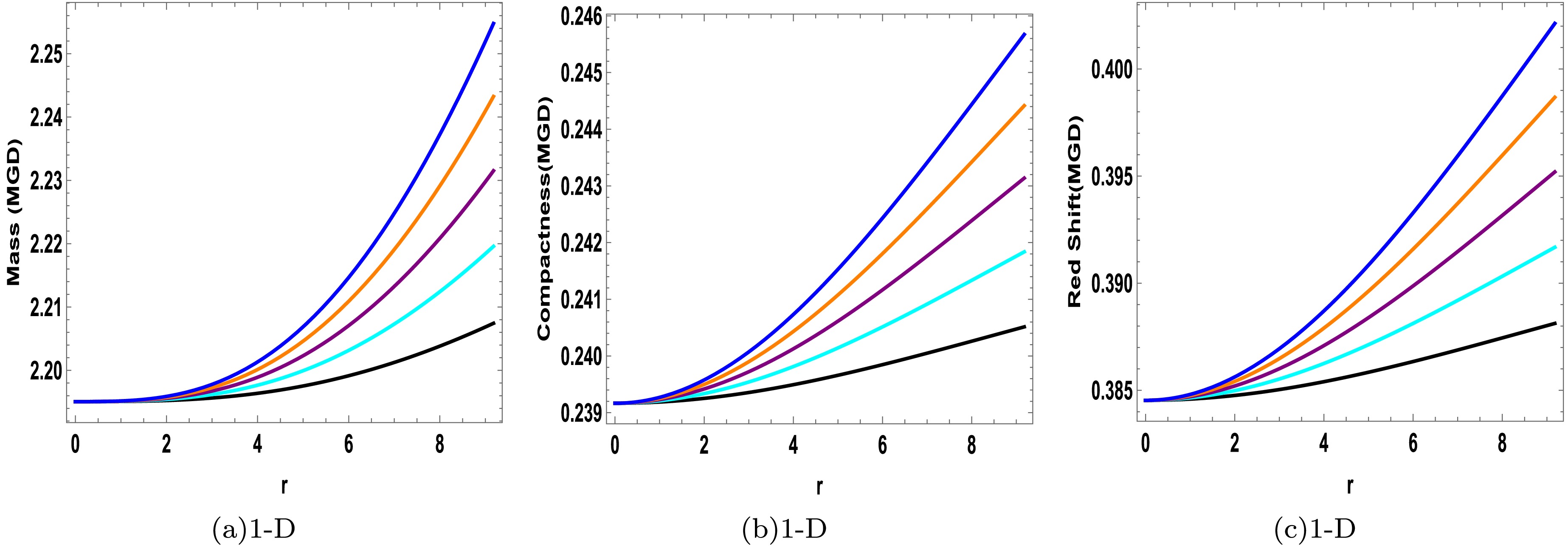
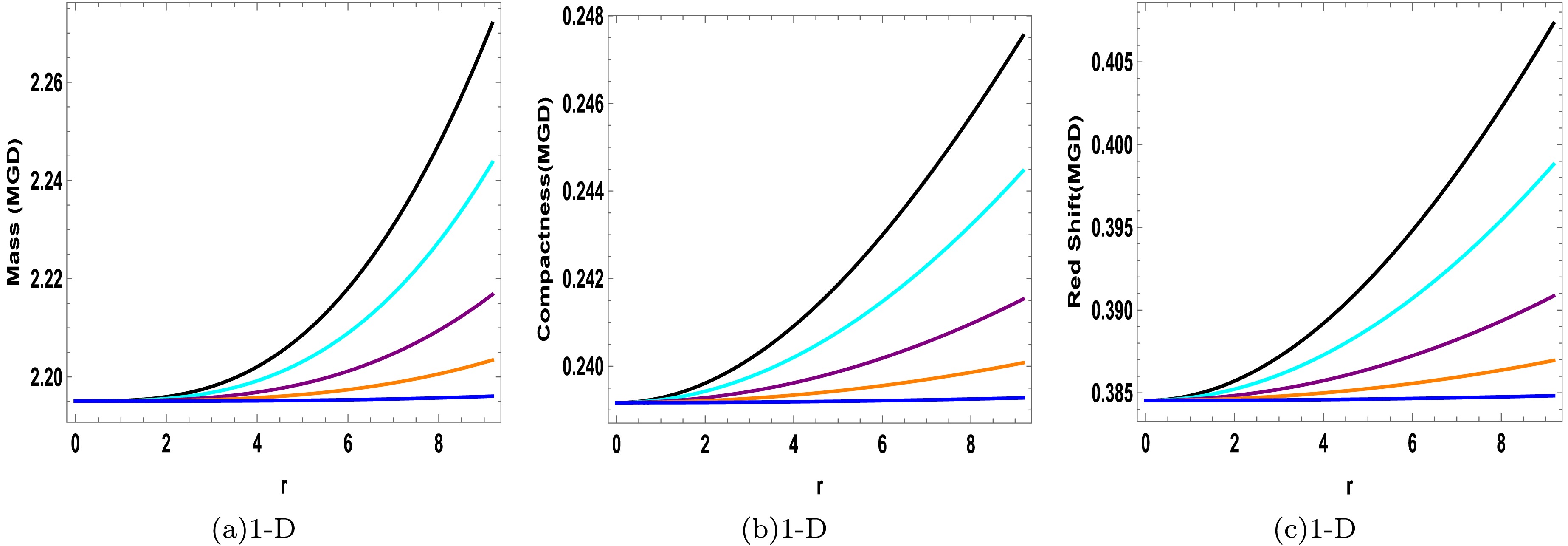
This study uses a minimal geometric deformation scheme within the\begin{document}$ f({\cal{R}},{\cal{L}}_m,T) $\end{document}
This study uses a minimal geometric deformation scheme within the
2026, 50(2): 025104. doi: 10.1088/1674-1137/ae1189
Abstract:
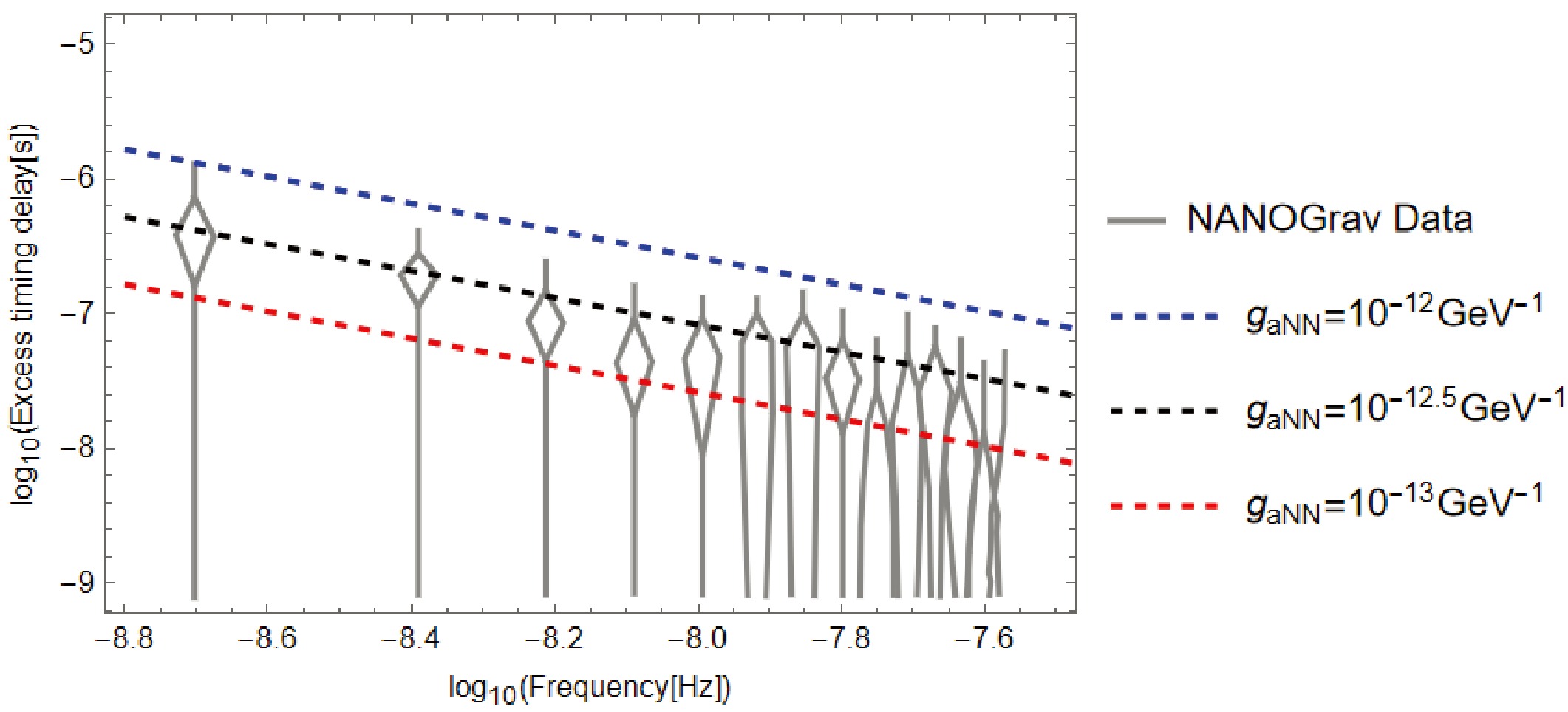
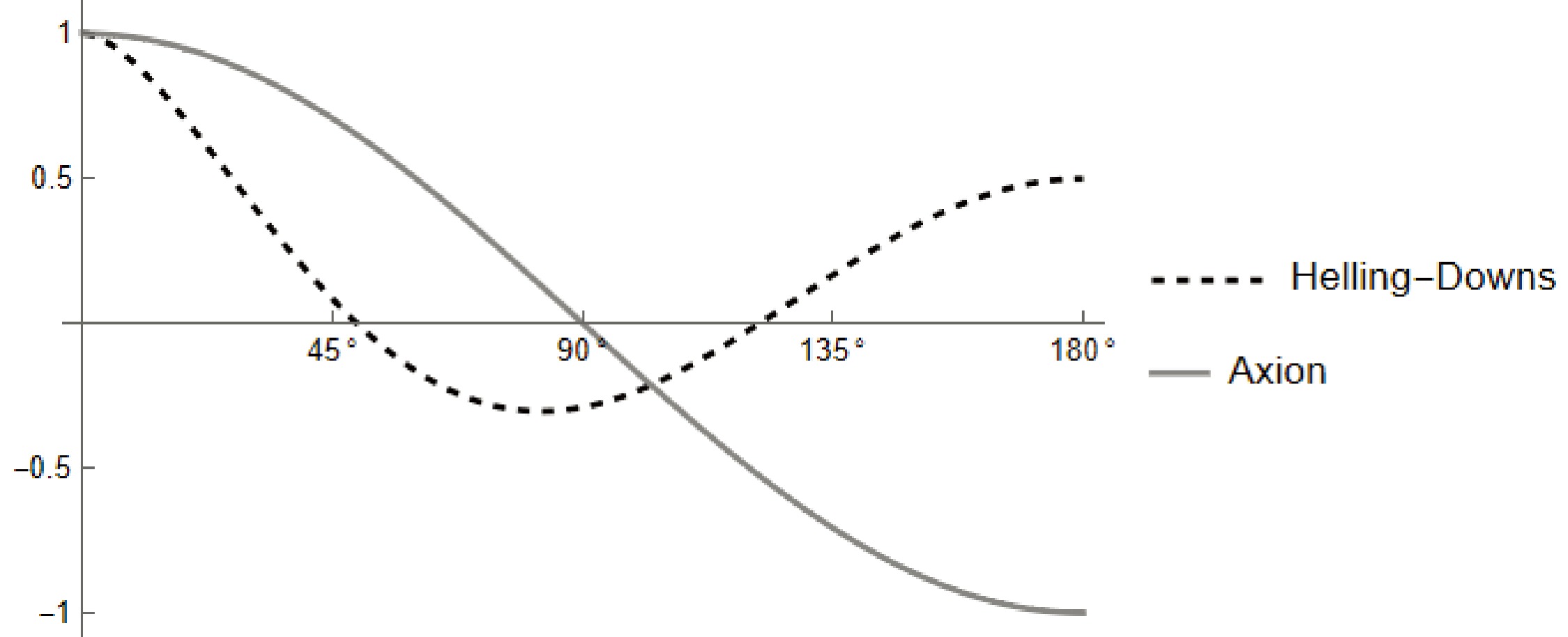
We consider the three-dimensional rotating motions of neutron stars blown by ''axion wind.'' Neutron star precession and spin can change from the magnetic moment coupling to the oscillating axion background field, which is analogous to gyroscope motions with a driving force and the laboratory nuclear magnetic resonance detections of the axion. This effect modulates the pulse arrival time of pulsar timing arrays (PTAs) through changes in the pulsars' periods. It has appeared as a signal in the timing residual and two-point correlation function of recent Nanograv and PPTA data. Thus, the current measurement of PTAs can cast constraints on the axion-nucleon, for example, coupling as\begin{document}$ g_\text{aNN} \sim 10^{-12}\; \text{GeV}^{-1} $\end{document} \begin{document}$ 10^{-23} $\end{document} \begin{document}$ \mathrm{eV} $\end{document}
We consider the three-dimensional rotating motions of neutron stars blown by ''axion wind.'' Neutron star precession and spin can change from the magnetic moment coupling to the oscillating axion background field, which is analogous to gyroscope motions with a driving force and the laboratory nuclear magnetic resonance detections of the axion. This effect modulates the pulse arrival time of pulsar timing arrays (PTAs) through changes in the pulsars' periods. It has appeared as a signal in the timing residual and two-point correlation function of recent Nanograv and PPTA data. Thus, the current measurement of PTAs can cast constraints on the axion-nucleon, for example, coupling as
2026, 50(2): 025105. doi: 10.1088/1674-1137/ae167c
Abstract:
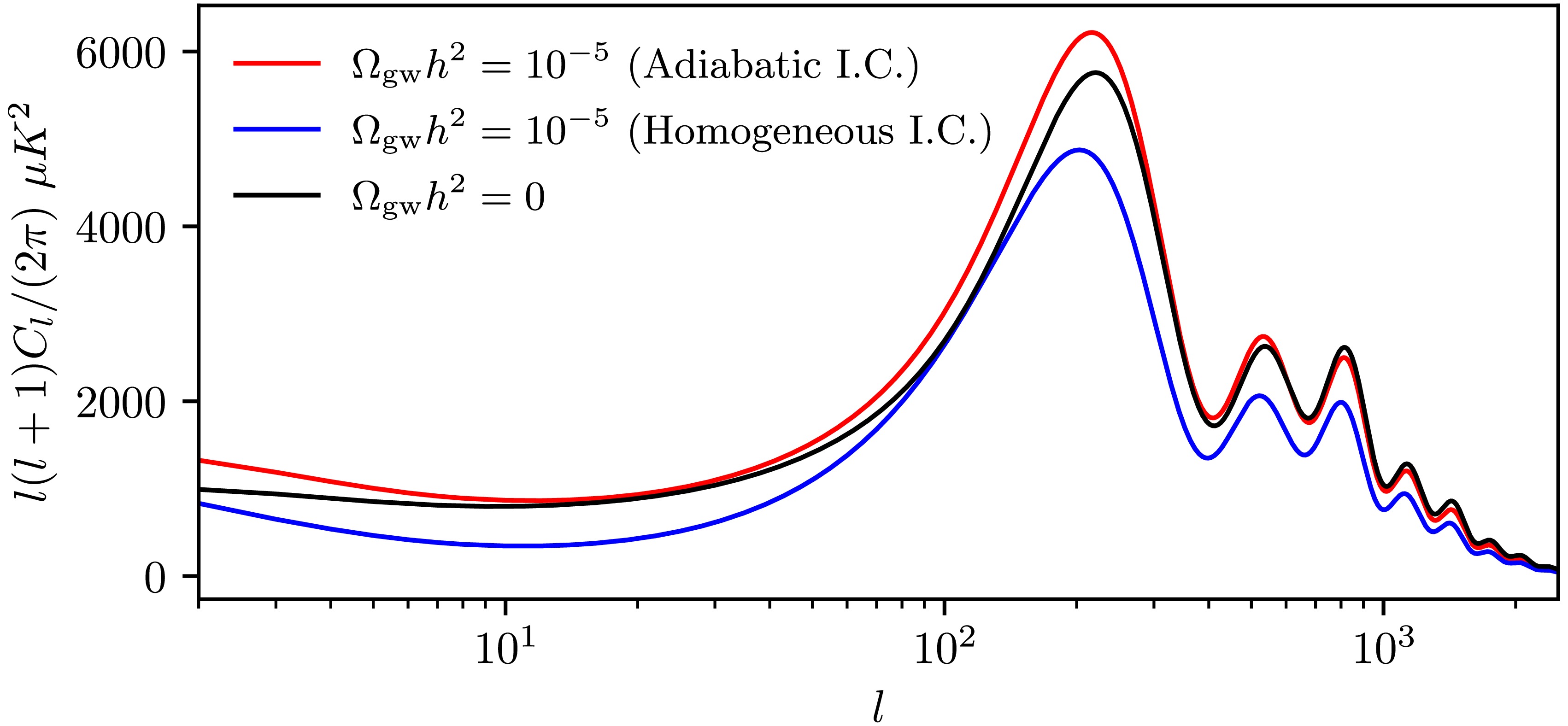
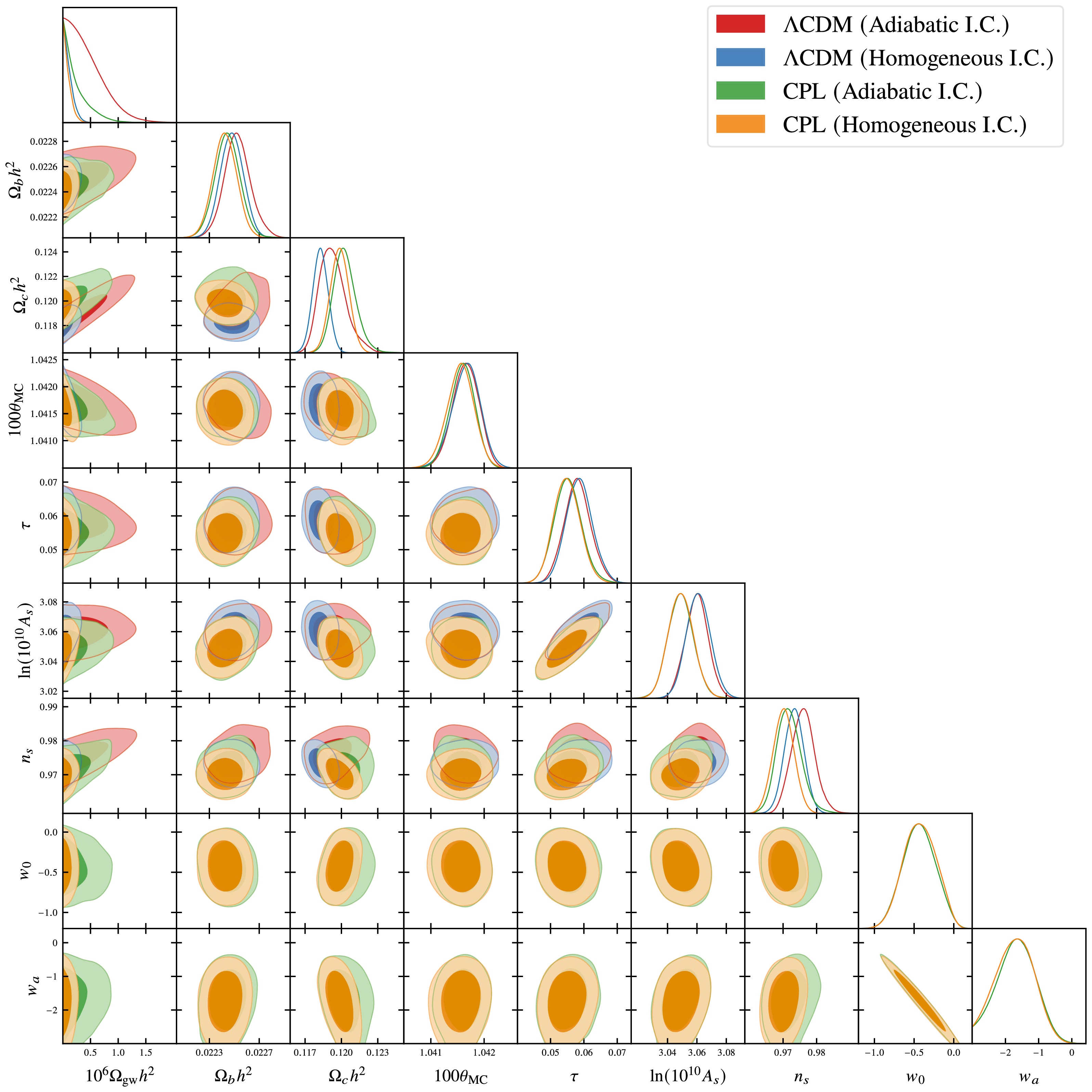
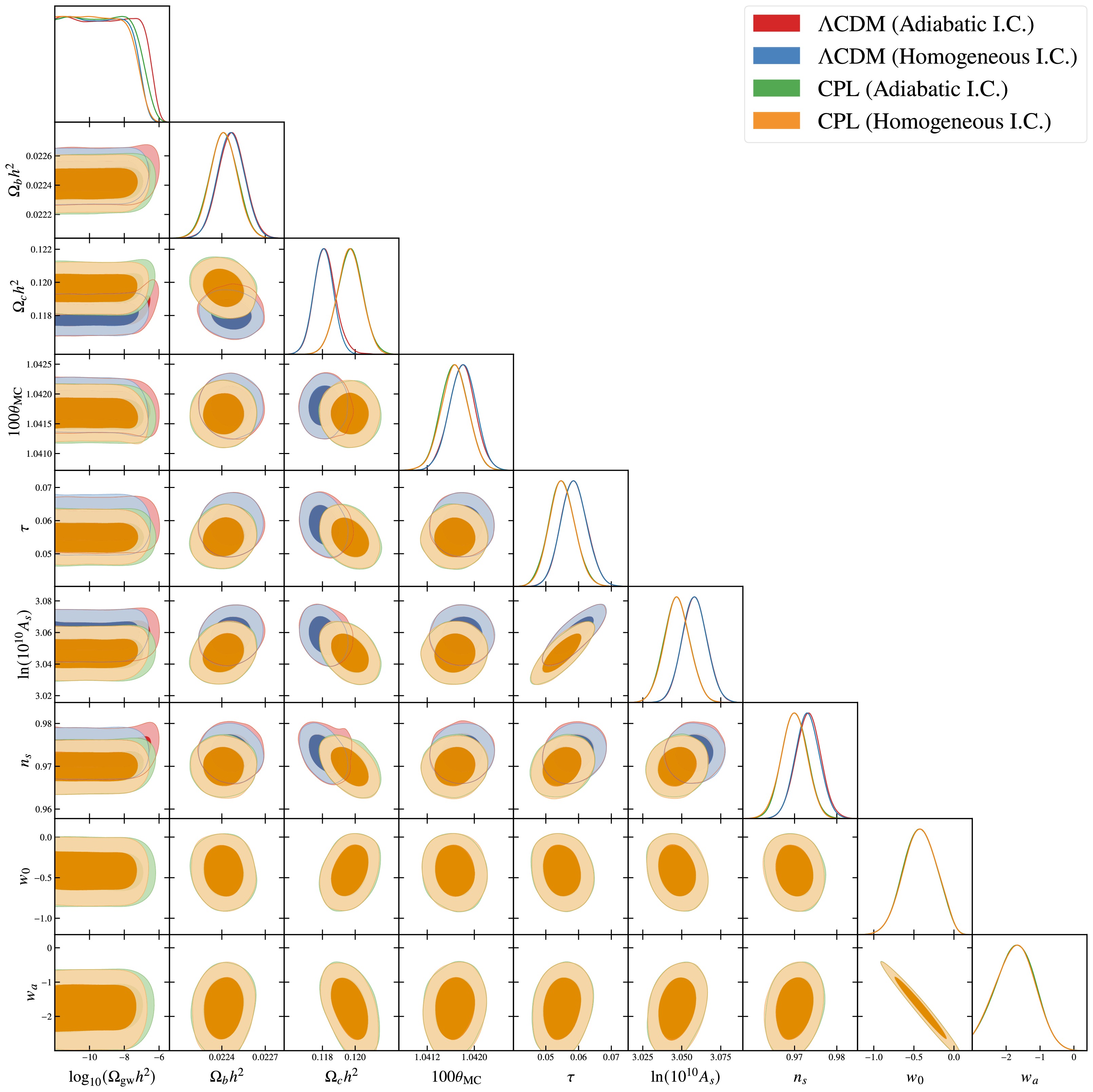
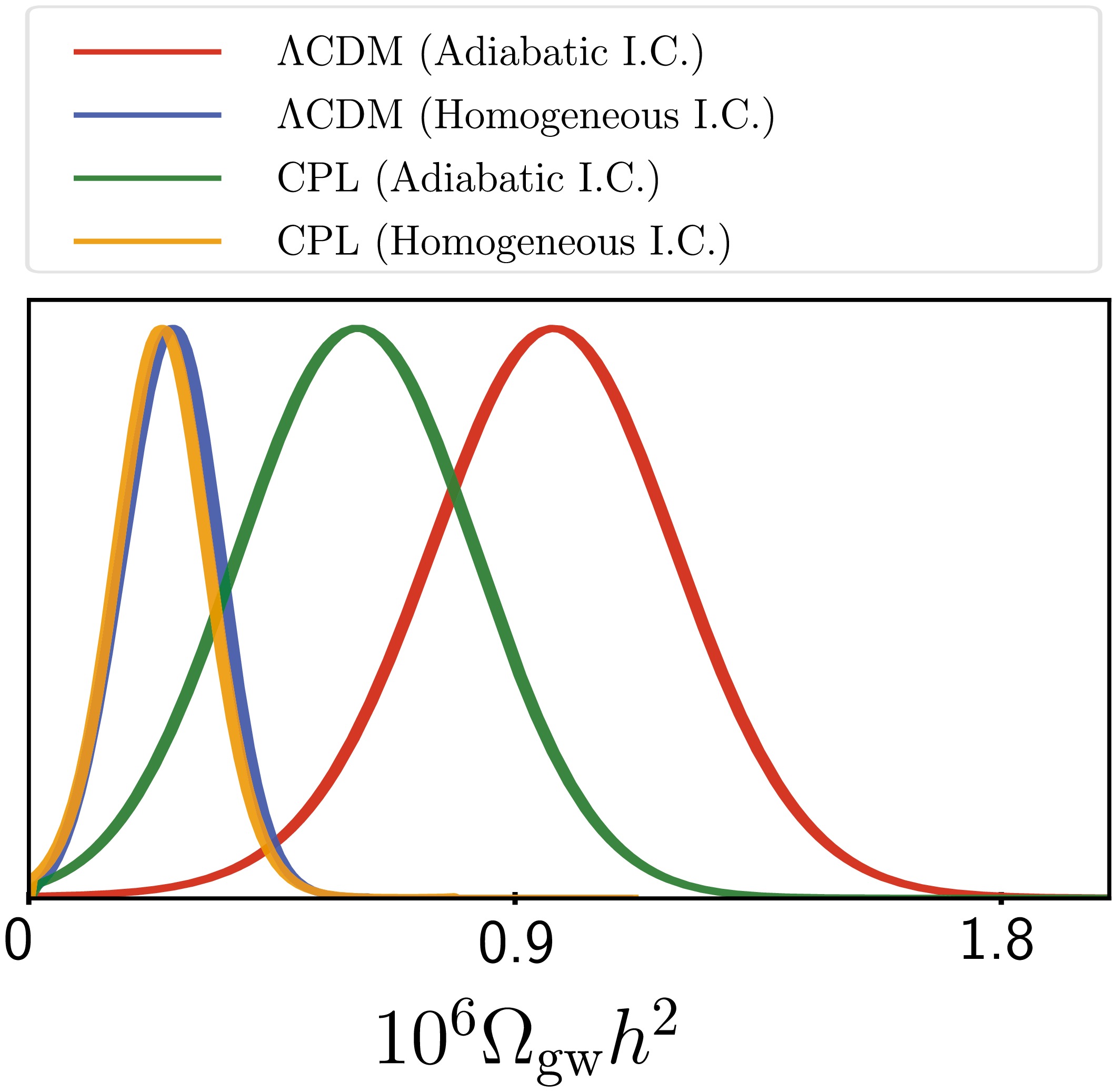
In this work, we derive upper limits on the physical energy-density fraction today of cosmological gravitational waves, denoted by\begin{document}$ \Omega_{\rm{gw}}h^{2} $\end{document} \begin{document}$ \Omega_{\rm{gw}}h^{2} < 1.0 \times 10^{-6} $\end{document} \begin{document}$ \Omega_{\rm{gw}}h^{2} < 2.7 \times 10^{-7} $\end{document} \begin{document}$ \Omega_{\rm gw}h^{2} $\end{document} \begin{document}$ \Omega_{\rm{gw}}h^{2} < 7.2 \times 10^{-7} $\end{document} \begin{document}$ \Omega_{\rm{gw}}h^{2} < 2.4 \times 10^{-7} $\end{document} \begin{document}$ \Omega_{\rm gw}h^{2} $\end{document} \begin{document}$ \sigma = 2.5 \times 10^{-7} $\end{document} \begin{document}$ \sigma = 1.0 \times 10^{-7} $\end{document} \begin{document}$ {\Omega_{\rm{gw}}h^{2}} $\end{document} \begin{document}$ f \gtrsim 10^{-15} $\end{document}
In this work, we derive upper limits on the physical energy-density fraction today of cosmological gravitational waves, denoted by
2026, 50(2): 025106. doi: 10.1088/1674-1137/ae15ec
Abstract:
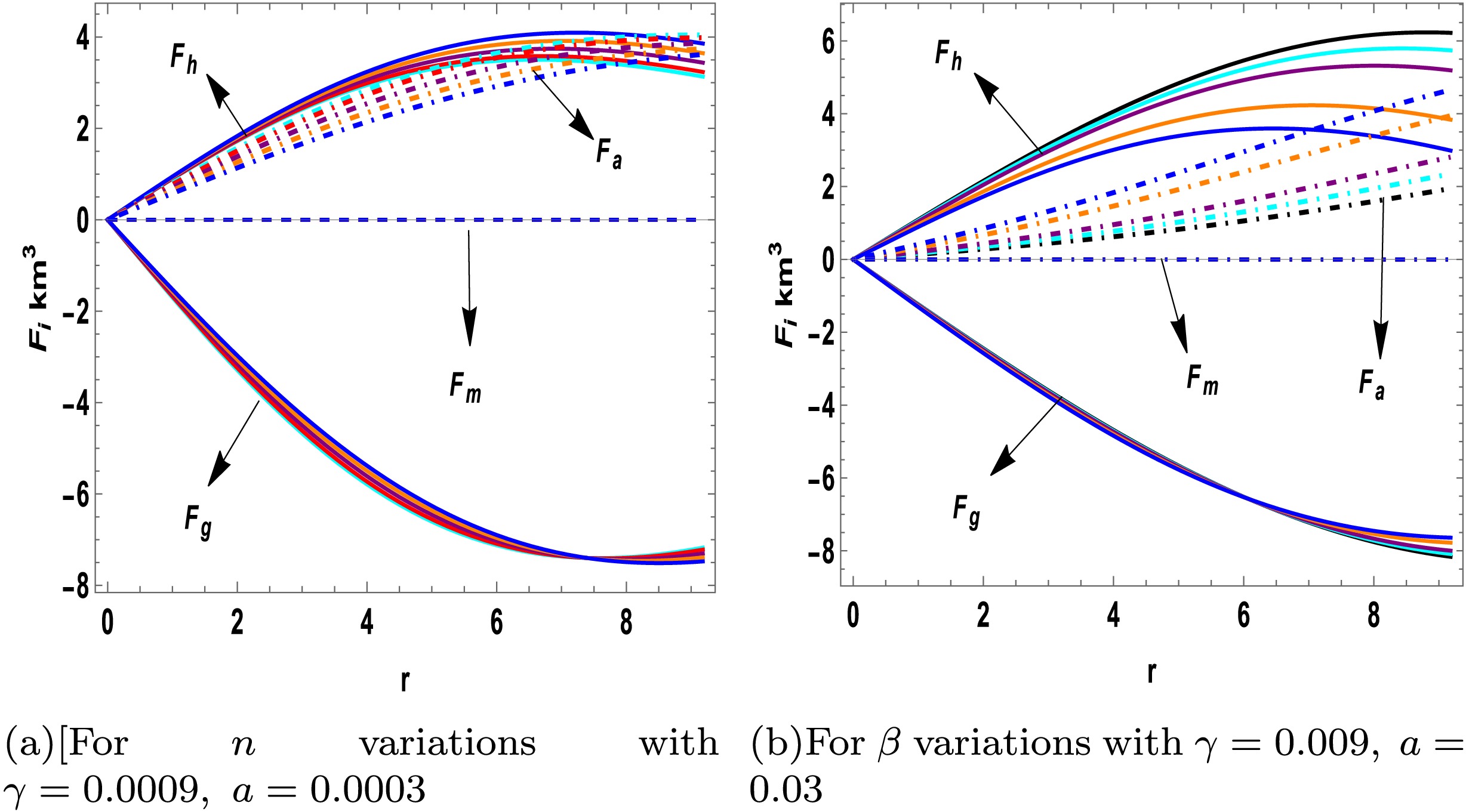
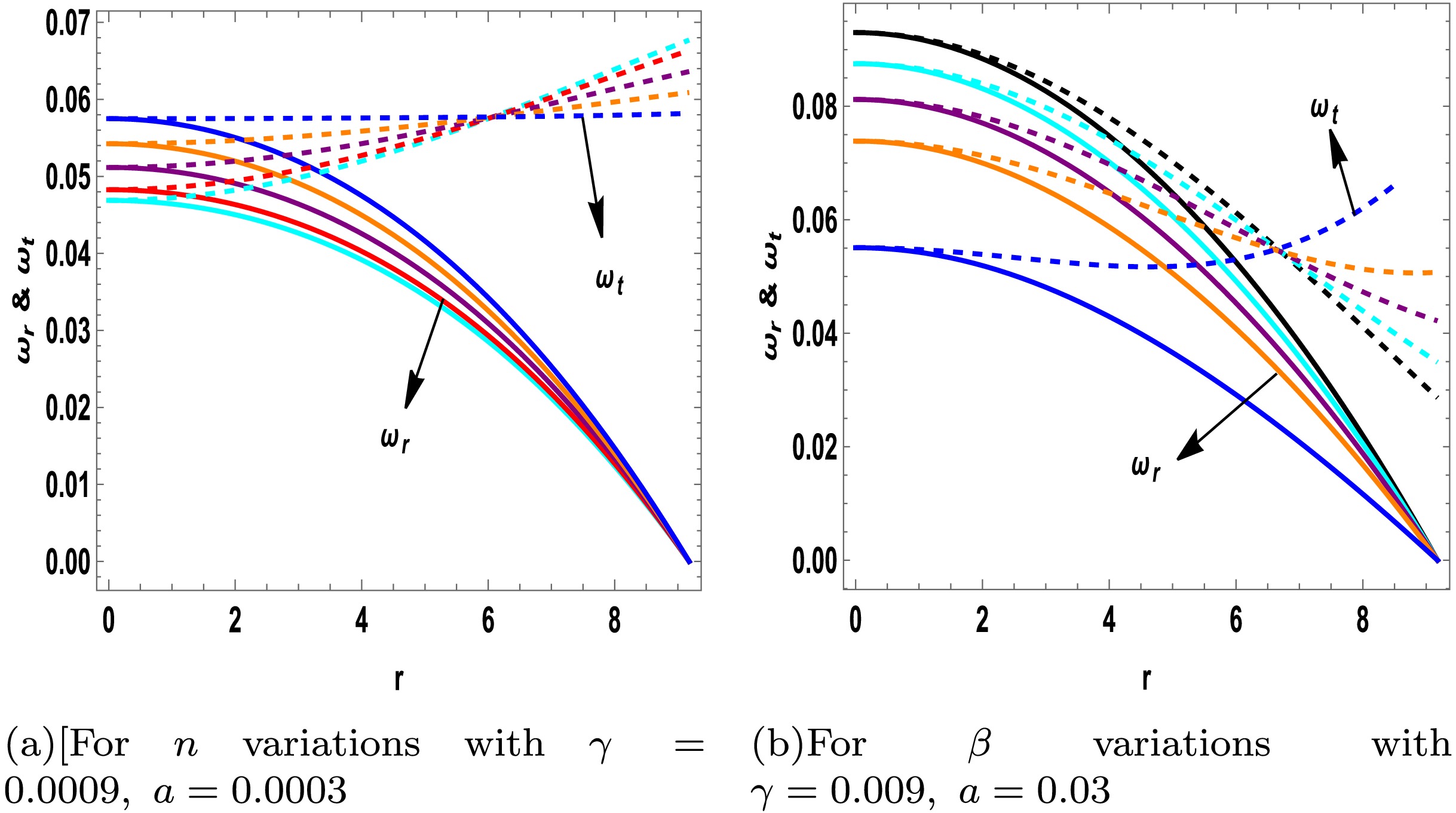
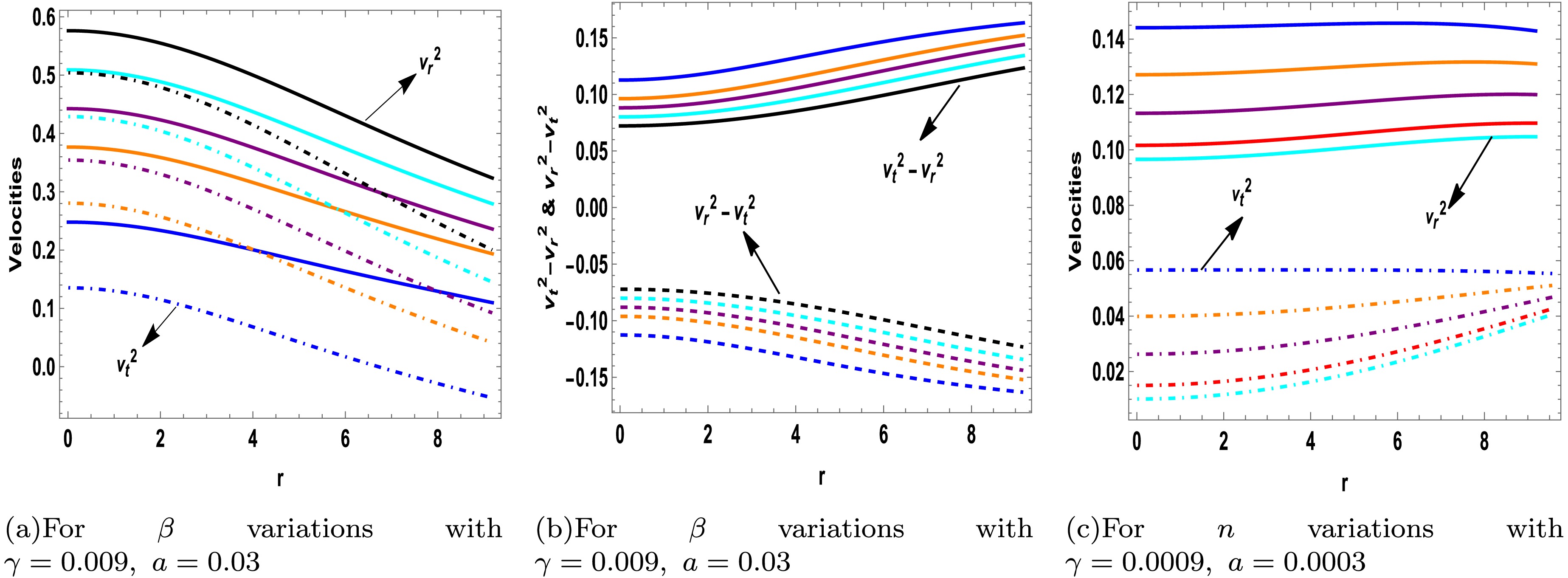
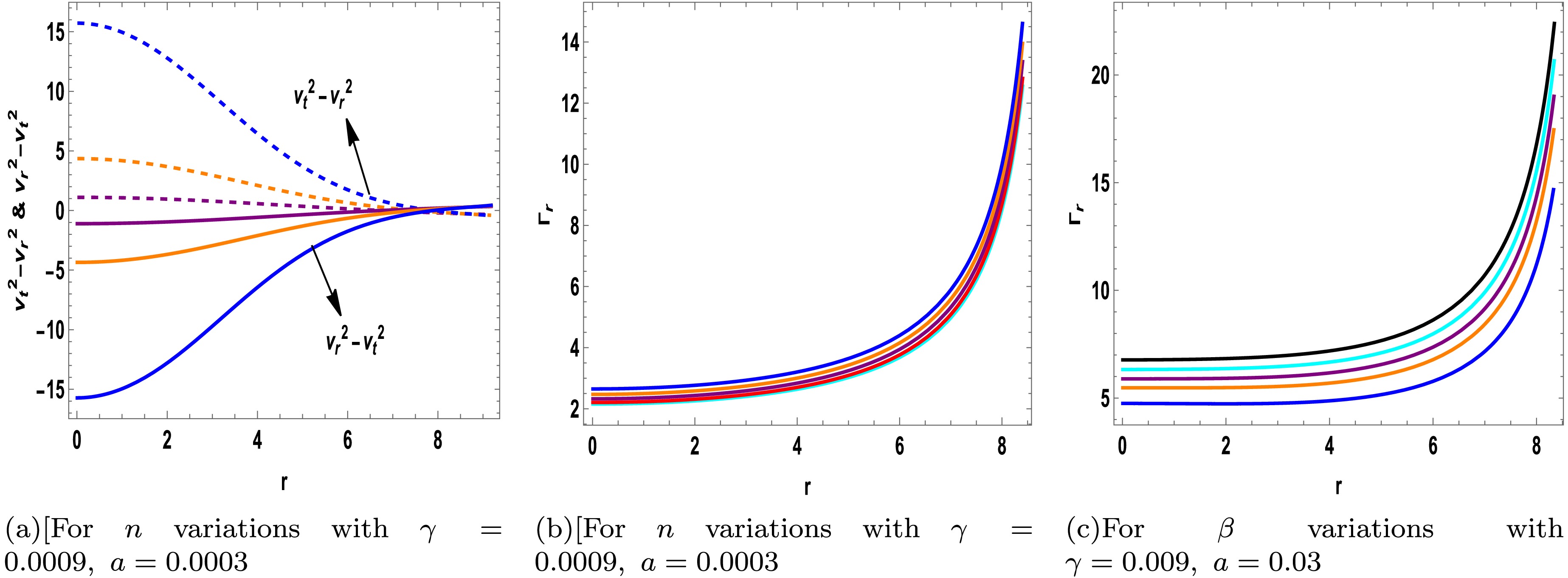
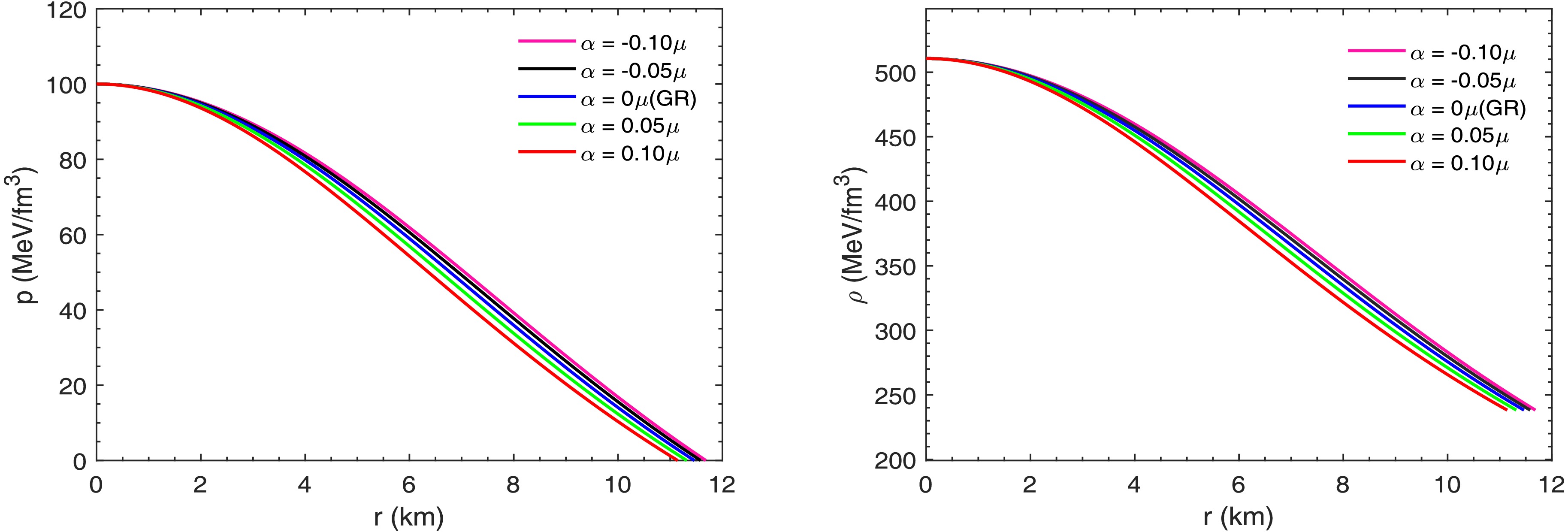
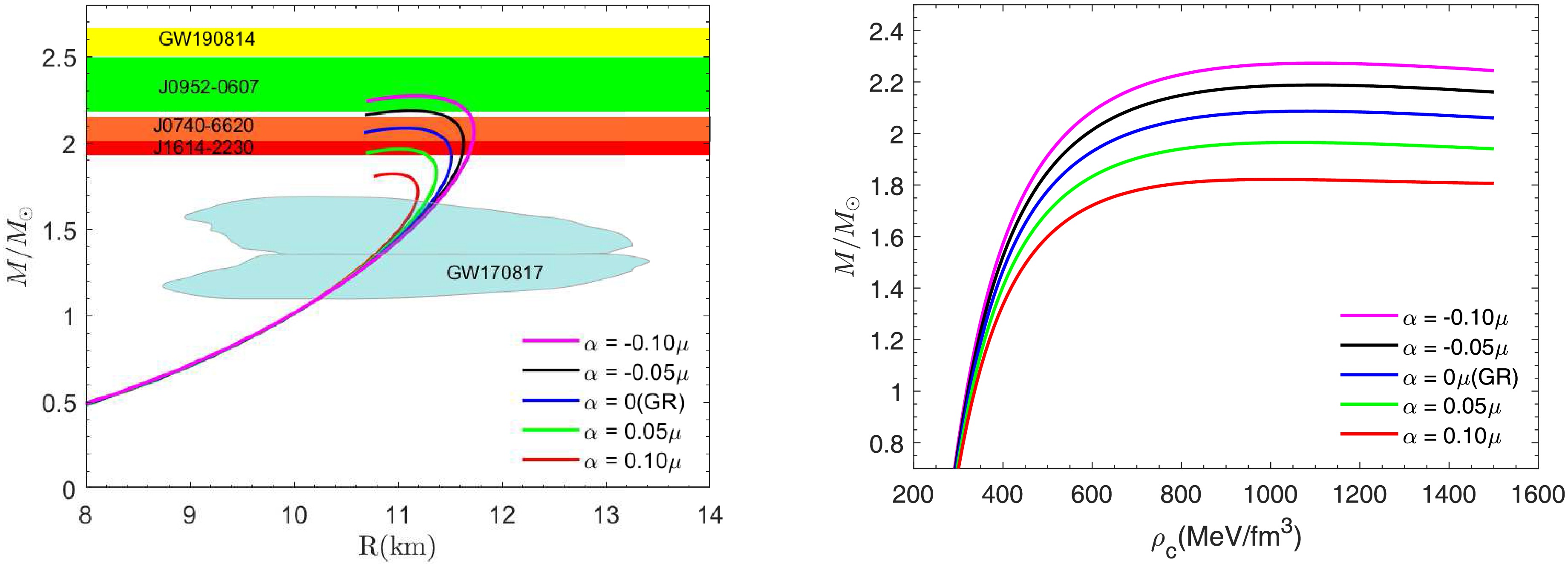
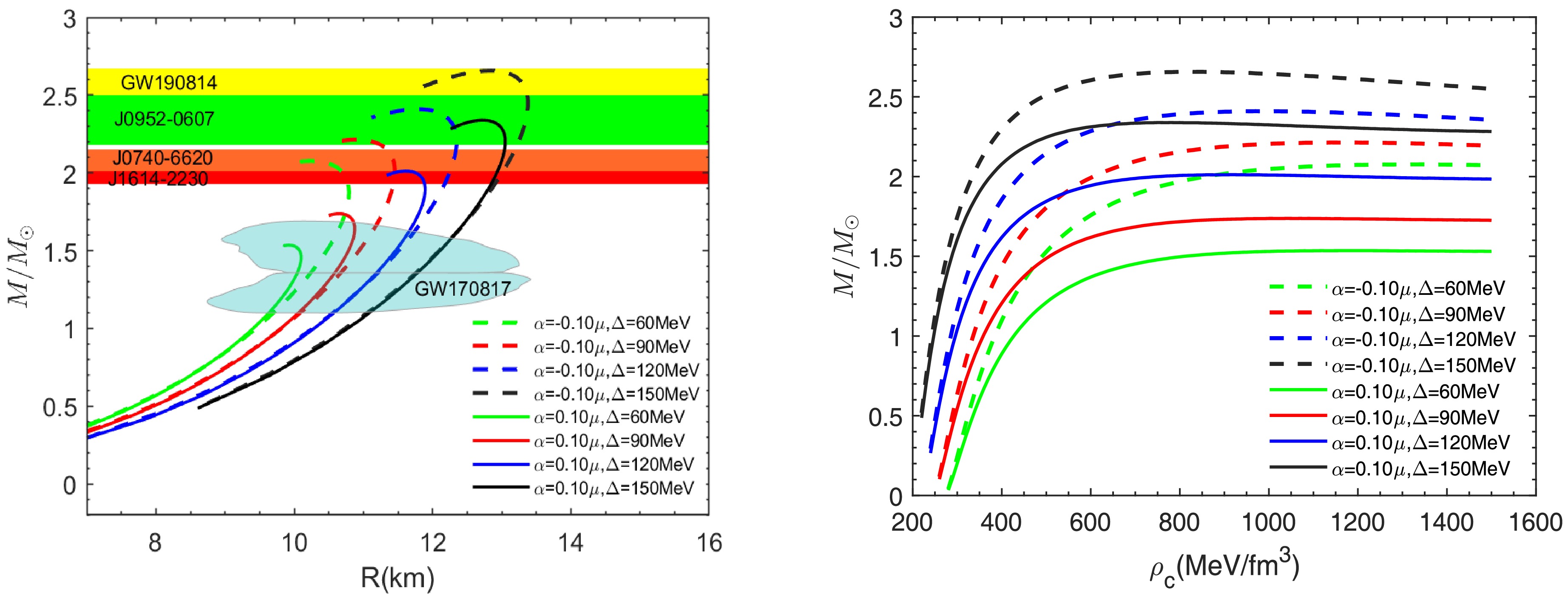
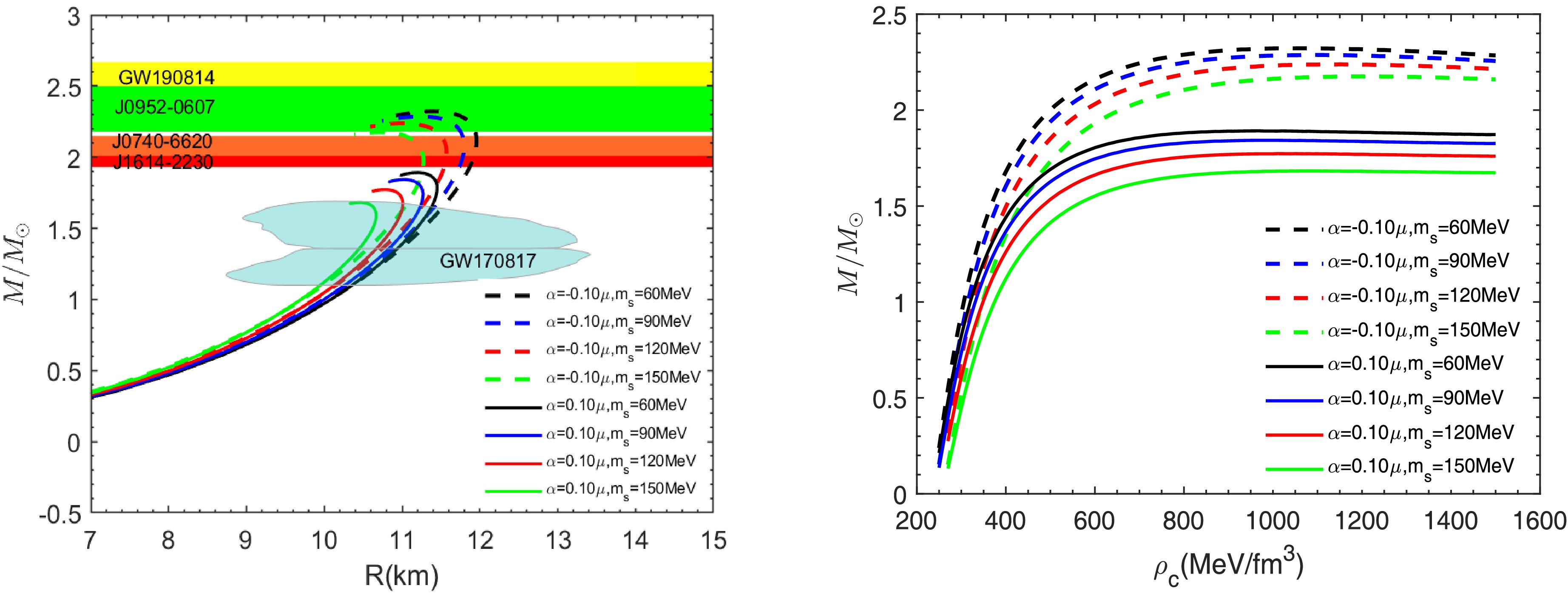
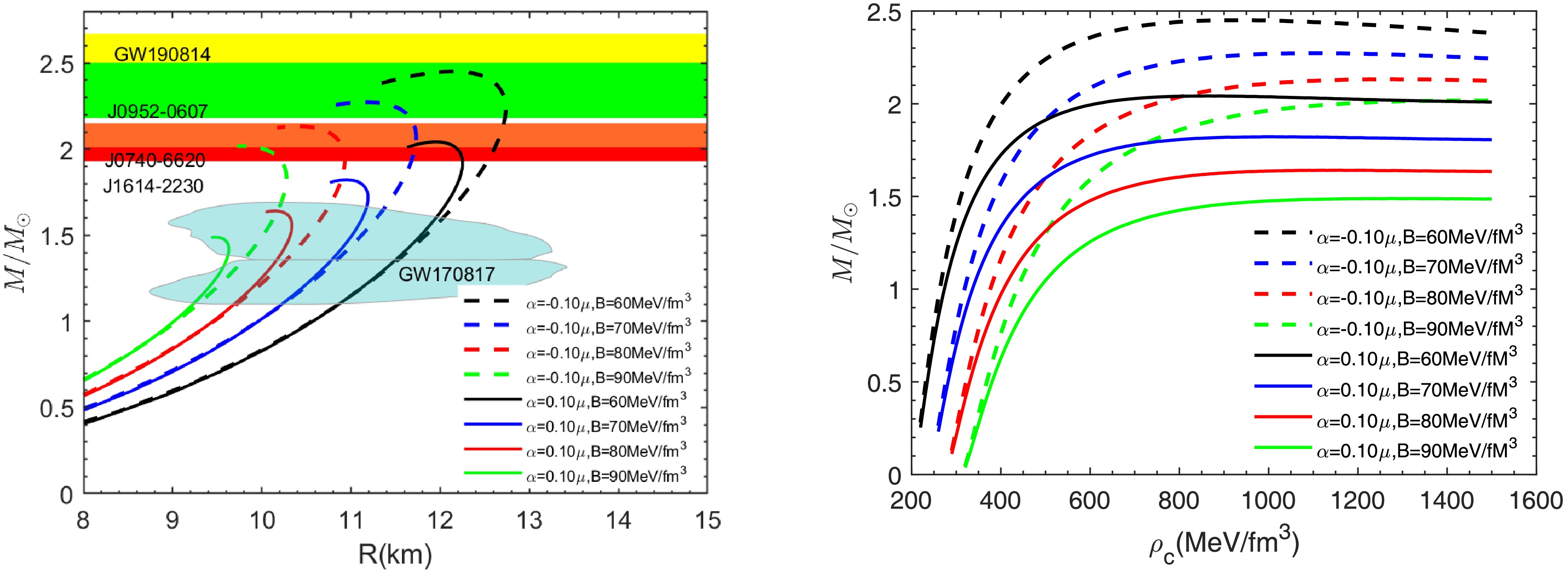
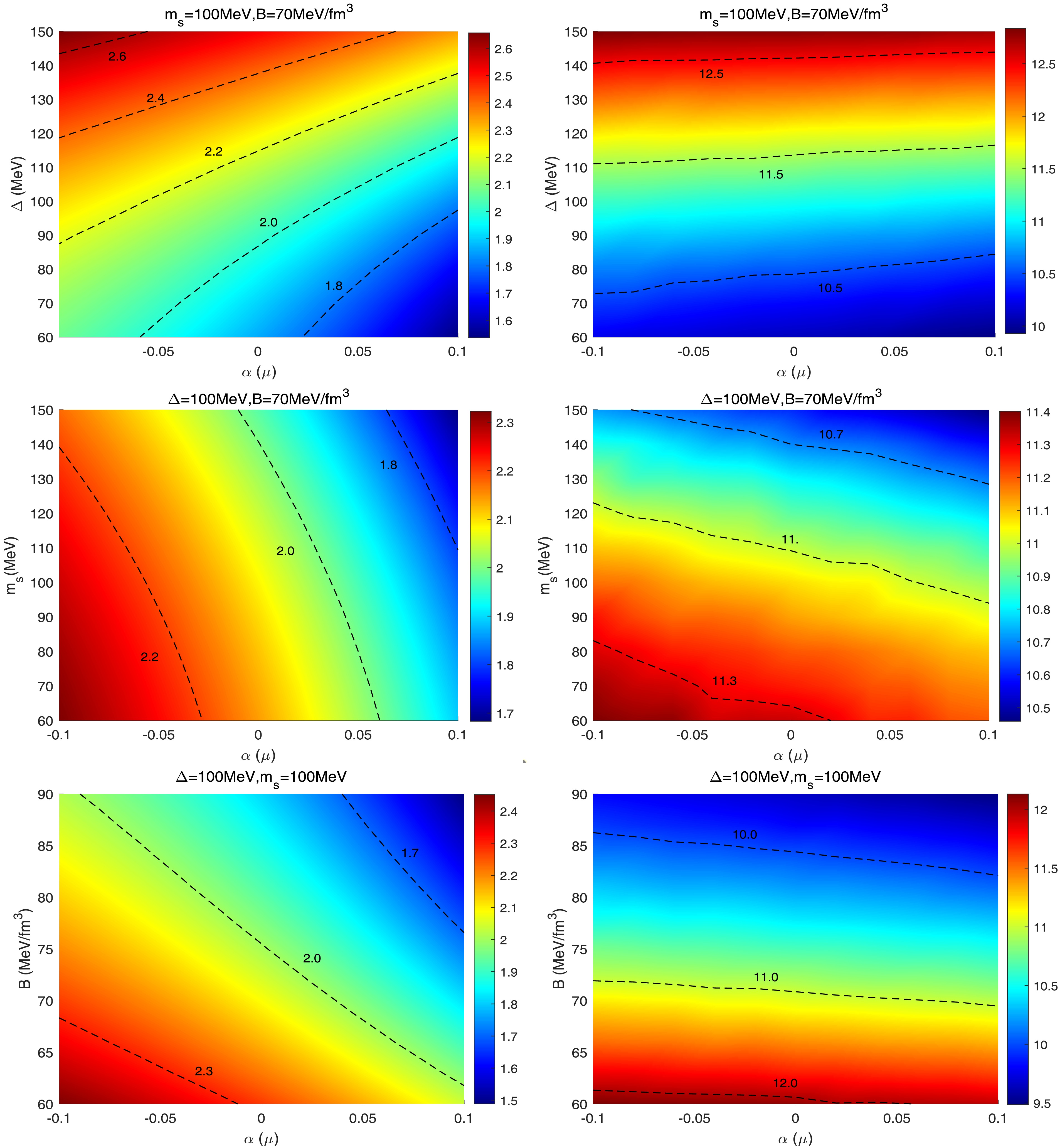
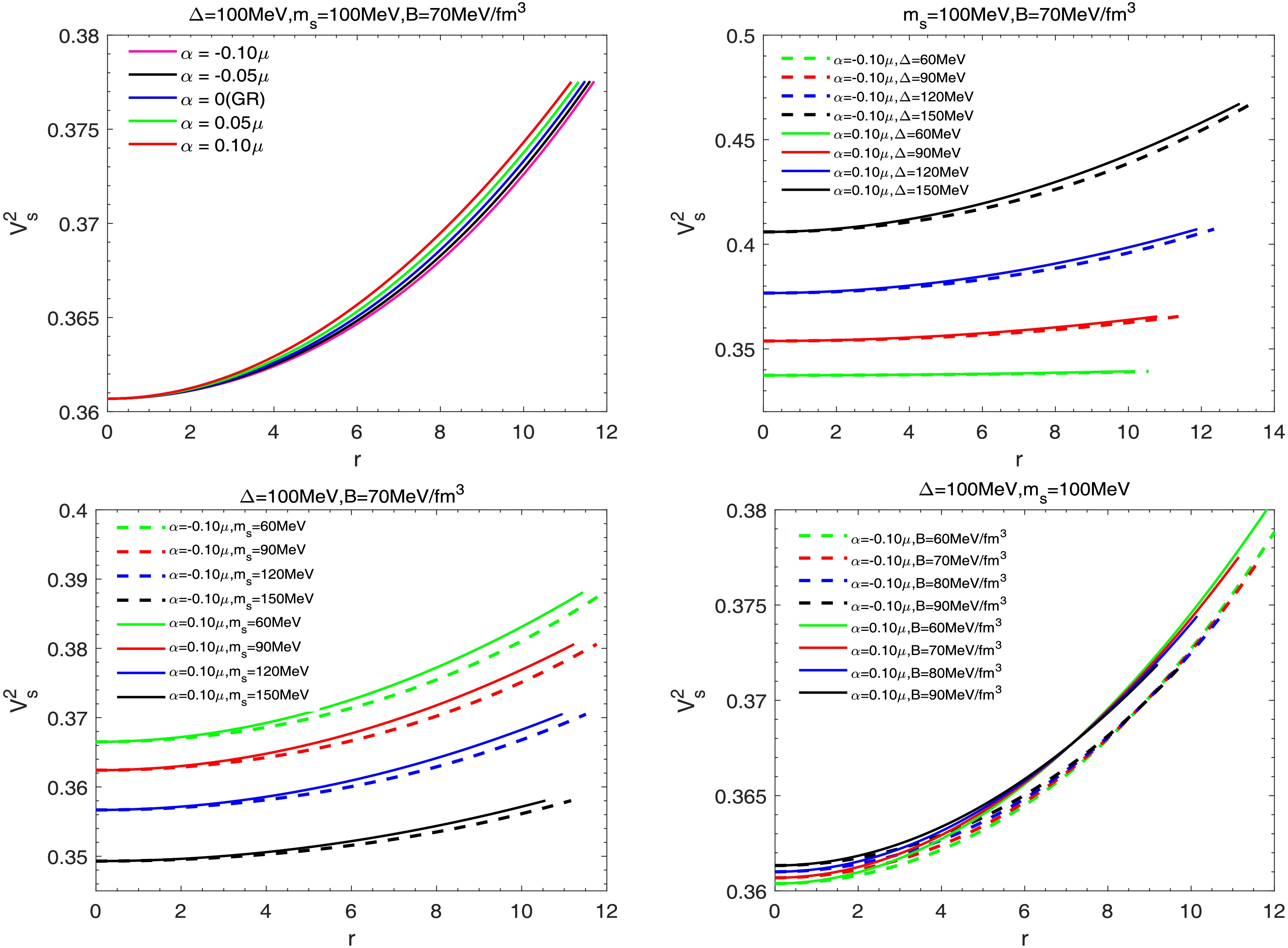
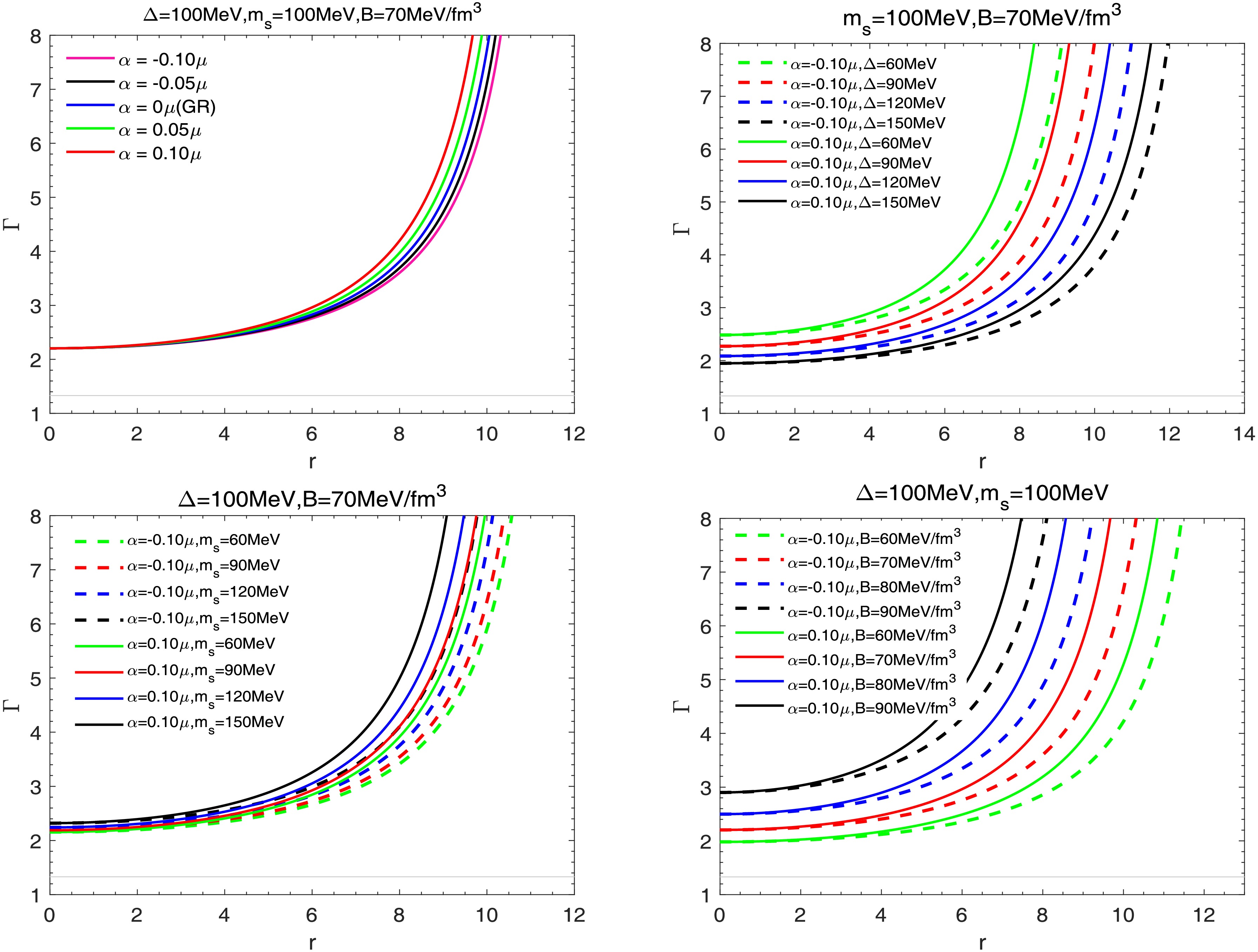
We investigate the physical properties of quark stars within the framework of\begin{document}$f(R,L_{m},T)$\end{document}
We investigate the physical properties of quark stars within the framework of
2026, 50(2): 025107. doi: 10.1088/1674-1137/ae1afc
Abstract:
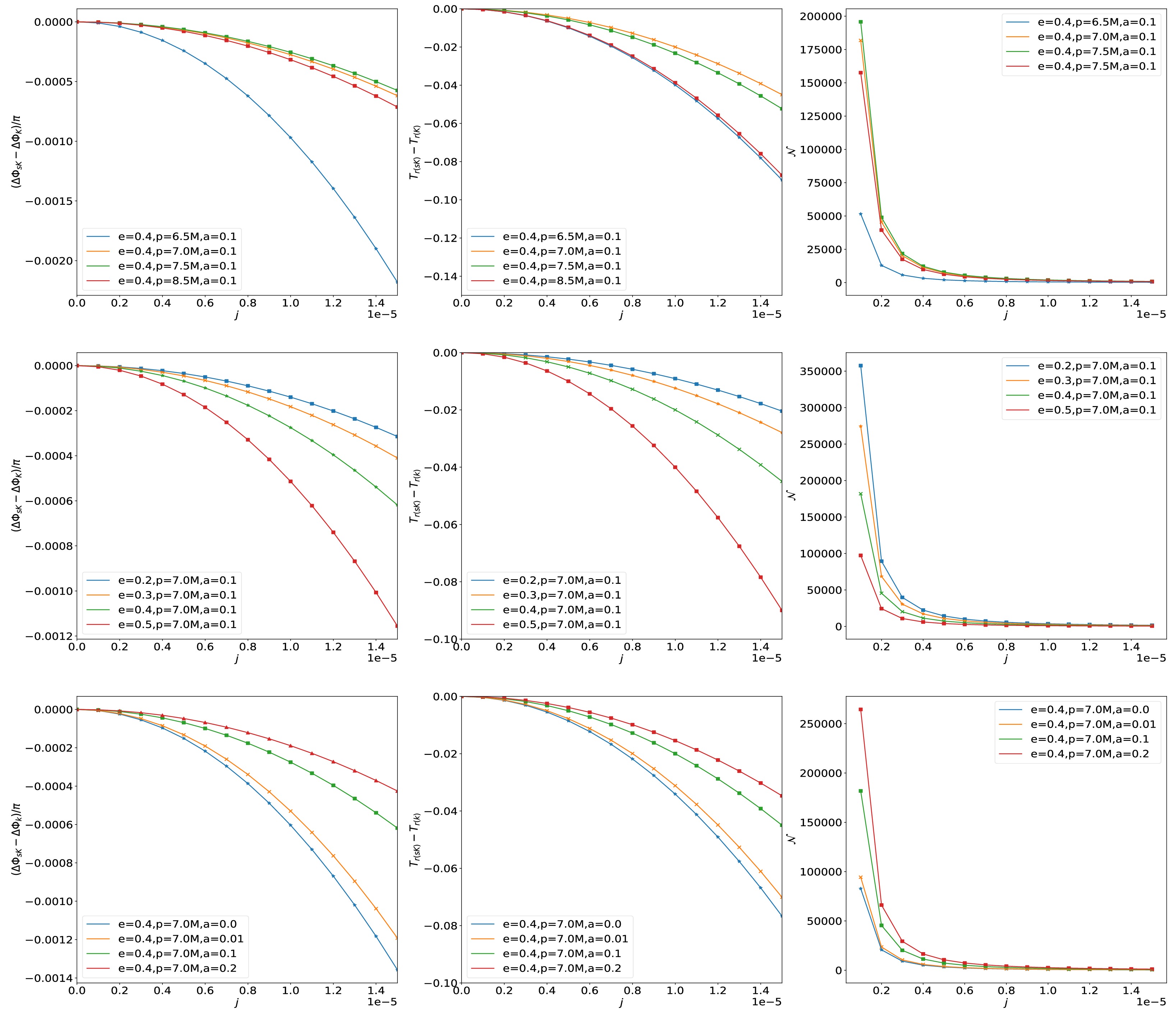
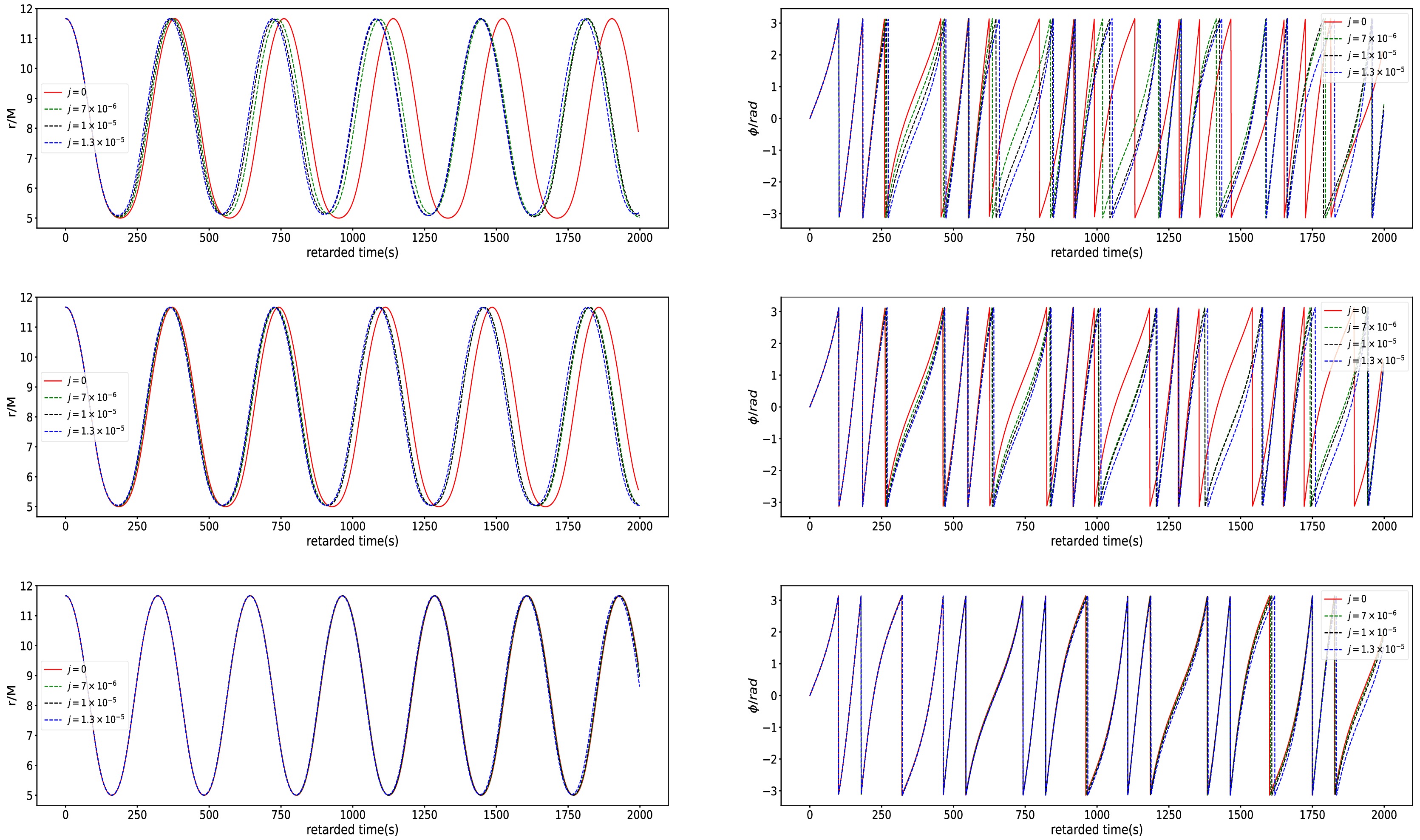
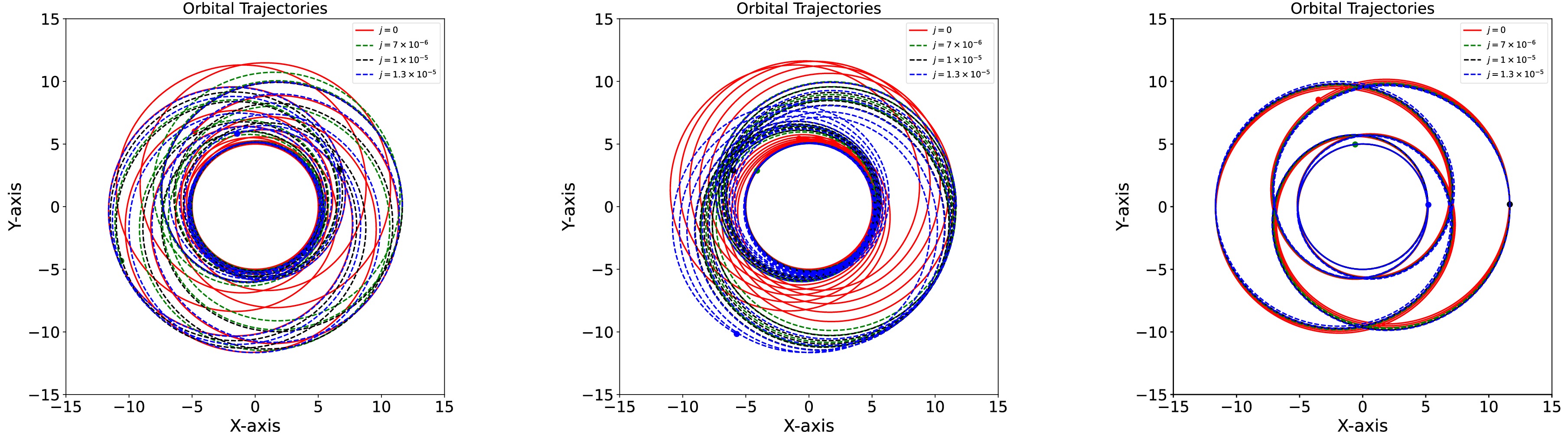
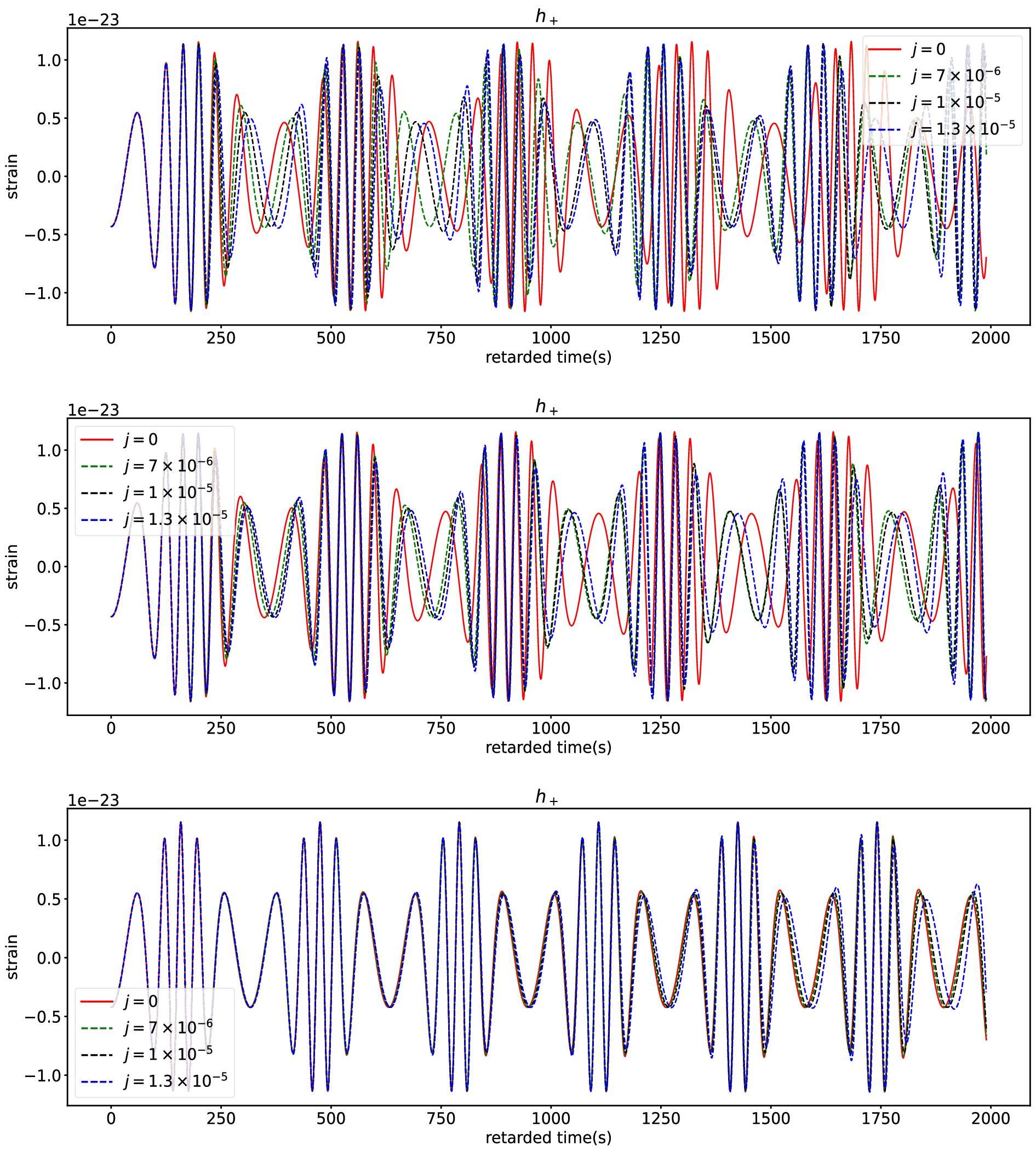
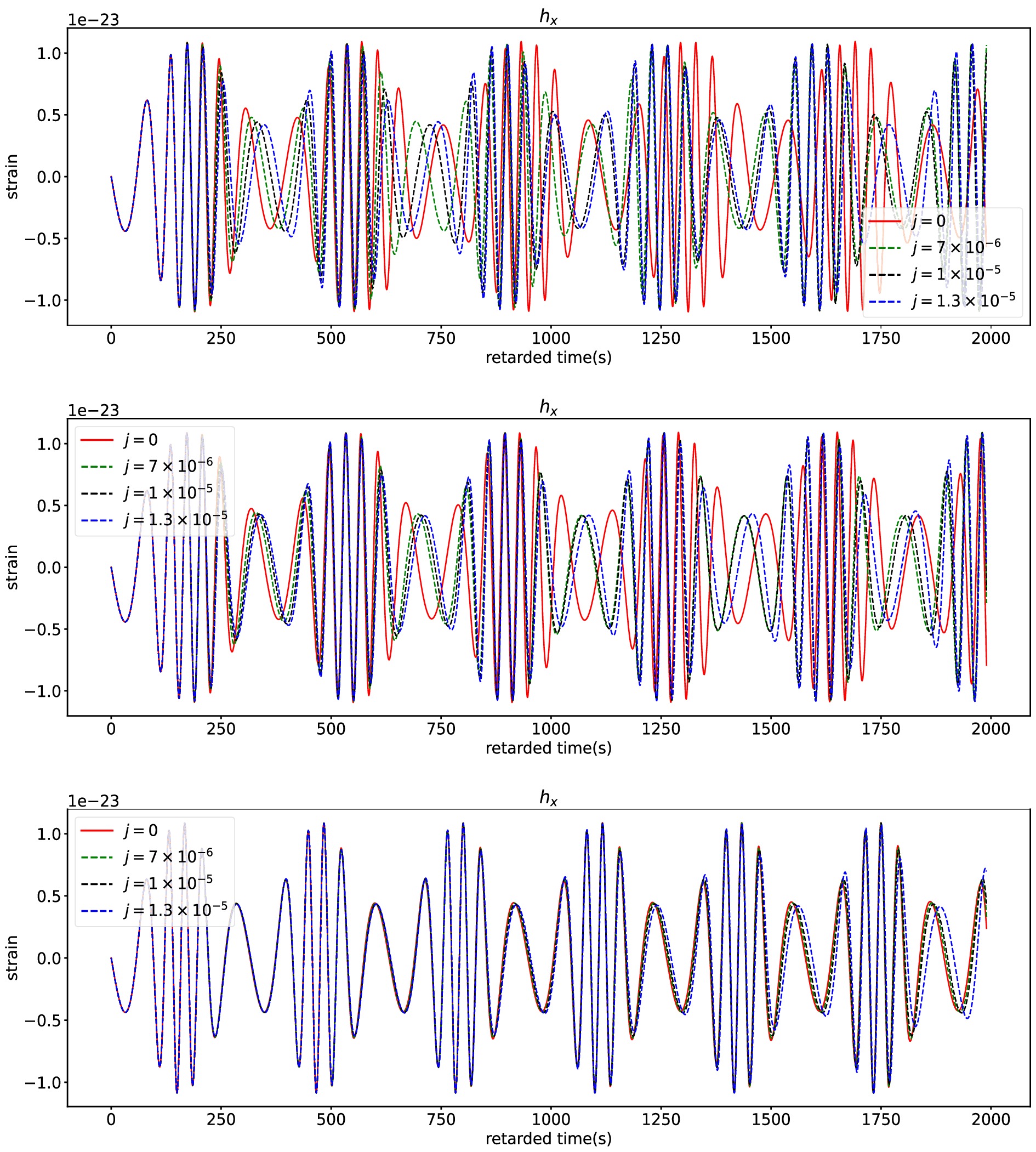
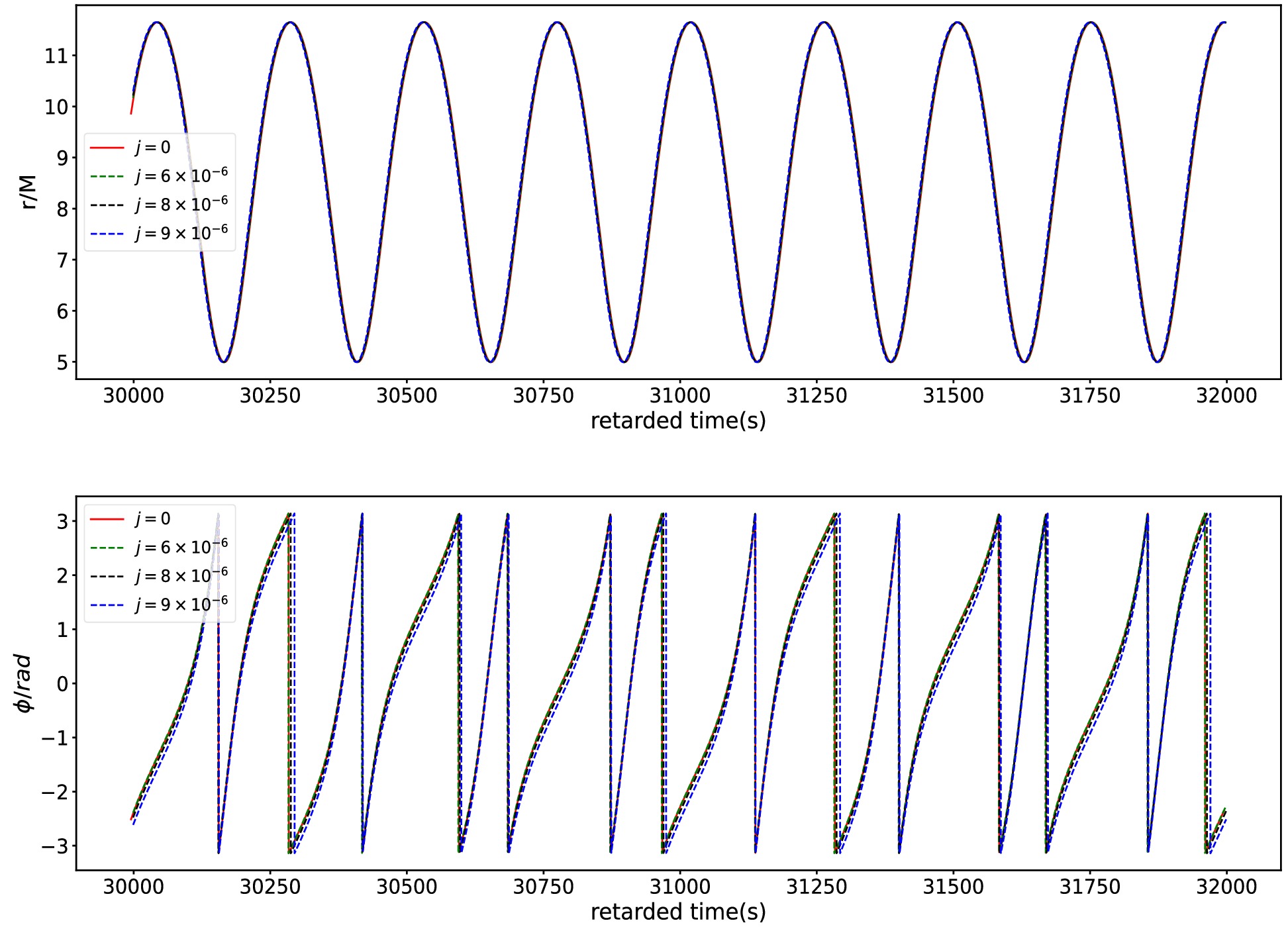
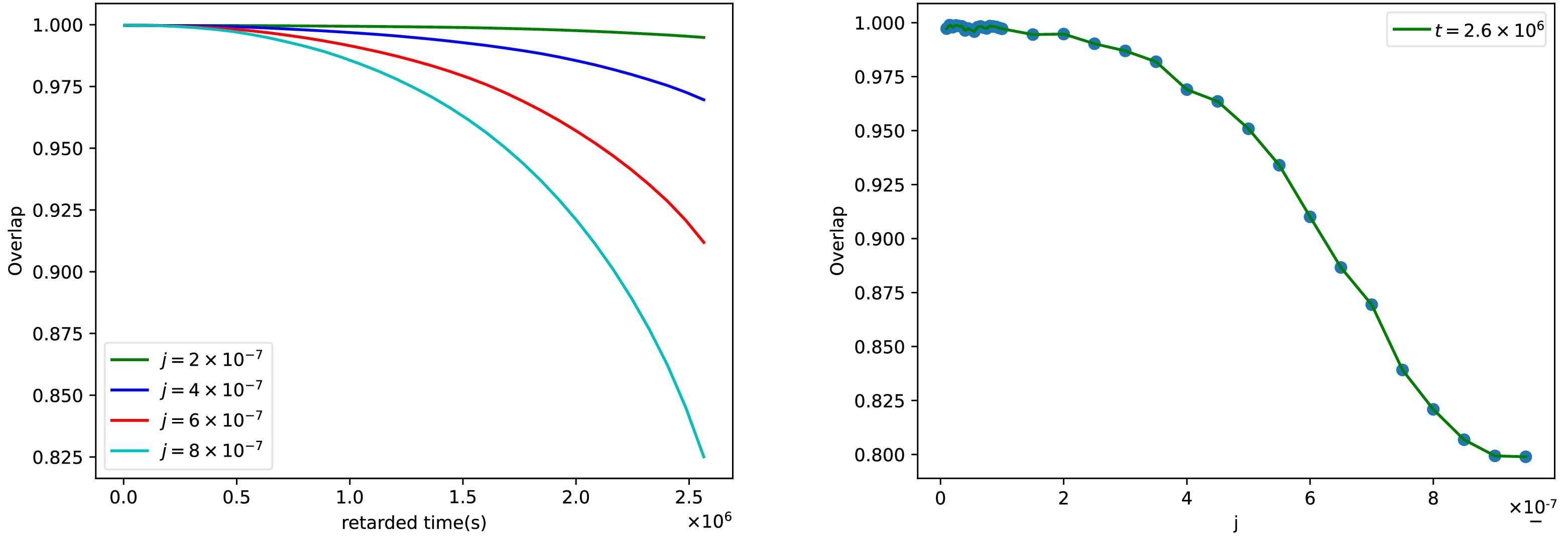
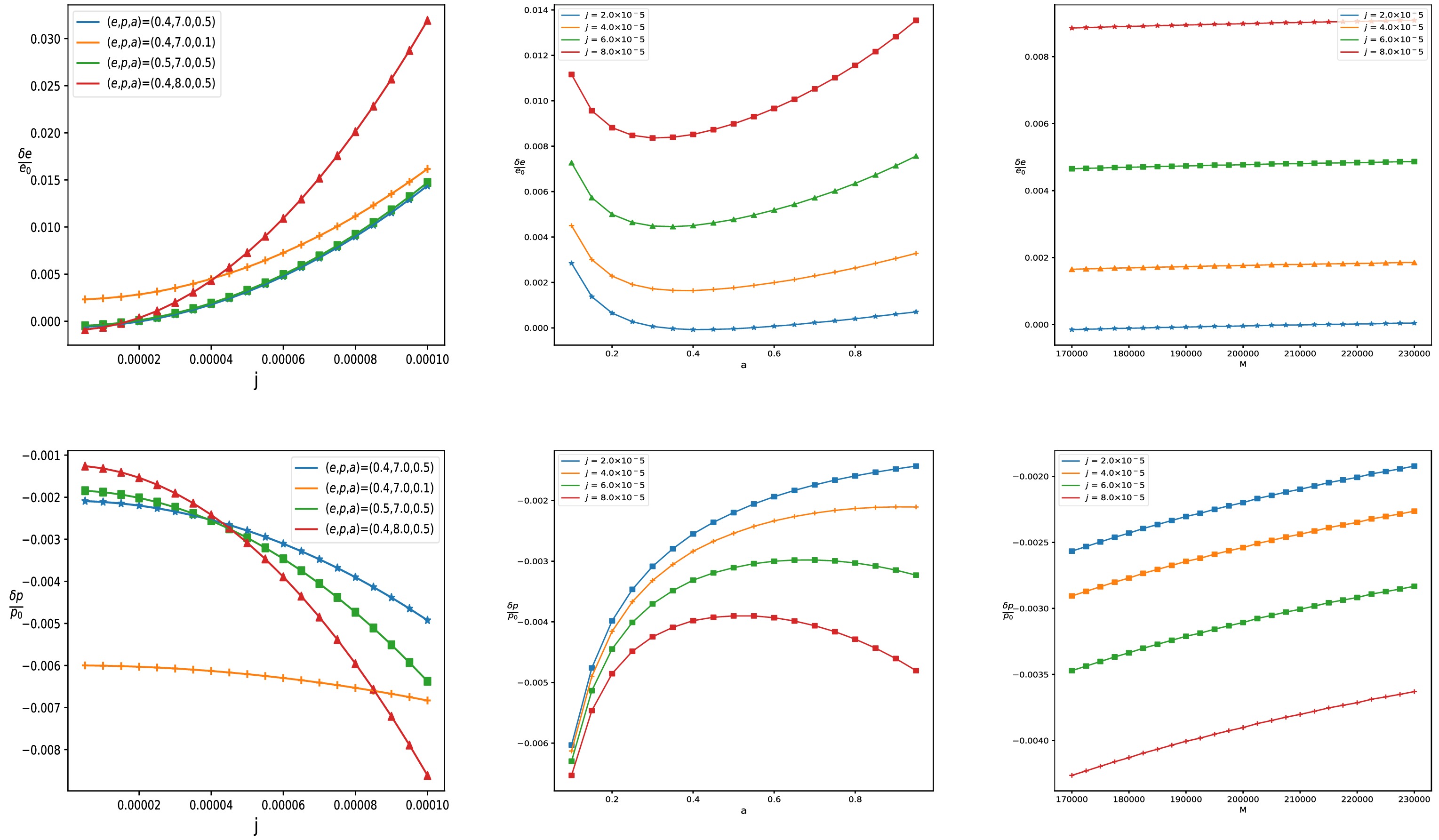
The swirling-Kerr black hole is a novel solution of vacuum general relativity and has an extra swirling parameter characterizing the rotation of spacetime background. We study the gravitational waves generated by extreme mass ratio inspirals (EMRIs) along eccentric orbits on the equatorial plane in this novel swirling spacetime. Our findings indicate that this swirling parameter leads to a delayed phase shift in the gravitational waveforms. Furthermore, we investigate the effects of the swirling parameter on the potential issue of waveform confusion caused by the orbital eccentricity and semi-latus rectum parameters. As the swirling parameter increases, the relative variations in the eccentricity increase, whereas the variations in the semi-latus rectum rapidly decrease. The trends related to changes in the orbital eccentricity and semi-latus rectum with the swirling parameter resemble those observed with the MOG parameter in Scalar-Tensor-Vector-Gravity (STVG) theory but with different rates of change. Furthermore, our results also reveal that the effects of the background swirling parameter on the relative variations in the eccentricity and semi-latus rectum are distinct from those of the black hole spin parameter. These results provide deeper insights into the properties of EMRI gravitational waves and background swirling.
The swirling-Kerr black hole is a novel solution of vacuum general relativity and has an extra swirling parameter characterizing the rotation of spacetime background. We study the gravitational waves generated by extreme mass ratio inspirals (EMRIs) along eccentric orbits on the equatorial plane in this novel swirling spacetime. Our findings indicate that this swirling parameter leads to a delayed phase shift in the gravitational waveforms. Furthermore, we investigate the effects of the swirling parameter on the potential issue of waveform confusion caused by the orbital eccentricity and semi-latus rectum parameters. As the swirling parameter increases, the relative variations in the eccentricity increase, whereas the variations in the semi-latus rectum rapidly decrease. The trends related to changes in the orbital eccentricity and semi-latus rectum with the swirling parameter resemble those observed with the MOG parameter in Scalar-Tensor-Vector-Gravity (STVG) theory but with different rates of change. Furthermore, our results also reveal that the effects of the background swirling parameter on the relative variations in the eccentricity and semi-latus rectum are distinct from those of the black hole spin parameter. These results provide deeper insights into the properties of EMRI gravitational waves and background swirling.
2026, 50(2): 025108. doi: 10.1088/1674-1137/ae2f50
Abstract:
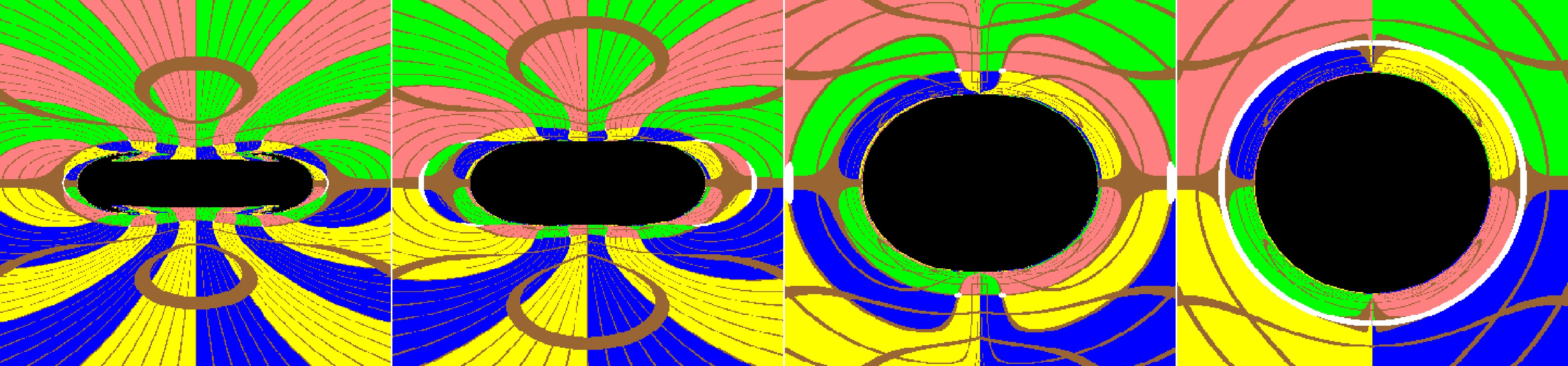
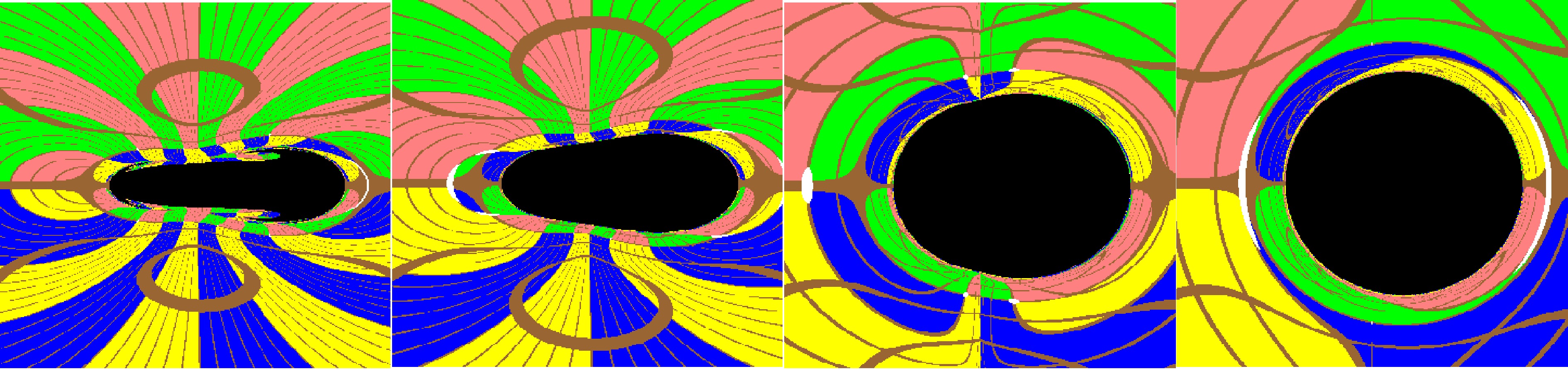
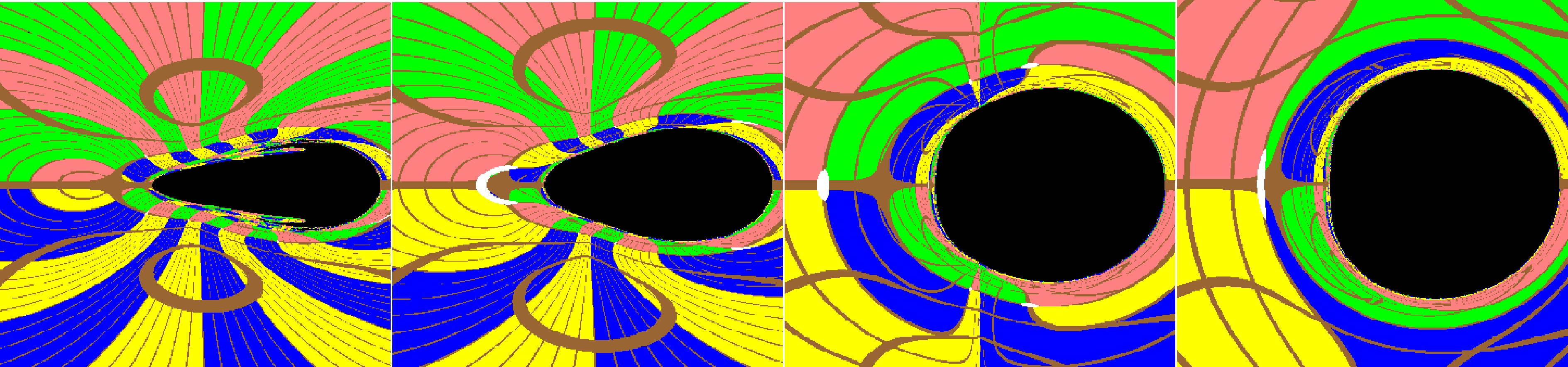
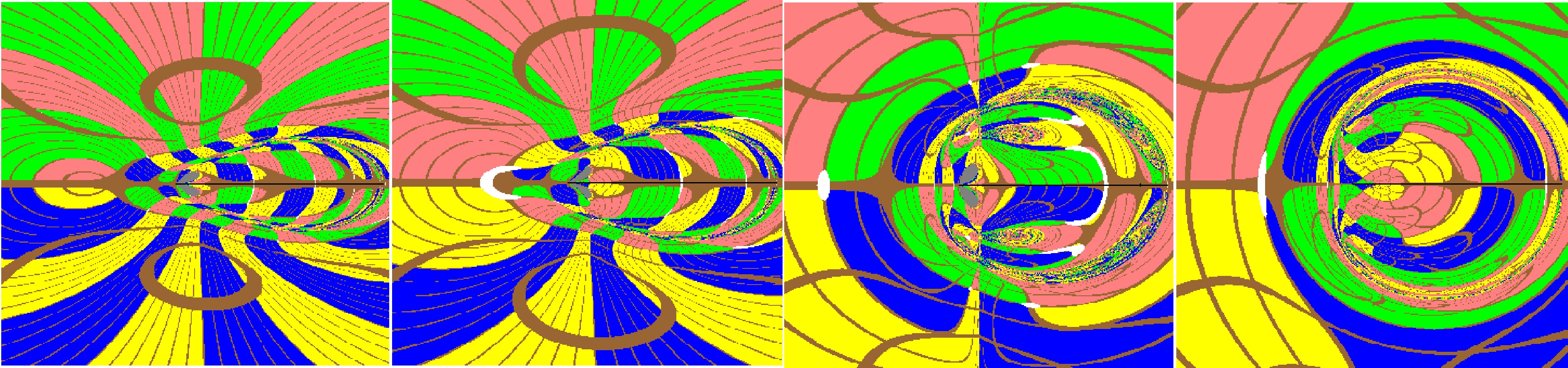
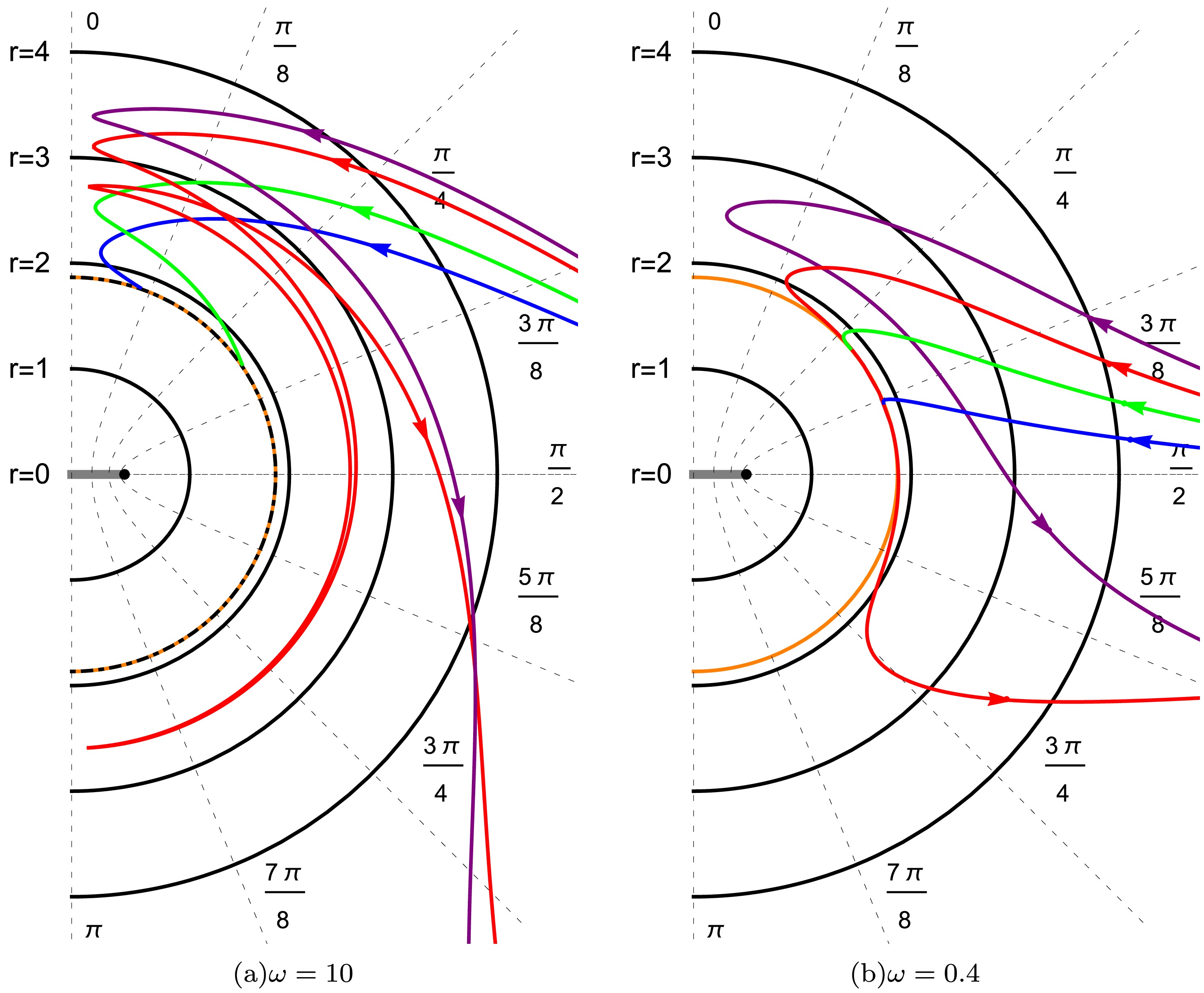
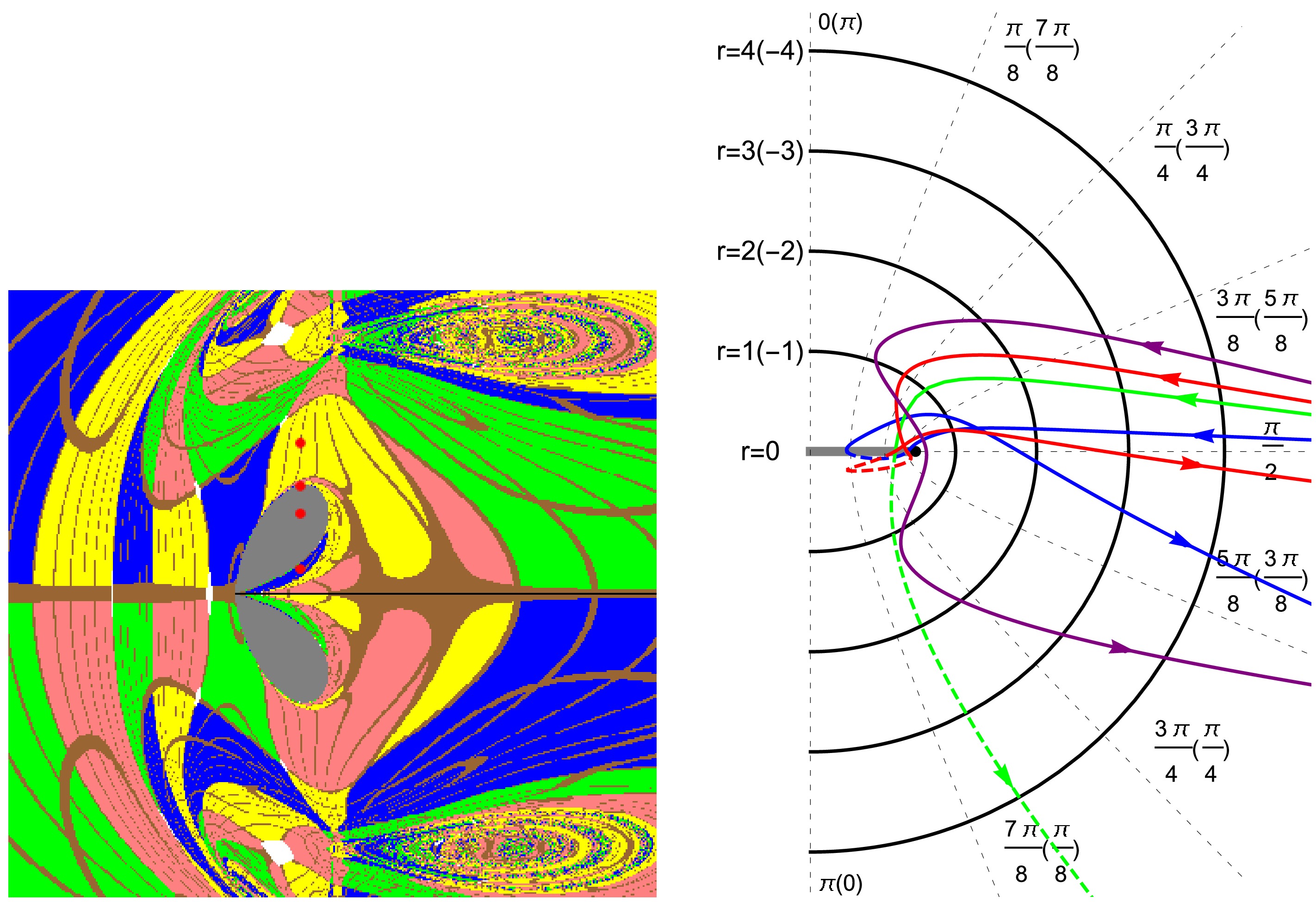
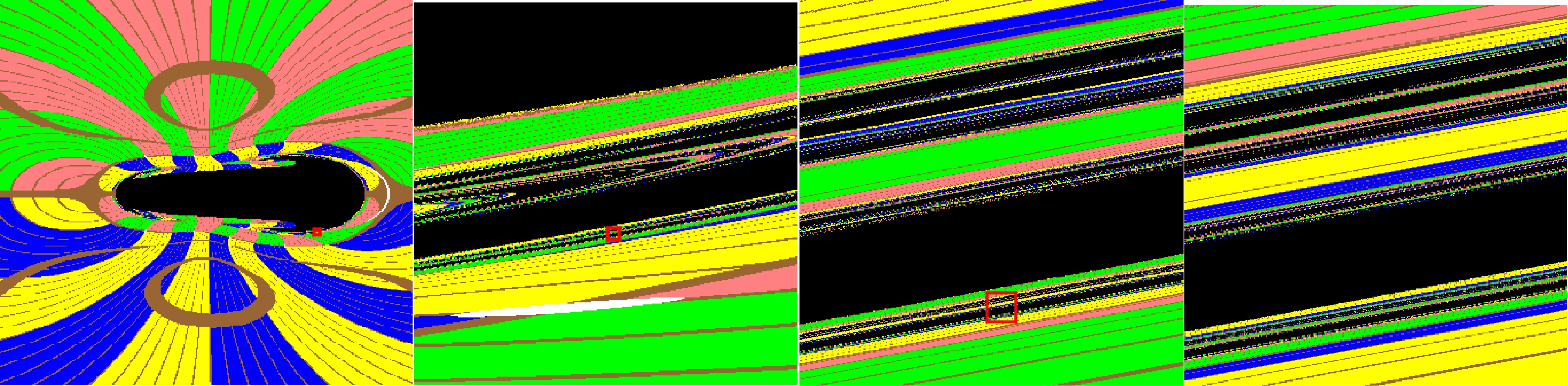
We have studied the images of the Brans-Dicke-Kerr spacetime with a dimensionless Brans-Dicke parameter ω, which belongs to axisymmetric rotating solutions in the Brans-Dicke theory. Our results show that the Brans-Dicke-Kerr spacetime with the parameter\begin{document}$ \omega>-3/2 $\end{document} \begin{document}$ a \leqslant M $\end{document} \begin{document}$ \omega<1/2 $\end{document} \begin{document}$ a > M $\end{document}
We have studied the images of the Brans-Dicke-Kerr spacetime with a dimensionless Brans-Dicke parameter ω, which belongs to axisymmetric rotating solutions in the Brans-Dicke theory. Our results show that the Brans-Dicke-Kerr spacetime with the parameter
IF: 3.0
Monthly issued, founded in 1977
Sponsored by:
ISSN 1674-1137 CN 11-5641/O4
Original research articles, Ietters and reviews Covering theory and experiments in the fieids of
- Particle physics
- Nuclear physics
- Particle and nuclear astrophysics
- Cosmology
Author benefits
- A SCOAP3 participating journal - free Open Access publication for qualifying articles
- Average 24 days to first decision
- Fast-track publication for selected articles
- Subscriptions at over 3000 institutions worldwide
- Free English editing on all accepted articles
News
- Chinese Physics C Best Paper Awards 2026 Announced
- Editorial Office Closed
- CPC Announces 2025 Outstanding Reviewers
- Chinese Physics C Outstanding Reviewer Award 2023
- Impact factor of Chinese Physics C is 3.6 in 2022
Cover Story
- Cover Story (Issue 9, 2026): Charge Separation Measurements in Au+Au collisions at \sqrt{S_{NN}} = 7.7-200 GeV in Search of the Chiral Magnetic Effect
- Cover Story (Issue 5, 2026): Determination of Fragmentation Functions from Charge Asymmetries in Hadron Production
- Cover Story (Issue 4, 2026): Initial performance results of the JUNO detector
- Cover Story (Issue 3, 2026): Comprehensive investigation on baryon number violating nucleon decays involving an axion-like particle
- Cover Story (Issue 2, 2026) |The images of Brans-Dicke-Kerr type naked singularities
Advertising