


 Abstract
 HTML
HTML Reference
 Related
 PDF
PDF


-
Many light nuclei are known to exhibit exotic geometries and density distributions at elevated excitation energies or under high-spin conditions—such as linear chains [1−3], toroidal configurations [4−6], and other novel states [7−11]. Investigations of such configurations provide crucial constraints on nuclear forces under extreme conditions and advance our understanding of the evolution of nuclear structure and dynamical processes [12−17].
Toroidal configurations in nuclei have been investigated for several decades. Wheeler [18] proposed that nuclei might assume toroidal configurations under certain conditions. Building on this idea, Wong applied the liquid-drop model to investigate the possible existence of toroidal nuclei, identifying the ranges of mass numbers and angular momenta in which such configurations could emerge [19−21]. Subsequently, numerous researchers have predicted the existence of toroidal isomers in various light nuclei using a range of theoretical approaches [4, 22−25].
As the lightest nucleus predicted by Wong to exhibit a stable toroidal configuration,
$ ^{28} $ Si has been the subject of extensive theoretical and experimental investigations in recent years. Experimentally, both Cao$ et ~~ al. $ and Hannaman$ et ~~ al. $ have explored toroidal states in$ ^{28} $ Si by analyzing resonant peaks in the excitation energy spectrum of the inverse kinematics reaction$ ^{12} $ C($ ^{28} $ Si,7α) at 35 MeV/u. Cao$ et ~~ al. $ reported potential toroidal resonances at 114,126, and 138 MeV [5]. In contrast, Hannaman$ et ~~ al. $ reported that no clearly statistically significant resonant peaks could be discerned above the background in the 7α excitation spectrum [26, 27]. The observed discrepancy between these experimental results is likely attributable to differences in the kinematic acceptances of the two detection systems [28]. Theoretically, Ren$ et ~~ al. $ conducted a systematic study of high-spin toroidal states in$ ^{28} $ Si [29] within the framework of cranking covariant density functional theory (CDFT) on a three-dimensional lattice, reproducing the experimentally observed resonances and demonstrating pronounced α-cluster features through the α-localization function. Zheng$ et ~~ al. $ employed a hybrid α cluster model [30] to explain the resonant peaks observed in the 7α disassembly of$ ^{28} $ Si, linking them to toroidal high-spin configurations.Although the aforementioned experimental and theoretical studies suggest the possible existence of toroidal configurations in
$ ^{28} $ Si, their actual presence still remains to be firmly established. Given the potential importance of α-cluster indicated by previous investigations of toroidal configurations in$ ^{28} $ Si, and in view of the the significant role of α-cluster in various nuclear structure studies [31−34], it is therefore meaningful to examine such an exotic nuclear structure from a microscopic α-cluster perspective.Considering that our interest is specifically focused on the toroidal configurations of
$ ^{28} $ Si, a practical approach is to assume that the relevant states consist of several α clusters arranged in prescribed geometrical patterns, thereby allowing reasonably relative predictions of certain physical properties [35, 36]. Building on this idea, the present study employs the generator coordinate method (GCM) constructed from fully antisymmetrized 7α-cluster wave functions, and introduces generator coordinates tailored to toroidal geometries in order to explore the possible formation of toroidal configurations in$ ^{28} $ Si. -
We perform GCM calculations to investigate a toroidal configuration of 7 α clusters, in which the clusters are located at the vertices of a regular heptagon (hereafter, toroidal configuration). For comparison, we also consider a disk-like configuration, where 6 α clusters are placed at the vertices of a regular hexagon and the seventh one is located at the center (hereafter, disk-like configuration).
We adopt Brink-Bloch 7α Slater determinants as intrinsic basis states with localized Gaussian packets [37],
$ \Phi^\text{B}({\boldsymbol{R}}_1,{\boldsymbol{R}}_2,\cdots,{\boldsymbol{R}}_7)=\mathcal{A}[\phi_1({\boldsymbol{R}}_1)\cdots\phi_4( {\boldsymbol{R}}_1) \phi_5( {\boldsymbol{R}}_2)\cdots \phi_{28}( {\boldsymbol{R}}_7)], $
(1) where
$ \mathcal{A} $ represents the antisymmetrization operator, and the wave function for the k-th nucleon is defined as a Gaussian wave packet$ \phi_k( {\boldsymbol{R}}_j)=\frac{1}{(\pi b^2)^{3/4}}\exp\left[-\frac{1}{2b^2}({\boldsymbol{r}}_k-{\boldsymbol{R}}_j)^2\right] \chi_k \tau_k. $
(2) Here,
$ {\boldsymbol{r}}_k $ denotes the coordinate of the k-th nucleon,$ {\boldsymbol{R}}_j $ is a real parameter specifying the center of the Gaussian wave packet for the j-th α cluster, while$ \chi_k $ and$ \tau_k $ represent its spin and isospin, respectively. The oscillator parameter for the single-particle wave functions is set to b = 1.44 fm.We directly use each configuration as the generator coordinate in Fig. 1 and the distance between adjacent α clusters on the regular polygon (hereafter, edge length) is denoted as ρ. The positions of 7 α clusters are placed at
$ {\boldsymbol{R}}_j $ $ (j=1,\ldots,7) $ , where$ {\boldsymbol{R}}_j $ are vectors defining the specific geometric distributions ($ \sum_j {\boldsymbol{R}}_j = 0 $ to fix the center of mass). We vary the edge length ρ from 0.8 to 9.5 fm in steps of 0.3 fm, yielding 30 basis points for each configuration.
Figure 1. (color online) Geometric arrangements of the 7α clusters: (a) toroidal configuration; (b) disk-like configuration.
According to the framework of the GCM, the total wave function of
$ ^{28} $ Si can be written as the superposition of angular-momentum-projected and parity-projected Brink wave functions$\Psi^{J\pi}_M = \sum\limits_{i,K}c_{i,K} \hat P_{MK}^J \hat P^\pi \Phi^\text{B}(\{\boldsymbol { R}\}_i), $
(3) in which
$ \hat P_{MK}^J $ and$ \hat P^\pi $ are the angular-momentum and parity projectors, respectively.$ \Phi^\text{B}(\{\boldsymbol { R}\}_i) $ indicates a Brink wave function in Eq. (1) with a specified set of generator coordinates$ \{\boldsymbol { R}\}_i $ . The coefficients$ c_{i,K} $ are determined by solving the Hill-Wheeler equation [38]. The Hamiltonian$ \hat{H} $ of the system includes kinetic, effective nucleon-nucleon interaction, and Coulomb parts$ \hat H=-\frac{\hbar^2}{2m}\sum\limits_i \nabla_i^2 - T_\mathrm{c.m.}+\hat{V}_{NN} + \hat V_\mathrm{C}. $
(4) In the present work, we used the Tohsaki No.1 effective nucleon-nucleon interaction as the central N-N potential [39].
-
The toroidal configuration, arranged as a regular heptagon, exhibits
$ D_{7h} $ point group symmetry, while the disk-like configuration (a centered hexagon) is characterized by$ D_{6h} $ symmetry. These specific geometric symmetries impose strong constraints on the intrinsic quantum numbers, excitation energies, and resultant rotational bands. To investigate the structural stability of these distinct α-cluster configurations, we perform simple calculations for the energy as a function of the edge length (ρ) in search of local energy minima.Figure 2 displays the resultant potential energy curves as functions of the edge length ρ for the two distinct α-cluster geometric arrangements. Here, the reference of the energy is taken as the
$ 7\alpha $ breakup energy. In both cases, the surfaces develop a clear potential pocket at intermediate ρ and an outer barrier at larger ρ, indicating partial shape stabilization along this one-dimensional coordinate. The existence of such a local minimum (pocket) is a necessary condition for the formation of a metastable cluster structure and its corresponding resonance; this approach to configuration analysis is systematically discussed in the cluster literature on exotic states by Tohsaki$ et ~~ al. $ [35, 36].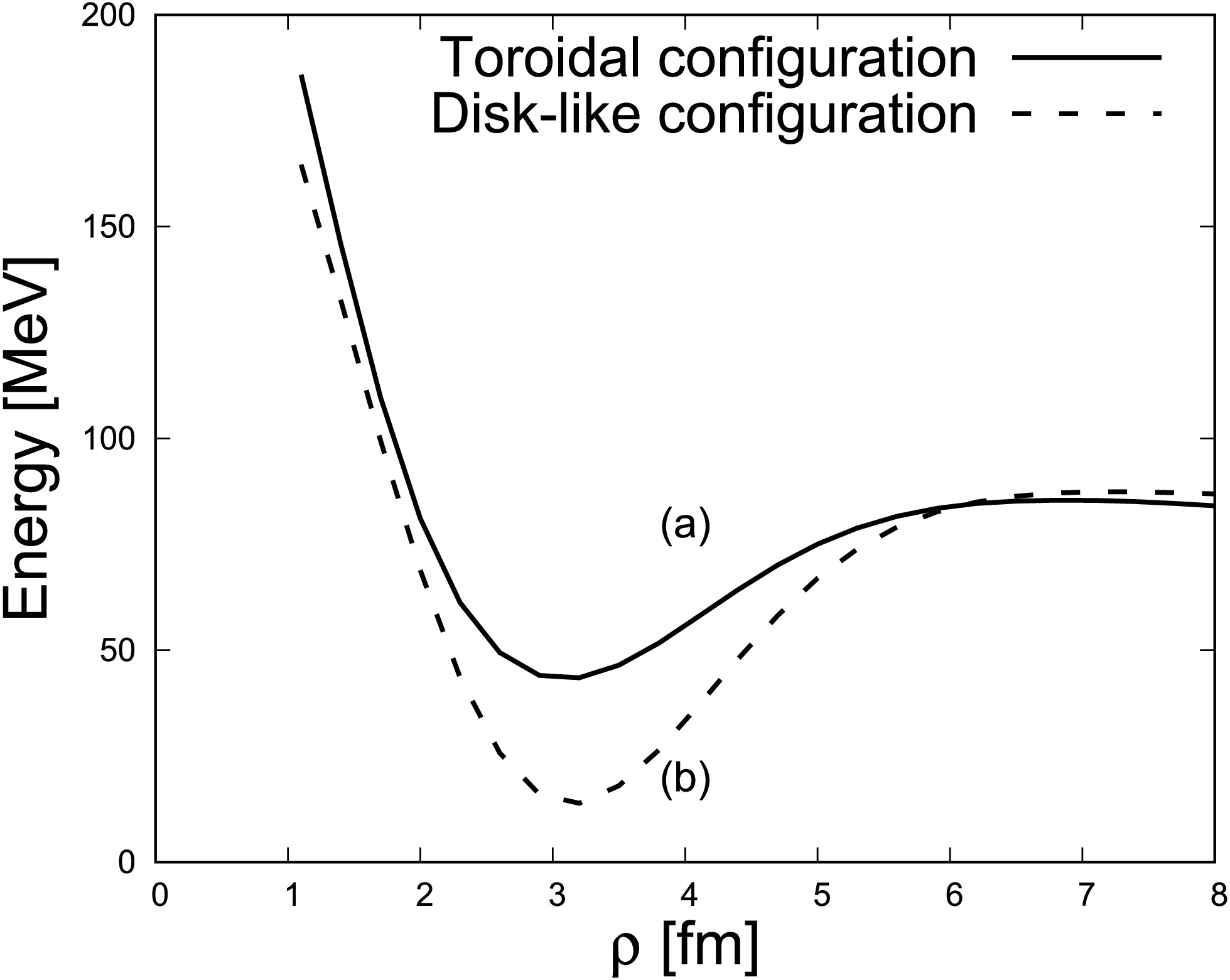
Figure 2. Energy as a function of the edge length (ρ in the text), (a) toroidal configuration; (b) disk-like configuration.
The stability of these exotic structures, particularly at high-spin states, is further enhanced by the centrifugal potential. Since the moment of inertia
$ \mathcal{I} $ for the toroidal configuration scales with the square of the size length ($ \mathcal{I} \propto \rho^2 $ ), the centrifugal term$ \hbar^2 J(J+1)/2\mathcal{I} $ scales as$ \rho^{-2} $ . This dependence introduces a strong repulsive potential at short distances, which significantly elevates the inner barrier of the potential pocket. Consequently, higher angular momenta effectively suppress the breathing-mode decay toward the compact limit. This dynamical stabilization mechanism corroborates the self-consistent mean-field predictions reported in Ref. [24], where toroidal isomers were found to be stabilized specifically at high spin.Compared with the toroidal configuration, the disk-like configuration develops a substantially deeper pocket that emerges at a smaller value of ρ—indicative of a more compact arrangement—with an excitation energy of approximately 14 MeV above the experimental 7α breakup threshold. This energy lowering can be attributed primarily to the increased coordination number of the central α, which maximizes the short-range nuclear attraction and overrides the increased Coulomb repulsion.
It should be noted that the presence of a pocket alone does not establish a physical resonance; confirmation requires enlarged configuration spaces and some other quantities. Nevertheless, the calculated pockets delineate an experimentally relevant energy window for toroidal or disk-like α-cluster candidates.
To obtain more refined results, we further perform angular-momentum and parity-projected GCM mixing along the generator coordinate ρ (and across both geometric configurations). This procedure removes the explicit ρ-dependence of the wave functions and enables the extraction of correlated cluster candidates for
$ J^\pi=0^+, 2^+, 4^+ $ .For the toroidal configuration, the obtained energies of the
$ 0^+ $ ,$ 2^+ $ , and$ 4^+ $ states are -151.22, -150.66, and -149.38 MeV, respectively, while for the disk-like configuration, the corresponding energies of the$ 0^+ $ ,$ 2^+ $ , and$ 4^+ $ states are -179.28, -178.62, and -177.06 MeV, respectively. The calculated cluster states are compared with the available experimental data and other theoretical predictions in Fig. 3.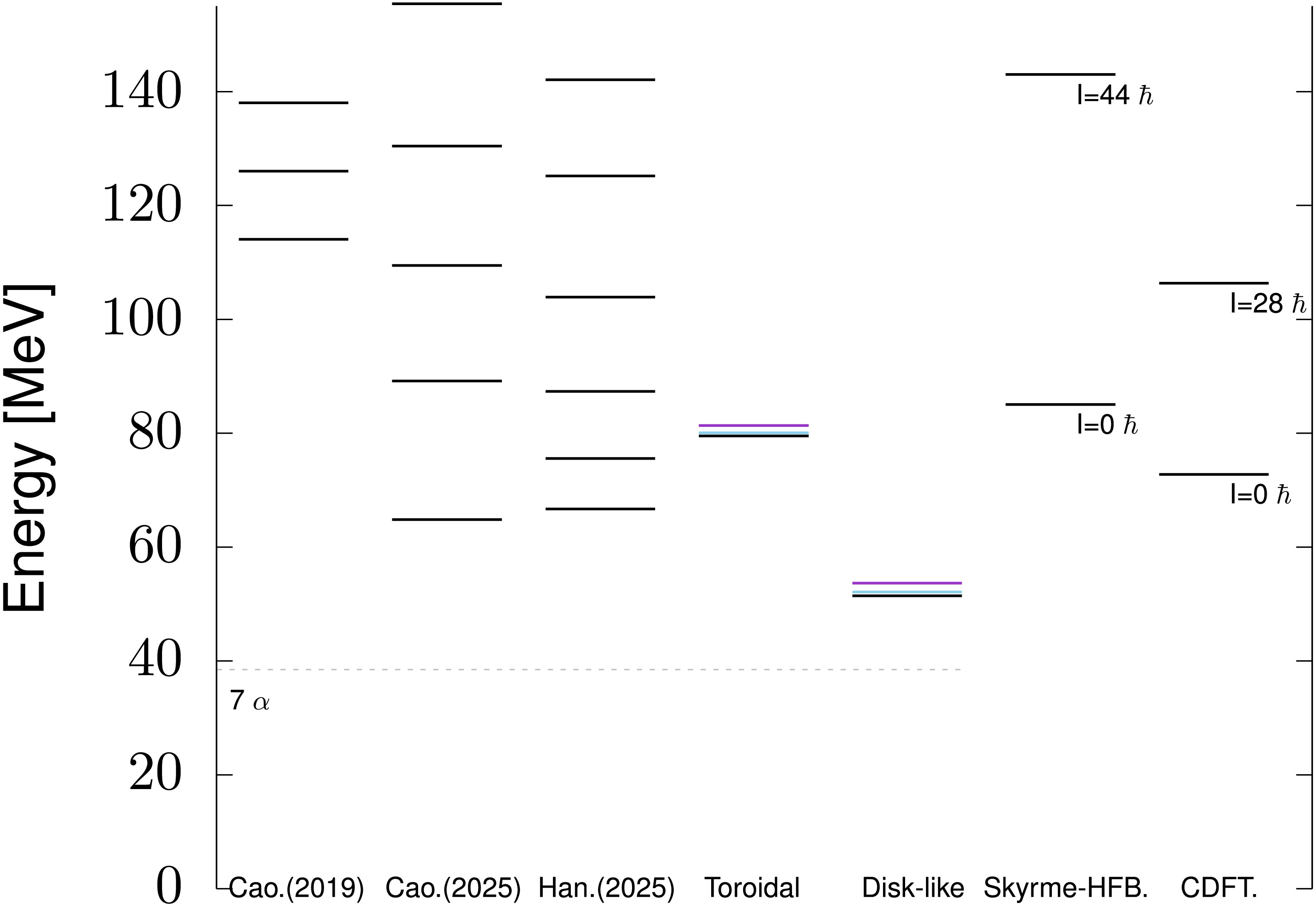
Figure 3. (color online) The energy spectra of
$ ^{28} $ Si obtained from the experiment by Cao$ et ~~ al. $ [5], artificial-intelligence analysis [28], 7α GCM calculation after superposition including$ 0^+ $ (black line),$ 2^+ $ (blue line), and$ 4^+ $ (purple line) states, Skyrme-Hartree-Fock-Bogoliubov (Skyrme-HFB) [24] and Covariant Density Functional Theory (CDFT) [29]. All energies are quoted relative to the$ 7\alpha $ breakup threshold, which is marked by the dashed lines.On the experimental side, both Cao
$ et ~~ al. $ [5] and Hannaman$ et ~~ al. $ [26, 27] faced limitations that prevented direct observation of the initial geometric configuration or determination of its angular momentum, and their identification of possible resonance peaks necessarily involved a degree of dependence on prior theoretical assumptions. Nevertheless, the energy intervals associated with the inferred toroidal configurations remain broadly consistent across various studies based on these two datasets [5, 28, 40]. Cao$ et ~~ al. $ [5] reported three resonance peaks extracted from their analysis; these values are listed in the first column. Hannaman$ et ~~ al. $ [26, 27] did not identify resonance peaks in their original analysis, yet subsequent studies suggested that several peaks may indeed be present in their dataset [40]. More recently, Depastas$ et ~~ al. $ [28] reanalyzed both experiments using an artificial-intelligence model trained on data from the rotating silicon HαC system, and extracted additional resonance peaks from each dataset. The peaks obtained by Depastas$ et ~~ al. $ from the dataset of Cao$ et ~~ al. $ are listed in the second column, while those from the dataset of Hannaman$ et ~~ al. $ are shown in the third column. The fourth and fifth columns present our theoretical predictions: the results for the toroidal configurations are listed in the fourth column, while those for the disk-like configurations are shown in the fifth column. Columns six through seven summarize some additional mean-field model theoretical calculations reported in the literature, including the result of the HFB calculations by Staszczak$ et ~~ al. $ [24] (sixth column) and the result of CDFT calculations by Ren$ et ~~ al. $ [29] (seventh column).We first examine the numerical stability of the resulting levels with respect to enlarging the basis set, and the spectra shown in Fig. 3 remain robust within the tested ranges. Since the present 7α model space is constructed under specific geometrical constraints rather than to reproduce the exact ground state of
$ ^{28}\mathrm{Si} $ , the theoretical 7α threshold obtained from the GCM calculation is shifted to coincide with the experimental value. For the other theoretical calculations, which do not incorporate a 7α threshold, their ground states are aligned with the experimental ground state. This alignment procedure is adopted to facilitate a meaningful comparison of relative excitation energies among different theoretical frameworks and the experimental data.The lowest
$ 0^+ $ candidate for the uniform toroidal configuration is found to appear at approximately 40 MeV above the$ 7\alpha $ threshold. This energy position is notably close to the$ I=0 $ extrapolation of the toroidal bands predicted by both Skyrme-HFB [24] and CDFT [29] calculations. While mean-field models typically stabilize toroidal isomers only at high spin due to the centrifugal barrier, our GCM result suggests that the observed$ 0^+ $ state may serve as the bandhead of this exotic toroidal rotational sequence. The consistency between our microscopic cluster result and the mean-field predictions lends support to the idea that a toroidal shape minimum exists, possessing intrinsic stability against the breathing mode. Furthermore, this energy region seems to be generally consistent with recent experimental signals observed in the$ 7\alpha $ breakup channel of$ ^{28}\mathrm{Si} $ [28, 40]. The rotational band structures,$ 2^+ $ and$ 4^+ $ , are extracted from our projected GCM calculation. Due to the computational complexity of the current model space, we are limited to discussing only these low-spin states and cannot explore the higher excited spin states seen in the mean-field predictions.Comparing the two geometric configurations, the toroidal configuration is significantly higher in energy (by approximately
$ 26 $ MeV) than the disk-like configuration ($ 14 $ MeV above threshold). This large energy separation can be understood as the substantial energy cost required to form the central hole of the torus: it primarily results from the loss of significant nuclear attraction that would otherwise be provided by a central α cluster, an effect that dominates over any reduction in Coulomb repulsion achieved by distributing the clusters on a larger periphery. While the disk-like configuration is energetically lower and asymmetric or non-planar cluster structures may generally be more favorable, our present investigation is specifically directed toward geometric cluster isomers in$ {}^{28}\text{Si} $ with high$ D_{7h} $ or$ D_{6h} $ symmetry—most notably the$ D_{7h} $ toroidal configuration. For this reason, other asymmetric or non-planar low-energy configurations are not discussed in detail here.Despite these findings, which suggest the possible excitation energy region for the toroidal structure, we must acknowledge the inherent limitations of the present model, which pose challenges for future research: (1) Limited Configuration Space: The study relies on a very simple symmetry assumption for the geometric arrangements (uniform heptagon and centered hexagon). This approach ignores the potential influence of other complex configurations (such as non-uniform toroidal or fully three-dimensional cluster arrangements) and their mixing effects.(2) Absence of Spin-Orbit Interaction: The nα cluster assumption inherently neglects the nucleon-level spin-orbit interaction. This simplification makes it difficult to accurately describe the ground state and higher J states. For instance, the calculated
$ 2^+ $ and$ 4^+ $ energy spacings and rotational band structures are primarily determined by the purely geometric moment of inertia of the clusters, potentially overlooking the crucial effects of spin coupling among nucleons within or near the cluster boundaries.(3) Continuum Effects: Since the calculated resonant states appear high above the$ 7\alpha $ breakup threshold, they are embedded in the continuum. The current constrained GCM method does not appropriately treat the continuum effects and thus cannot provide reliable estimates for the decay widths of these resonances, which is essential for a precise comparison with experimental observation. Future work should adopt some resonance methods to address the coupling to the continuum. -
In this study, we explore the possible existence of a toroidal α-cluster structure in
$ {}^{28}\mathrm{Si} $ using a microscopic$ 7\alpha $ cluster GCM framework. By employing constrained toroidal and disk-like configurations as generator coordinates, we extract correlated cluster candidate states with low angular momenta ($ J^\pi=0^+, 2^+, 4^+ $ ). The results indicate that the lowest$ 0^+ $ candidate of the uniform toroidal configuration is located around 40 MeV above the$ 7\alpha $ breakup threshold. This energy placement shows reasonable consistency with the intrinsic energy of toroidal structures predicted by mean-field calculations and is generally comparable to recent experimental possible resonant signals observed in the$ 7\alpha $ breakup channel of$ {}^{28}\mathrm{Si} $ . It should be emphasized, however, that the present GCM approach relies on highly simplified$ 7\alpha $ geometric constraints, which limit its predictive power for a complete description of the continuum and structural mixing. Future studies are required to expand the configuration space, incorporate continuum effects to determine decay widths, and investigate spin-orbit coupling effects for a more complete description of these highly excited states.
Exploring toroidal α-cluster configurations in 28Si within the 7α cluster model
- Received Date: 2025-12-01
- Available Online: 2026-05-01
Abstract: Two $ 7\alpha $ cluster configurations in $ ^{28}\mathrm{Si} $—a uniform toroidal configuration and a disk-like configuration—are investigated within the framework of the generator coordinate method (GCM) with Brink-Bloch 7α wave functions by taking the edge length as the generator coordinate. Within the framework of the 7α cluster model with imposed geometric symmetry, we observe that a uniform toroidal configuration may emerge at approximately 40 MeV above the 7α threshold. This provides a cluster-model perspective that complements some mean-field descriptions of toroidal structure in $ ^{28}\mathrm{Si} $.



 DownLoad: